
Why Is My AC Blowing Hardly Any Air? 8 Causes & How to Fix It
Why Is My AC Blowing Hardly Any Air? 8 Causes & How to Fix It
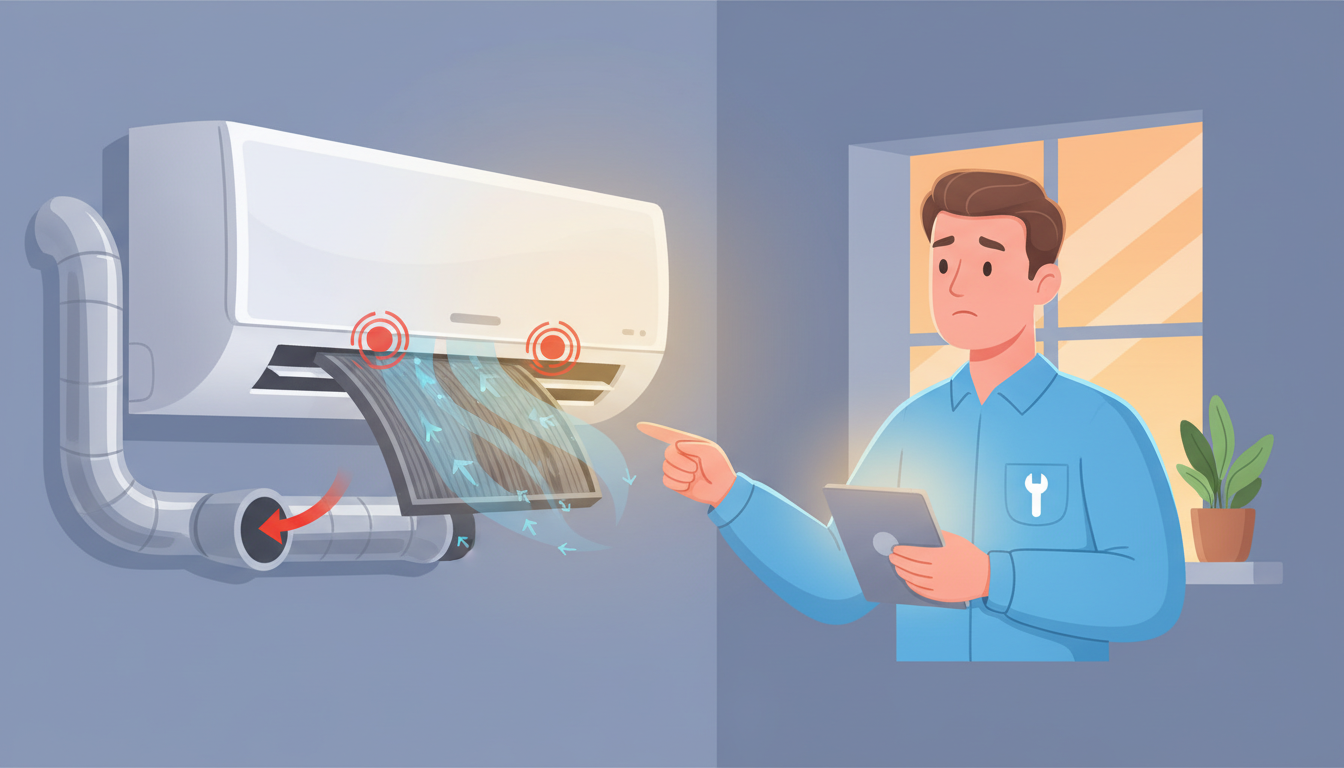
Is your air conditioner running but barely pushing any air through your vents? You're not alone. Weak AC airflow is one of the most frustrating HVAC problems homeowners face, especially during hot summer months when you need cooling the most. When your AC is blowing hardly any air, it's not just uncomfortable—it's a sign something in your system needs attention.
In this guide, you'll discover the eight most common causes of low airflow from vents and exactly what to do about each one. Some fixes take just minutes and cost nothing, while others require professional help. Let's diagnose your weak airflow problem and get your home comfortable again.
What Does Weak AC Airflow Actually Mean?
Before we dive into causes, let's clarify what we mean by "weak airflow." You might notice:
- Air barely trickling from your vents instead of a strong, steady flow
- Some rooms getting cool while others stay warm
- Your AC running constantly but never reaching the temperature you set
- Higher energy bills even though your home isn't cooling properly
These are all signs your HVAC system isn't moving enough air through your home. The technical term is "low CFM" (cubic feet per minute), which measures how much air your system circulates. A typical residential AC should move 400 CFM per ton of cooling capacity.
1. Dirty or Clogged Air Filter
This is the number one cause of weak AC airflow—and the easiest to fix yourself.
Your air filter traps dust, pollen, pet hair, and other particles before they enter your HVAC system. Over time, these particles build up and create a dense barrier that blocks airflow. When your filter is clogged, your AC has to work much harder to pull air through it, resulting in significantly reduced airflow to your vents.
How to Check
Remove your air filter (usually located in the return air vent or inside your air handler) and hold it up to a light. If you can't see light passing through, it's too dirty.
The Fix
Replace disposable filters or clean reusable ones. Standard 1-inch filters should be changed every 30-60 days. If you have pets, allergies, or live in a dusty area, change them monthly. Thicker 4-5 inch filters last 6-12 months.
Pro tip: Set a phone reminder for filter changes. This simple maintenance prevents the majority of airflow issues and is covered in detail in our comprehensive HVAC repair guide.
2. Frozen Evaporator Coil
Your evaporator coil (located inside your air handler) removes heat from the air passing over it. When airflow is restricted or refrigerant levels drop, the coil can freeze solid, blocking air from passing through your system entirely.
Signs Your Coil Is Frozen
- Ice visible on the copper refrigerant lines outside
- Frost or ice on your air handler
- Water pooling around your indoor unit as ice melts
- Little to no air coming from vents even though the system is running
What to Do
Turn off your AC completely and let the ice melt (this can take 3-8 hours). Turn on just the fan setting on your thermostat to speed up melting. Once thawed, check your air filter—a dirty filter is the most common cause of frozen coils.
Important: If the coil freezes again after thawing, you likely have a refrigerant leak or more serious airflow restriction that needs professional diagnosis. For more troubleshooting on cooling issues, check our guide on AC blowing warm air.
3. Blower Motor or Fan Problems
Your blower motor is the muscle behind your airflow. It spins a fan wheel that pushes conditioned air through your ductwork and into your home. When the blower has problems, you'll notice weak airflow from all vents in your house.
Common Blower Issues
Failing Blower Motor: Motors wear out over time. You might hear humming or grinding sounds but get little airflow.
Bad Capacitor: The capacitor gives your blower motor the electrical boost it needs to start. When capacitors fail, the motor runs weak or doesn't start at all.
Dirty Blower Wheel: The fan wheel can accumulate layers of dust and debris, making it less efficient at moving air. This often happens when filters aren't changed regularly.
Wrong Speed Setting: Some systems have multiple blower speed settings. If it's stuck on low speed, you'll get weak airflow.
The Fix
Blower motor and capacitor problems require professional repair. However, you can check your thermostat fan setting—make sure it's set to AUTO rather than ON. The ON setting runs the fan continuously at a lower speed, which can feel like weak airflow.
If you hear unusual noises from your air handler, shut down your system and call an HVAC technician. Running a failing blower motor can cause complete motor failure, leading to more expensive repairs.
4. Blocked or Leaky Ductwork
Your ductwork is the highway system that delivers cool air throughout your home. According to Energy Star, the average home loses 20-30% of conditioned air through duct leaks, holes, and disconnected sections. That's a massive loss that directly impacts airflow at your vents.
Types of Duct Problems
Disconnected Ducts: In attics and crawl spaces, flexible ducts can disconnect at joints, dumping your cool air where you can't use it.
Crushed Flex Ducts: Flexible ductwork can be crimped, crushed, or kinked—especially in tight spaces or where storage items press against it.
Leaky Seams: Over time, duct tape and mastic sealant deteriorate, creating gaps that leak air.
Blocked Ducts: Construction debris, fallen insulation, or even pest nests can completely block sections of ductwork.
Signs of Duct Problems
- Some rooms have strong airflow while others barely get any
- Dusty streaks or spots around vent covers
- Different temperatures in different rooms despite same vent size
- Higher than normal energy bills
The Fix
Inspect visible ductwork in your attic, basement, or crawl space for obvious disconnections or damage. Seal small leaks with mastic sealant (not duct tape—it actually fails over time despite the name).
For comprehensive duct inspection and repair, including sections hidden in walls or ceilings, hire an HVAC professional. They can perform a duct pressure test to find all leaks and assess your system's overall efficiency.
5. Closed or Blocked Vents and Registers
This might seem obvious, but blocked supply or return vents are surprisingly common causes of weak airflow.
Supply Vents
These are the vents that blow cool air into your rooms. Make sure:
- Furniture, curtains, or rugs aren't blocking them
- The damper (adjustable louvers) is fully open
- Dust and debris aren't clogged in the register
Return Vents
These larger vents pull air back to your AC for cooling. Return vents are critical—if they're blocked, your system can't pull in enough air to circulate. Return vent blockage reduces airflow throughout your entire house.
Common return vent mistakes:
- Placing large furniture directly against return vents
- Having too few return vents for your home size
- Closing doors in rooms that don't have return vents (creates pressure imbalances)
The Fix
Walk through your home and check every vent. Move furniture away from vents, vacuum dust from registers, and ensure all dampers are fully open. Keep interior doors open or install door undercuts to allow air circulation in rooms without return vents.
6. Dirty Condenser Unit (Outdoor Unit)
Your outdoor condenser unit needs proper airflow too. While condenser problems more commonly cause warm air issues, a severely restricted condenser can reduce overall system performance, including airflow.
What Causes Condenser Blockage
- Leaves, grass clippings, and debris packed around fins
- Overgrown shrubs or plants too close to the unit
- Cottonwood seeds or "summer snow" blocking fins
- Dirt and grime coating the coil fins
The Fix
Turn off power to your outdoor unit at the disconnect box. Carefully spray the condenser fins from the inside out using a garden hose with gentle pressure. Remove debris, trim vegetation to maintain 2-3 feet of clearance, and straighten any bent fins with a fin comb.
For a deeper clean, including checking refrigerant levels and system efficiency, schedule annual maintenance with a professional. Learn more about maintaining your system in our central AC repair guide.
7. Wrong Thermostat Fan Setting
Many homeowners don't realize their thermostat has two fan settings: AUTO and ON.
AUTO mode: The fan only runs when your AC is actively cooling. You get stronger airflow during cooling cycles.
ON mode: The fan runs continuously, even when not cooling. This provides constant circulation but at a lower fan speed, which can feel like weak airflow.
The Fix
Check your thermostat and switch the fan setting from ON to AUTO. This ensures your blower runs at full speed during cooling cycles, giving you stronger airflow when you need it most.
8. Undersized or Improperly Designed System
Sometimes weak airflow isn't a malfunction—it's a system that was never designed correctly for your home.
Signs of an Undersized System
- Weak airflow from every vent since installation
- System runs constantly on hot days
- Some rooms never reach desired temperature
- Short cycling (frequent on/off cycles)
Why This Happens
- Home additions increased square footage without upgrading HVAC
- Original contractor undersized the system to save costs
- Ductwork designed for smaller system capacity
- Poor room-by-room load calculations during installation
The Fix
An HVAC professional can perform a Manual J load calculation to determine proper system sizing. Unfortunately, if your system is significantly undersized, the only permanent solution is upgrading to properly sized equipment. However, sometimes strategic duct modifications, additional return vents, or zone control systems can improve performance without complete replacement.
How to Troubleshoot Weak AC Airflow (Step-by-Step)
Follow these steps in order to identify and potentially fix your airflow problem:
- Check your air filter first - This fixes 50% of airflow problems and takes 2 minutes
- Inspect all vents - Make sure supply and return vents are open and unblocked
- Look for ice - Check refrigerant lines and air handler for frost or ice
- Listen for unusual sounds - Grinding, squealing, or no sound from the air handler points to blower issues
- Check thermostat settings - Verify fan is set to AUTO, not ON
- Inspect outdoor unit - Remove debris and check for blockage
- Compare room by room - Identify if one vent or all vents have weak flow
If you've completed these steps and still have weak airflow, it's time to call a professional.
When to Call an HVAC Professional
Some airflow problems require professional diagnosis and repair:
- Blower motor failure - Requires motor replacement ($400-$1,500)
- Capacitor replacement - Quick fix but requires electrical knowledge ($150-$400)
- Refrigerant leaks - Causing frozen coils (leak repair + recharge: $200-$1,500)
- Major duct leaks - Especially in inaccessible areas ($300-$2,000+)
- Evaporator coil cleaning - Deep cleaning when heavily soiled ($100-$400)
- System undersizing - Requires load calculation and possibly equipment upgrade
Safety note: Never attempt to repair electrical components, refrigerant systems, or blower motors yourself. HVAC systems operate at high voltage and contain pressurized refrigerant that requires EPA certification to handle.
Preventing Weak AC Airflow
The best fix is prevention. Follow these maintenance steps:
Monthly Tasks:
- Check and replace air filters as needed
- Inspect vents for blockage
- Keep outdoor unit clear of debris
Seasonal Tasks (Spring):
- Schedule professional maintenance before cooling season
- Clean condenser coils
- Verify thermostat accuracy
- Test system performance
Annual Professional Maintenance: A yearly tune-up catches small problems before they become major failures. Technicians will:
- Clean evaporator and condenser coils
- Check refrigerant levels
- Inspect and tighten electrical connections
- Lubricate motors and bearings
- Test capacitors
- Measure airflow (CFM) and system performance
- Inspect ductwork for leaks
Regular maintenance extends your system's lifespan from 10-15 years to 15-20 years and keeps airflow strong throughout.
The Cost of Ignoring Weak Airflow
When you ignore weak AC airflow, small problems escalate:
- Higher energy bills - Your system runs longer to cool your home
- Shortened equipment life - Strain on components causes premature failure
- Comfort problems - Hot spots and uneven cooling
- Frozen coils - Leads to compressor damage (the most expensive repair)
- Indoor air quality issues - Poor circulation affects air quality
Addressing weak airflow quickly saves money and prevents more serious damage to your system.
FAQ: Common Questions About Weak AC Airflow
How much airflow should come from my AC vents?
A properly functioning AC should deliver 400 CFM (cubic feet per minute) per ton of cooling capacity. For a typical 3-ton system, that's 1,200 CFM total. You should feel strong, steady air when you hold your hand 6 inches from a supply vent. If you barely feel anything, your airflow is too low.
Can a dirty filter really reduce airflow that much?
Absolutely. A severely clogged filter can reduce airflow by 50% or more. Air filters are designed to trap particles, but once they're saturated, they become barriers instead of filters. This is why regular filter changes are the single most important maintenance task for homeowners.
Why is the airflow weak in only one room?
If one room has weak airflow while others are fine, the problem is likely in the ductwork serving that specific room. Check for crushed flex ducts, disconnected duct sections, closed dampers, or blocked vents in that room. This is different from whole-house airflow problems, which typically involve your air filter, blower, or evaporator coil.
Does closing vents in unused rooms help airflow in other rooms?
No—this is a common misconception. Modern HVAC systems are designed to distribute air to all rooms. Closing vents creates pressure imbalances that actually reduce overall system efficiency and can damage your ductwork. Keep all vents open for optimal performance.
How long should my AC run per cycle?
A properly sized AC with good airflow should run 15-20 minute cycles, then shut off once your home reaches the set temperature. If your system runs constantly or cycles every 5-10 minutes, you have either an airflow problem, a refrigerant issue, or an undersized system.
Conclusion: Get Your Airflow Back on Track
Weak AC airflow doesn't have to leave you sweating through summer. Start with the quick wins—check your filter, inspect your vents, and verify your thermostat settings. These simple steps resolve most airflow problems without spending a dime.
If you've tried the DIY solutions and still have barely any air coming from your vents, it's time to bring in a professional. Blower motors, ductwork repairs, and refrigerant issues require specialized knowledge and tools to fix safely and correctly.
Don't let weak airflow turn into a complete system breakdown. The longer you wait, the more stress you put on your equipment—and the more expensive repairs become. Take action today to restore strong, consistent airflow throughout your home.
Need more help troubleshooting your air conditioning system? Explore our complete HVAC repair guide for more expert tips and solutions.