Why Is My AC Fan Running but the Compressor Not Starting?
Why Is My AC Fan Running but the Compressor Not Starting?
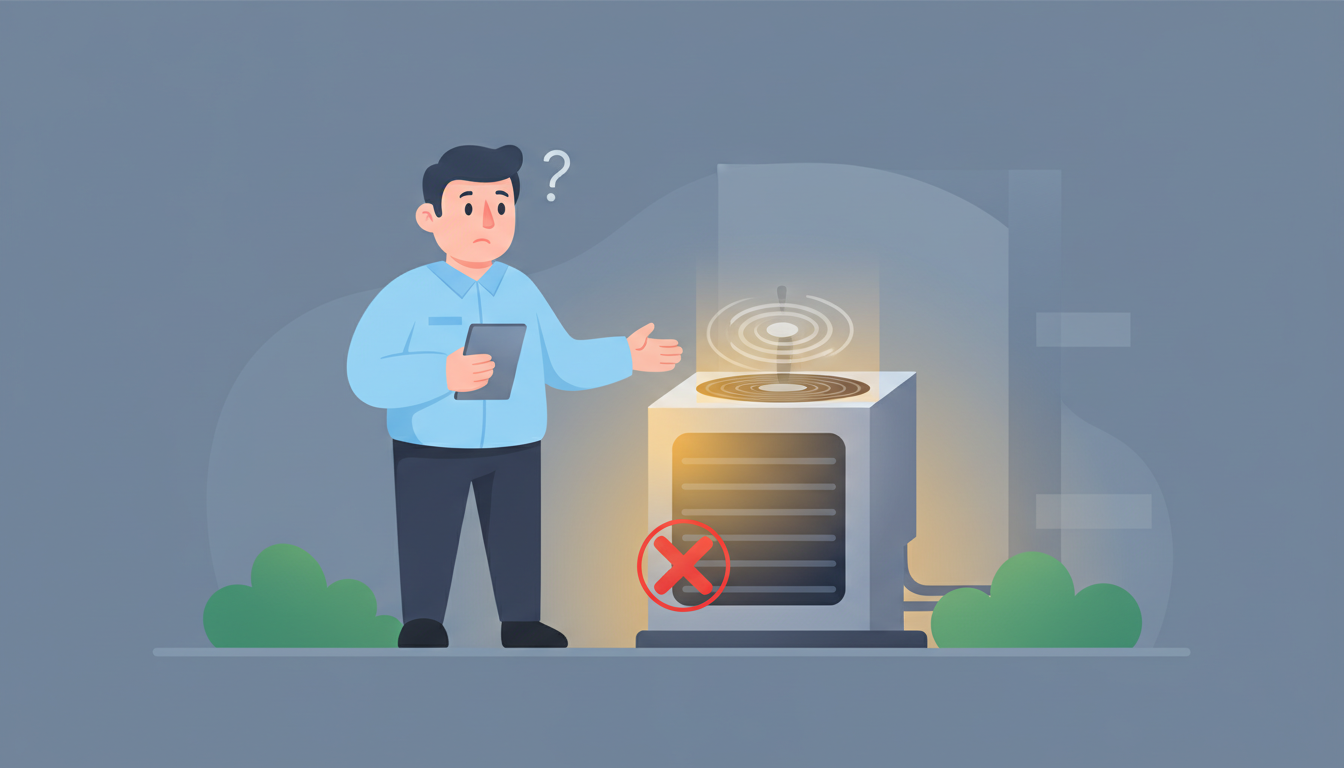
Nothing's more frustrating than hearing your AC fan running on a hot day, only to realize your home isn't getting cooler. If your outdoor AC fan is spinning but the compressor isn't starting, you're dealing with one of the most common HVAC problems homeowners face. The good news? Many causes are fixable, and understanding what's happening can save you time and money.
What's Actually Happening When Your AC Fan Runs but the Compressor Won't Start
Your air conditioning system has two critical components working in tandem: the condenser fan (the visible spinning fan in your outdoor unit) and the compressor (the heart of your cooling system). When the fan runs but your compressor doesn't kick in, it means the electrical power is reaching your outdoor unit, but something is preventing the compressor from starting.
This is why your house isn't cooling down—the fan circulates air, but without the compressor running, there's no refrigerant compression happening. No compression means no cooling cycle, which means no cold air flowing through your vents.
Understanding Your AC Compressor's Role
Your compressor is the powerhouse of your HVAC system. It takes low-pressure refrigerant gas from inside your home and compresses it into high-pressure, high-temperature gas. This compressed refrigerant then flows through your condenser coils, where it releases heat to the outside air before cycling back inside.
When your compressor fails to start, your entire cooling process stops—even though the fan keeps running. This creates the illusion that your system is working when it's actually not cooling at all.
8 Common Reasons Why Your AC Fan Is Running but the Compressor Not Starting
1. Failed Capacitor (The #1 Culprit)
A faulty capacitor is the most common reason for compressor failure. Your AC system has either a dual capacitor (powering both the fan and compressor) or separate capacitors for each component.
What capacitors do: Capacitors provide the electrical "jolt" needed to start your compressor motor and keep it running. Think of them like a battery that helps your compressor overcome inertia and begin spinning.
Signs of capacitor failure:
- Humming noise from the outdoor unit without the compressor starting
- Compressor tries to start but quickly shuts off
- System works intermittently
- Burning smell near the outdoor unit
Why capacitors fail: Heat, age, voltage spikes, and normal wear-and-tear cause capacitors to weaken over time. Most capacitors last 10-20 years, but extreme heat can shorten their lifespan significantly.
Cost to repair: $150-$400 for capacitor replacement by a professional technician.
2. Tripped Circuit Breaker or Blown Fuse
Your compressor draws significant electrical current when starting. If there's an overload, your circuit breaker trips to protect your home's electrical system.
How to check: Go to your electrical panel and look for a tripped breaker. It won't be fully in the "off" position—it'll be in the middle. Flip it completely off, then back on.
Warning: If your breaker trips again immediately after resetting, do not keep flipping it. This indicates a serious electrical problem that requires professional attention. Repeated tripping can damage your compressor and create fire hazards.
Why breakers trip:
- Compressor drawing too much current
- Short circuit in wiring
- Faulty breaker itself
- Voltage fluctuations
For more comprehensive electrical troubleshooting, check out our HVAC repair guide.
3. Thermostat Issues or Wrong Settings
Sometimes the simplest explanation is the right one. Your thermostat might be set incorrectly or malfunctioning.
Common thermostat problems:
- Set to "Fan Only" mode instead of "Cool" or "Auto"
- Temperature set higher than current room temperature
- Dead batteries (for battery-powered models)
- Incorrectly calibrated temperature sensor
- Loose or corroded wiring connections
Quick fix: Check that your thermostat is set to "Cool" mode and the target temperature is at least 3-5 degrees below your current room temperature. Replace batteries if applicable.
4. Faulty Contactor Relay
The contactor is an electrical relay that controls power flow to your compressor. When your thermostat signals for cooling, the contactor closes, sending electricity to the compressor motor.
Signs of contactor failure:
- Clicking sound when AC tries to start
- Visible pitting or burning on contactor points
- Compressor doesn't receive power even though the fan runs
What causes contactor failure: Repeated electrical arcing, ant infestations (they're attracted to electrical fields), moisture damage, and age can all cause contactors to fail.
Contactors typically cost $20-40 for the part, but professional installation runs $150-300.
5. Low Refrigerant Levels
Low refrigerant doesn't just reduce cooling—it can prevent your compressor from starting altogether. Modern AC systems have safety switches that detect low pressure and shut down the compressor to prevent damage.
Signs of low refrigerant:
- Ice forming on refrigerant lines or evaporator coil
- Hissing or bubbling sounds (indicating a leak)
- AC runs continuously but doesn't cool
- Higher-than-normal energy bills
Important: Refrigerant doesn't "run out" through normal operation. If you're low on refrigerant, you have a leak that needs professional repair. Simply adding more refrigerant without fixing the leak is wasteful and doesn't solve the problem.
Learn more about troubleshooting your central AC in our central AC repair guide.
6. Compressor Overheating and Thermal Overload Protection
Your compressor has a built-in thermal overload switch that shuts it down when it gets too hot. This is a safety feature preventing permanent damage.
Common overheating causes:
- Dirty condenser coils blocking heat dissipation
- Insufficient airflow around outdoor unit
- Low refrigerant causing compressor to work harder
- Direct sunlight on unit for extended periods
- Debris blocking the outdoor unit
What to do: Turn off your system for 30-60 minutes to let the compressor cool down. Check for and clear any debris around your outdoor unit. If overheating persists, you need professional service.
7. Electrical Wiring Problems
Loose connections, corroded wires, or damaged wiring can prevent adequate power from reaching your compressor while still allowing the fan to operate.
Warning signs:
- Burnt smell near outdoor unit
- Visible wire damage or corrosion
- Intermittent operation
- Tripped breakers
Safety alert: Never attempt to inspect or repair electrical wiring yourself unless you're a qualified electrician. Working with HVAC electrical systems can be deadly.
8. Dead or Locked Compressor
Sometimes the compressor itself has mechanically failed. This is the most expensive scenario and typically requires compressor replacement or even full system replacement.
Signs of compressor failure:
- Loud clanking or rattling before it stopped working
- Complete silence from compressor (no humming, clicking, or other sounds)
- System age over 12-15 years
- Previous refrigerant leaks or repeated repairs
Locked rotor: If internal components seize up, the compressor motor can't spin. This is often caused by lack of lubrication, bearing failure, or liquid refrigerant entering the compressor (called "slugging").
If you're also experiencing issues with your outdoor fan, our guide on outdoor unit fan running slowly can help.
Step-by-Step DIY Troubleshooting (Safe Methods Only)
Before calling a technician, you can safely check a few things yourself:
Step 1: Check Your Thermostat Settings
Verify it's set to "Cool" mode, temperature is below room temperature, and batteries are fresh.
Step 2: Inspect the Circuit Breaker
Look for tripped breakers at your electrical panel. Reset once only—if it trips again, call a professional.
Step 3: Clear Debris Around the Outdoor Unit
Remove leaves, grass clippings, and debris within 2 feet of your condenser unit. Trim back plants and bushes.
Step 4: Check and Replace Air Filters
Clogged filters restrict airflow, causing system stress. Replace disposable filters monthly during peak season.
Step 5: Listen for Unusual Sounds
- Humming: Likely capacitor failure
- Clicking: Possibly contactor or relay issue
- No sound at all: Electrical problem or dead compressor
- Loud clanking: Mechanical compressor failure
Step 6: Let the System Rest
If you suspect overheating, turn everything off for an hour, then try again.
What NOT to do:
- Don't remove the outdoor unit's access panel (high voltage risk)
- Don't attempt to test capacitors yourself (they store deadly voltage)
- Don't repeatedly reset tripping breakers
- Don't add refrigerant yourself (requires EPA certification)
When to Call a Professional Immediately
Some situations require immediate professional attention:
Emergency Situations:
- Burning smell or smoke from the outdoor unit
- Breaker trips repeatedly after reset attempts
- Loud grinding or screeching sounds from compressor
- Visible electrical damage like melted wires or burnt components
- Refrigerant leak (hissing sound or oily residue)
- Water pooling around indoor or outdoor units
Regular Service Calls:
Contact an HVAC technician if you've tried basic troubleshooting and the compressor still won't start. Professional diagnosis typically takes 30-60 minutes and costs $75-150 for the service call.
Repair vs. Replacement: Making the Right Decision
Repair Makes Sense When:
- Your system is less than 10 years old
- It's a simple fix (capacitor, contactor, breaker)
- Repair cost is less than 50% of replacement cost
- The compressor is still under warranty
- You've had minimal previous repairs
Consider Replacement When:
- System is 15+ years old
- Compressor itself has failed (not just components)
- Repair estimate exceeds $2,000
- You've had frequent breakdowns
- Your unit uses R-22 refrigerant (being phased out)
- Energy bills have increased significantly
Cost reference:
- Minor repairs (capacitor, contactor): $150-$400
- Medium repairs (hard start kit, rewiring): $400-$800
- Major repairs (compressor replacement): $1,500-$3,000
- Full system replacement: $3,500-$7,500
How to Prevent AC Compressor Issues
Prevention is always cheaper than repairs. Here's how to keep your compressor running smoothly:
Regular Maintenance Schedule:
- Monthly: Replace/clean air filters
- Quarterly: Clear debris from outdoor unit, inspect for unusual sounds
- Bi-annually: Professional HVAC tune-up (spring and fall)
- Annually: Deep cleaning of condenser coils
Additional Prevention Tips:
- Keep outdoor unit shaded: Direct sunlight increases compressor workload by 5-10%
- Maintain 2-foot clearance: Ensure airflow isn't blocked by plants, fences, or stored items
- Install a surge protector: Protects against voltage spikes that damage capacitors and contactors
- Don't overwork your system: Set thermostat 3-5 degrees higher when away from home
- Address problems early: Strange sounds or reduced cooling are early warning signs
Professional Maintenance Benefits:
Annual professional maintenance catches 85% of potential problems before they cause breakdowns. A typical tune-up includes:
- Capacitor testing and voltage checks
- Contactor inspection and cleaning
- Refrigerant level verification
- Electrical connection tightening
- Condenser coil cleaning
- Compressor amp draw testing
Most maintenance plans cost $150-300 annually and often include priority service and repair discounts.
Understanding Repair Costs and Timelines
Knowing what to expect helps you plan and budget for repairs.
Typical Repair Timelines:
- Capacitor replacement: 30-60 minutes
- Contactor replacement: 30-45 minutes
- Thermostat replacement: 1-2 hours
- Compressor replacement: 4-8 hours
- Full system replacement: 1-2 days
Cost Breakdown by Component:
| Component | Part Cost | Labor Cost | Total |
|---|---|---|---|
| Capacitor | $15-$50 | $100-$300 | $150-$400 |
| Contactor | $20-$40 | $100-$250 | $150-$300 |
| Hard Start Kit | $25-$75 | $150-$300 | $200-$400 |
| Compressor | $800-$1,500 | $700-$1,500 | $1,500-$3,000 |
Money-saving tip: Get at least three quotes for major repairs. Prices can vary significantly between contractors, especially for compressor replacement.
Frequently Asked Questions
Why is my AC fan running but the house not cooling?
If your fan runs but your compressor isn't starting, your system can't complete the cooling cycle. The fan only circulates air—the compressor is what actually creates cold air by compressing refrigerant. Check your circuit breaker, thermostat settings, and listen for unusual sounds from your outdoor unit.
Can I reset my AC compressor myself?
You can reset your system by turning it off at the thermostat and circuit breaker for 30 minutes, then turning it back on. This allows the thermal overload protection to reset and the compressor to cool down. However, if your compressor doesn't start after this reset, you need professional diagnosis.
How much does it cost to replace an AC capacitor?
Professional capacitor replacement typically costs $150-$400, including the service call, part, and labor. The capacitor itself only costs $15-$50, but the technical expertise and safety equipment justify professional installation. Never attempt capacitor replacement yourself—they store lethal voltage even when the power is off.
How do I know if my compressor is bad or if it's another component?
A truly dead compressor makes no sound at all—no humming, clicking, or buzzing. If you hear humming, the compressor is likely fine but can't start due to a failed capacitor. Clicking sounds suggest contactor or relay issues. Professional diagnosis with a multimeter and amp clamp is the only way to definitively determine compressor health.
Is it worth replacing just the compressor or should I replace the whole system?
If your system is less than 10 years old and well-maintained, compressor replacement may be worth it, especially if covered by warranty. For systems 12+ years old, full system replacement is usually more cost-effective because other components are likely near failure too. Additionally, newer systems are 30-40% more energy-efficient, providing long-term savings.
Final Thoughts: Don't Ignore a Non-Starting Compressor
When your AC fan is running but the compressor isn't starting, you're dealing with a problem that won't fix itself. While some causes like tripped breakers or thermostat settings are easy DIY fixes, most compressor issues require professional attention.
The key is acting quickly. Running your system with a failing capacitor or low refrigerant can cause additional damage to your compressor—turning a $200 repair into a $2,000 problem. If basic troubleshooting doesn't solve the issue, contact a qualified HVAC technician before the problem escalates.
Remember that regular maintenance is your best defense against compressor problems. An annual tune-up costs a fraction of emergency repairs and can extend your system's lifespan by years.
Need professional help? Contact a licensed HVAC technician today for accurate diagnosis and repair. Your comfort and safety are worth the investment.