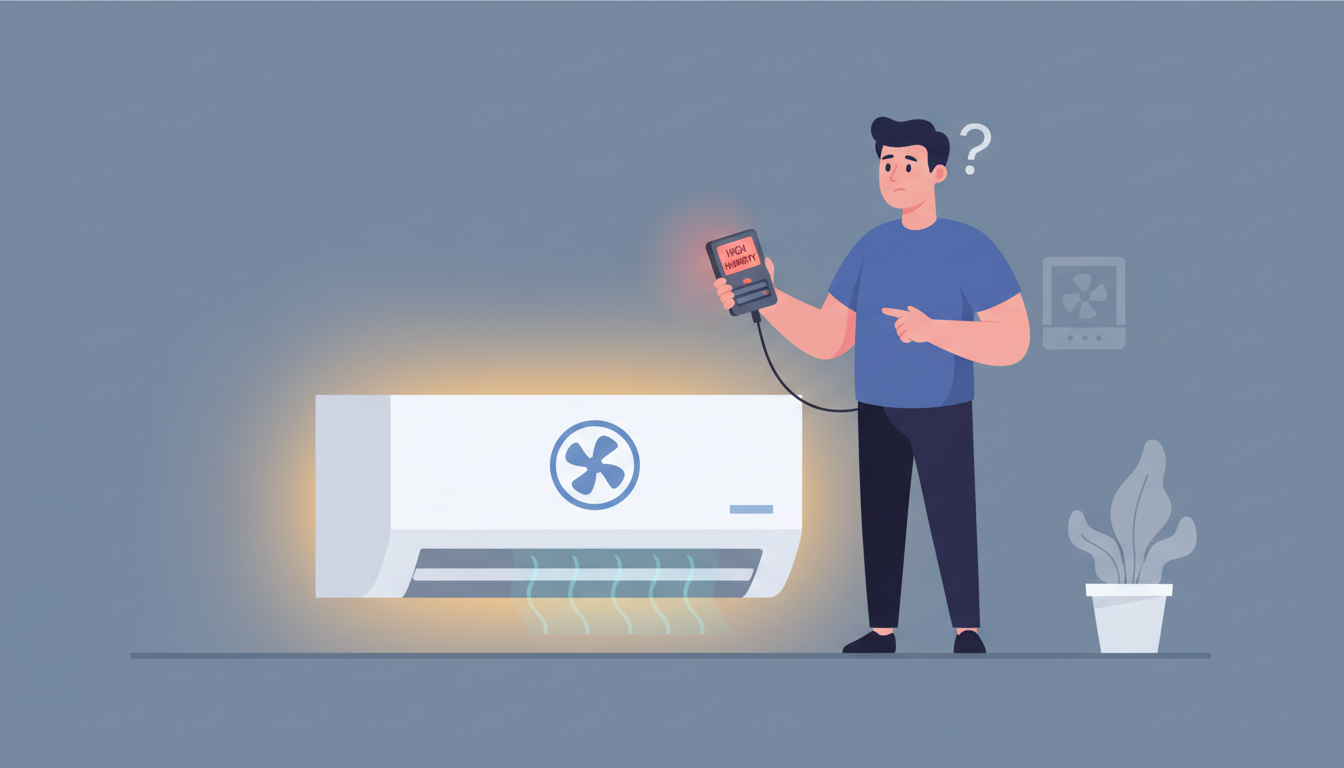
Why Does My AC Keep Running Without Lowering Humidity?
Why Does My AC Keep Running Without Lowering Humidity?
Is your air conditioner running constantly, but your home still feels sticky and uncomfortable? You're not alone. Many homeowners experience the frustrating problem of an AC that cools the air but fails to remove humidity. High indoor humidity not only makes your home uncomfortable, but it can also lead to mold growth, musty odors, and higher energy bills. In this guide, we'll explore why your AC isn't removing humidity and what you can do to fix it.
Understanding How Your AC Removes Humidity
Before we dive into the problems, let's quickly understand how air conditioners are supposed to handle humidity. Your AC doesn't just cool the air—it also acts as a dehumidifier.
When warm, humid air passes over your evaporator coil inside the air handler, the coil's cold surface causes moisture in the air to condense into water droplets. This is the same process that creates condensation on a cold glass of water on a hot day. The water drips into a drain pan and flows out through your condensate drain line, removing moisture from your indoor air.
For this dehumidification process to work effectively, your AC needs to run in complete cooling cycles. The longer your system runs during each cycle, the more moisture it can remove from the air. Ideally, your indoor humidity level should stay between 30% and 50% for optimal comfort and health.
Common Reasons Your AC Isn't Lowering Humidity
If your air conditioner is running but not dehumidifying properly, several issues could be at play. Let's break down the most common culprits.
1. Your Thermostat Fan Is Set to "ON" Instead of "AUTO"
This is one of the most common and easily fixable causes of humidity problems. When your thermostat fan is set to "ON," the fan runs continuously—even when the compressor isn't actively cooling. This means the fan keeps blowing air over the evaporator coil even after the cooling cycle stops.
Here's the problem: when the cooling cycle ends, the moisture that condensed on the evaporator coil during the cycle gets blown back into your home instead of draining away. This re-evaporation sends humid air back into your living space, making your house feel sticky even with the AC running.
The fix: Switch your thermostat fan setting to "AUTO." In AUTO mode, the fan only runs during active cooling cycles, giving moisture time to drain away properly and preventing humidity from being recirculated into your home.
2. Your AC System Is Oversized for Your Home
Bigger isn't always better when it comes to air conditioning. An oversized AC unit cools your home too quickly, which sounds great until you realize what it means for humidity control.
When your AC is too large for your space, it reaches your desired temperature rapidly and shuts off before it has time to properly dehumidify the air. This problem is called "short-cycling." While the temperature drops, the moisture stays in the air, leaving you with a cold but clammy home.
How do you know if your system is oversized? Look for these signs:
- Your AC turns on and off frequently (every 5-10 minutes)
- Some rooms feel significantly cooler than others
- Your energy bills are higher than expected
- The house feels humid even at your target temperature
An AC system is measured in BTU capacity (British Thermal Units). A professional HVAC technician should perform a load calculation based on your home's square footage, insulation, window placement, and climate to determine the right size. As a rough guideline, most homes need about 20 BTU per square foot, but this varies significantly based on your specific situation.
The fix: Unfortunately, you can't easily "fix" an oversized system short of replacing it. However, you can install a standalone dehumidifier to handle the moisture while you plan for a properly-sized replacement. Some homeowners also benefit from upgrading to a variable-speed or multi-stage system that can run at lower capacities for longer cycles.
3. Refrigerant Leaks Are Reducing Dehumidification Capacity
Your AC's refrigerant is the substance that absorbs heat and moisture from your indoor air. When refrigerant levels drop due to a leak, your system loses its ability to effectively cool and dehumidify.
Low refrigerant doesn't just mean less cooling power—it directly impacts moisture removal. The evaporator coil won't get cold enough to condense water vapor from the air efficiently. You might notice your AC blowing cold air but humid conditions persisting throughout your home.
Signs of a refrigerant leak include:
- Ice forming on the evaporator coil or refrigerant lines
- Hissing or bubbling sounds near the AC unit
- AC running constantly but not reaching the set temperature
- Higher-than-normal energy bills
- Reduced airflow from vents
The fix: Refrigerant leaks require professional repair. An HVAC technician will locate the leak, repair it, and recharge your system with the correct amount of refrigerant. Never attempt to add refrigerant yourself—it requires specialized equipment and EPA certification. Expect to pay between $200 and $1,500 depending on the leak's location and severity.
4. Dirty Evaporator Coils Block Moisture Removal
Your evaporator coil is the heart of your AC's dehumidification process, and when it's covered in dirt, dust, and debris, it can't do its job effectively.
A dirty evaporator coil has a reduced surface area for condensation to occur. This means less moisture gets pulled from the air during each cooling cycle. Additionally, dirt acts as an insulator, preventing the coil from getting cold enough to condense water vapor efficiently.
Dirty coils also restrict airflow, which can lead to your AC running longer while accomplishing less. In severe cases, restricted airflow can cause the evaporator coil to freeze, completely blocking dehumidification until it thaws.
The fix: Evaporator coils should be professionally cleaned during annual maintenance. You can help prevent this problem by changing your air filter every 1-3 months. A clogged air filter forces your system to work harder and allows more debris to reach the coil. If you notice musty smells when your AC turns on, dirty coils are often the culprit.
5. Leaky Ductwork Is Pulling In Humid Air
According to the Department of Energy, the typical home loses up to 30% of conditioned air through duct leaks. But leaky ducts don't just waste cooled air—they can also pull humid air from unconditioned spaces into your home.
If your ductwork runs through your attic, crawl space, or basement, leaks can draw in hot, humid air from these areas and distribute it throughout your home. Your AC might be removing humidity from the air that reaches it, but that dehumidified air is being contaminated with moisture from duct leaks before it reaches your living spaces.
Common signs of duct leakage include:
- Certain rooms that never quite feel comfortable
- Excessive dust in your home
- Higher-than-expected utility bills
- Visible gaps or disconnected sections in accessible ductwork
The fix: Professional duct sealing can significantly improve humidity control and energy efficiency. An HVAC contractor can perform a duct leakage test and seal problems using mastic sealant or metal tape (never use standard duct tape, which deteriorates quickly). Proper duct sealing typically pays for itself through energy savings within a few years.
6. Clogged Condensate Drain Line Causes Backup
When moisture condenses on your evaporator coil, it needs somewhere to go. That's where your condensate drain line comes in. This pipe carries water away from your system to a drain or outdoors.
Over time, the drain line can become clogged with algae, mold, dirt, and debris. When this happens, water backs up into the drain pan and eventually overflows. Some systems have a safety switch that shuts down the AC when the pan fills to prevent water damage. Either way, a clogged drain means moisture isn't leaving your home as it should.
Signs of a clogged condensate drain include:
- Water pooling around your indoor AC unit
- AC shutting off unexpectedly
- Musty odors near the air handler
- Visible mold or slime in the drain pan
The fix: You can try clearing a clogged drain line yourself by pouring a cup of white vinegar or a bleach solution down the drain opening once per month as preventive maintenance. For serious clogs, use a wet/dry vacuum on the drain line's outdoor opening to suck out debris. If this doesn't work, call a professional to clear the line and inspect for damage. For more guidance on central AC repair, check out our comprehensive guide.
7. Your AC System Is Undersized for Your Home
While oversizing gets more attention, an undersized AC can also cause humidity problems—though for different reasons. An undersized system runs continuously trying to reach your desired temperature but never quite gets there, especially during peak summer heat.
A continuously running undersized AC might seem like it would remove more humidity since it runs longer cycles. However, if it's working at maximum capacity just to barely cool your home, it may not have enough dehumidification capacity left over to effectively remove moisture.
Signs your AC might be undersized:
- AC runs constantly without reaching the set temperature
- Temperature rises quickly when the AC finally cycles off
- System struggles more on particularly hot days
- Uneven cooling with some areas much warmer than others
The fix: An undersized system ultimately needs to be replaced with a properly-sized unit. In the meantime, improve your home's efficiency by sealing air leaks, adding insulation, and using window treatments to block solar heat gain. These measures reduce the cooling load and help your existing system keep up.
How Long Should Your AC Run to Remove Humidity?
Many homeowners wonder whether running their AC longer will help with humidity. The answer is: it depends.
A properly functioning AC should run in cycles of about 15-20 minutes at a time, with 2-3 cycles per hour on a typical day. During very hot weather, longer cycles (up to 30 minutes) are normal and actually beneficial for dehumidification.
If your AC runs constantly for hours without cycling off, you likely have an undersized system or a major problem like a refrigerant leak. If it short-cycles with 5-10 minute runs, your system is probably oversized.
The key isn't just runtime—it's having complete cycles that allow moisture to condense and drain away. This is why the AUTO fan setting is so important. It ensures moisture removal happens during cooling cycles and doesn't get recirculated afterward.
When to Call a Professional
Some humidity problems have simple DIY solutions, but others require professional expertise. Call an HVAC technician if you experience:
- Ice forming on your AC components
- Strange noises or odors from your system
- AC running but not cooling at all
- Water leaking around your indoor unit
- Humidity problems that persist after adjusting thermostat settings and changing filters
A professional can perform a complete system evaluation, including:
- Refrigerant level check and leak detection
- Evaporator and condenser coil inspection and cleaning
- Ductwork assessment for leaks
- Proper system sizing verification
- Condensate drain inspection
- Overall system performance testing
Annual professional maintenance is one of the best ways to prevent humidity problems before they start. During a maintenance visit, technicians clean coils, check refrigerant levels, clear drain lines, and identify potential issues early. For general HVAC repair guidance, we've created a helpful resource.
Additional Solutions for Stubborn Humidity Problems
If you've addressed the common causes and still struggle with humidity, consider these additional solutions:
Install a Whole-Home Dehumidifier
A whole-home dehumidifier works alongside your AC to remove excess moisture. Unlike portable units, these systems integrate with your ductwork and can remove 90-130 pints of moisture per day.
Whole-home dehumidifiers are particularly useful if you have an oversized AC that can't be immediately replaced or if you live in an especially humid climate. They run independently of your cooling system, so they can remove moisture even when your AC isn't running.
Upgrade to a Variable-Speed System
Modern variable-speed (or multi-stage) AC systems can run at different capacity levels instead of just "on" or "off." This allows them to run at lower speeds for longer periods, which is ideal for dehumidification.
Variable-speed systems typically have SEER ratings of 16 or higher and can improve both comfort and energy efficiency by 30-40% compared to single-stage units. While the upfront cost is higher, the improved humidity control and energy savings make them worthwhile for many homeowners.
Consider Smart Thermostat Upgrades
Some smart thermostats have humidity control features that can help optimize your system's performance. These thermostats monitor indoor humidity levels and can adjust cooling cycles to prioritize dehumidification when needed.
Advanced models can even coordinate with whole-home dehumidifiers or control ventilation systems to maintain ideal humidity levels automatically.
The Health and Cost Impact of High Humidity
Addressing humidity problems isn't just about comfort—it's about protecting your health and your home.
Health Concerns
High indoor humidity (above 60%) creates ideal conditions for:
- Mold and mildew growth, which can trigger allergies and respiratory problems
- Dust mites, which thrive in humid environments
- Bacteria and virus transmission, which increase in very humid conditions
Home Damage
Excess moisture can cause:
- Wood rot in framing, floors, and trim
- Paint and wallpaper peeling
- Warped wood floors and furniture
- Increased condensation leading to water damage
- Musty odors that are difficult to eliminate
Energy Costs
Humid air feels warmer than dry air at the same temperature, causing you to set your thermostat lower. This increases your cooling costs significantly. Additionally, many of the problems that cause poor dehumidification (like refrigerant leaks and duct leaks) also reduce efficiency, driving up energy bills even further.
Frequently Asked Questions
How do I know if my AC is the right size for my home?
The only way to definitively know if your AC is properly sized is to have a professional perform a Manual J load calculation. This comprehensive assessment considers your home's square footage, insulation levels, window placement, ceiling height, local climate, and more. If your AC short-cycles frequently or runs constantly without maintaining temperature, it's likely improperly sized.
Can I fix AC humidity problems myself, or do I need a professional?
Start with simple fixes: change your air filter, switch your thermostat fan to AUTO mode, and clear any visible debris from around your outdoor unit. If these don't help within a few days, call a professional. Issues like refrigerant leaks, coil cleaning, duct sealing, and system sizing all require professional expertise and specialized equipment.
Will adding a dehumidifier solve my AC humidity problem, or is it just a band-aid?
It depends on the underlying cause. If you have an oversized AC or live in an extremely humid climate, a dehumidifier is a legitimate long-term solution. However, if the problem stems from refrigerant leaks, dirty coils, or duct leaks, a dehumidifier will help with symptoms but won't fix the root cause. Address mechanical problems first, then add supplemental dehumidification if needed.
How much does it cost to fix AC humidity problems?
Costs vary widely based on the issue:
- Thermostat adjustment: Free (DIY)
- Air filter replacement: $10-30 (DIY)
- Professional coil cleaning: $100-400
- Condensate drain clearing: $75-250
- Refrigerant leak repair: $200-1,500
- Duct sealing: $300-2,000
- Whole-home dehumidifier: $1,200-2,800 installed
- AC replacement (properly sized): $3,500-7,500+
Many problems can be prevented with annual maintenance ($75-200), which is far more cost-effective than major repairs.
Does running my AC at a lower temperature help remove more humidity?
Not necessarily. Setting your thermostat very low doesn't improve dehumidification—it just makes your AC run longer trying to reach an uncomfortable temperature. The key to moisture removal is proper system function and complete cooling cycles, not extreme temperature settings. Keep your thermostat at a comfortable 72-76°F and focus on fixing underlying humidity problems instead.
Conclusion: Take Control of Your Indoor Humidity
Living with an AC that runs constantly but leaves your home feeling sticky and uncomfortable is frustrating, but now you understand the common causes and solutions. Whether the culprit is incorrect thermostat settings, an oversized system, dirty coils, refrigerant leaks, or ductwork problems, you have the knowledge to take action.
Start by checking your thermostat fan setting and replacing your air filter—these simple fixes solve many humidity problems. If the issue persists, call a qualified HVAC professional to diagnose and repair mechanical problems before they lead to more serious damage or health concerns.
Remember, your air conditioner should both cool AND dehumidify your home. When it's not doing both jobs effectively, addressing the problem quickly protects your comfort, your health, and your wallet. Don't let humidity problems linger—take action today to restore your home's comfort and air quality.