Why Does My AC Lose Cooling Power During a Heat Wave?
Why Does My AC Lose Cooling Power During a Heat Wave?
When a scorching heat wave hits and your air conditioner can't keep up, it's not just frustrating—it can be genuinely uncomfortable and concerning. You've probably noticed your AC running nonstop, yet your home stays warmer than your thermostat setting. Before you panic about a costly breakdown, understanding why your AC loses cooling power during extreme heat can help you take the right steps to stay comfortable and protect your system.
Understanding the 20-Degree Rule: Your AC's Design Limitations
Here's something most homeowners don't realize: your air conditioner wasn't designed to cool your home to any temperature you want, regardless of outdoor conditions.
Most residential AC systems are engineered to maintain about a 20-degree temperature difference between outdoor and indoor air. This means if it's 100°F outside, your AC is working at its limit to keep your home around 80°F—not the 72°F you might prefer.
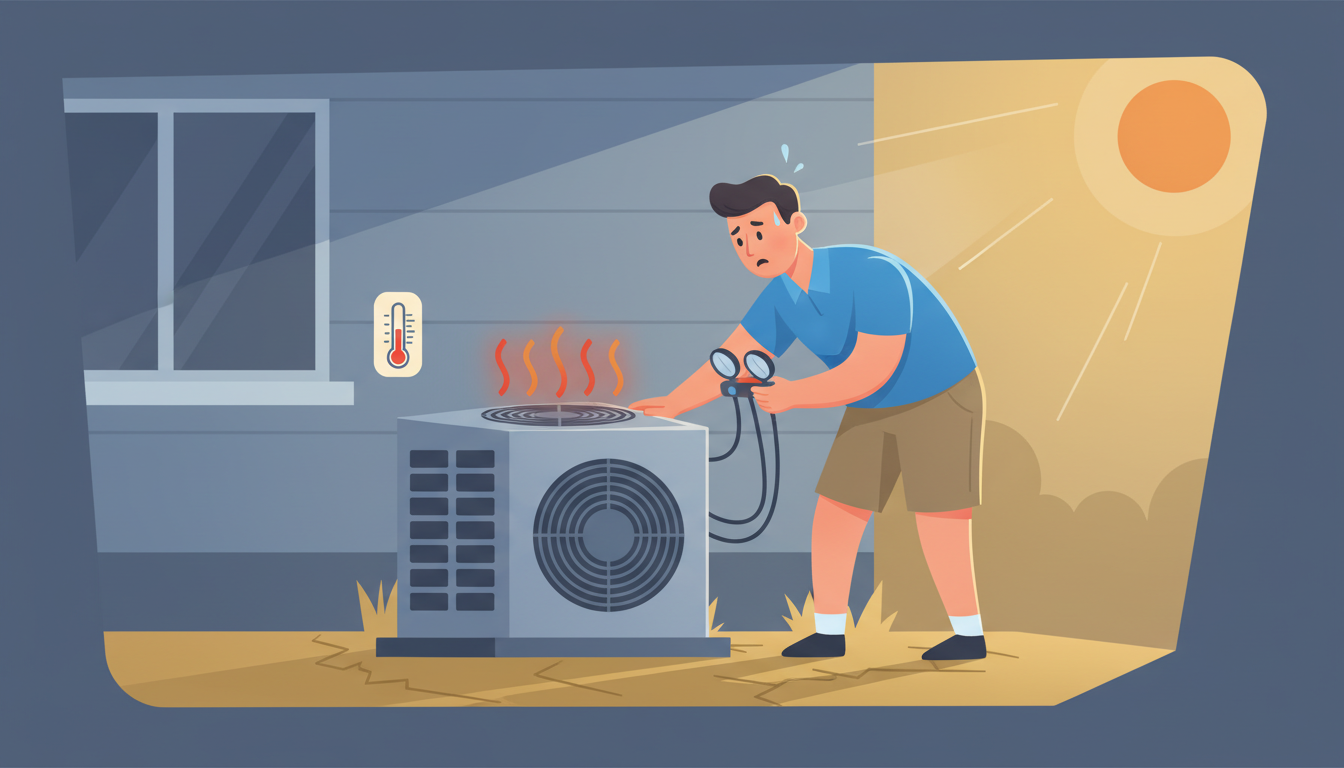
When outdoor temperatures climb to 105°F or higher during a heat wave, your system is fighting a losing battle against physics. The hotter it gets outside, the harder your AC must work to remove heat from your indoor air and expel it outside. This isn't a defect in your system—it's simply how the technology works.
If your AC is running continuously during extreme heat but maintaining a temperature within 15-20 degrees of the outdoor temperature, it's actually performing as designed. Understanding this realistic expectation can save you unnecessary service calls and help you focus on what really matters.
How Extreme Heat Reduces Your AC's Cooling Capacity
During a heat wave, your air conditioner doesn't just work harder—it actually produces less cooling. This seems counterintuitive, but it's a critical factor in why your AC struggles.
BTU Capacity Drop at High Temperatures
Your AC's cooling capacity is measured in BTUs (British Thermal Units) or tons. A typical 3-ton system should produce 36,000 BTUs per hour under standard conditions. However, once outdoor temperatures exceed 95-99°F, the total BTU capacity of your unit drops significantly.
In 99-degree weather, that same 3-ton system might only produce 2 to 2.5 tons of actual cooling—a reduction of up to 25%. When temperatures climb even higher to 105°F or beyond, the efficiency drop becomes even more pronounced.
Why This Happens: The Physics of Heat Exchange
Your outdoor condenser unit works by releasing the heat it pulls from your home into the outside air. The greater the temperature difference between the refrigerant in your system and the outdoor air, the easier this heat exchange occurs.
During a heat wave, the outdoor air is already so hot that your condenser struggles to expel heat effectively. The refrigerant can't cool down enough before cycling back into your home, reducing the system's overall cooling capacity. This creates a vicious cycle where your AC runs constantly but delivers diminishing results.
Is It Normal for My AC to Run 24/7 During a Heat Wave?
Yes, continuous operation during extreme heat is often completely normal and expected. When outdoor temperatures soar well above 95°F, your AC may need to run around the clock just to maintain a reasonable indoor temperature.
However, continuous operation should still produce cooling. If your AC runs nonstop but your home temperature keeps rising, or if indoor temperatures exceed 85°F when it's 100°F outside, you likely have an underlying problem that needs attention.
Signs your 24/7 operation is normal:
- Home stays within 20 degrees of outdoor temperature
- AC produces cold air at the vents
- System sounds normal (no unusual noises)
- Indoor temperature remains stable, even if warmer than usual
Signs you need HVAC repair:
- Home temperature continues climbing despite AC running
- Weak or warm airflow from vents
- Ice formation on refrigerant lines or evaporator coil
- Unusual sounds like grinding, squealing, or clicking
Common AC Problems That Get Worse During Heat Waves
While some cooling loss during extreme heat is normal, several common issues can make your situation much worse. A heat wave often exposes problems that might go unnoticed during milder weather.
Dirty Air Filters Choking Your System
A clogged air filter is your AC's worst enemy during a heat wave. When your filter is packed with dust, pet hair, and debris, it restricts airflow through your system. This forces your AC to work harder while delivering less cooling.
During extreme heat when your system runs continuously, a dirty filter accelerates efficiency loss. Your evaporator coil may freeze, your blower motor may overheat, and your energy bills will skyrocket.
Solution: Check your filter immediately during a heat wave. If it looks dirty, replace it—even if you changed it recently. During extreme weather, you may need to change filters more frequently than usual.
Refrigerant Leaks Stealing Your Cooling Power
Refrigerant is the lifeblood of your air conditioning system. It absorbs heat from your indoor air and releases it outside. When refrigerant levels drop due to leaks, your cooling capacity plummets.
Low refrigerant doesn't just reduce cooling—it can cause your compressor to overheat and fail completely during a heat wave. Signs of low refrigerant include:
- Ice forming on copper refrigerant lines
- Hissing or bubbling sounds near AC components
- AC runs constantly but produces minimal cooling
- Vents blowing lukewarm air
Refrigerant leaks require professional repair. Modern systems use R-410A refrigerant, while older units may have R-22 (Freon). Adding refrigerant without finding and fixing the leak is a temporary Band-Aid that won't solve the problem.
Dirty Condenser Coils Blocking Heat Release
Your outdoor condenser unit sits outside year-round, accumulating dirt, pollen, grass clippings, and debris. These contaminants coat the condenser coils, creating an insulating layer that prevents efficient heat release.
During a heat wave, dirty condenser coils compound the challenge of expelling heat into already-hot air. Your system works overtime but can't effectively complete the cooling cycle.
Check your outdoor unit right now. If you see:
- Heavy dirt or dust coating the metal fins
- Grass clippings or leaves stuck to the unit
- Bent or damaged fins
- Plants or debris within 2 feet of the unit
You need to clean it. Turn off power to the unit, gently rinse the coils with a garden hose (spray from inside out), and clear away all vegetation and debris.
Dirty Evaporator Coils Inside Your Home
While your condenser coils are outside, your evaporator coils are inside your air handler or furnace. These coils absorb heat from your indoor air. When they accumulate dust and grime, they can't absorb heat efficiently.
Dirty evaporator coils often cause ice formation, which paradoxically reduces cooling even further. If you notice ice on your indoor unit or refrigerant lines, you likely have evaporator coil issues that need professional cleaning.
Overheating Compressor and Fan Motor
Your compressor is the heart of your AC system, and extreme heat puts enormous strain on it. The compressor already generates significant heat during normal operation. When outdoor temperatures soar and your system runs continuously, compressor temperatures can reach critical levels.
Overheating can damage the compressor oil, reducing lubrication and accelerating wear. This can lead to compressor failure—one of the most expensive AC repairs you can face.
Similarly, your outdoor fan motor works overtime during heat waves. If the motor overheats or seizes, your condenser can't release heat properly, and your entire system fails.
Warning signs of overheating components:
- AC shuts off on its own and won't restart for 30+ minutes (thermal safety cutoff)
- Burning smell near your AC units
- Circuit breakers tripping repeatedly
- AC cycles on and off rapidly
These symptoms require immediate professional attention. Don't wait—continuing to run an overheating system can cause permanent damage.
Your AC System Might Be Undersized for Heat Waves
If your AC consistently struggles every summer, especially during heat waves, the problem might not be maintenance—your system might simply be too small for your home.
Tonnage vs. Square Footage
AC capacity is measured in tons (not weight, but cooling capacity). A general rule of thumb is one ton of cooling per 400-600 square feet, but many factors affect proper sizing:
- Climate zone and typical high temperatures
- Home insulation quality
- Ceiling height
- Number and efficiency of windows
- Sun exposure and shade
- Number of occupants
A home in a moderate climate might get by with an undersized unit most of the year, but heat waves reveal the inadequacy. If your 2-ton AC worked fine for years but now struggles as summers get hotter, climate change may have outpaced your system's capacity.
Signs Your AC Is Undersized
- Runs 24/7 even during moderate weather (not just heat waves)
- Can't maintain comfortable temperatures even before peak afternoon heat
- Struggles to cool certain rooms or upper floors
- Constantly fails to reach thermostat setting
An HVAC professional can perform a Manual J load calculation to determine if your system is properly sized. If you're considering central AC repair, this assessment can help you decide between repair and replacement.
Age and Efficiency: When Old AC Units Can't Handle the Heat
Even a properly sized air conditioner loses efficiency over time. If your system is 10-15 years old, it's delivering significantly less cooling than when it was new—and heat waves expose this degradation dramatically.
How Age Affects Performance
- Compressor efficiency decreases 5-10% over the system's lifetime
- Refrigerant may have leaked slowly over years
- Coils accumulate debris that cleaning can't fully remove
- Fan motors wear down and move less air
- Ductwork develops small leaks
An aging system might adequately cool during spring and fall but fail spectacularly when a heat wave hits. If your AC is over 10 years old and increasingly struggles during hot weather, replacement may be more cost-effective than ongoing repairs.
Modern high-efficiency systems (16+ SEER rating) not only cool better during extreme heat but also save 20-40% on energy costs compared to older units. This can offset replacement costs over time, especially in hot climates.
How to Help Your AC During a Heat Wave
While you can't change physics or suddenly upgrade your system, you can take several steps to maximize your AC's performance during extreme heat.
Strategic Thermostat Management
Counterintuitively, setting your thermostat higher can actually improve comfort during a heat wave.
When outdoor temperatures exceed 100°F, setting your thermostat to 76-78°F instead of 72°F accomplishes several things:
- Reduces the temperature differential, making cooling achievable
- Decreases system strain, extending equipment life
- Lowers energy costs during peak-rate periods
- Prevents system from cycling on and off inefficiently
If you'll be away from home, raise the setting to 82-85°F. Your system can more easily maintain this temperature and will recover faster when you return than if you turn it off completely.
Maximize Your Home's Heat Resistance
Help your AC by reducing the heat load on your home:
Window treatments: Close blinds, curtains, or shutters on sun-facing windows during the hottest parts of the day. This single step can reduce indoor temperatures by 10-15°F.
Minimize heat generation: Avoid using your oven, running the dishwasher, or doing laundry during peak afternoon heat. These activities add significant heat to your home when your AC is already struggling.
Strategic ventilation: Open windows and use fans during cooler evening and early morning hours to expel hot air. Close everything up before temperatures rise.
Check your attic: Attic temperatures can reach 150°F during heat waves. If your attic lacks proper insulation or ventilation, this heat radiates down into your living space. Adding insulation or improving attic ventilation can dramatically reduce your AC's workload.
Improve Airflow Throughout Your Home
Even properly functioning AC systems work better with optimal airflow:
- Make sure all supply vents are open and unblocked by furniture
- Keep interior doors open to promote air circulation
- Use ceiling fans to enhance air movement (remember, fans cool people, not rooms—turn them off in unoccupied rooms)
- Ensure your air handler closet or room has adequate ventilation
Give Your Outdoor Unit Some Help
Your condenser unit needs all the help it can get during extreme heat:
- Provide shade if possible (but maintain 2-3 feet of clearance around the unit)
- Mist the air around the unit with a garden hose during peak heat (don't spray directly on components)
- Keep the area clear of debris and vegetation
- Consider installing a condenser misting system for frequent heat waves
When to Call for Emergency AC Service During a Heat Wave
Some situations require immediate professional attention, even during a heat wave when HVAC companies are swamped with calls.
Contact an HVAC professional immediately if:
- Your AC stops cooling suddenly and completely
- You smell burning or see smoke from AC components
- Ice forms on indoor or outdoor refrigerant lines
- Circuit breakers trip repeatedly when AC runs
- You hear loud grinding, banging, or screeching sounds
- Refrigerant lines or connections are leaking
- Indoor temperatures exceed 90°F and continue rising
For less urgent issues like reduced cooling but still functioning, you can often wait for the heat wave to pass before scheduling service. HVAC companies prioritize complete failures over performance issues during emergency periods.
Can a Heat Wave Permanently Damage Your AC?
Yes, extended heat waves can cause permanent damage to AC components, especially if your system already has underlying issues.
The most common heat wave-related damage includes:
Compressor failure: Extended operation at high temperatures can cause compressor oil to break down, leading to bearing damage and compressor seizure. This is often a $1,500-$3,000+ repair.
Capacitor burnout: The capacitor that starts your compressor and fan motor can fail from heat and overuse. This is a relatively inexpensive fix ($150-$400) if caught quickly.
Fan motor failure: Continuous operation in extreme heat can burn out fan motors in both indoor and outdoor units.
Refrigerant line damage: Extreme temperature fluctuations can worsen existing weak points in refrigerant lines, causing leaks.
Electrical component failure: Circuit boards, contactors, and transformers can fail from heat exposure.
Prevention Is Cheaper Than Repair
The best way to prevent heat wave damage is pre-season maintenance. Have an HVAC professional inspect and tune up your system each spring before the cooling season begins. This catches small problems before they become catastrophic failures during the first heat wave.
Regular maintenance includes:
- Cleaning condenser and evaporator coils
- Checking refrigerant levels and pressures
- Testing capacitors and electrical components
- Lubricating motors and checking fan operation
- Inspecting ductwork for leaks
- Calibrating thermostat
Should You Upgrade If Your AC Can't Handle Heat Waves?
If your AC consistently fails during heat waves, you face a decision: repair or replace?
Consider replacement if:
- Your system is 12+ years old
- Repair costs exceed 50% of replacement cost
- Your AC was undersized from the start
- You've had multiple repairs in the past 2-3 years
- Heat waves are becoming more frequent in your area
- Your energy bills have increased significantly
Modern high-efficiency systems (16-20 SEER) handle extreme heat better than older units and can reduce cooling costs by 30-40%. If you're spending $300+ monthly on cooling during summer, a new efficient system could pay for itself in 5-7 years through energy savings.
Variable-speed and two-stage systems are particularly effective during heat waves. Unlike single-stage units that run at full blast or not at all, these systems can modulate their output to match demand more efficiently.
Preparing for the Next Heat Wave
Don't wait until the next heat wave to take action. Proactive preparation makes a huge difference in how well your AC performs during extreme weather.
Spring Preparation Checklist
8-12 weeks before summer:
- Schedule professional HVAC maintenance
- Replace air filters
- Clean condenser unit and surrounding area
- Test system operation during a warm day
- Inspect and seal ductwork leaks
- Check attic insulation levels
2-4 weeks before expected hot weather:
- Stock up on replacement air filters
- Verify you have a qualified HVAC company's contact information
- Install or check programmable/smart thermostat
- Inspect and repair window seals and weatherstripping
- Test window treatments for heat blocking
When heat wave is forecasted:
- Replace air filter even if recently changed
- Pre-cool home before peak temperatures arrive
- Prepare backup cooling plans (fans, portable AC units)
- Adjust thermostat to realistic settings
- Close blinds and curtains on sun-facing windows
FAQ: Your Heat Wave AC Questions Answered
Is it normal for my AC to struggle during 100+ degree weather?
Yes, it's completely normal for AC systems to struggle when outdoor temperatures exceed 100°F. Most residential AC units are designed to maintain about a 15-20 degree temperature difference between indoor and outdoor air. During extreme heat, your AC may run continuously just to maintain this differential.
What temperature is too hot for my AC to work?
Most AC systems lose significant efficiency above 95-99°F and may struggle to cool effectively above 105-110°F. However, this varies by system design, age, and maintenance condition. If your AC can't maintain indoor temperatures below 85°F when it's 100°F outside, you likely have a system problem beyond normal heat limitations.
Should I turn off my AC during a heat wave to save energy?
No, turning off your AC during peak heat often costs more energy and money than leaving it running at a higher temperature setting. When you turn the system back on, it must work much harder to remove the accumulated heat. Instead, raise your thermostat to 78-80°F while home and 82-85°F when away.
How can I tell if my AC needs refrigerant or just can't handle the heat?
Low refrigerant causes specific symptoms beyond reduced cooling: ice formation on indoor coils or refrigerant lines, hissing sounds near AC components, and indoor humidity problems. If your AC struggles but shows none of these signs, the issue is more likely heat-related capacity limitations or other maintenance problems.
Can I add a second AC unit to help during heat waves?
Yes, adding a supplemental mini-split system or portable AC unit for problem areas can help, but this is treating symptoms rather than causes. If your central system is undersized or failing, supplemental cooling is expensive to operate. Consider whether upgrading your main system would be more cost-effective long-term.
Take Action Before the Heat Becomes Unbearable
Your air conditioner losing cooling power during a heat wave is frustrating, but now you understand the combination of physics, system limitations, and potential maintenance issues at play.
The key takeaways:
- Some cooling loss during extreme heat is normal due to AC design limitations
- Aim for realistic temperature expectations (within 20 degrees of outdoor temperature)
- Address maintenance issues before they become failures during peak heat
- Consider system age and sizing if problems occur every summer
- Prepare proactively rather than reacting to heat wave emergencies
Don't wait until you're sweltering in 100-degree indoor temperatures to take action. Whether you need a simple maintenance tune-up or a conversation about system replacement, addressing AC performance issues now will save you money, stress, and discomfort during the next heat wave.
Stay cool, stay safe, and remember that understanding your AC's limitations is the first step toward effective solutions.