
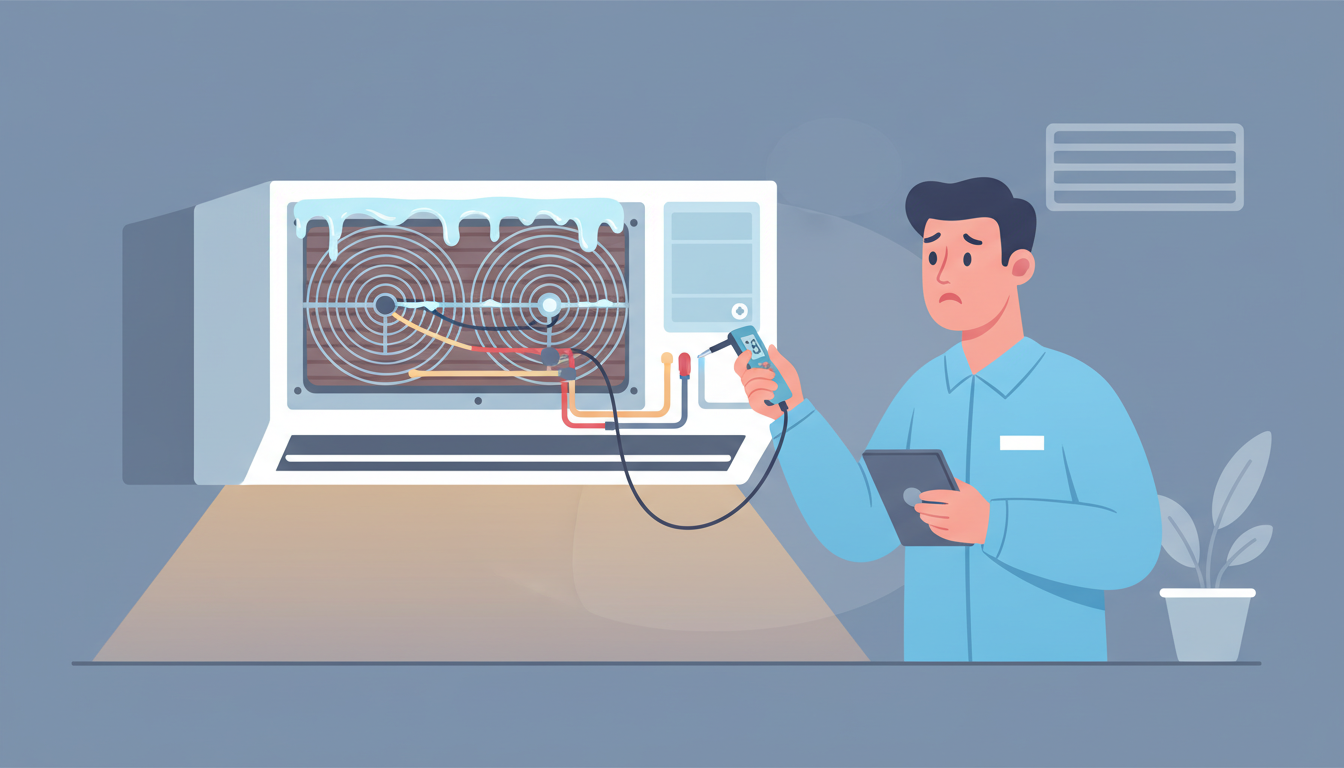
AC Running but Not Cooling? 12 Likely Causes (And How to Fix Them)
AC Running but Not Cooling? 12 Likely Causes (And How to Fix Them)
Is your air conditioner running but not cooling your home? You're not alone. This frustrating problem affects thousands of homeowners, especially during peak summer months. When your AC runs constantly but fails to cool the house, you're wasting energy and money while suffering in the heat.
The good news? Many causes of an AC running but not cooling can be diagnosed and some even fixed yourself. In this comprehensive guide, we'll walk you through the 12 most common reasons why your air conditioner is not blowing cold air, how to identify each problem, and when you need professional help.
1. Dirty or Clogged Air Filter
The Problem: A dirty air filter is the #1 culprit when your AC is running but not cooling properly. Your air filter traps dust, pollen, pet dander, and other airborne particles. Over time, this buildup restricts airflow through your HVAC system, forcing your air conditioner to work harder while delivering less cooling power.
How to Identify It: Check your air filter. If you can't see light through it when holding it up to a lamp, it's too dirty. Most homeowners are shocked when they see how clogged their filters have become.
The Fix: Replace disposable filters or clean reusable ones every 30-90 days depending on usage, pets, and allergies. This simple 5-minute task can restore your cooling and save up to 15% on energy costs. For detailed guidance on HVAC maintenance, check out our comprehensive HVAC repair guide.
DIY or Professional? DIY - This is the easiest fix any homeowner can do.
2. Incorrect Thermostat Settings
The Problem: Sometimes your AC fan is running but not cooling because the thermostat is set incorrectly. If your thermostat is set to "ON" instead of "AUTO," the fan runs continuously even when the system isn't actively cooling. You'll feel air movement but no cold air.
How to Identify It: Check your thermostat display. Look at the fan setting and the temperature setting. Also verify your thermostat is set to "COOL" mode, not "HEAT" or "OFF."
The Fix:
- Switch the fan from "ON" to "AUTO"
- Ensure the temperature is set at least 3-5 degrees below current room temperature
- Replace thermostat batteries if display appears dim
- Check that your thermostat isn't exposed to direct sunlight or heat sources, which can cause false readings
DIY or Professional? DIY - Unless your thermostat needs rewiring or replacement.
3. Frozen Evaporator Coil
The Problem: When your evaporator coil freezes over, it can't absorb heat from your home's air. You might notice ice buildup on the copper lines running to your outdoor unit, or water pooling around your indoor air handler. A frozen coil means your AC is running but not cooling effectively.
Common Causes of Frozen Coils:
- Restricted airflow from dirty filters
- Low refrigerant levels
- Blocked vents or registers
- Running the AC when outdoor temps drop below 60°F
How to Identify It: Look for ice on the refrigerant lines or water leaking from your indoor unit. You may also notice reduced airflow from vents.
The Fix:
- Turn off your AC immediately
- Switch your thermostat to "fan only" to help melt the ice
- Check and replace your air filter
- Ensure all vents are open and unblocked
- Wait 2-4 hours for complete thawing
- If the problem returns, call a professional - you likely have a refrigerant leak
DIY or Professional? DIY for one-time occurrence; Professional if it happens repeatedly.
4. Low Refrigerant or Refrigerant Leak
The Problem: Refrigerant is the lifeblood of your cooling system. It absorbs heat from inside your home and releases it outside. If your refrigerant level is low, your AC will run continuously but struggle to cool. Since AC systems are sealed, low refrigerant almost always means there's a leak somewhere in the system.
How to Identify It:
- Ice on the refrigerant lines
- Hissing or bubbling sounds near the AC
- Your AC runs all day but not cooling the house to the set temperature
- Higher than normal electric bills
- Takes much longer to cool your home
The Fix: This requires a licensed HVAC technician. They'll locate the leak, repair it, and recharge your system with the proper amount of refrigerant. DIY refrigerant recharging is illegal without proper EPA certification and won't fix the underlying leak.
DIY or Professional? Professional - Always. Refrigerant handling requires EPA certification.
5. Dirty Condenser Coils (Outdoor Unit)
The Problem: Your outdoor condenser unit releases the heat absorbed from your home. When the condenser coils become coated with dirt, grass clippings, cottonwood, and debris, they can't release heat efficiently. This causes your AC to run but not cool effectively.
How to Identify It: Inspect your outdoor unit. Look between the metal fins for buildup. Also check for reduced airflow from the top of the unit where the fan expels hot air.
The Fix:
- Turn off power to the unit at the disconnect box
- Remove large debris by hand
- Gently spray the coils from inside-out using a garden hose (never use a pressure washer - it will bend the fins)
- Cut back vegetation to maintain 2-3 feet clearance on all sides
- Consider professional coil cleaning annually
For specific central air system issues, see our central AC repair guide.
DIY or Professional? DIY for basic cleaning; Professional for deep cleaning and straightening bent fins.
6. Faulty or Failing Compressor
The Problem: The compressor is the heart of your AC system. It pressurizes refrigerant and pumps it through the system. When your compressor fails, your AC fan may run but the cooling cycle won't engage. You'll hear the outdoor fan running, but the compressor won't make its typical humming sound.
How to Identify It:
- Outdoor fan runs but compressor is silent
- Clicking sound when AC tries to start
- Circuit breaker trips repeatedly
- No cold air despite system running
The Fix: Compressor replacement or full system replacement is necessary. This is one of the most expensive AC repairs. If your system is over 10 years old, replacing the entire unit may be more cost-effective than replacing just the compressor.
DIY or Professional? Professional - This is a major repair requiring specialized tools and refrigerant handling.
7. Undersized or Oversized AC Unit
The Problem: An incorrectly sized air conditioner is a common reason for an AC not cooling properly. An undersized unit runs constantly trying to cool a space that's too large for its capacity. An oversized unit cycles on and off too frequently, never running long enough to properly dehumidify your home or cool evenly.
How to Identify It:
- Undersized: AC runs non-stop but never reaches the set temperature, especially on hot days
- Oversized: Frequent cycling, uneven temperatures, high humidity despite AC running
The Fix: Unfortunately, the only real solution is replacing your AC with a properly sized unit. An HVAC contractor should perform a Manual J load calculation to determine the correct size for your home based on square footage, insulation, windows, and climate.
DIY or Professional? Professional - Sizing calculations and system replacement require expertise.
8. Clogged Condensate Drain Line
The Problem: As your AC cools air, it removes moisture that collects in a drain pan and exits through a condensate drain line. When this line clogs with algae, mold, or debris, water backs up. Many modern systems have a safety switch that shuts down the AC to prevent water damage.
How to Identify It:
- Water pooling around indoor unit
- AC shuts off unexpectedly
- Musty odors near the air handler
- Visible standing water in the drain pan
The Fix:
- Locate the condensate drain line (usually a PVC pipe near your indoor unit)
- Pour a cup of white vinegar or bleach down the drain line
- Use a wet/dry vacuum on the outdoor end of the drain line to suck out clogs
- Flush with water to ensure clear drainage
DIY or Professional? DIY for simple clogs; Professional for severe blockages or if you can't locate the drain line.
9. Electrical Problems (Capacitor, Contactor, or Wiring Issues)
The Problem: Your AC system relies on several electrical components. The capacitor provides the jolt of electricity needed to start the compressor and fan motors. The contactor acts as a switch to send power to the compressor. If either fails, your AC may turn on but won't actually cool.
How to Identify It:
- AC hums but doesn't start
- Burning smell near the outdoor unit
- Clicking sounds but no cooling
- Compressor won't run even though fan operates
- Tripped circuit breakers
Common Electrical Failures:
- Failed capacitor (bulging or leaking)
- Burned contactor points
- Loose wiring connections
- Tripped breakers or blown fuses
The Fix: Electrical issues require professional diagnosis and repair. These components store dangerous levels of electricity even when the power is off. A technician can test capacitors, contactors, and wiring to identify and replace faulty parts.
DIY or Professional? Professional - AC electrical work is dangerous without proper training.
10. Blocked or Leaky Ductwork
The Problem: Your ductwork delivers cooled air throughout your home. If ducts are blocked, crimped, or have significant leaks, that precious cool air never reaches your living spaces. You might lose 20-30% of cooled air through duct leaks, meaning your AC is running but not cooling your home efficiently.
How to Identify It:
- Some rooms are much warmer than others
- Weak airflow from certain vents
- Excessive dust in your home
- Visible gaps or disconnected ducts in accessible areas
- Higher than normal energy bills
The Fix:
- Check all vents to ensure they're open and unblocked by furniture or curtains
- Inspect accessible ductwork in attics, basements, and crawl spaces for obvious gaps or disconnections
- Seal visible gaps with mastic sealant (not duct tape, which fails quickly)
- Consider professional duct sealing and insulation for comprehensive repair
For more insights on why your central AC might be blowing warm air, read our article on causes of warm air from central AC systems.
DIY or Professional? DIY for visible minor repairs; Professional for complete duct sealing and testing.
11. Dirty or Failed Blower Motor
The Problem: The blower motor in your air handler circulates air through your ductwork. When the blower motor is dirty, worn out, or failing, it can't move enough air through your system. You'll notice weak airflow from vents even though your AC is running.
How to Identify It:
- Weak or minimal airflow from vents
- Unusual squealing or grinding noises
- Air handler struggles to start or stops randomly
- Burning smell from indoor unit
The Fix:
- Simple cleaning of the blower wheel can help if it's coated with dust
- Worn motor bearings may need lubrication
- A completely failed motor requires replacement
- Professional cleaning and motor service extends blower life
DIY or Professional? Professional - Blower motors require system disassembly and electrical knowledge.
12. Aging AC System
The Problem: Even with perfect maintenance, AC systems have a lifespan of 15-20 years. As your system ages, efficiency drops, parts wear out, and refrigerant levels may decline. An aging AC runs longer to achieve the same cooling, increasing your energy bills while struggling to keep you comfortable.
Signs Your AC Is Nearing the End:
- System is 15+ years old
- Frequent repairs becoming expensive
- Significant efficiency drop (higher bills for less cooling)
- Uses R-22 refrigerant (phased out, extremely expensive)
- Multiple simultaneous component failures
The Fix: If your AC is over 15 years old and experiencing multiple issues, replacement is often more economical than continued repairs. Modern systems are 30-50% more efficient, saving hundreds annually on cooling costs.
DIY or Professional? Professional - Full system replacement requires proper sizing, installation, and refrigerant handling.
When to Call a Professional HVAC Technician
While some AC problems are easy DIY fixes, others require professional expertise. Call a licensed HVAC technician when:
- You've tried basic troubleshooting (filter, thermostat, vents) without success
- You suspect refrigerant leaks or electrical issues
- Ice keeps forming on your AC despite thawing and filter changes
- Your compressor won't run or makes unusual noises
- You smell burning or notice sparking
- Your AC is over 10 years old and having multiple issues
A professional can diagnose complex problems accurately, preventing costly mistakes from incorrect DIY repairs.
Preventing AC Cooling Problems
The best fix is prevention. Here's how to keep your AC running efficiently:
Monthly:
- Check and replace air filters
- Ensure vents are open and unblocked
- Listen for unusual sounds
Seasonally:
- Clean your outdoor condenser unit
- Trim vegetation around outdoor unit
- Pour vinegar down condensate drain line
- Test your thermostat accuracy
Annually:
- Schedule professional maintenance before cooling season
- Have technician check refrigerant levels
- Clean evaporator coils
- Inspect electrical connections
- Test capacitors and contactors
Regular maintenance prevents most common AC failures and extends system lifespan by years.
Frequently Asked Questions
Why is my AC running but not cooling my house?
The most common reasons are dirty air filters restricting airflow, low refrigerant levels from a leak, frozen evaporator coils, or thermostat issues. Start by checking your air filter and thermostat settings, as these are easy DIY fixes. If the problem persists, you likely need professional diagnosis.
How long should my AC run to cool my house?
A properly functioning AC should run 15-20 minute cycles to cool your home. If your AC runs constantly but doesn't reach the set temperature, you likely have an airflow restriction, refrigerant issue, or undersized unit. An AC that cycles on and off every few minutes may be oversized.
Can a dirty air filter cause my AC not to cool?
Yes, absolutely. A clogged air filter is one of the top causes of cooling problems. It restricts airflow through your system, which can lead to frozen evaporator coils and reduced cooling capacity. Always check your filter first when troubleshooting AC issues.
Is it normal for my AC to run all day in extreme heat?
During extreme heat waves (95°F+), it's normal for your AC to run more frequently or even continuously while maintaining your set temperature. However, if it runs all day and can't reach your target temperature, that indicates a problem like low refrigerant, undersized unit, or poor insulation.
How much does it cost to fix an AC that's not cooling?
Repair costs vary widely:
- Air filter replacement: $15-50 (DIY)
- Thermostat replacement: $150-400
- Capacitor replacement: $150-400
- Refrigerant recharge: $200-500
- Coil cleaning: $100-400
- Compressor replacement: $1,500-2,500
- Full system replacement: $3,500-7,500+
Simple issues like filters and thermostats are inexpensive, while refrigerant and compressor problems cost significantly more.
Take Action Now
Don't suffer through another hot day with an AC that's not cooling your home. Start with the simple fixes - check your air filter, verify thermostat settings, and inspect your outdoor unit. These three steps solve the problem for many homeowners.
If basic troubleshooting doesn't restore your cooling, it's time to call a professional HVAC technician. Continuing to run a malfunctioning AC can cause additional damage and higher repair costs.
Need expert help with your AC? Contact a licensed HVAC contractor today for fast diagnosis and repair. Your comfort is too important to delay.