Why Does My AC Stop Cooling at Night? 7 Common Causes and Solutions
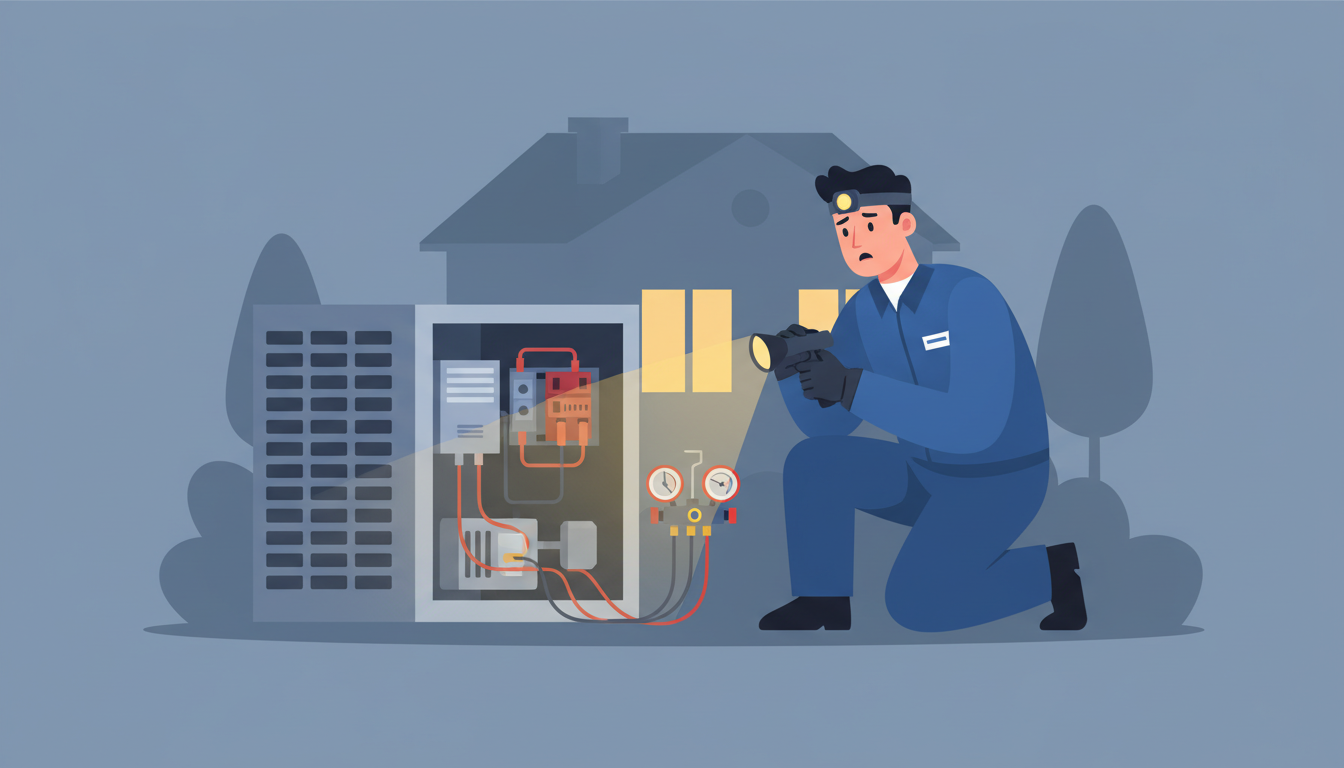
Why Does My AC Stop Cooling at Night? 7 Common Causes and Solutions
Nothing is more frustrating than waking up in the middle of the night drenched in sweat because your air conditioner suddenly stopped working. If your AC works perfectly during the day but mysteriously stops cooling at night, you're not alone. This common problem affects thousands of homeowners, and the good news is that many nighttime AC failures have simple explanations and solutions.
In this guide, we'll walk you through the seven most common reasons why your AC stops cooling at night, how to troubleshoot the problem yourself, and when it's time to call a professional HVAC technician.
Understanding Why Nighttime AC Failures Are Different
Before diving into specific causes, it's important to understand that nighttime creates unique conditions that can trigger AC problems. As outdoor temperatures drop after sunset, your air conditioning system faces different demands than during peak daytime heat. Lower ambient temperatures, increased humidity, and systems that have been running continuously all day can all contribute to nighttime cooling failures.
1. Low Outdoor Temperature Causing System Shutdown
One of the most common but least understood reasons your AC stops cooling at night is actually related to outdoor temperature being too low.
Why This Happens
Most residential air conditioning systems are designed to operate when outdoor temperatures are above 60-65°F. When nighttime temperatures drop below this threshold, your AC's refrigerant pressure can fall too low for the system to function properly. The low-pressure switch may trigger, shutting down your compressor to prevent damage.
This is especially common during spring and fall when days are warm enough to require cooling, but nights cool down significantly. Your system might work flawlessly at 3 PM when it's 85°F outside, but fail completely at 2 AM when temperatures drop to 58°F.
The Solution
If low outdoor temperature is your problem, you have a few options:
- Open your windows at night instead of running the AC when it's cool outside
- Install a low ambient control kit that allows your AC to operate at lower outdoor temperatures
- Use a programmable thermostat to turn off cooling when outdoor temps drop below 65°F
- Consider switching to a heat pump system, which handles temperature fluctuations better
If you frequently need cooling when outdoor temperatures are below 60°F, talk to an HVAC professional about installing low ambient controls.
2. Frozen Evaporator Coils Blocking Airflow
Frozen evaporator coils are one of the leading causes of AC failure at night. Ice buildup prevents your system from absorbing heat from your home's air, leaving you with an AC that runs but doesn't cool.
Why Coils Freeze at Night
Several factors make coil freezing more likely during nighttime operation:
- Reduced heat load: As outdoor temperatures drop and your home naturally cools, there's less heat for the evaporator coils to absorb. Without sufficient heat, moisture on the coils can freeze.
- Restricted airflow: A dirty air filter that's been accumulating dust all day reaches critical restriction levels by nighttime.
- Low refrigerant levels: If your system is low on refrigerant, the pressure drop becomes more pronounced during extended runtime.
- Increased humidity: Nighttime often brings higher humidity levels, providing more moisture that can freeze on cold coils.
Signs Your Coils Are Frozen
- Ice visible on the refrigerant lines outside
- Little to no airflow from vents
- Water pooling around your indoor unit
- Hissing or bubbling sounds from the unit
The Solution
If you discover frozen coils:
- Turn off your AC immediately to prevent compressor damage
- Switch your thermostat to "fan only" to help melt the ice
- Check and replace your air filter if it's dirty
- Let the system thaw completely (2-4 hours) before restarting
- Call a technician if the problem persists, as you may have a refrigerant leak
For comprehensive guidance on central AC issues, including frozen coils, check out our detailed repair guide.
3. Thermostat Malfunction or Incorrect Settings
Your thermostat is the brain of your cooling system, and problems with this component are surprisingly common at night.
Common Thermostat Issues
Dead or Dying Batteries: If your thermostat uses batteries, they may fail during continuous operation. By nighttime, weak batteries can cause erratic behavior or complete shutdown.
Poor Placement: A thermostat located near a lamp, TV, or window may read artificially high temperatures during the day (causing the AC to run), but accurate cooler temperatures at night (causing premature shutdown).
Faulty Temperature Sensor: An aging thermostat may have a sensor that drifts out of calibration, especially after hours of continuous operation.
Wrong Mode Settings: Simple mistakes like leaving the thermostat in "Fan Only" mode instead of "Cool" or "Auto" are more common than you'd think.
The Solution
Try these troubleshooting steps:
- Replace thermostat batteries if applicable
- Verify the thermostat is set to "Cool" mode and the temperature is set at least 3-5°F below room temperature
- Switch from "On" to "Auto" fan setting (On mode runs the fan constantly even when not cooling)
- Clean the thermostat by removing the cover and gently blowing out any dust
- Recalibrate or replace if your thermostat is more than 10 years old
If your thermostat seems to be working but your AC still won't cool, you might be dealing with a different issue covered in our guide on AC that stops cooling suddenly.
4. Electrical Issues and Circuit Breaker Problems
Electrical problems often manifest at night after your AC system has been running for hours during peak heat.
Why Electrical Failures Happen at Night
Thermal Overload: Electrical components like circuit breakers heat up during continuous use. After 8-10 hours of daytime operation, they may trip more easily.
Capacitor Failure: Start and run capacitors can fail after extended use. Your compressor may work fine during the day but fail to start when cycling on at night.
Loose Connections: Vibration from continuous operation can loosen electrical connections, causing intermittent failures that often occur during nighttime startup cycles.
Power Grid Issues: In some areas, voltage drops during peak evening usage (when everyone comes home and turns on appliances) can affect AC performance.
The Solution
- Check your circuit breaker panel for tripped breakers. If the AC breaker is off, reset it once. If it trips again, call a professional.
- Listen for clicking sounds when the AC tries to start. Repeated clicking without the compressor starting often indicates a failed capacitor.
- Never repeatedly reset a tripping breaker, as this indicates a serious electrical problem that could cause a fire.
- Have a professional inspect the electrical system if you notice dimming lights when the AC starts or burning smells near the outdoor unit.
Capacitor replacement is a common repair that typically costs $150-$400 and can be completed in under an hour by a qualified technician.
5. Low Refrigerant Levels and Leaks
Refrigerant is the lifeblood of your air conditioning system. When levels drop too low, your AC cannot effectively transfer heat, especially during extended operation.
Why Low Refrigerant Affects Nighttime Cooling
Refrigerant leaks don't always cause immediate failure. During the day, your system might barely maintain cooling despite low refrigerant. By nighttime, after hours of operation, the refrigerant pressure drops to a point where the system can no longer function, triggering low-pressure shutdown.
Signs of Low Refrigerant
- Ice forming on refrigerant lines or outdoor unit
- AC runs constantly but doesn't reach set temperature
- Hissing or bubbling sounds near refrigerant lines
- Higher than normal electricity bills
- System works better in cooler weather but struggles in extreme heat
The Solution
Refrigerant leaks require professional repair. An HVAC technician will:
- Locate and repair the leak
- Evacuate the old refrigerant
- Pressure test the system
- Recharge with the correct amount of refrigerant
Important: Simply "topping off" refrigerant without fixing the leak is a temporary fix that will fail again. Always have leaks properly repaired.
Refrigerant leak repair typically costs $200-$1,500 depending on leak location and the amount of refrigerant needed.
6. Dirty or Clogged Air Filter Restricting Airflow
This is the simplest problem to fix but one of the most common causes of nighttime AC failure.
How a Dirty Filter Causes Nighttime Problems
During daytime operation, your air filter accumulates dust, pet dander, and debris. By evening, restriction reaches a critical point where airflow is severely limited. This causes:
- The evaporator coils to freeze (due to insufficient warm air passing over them)
- The system to overheat and shut down
- Reduced cooling capacity just when you need it most
The Solution
- Check your air filter monthly and replace when it looks dirty
- Replace standard filters every 30-90 days depending on usage
- Use high-quality pleated filters for better filtration and longer life
- Upgrade to a thicker filter (4-5 inch) if your system allows, which can last 6-12 months
- Set calendar reminders to check your filter regularly
A simple filter change costs $10-30 if you do it yourself, or $80-150 if included in a professional service call.
Pro Tip: Keep spare filters on hand so you're never caught without a replacement when you need one.
7. Aging Compressor or Fan Motor Thermal Shutdown
As HVAC components age, they become more susceptible to heat-related failure, especially after extended daytime operation.
Understanding Thermal Shutdown
Most AC compressors and fan motors have built-in thermal protection that shuts them down if they overheat. After running all day in hot weather, aging components may reach their thermal limit by nighttime and automatically shut off to prevent damage.
Signs of Component Thermal Failure
- System runs fine for several hours then stops
- AC works better in the morning after cooling off overnight
- Outdoor fan stops running but compressor continues (or vice versa)
- Burning smell from outdoor unit
- Unit is more than 10-15 years old
The Solution
If thermal shutdown is occurring:
- Give the system rest periods by raising the thermostat a few degrees
- Ensure adequate clearance around the outdoor unit (at least 2 feet on all sides)
- Clean debris from around the condenser unit
- Have a professional inspect the compressor and fan motors
- Consider system replacement if components are failing due to age
Compressor replacement costs $1,500-$2,500, which is often 50-75% of a full system replacement. If your AC is over 12 years old, replacement may be more economical than major repairs.
Quick Troubleshooting Checklist for Nighttime AC Failures
Before calling a professional, work through this step-by-step troubleshooting checklist:
-
Check the thermostat
- Verify it's set to "Cool" mode
- Ensure temperature is set 3-5°F below room temperature
- Replace batteries if applicable
- Switch fan setting from "On" to "Auto"
-
Check power supply
- Confirm circuit breaker hasn't tripped
- Verify outdoor disconnect switch is on
- Look for blown fuses in the disconnect box
-
Inspect air filter
- Remove and check filter
- Replace if dirty or clogged
- Never run AC without a filter
-
Check for ice
- Look at outdoor refrigerant lines for ice buildup
- Check for ice on indoor evaporator coils (visible through access panel)
- If frozen, turn off AC and let thaw completely
-
Note outdoor temperature
- If below 60°F outside, your AC may not be designed to operate
- Consider opening windows instead
-
Listen and observe
- Does the outdoor unit try to start but fail?
- Do you hear clicking, humming, or grinding sounds?
- Is the outdoor fan running but compressor silent?
If you've worked through this checklist and your AC still isn't cooling, it's time to call a professional technician.
Preventing Nighttime AC Failures: Maintenance Tips
The best way to avoid nighttime cooling problems is regular preventive maintenance. Follow this schedule:
Monthly Tasks
- Check and replace air filter if needed
- Inspect outdoor unit for debris accumulation
- Verify thermostat is functioning properly
Seasonal Tasks (Spring/Fall)
- Schedule professional HVAC tune-up
- Clean outdoor condenser coils
- Check refrigerant levels
- Test capacitors and electrical connections
- Lubricate motor bearings if needed
Annual Tasks
- Deep clean ductwork if needed
- Replace thermostat batteries
- Inspect and seal duct leaks
- Verify proper refrigerant charge
Professional maintenance typically costs $80-150 annually and can prevent 90% of common AC failures, saving you money on emergency repairs and extending your system's lifespan by 5-10 years.
When to Call a Professional HVAC Technician
While some nighttime AC problems can be solved with DIY troubleshooting, others require professional expertise. Call a licensed HVAC technician if:
- Your circuit breaker trips repeatedly
- You see or smell smoke coming from the unit
- Ice keeps forming even after replacing the filter
- You hear loud grinding, screeching, or banging noises
- The compressor won't start or cycles on and off rapidly
- Refrigerant lines show signs of leaking (oil residue)
- Your system is more than 15 years old and failing frequently
Emergency AC service during nighttime typically costs $150-300 more than regular service calls, so consider whether the problem can wait until morning unless you're experiencing extreme temperatures.
FAQ: Common Questions About AC Not Cooling at Night
Is it normal for my AC to stop working when it's cool outside?
Yes, it's completely normal. Most residential AC systems aren't designed to operate efficiently when outdoor temperatures drop below 60-65°F. The low ambient temperature causes refrigerant pressure to drop too low for proper operation. If you need cooling when it's cool outside, open windows instead or talk to an HVAC professional about installing low ambient controls.
Why does my AC freeze up only at night and not during the day?
Nighttime freezing typically occurs because outdoor temperatures drop, humidity increases, and your system has been running for hours. The combination of lower heat load, restricted airflow from a day's worth of dust accumulation, and potential refrigerant issues creates perfect conditions for coil freezing. Check your air filter first, as this is the most common cause.
Should I turn off my AC when outdoor temperatures are cool at night?
Yes. If outdoor temperatures are within 10°F of your desired indoor temperature, you'll save energy and prevent system stress by turning off your AC and opening windows. Most systems shouldn't run when outdoor temps drop below 60°F. Using a programmable thermostat can automate this process.
Can running my AC all day cause it to fail at night?
Extended operation during hot days can stress aging components, particularly capacitors, fan motors, and compressors. These components heat up during continuous use and may trigger thermal shutdown protection by evening. If this happens regularly, have a professional inspect your system for failing components and ensure proper airflow around the outdoor unit.
How much does it cost to fix an AC that won't cool at night?
Costs vary widely depending on the problem:
- Air filter replacement: $10-30 (DIY) or $80-150 (professional)
- Thermostat replacement: $100-300
- Capacitor replacement: $150-400
- Refrigerant recharge with leak repair: $200-$1,500
- Compressor replacement: $1,500-$2,500
- Full system replacement: $3,500-$7,500
Simple issues like dirty filters or thermostat problems can often be fixed for under $200, while major component failures may cost thousands.
Conclusion: Stay Cool All Night Long
A malfunctioning air conditioner at night doesn't just mean discomfort—it can affect your sleep quality, health, and productivity the next day. Most nighttime AC cooling failures stem from low outdoor temperatures, frozen coils, thermostat issues, electrical problems, low refrigerant, dirty filters, or aging components experiencing thermal shutdown.
Start with the simple fixes: check your thermostat settings, replace your air filter, and verify your circuit breaker hasn't tripped. If basic troubleshooting doesn't solve the problem, don't hesitate to call a qualified HVAC professional. Regular maintenance is your best defense against nighttime cooling failures and can extend your system's life while reducing energy costs.
Remember, addressing AC problems early prevents small issues from becoming expensive emergencies. If your system is struggling to keep up or you're experiencing repeated failures, it may be time for a professional inspection or system upgrade.
Need help with your nighttime AC problems? Our comprehensive HVAC repair guides can walk you through more troubleshooting steps, or contact a local HVAC professional for emergency service and expert diagnosis.