What to Do When Your AC Stops Cooling Suddenly
What to Do When Your AC Stops Cooling Suddenly
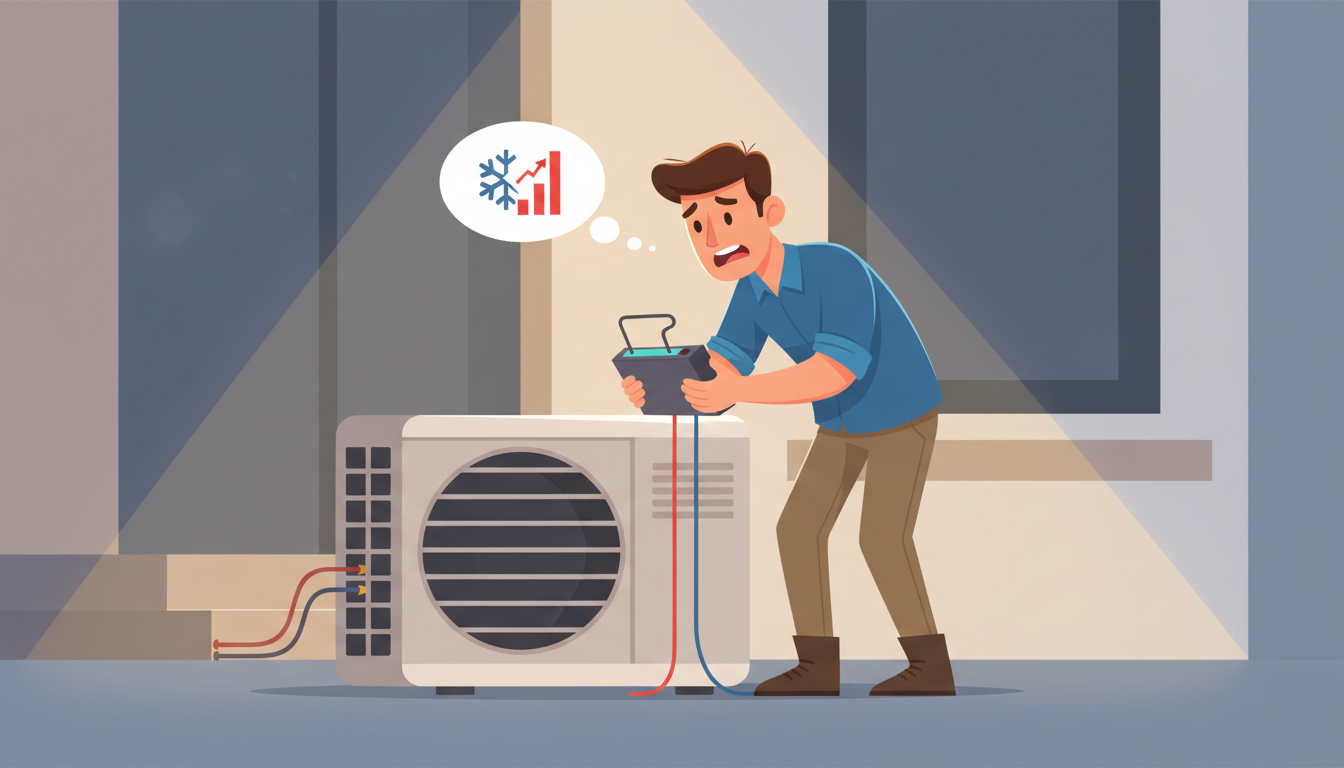
Is your air conditioner running but barely cooling your home? Few things are more frustrating than an AC that stops cooling suddenly, especially during the peak of summer. When your AC stops cooling suddenly, you need immediate answers — not a lecture on HVAC theory. This guide walks you through exactly what to do in the first minutes, hours, and days after your cooling system fails.
Immediate Steps to Take (First 5 Minutes)
When your AC stops cooling suddenly, don't panic. Follow these quick checks before calling for emergency service:
Check Your Thermostat Settings
Your first stop should be the thermostat. Make sure it's set to "Cool" mode and the temperature is at least 5 degrees lower than your current room temperature. This might seem obvious, but thermostat issues cause up to 30% of AC service calls.
Check these specific settings:
- Mode is set to "Cool" (not "Heat" or "Off")
- Fan setting is on "Auto" (not just "On")
- Temperature setting is below current room temp
- Batteries aren't dead (for battery-powered thermostats)
If you have a smart thermostat, verify it's connected to Wi-Fi and hasn't lost its programming due to a software glitch.
Verify Your Circuit Breaker
A tripped circuit breaker is one of the most common reasons an AC stops cooling suddenly. Head to your electrical panel and check if the breaker labeled for your AC unit has tripped to the "off" position.
If the breaker has tripped:
- Turn it completely off, then back to the "on" position
- Wait 5 minutes before testing your AC
- If it trips again immediately, stop — this indicates an electrical problem that requires professional repair
Never repeatedly reset a tripping breaker. This can lead to electrical fires or permanent damage to your HVAC system.
Check the Outside Disconnect Switch
Many homeowners don't realize their outdoor AC unit has its own disconnect switch, typically mounted on the exterior wall near the condenser. Make sure this switch is in the "on" position. Children playing outside or lawn maintenance crews sometimes accidentally flip this switch.
Common Causes of Sudden Cooling Loss
Understanding why your AC stops cooling suddenly helps you determine whether it's a DIY fix or requires professional help.
Dirty or Clogged Air Filter
A dirty air filter is the #1 cause of air conditioner not cooling properly. When your filter becomes clogged with dust, pet hair, and debris, it restricts airflow to your system. This forces your AC to work harder while producing less cooling.
How to check: Remove your air filter (usually located near the return air vent or in the air handler). Hold it up to a light source. If you can't see light passing through, it's time for a replacement.
The fix: Replace disposable filters or clean reusable ones every 30-90 days. If you have pets or live in a dusty area, check monthly. A new filter costs $5-$25 and takes 2 minutes to replace — it's the easiest fix for an AC running but not cooling.
For detailed guidance on maintaining your system, check out our comprehensive HVAC repair guide.
Frozen Evaporator Coils
When your AC stops cooling after running for several hours, frozen evaporator coils are often the culprit. Ice buildup on the indoor coil prevents heat absorption, killing your cooling capacity.
Signs of frozen coils:
- Ice visible on refrigerant lines or indoor unit
- Water dripping from indoor unit
- Hissing sounds from the AC
- AC runs constantly but produces warm air
Immediate action:
- Turn off your AC immediately
- Switch the fan to "On" (not "Auto") to help melt ice
- Let the system thaw for 4-8 hours
- Check and replace your air filter
- Ensure all supply vents are open
If coils refreeze after thawing, you likely have a refrigerant leak or airflow problem requiring professional repair.
Refrigerant Leak
Refrigerant is the lifeblood of your cooling system. When refrigerant levels drop due to a leak, your AC can't transfer heat effectively. This causes your central AC not cooling even though it runs continuously.
Warning signs of low refrigerant:
- AC runs constantly but doesn't cool
- Ice forming on refrigerant lines
- Hissing or bubbling sounds near the outdoor unit
- Significantly higher electric bills
- Warm air from vents
Important: Refrigerant handling requires EPA certification. Never attempt to "recharge" your AC yourself. A licensed HVAC technician must locate the leak, repair it, and properly recharge the system. Simply adding refrigerant without fixing the leak wastes money and harms the environment.
Learn more about central AC issues in our central AC repair guide.
Dirty Condenser Coils
Your outdoor condenser unit releases heat from your home into the outside air. When condenser coils become coated with dirt, grass clippings, cottonwood seeds, or other debris, heat transfer efficiency plummets.
How to inspect:
- Turn off power to the outdoor unit
- Remove the top grill or fan guard
- Look for dirt buildup on the coil fins
- Check for bent fins that restrict airflow
Safe DIY cleaning:
- Gently spray coils with a garden hose from the inside out
- Use a soft brush to remove stubborn debris
- Straighten bent fins with a fin comb (available at hardware stores)
- Clear vegetation within 2 feet of the unit
Schedule professional coil cleaning annually for best performance. This is especially important if you notice your AC stops cooling suddenly at night when outdoor temperatures are highest.
Blocked or Restricted Airflow
Your HVAC system depends on consistent airflow to function properly. When airflow becomes restricted, your AC running but not cooling is the inevitable result.
Common airflow blockers:
- Closed or blocked supply vents
- Furniture placed over floor vents
- Dirty return air grilles
- Collapsed or disconnected ductwork
- Blocked outdoor condenser unit
Walk through your home and ensure all vents are open and unobstructed. Check that your outdoor unit has at least 2 feet of clearance on all sides. Remove any leaves, grass clippings, or debris that have accumulated around the condenser.
Compressor Failure
The compressor is your AC's heart — it pumps refrigerant through the system. When the compressor fails, your AC stops cooling suddenly and completely.
Signs of compressor problems:
- Outdoor unit fan runs but compressor doesn't
- Loud grinding, screeching, or rattling from outdoor unit
- Circuit breaker trips repeatedly
- AC blows warm air constantly
Compressor replacement costs $1,500-$2,500 and may not be worth it for older systems. If your AC is over 12 years old, replacement is often more cost-effective than compressor repair.
Faulty Capacitor
The capacitor provides the electrical jolt needed to start your compressor and fan motors. When a capacitor fails, your outdoor unit may hum but not start, or it may not turn on at all.
Capacitor failure is extremely common in hot climates where AC units cycle frequently. Replacement costs $150-$400 and typically takes less than an hour.
Never attempt to replace a capacitor yourself — they store dangerous electrical charges even when the power is off.
Troubleshooting Based on Symptoms
Different symptoms point to different problems. Use this quick-reference guide:
AC Stops Cooling at Night
If your AC stops cooling suddenly at night but works during the day, you're likely experiencing:
- Undersized AC unit struggling during peak heat hours
- Poor insulation allowing daytime heat to overwhelm the system by evening
- Compressor overheating due to extended run times
This is a common pattern that requires professional assessment of your cooling load and system capacity. Our article on AC stops cooling at night provides detailed solutions for this specific issue.
AC Stops Cooling After 30 Minutes
Short-cycling (running for brief periods then shutting off) indicates:
- Oversized AC unit cooling too quickly and shutting down
- Dirty evaporator coils causing the system to freeze
- Thermostat location issues (placed near heat sources)
- Low refrigerant triggering safety shutoffs
AC Runs Constantly But Doesn't Cool
If your air conditioner not cooling despite running non-stop, the problem is likely:
- Refrigerant leak reducing cooling capacity
- Failed compressor circulating refrigerant without compression
- Extremely dirty coils (indoor or outdoor) preventing heat transfer
- Undersized system unable to meet cooling demands
One Room Not Cooling
When central AC not cooling one room but others stay comfortable:
- Closed damper in ductwork to that room
- Disconnected or leaking duct to that specific zone
- Insufficient return air in that room
- Extreme sun exposure overwhelming single-room capacity
When to Call a Professional HVAC Technician
Some AC problems require professional diagnosis and repair. Call for emergency AC repair if:
- Refrigerant leak suspected (ice, hissing sounds, warm air)
- Electrical issues (repeated breaker trips, burning smell)
- Compressor won't start or makes loud grinding noises
- Water leaking inside your home
- System is more than 15 years old and needs frequent repairs
For less urgent issues, schedule service if:
- AC stops cooling suddenly despite filter replacement and basic troubleshooting
- System short-cycles or runs constantly
- Energy bills have increased significantly without usage changes
- You haven't had professional maintenance in over a year
Repair vs. Replace: Making the Decision
Use the $5,000 rule: Multiply the repair cost by your system's age in years. If the result exceeds $5,000, replacement makes more financial sense than repair.
Example: A $600 repair on a 10-year-old system = $6,000. Replace it.
Modern AC units are 20-40% more efficient than models from 2010, meaning replacement often pays for itself through energy savings within 7-10 years.
Temporary Cooling Solutions While Waiting for Repair
If your AC stops cooling in summer and you're waiting for a technician, these strategies help:
Immediate relief:
- Close blinds and curtains on sun-facing windows
- Run ceiling fans counterclockwise to create downdraft
- Use portable fans to circulate air
- Stay in the lowest level of your home (heat rises)
Reduce heat load:
- Avoid using heat-generating appliances (oven, dryer, dishwasher)
- Grill outdoors instead of cooking inside
- Turn off unnecessary lights and electronics
- Take cool showers to lower body temperature
Consider alternatives:
- Portable AC units for critical rooms ($300-$700)
- Window AC units for bedrooms ($150-$400)
- Hotel stay for vulnerable family members (elderly, infants)
Preventative Maintenance to Avoid Future Failures
Most cases of AC stops cooling suddenly are preventable with regular maintenance:
Monthly tasks:
- Check and replace air filters
- Clear debris from outdoor unit
- Ensure all vents are open and unobstructed
Seasonal tasks (spring and fall):
- Professional HVAC tune-up ($80-$200)
- Clean condenser coils
- Check refrigerant levels
- Test capacitors and electrical connections
- Lubricate moving parts
- Verify thermostat calibration
Annual inspection checklist:
- Ductwork inspection for leaks
- Blower motor performance test
- Drain line cleaning
- Compressor amp draw test
- Temperature differential measurement
Professional maintenance costs $150-$300 annually but prevents 85% of AC failures and extends system life by 5-10 years.
How Much Does AC Repair Cost?
Understanding typical repair costs helps you budget and make informed decisions:
Common repairs:
- Capacitor replacement: $150-$400
- Contactor replacement: $150-$350
- Thermostat replacement: $120-$300
- Refrigerant recharge (with leak repair): $400-$1,500
- Evaporator coil replacement: $800-$2,500
- Condenser coil replacement: $900-$2,800
- Compressor replacement: $1,500-$2,500
- Full system replacement: $3,500-$7,500
Emergency service calls typically add $100-$300 to base repair costs, while weekend or holiday repairs may cost 50-100% more.
Frequently Asked Questions
How long should I wait before calling for AC repair?
If basic troubleshooting (checking thermostat, replacing filter, resetting breaker) doesn't restore cooling within 2-3 hours, call a professional. During heat waves, book service immediately — HVAC companies get backlogged quickly.
Can I run my AC if it's not cooling properly?
It depends. If your AC runs but produces weak cooling, you can continue operating it temporarily without damage. However, if you see ice formation, hear unusual noises, or smell burning odors, turn it off immediately and call for service. Running a malfunctioning AC can turn a $300 repair into a $2,000 replacement.
Why does my AC work fine in the morning but stop cooling by afternoon?
This pattern indicates your system is undersized for your cooling load or has insufficient refrigerant. As outdoor temperatures peak, the system can't keep up. You may also have poor insulation allowing heat buildup throughout the day that overwhelms your AC by evening.
How do I know if my AC needs refrigerant or has another problem?
Ice formation on refrigerant lines or the indoor unit strongly suggests low refrigerant. However, a severely dirty air filter can also cause ice formation. Replace your filter first. If ice returns after the system thaws completely (6-8 hours), you likely have a refrigerant leak requiring professional service.
Is it safe to sleep without AC when it stops working?
For most healthy adults, yes — use fans and stay hydrated. However, extreme heat poses serious health risks for infants, elderly individuals, pregnant women, and those with heart or respiratory conditions. Consider alternative cooling or temporary relocation if indoor temperatures exceed 85°F overnight.
Take Action Before the Heat Becomes Unbearable
When your AC stops cooling suddenly, every hour counts. Start with the quick checks: thermostat settings, air filter, and circuit breaker. These fix 40% of cooling failures in under 10 minutes.
For problems beyond basic troubleshooting, contact a licensed HVAC professional immediately. During summer, same-day service availability disappears quickly. Don't wait until you're desperate — schedule service as soon as you notice reduced cooling performance.
Regular maintenance remains your best defense against sudden cooling failures. A $200 annual tune-up prevents thousands in emergency repairs and keeps your home comfortable all summer long.
Need professional help? Contact a licensed HVAC technician in your area for fast, reliable AC repair service. Your comfort and safety are too important to leave to chance.