Why Is My AC Taking So Long to Cool the House?
Why Is My AC Taking So Long to Cool the House?
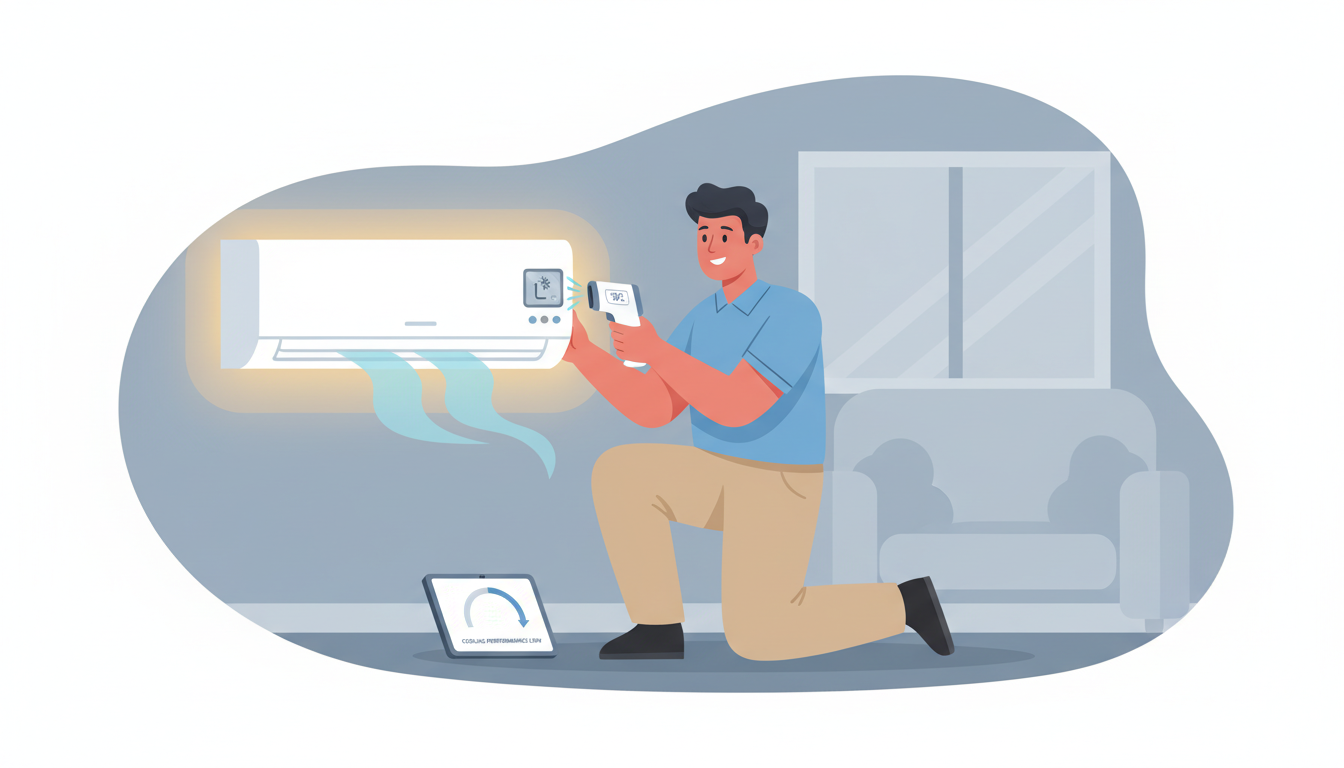
Nothing is more frustrating than cranking up your air conditioner on a hot day, only to find your house still feels warm hours later. If your AC is taking forever to cool your home, you're not alone—and you're likely dealing with one of several common issues that affect cooling efficiency.
Understanding why your air conditioner cooling slowly can help you identify the problem and get your home comfortable again. In this guide, we'll explore the most common reasons your AC takes so long to cool, what you can do about it, and when to call in a professional HVAC technician.
How Long Should It Take for Your AC to Cool Your House?
Before we dive into problems, let's establish what's normal. A properly functioning air conditioner should cool your home by about 1 degree every 15-20 minutes. This means if you set your thermostat 5 degrees lower than the current temperature, it should take roughly 1 to 1.5 hours to reach your target temperature.
If your AC is taking 3+ hours to cool your house by just a few degrees, or if it's running constantly without reaching your desired temperature, something is definitely wrong. The good news is that most cooling issues have straightforward solutions.
1. Dirty Air Filters Are Restricting Airflow
The most common culprit behind an AC not cooling fast enough is a clogged air filter. Your air filter's job is to trap dust, pollen, and debris before they enter your HVAC system. But when filters become too dirty, they restrict airflow, forcing your system to work much harder to push cool air through your home.
Signs you have a dirty air filter:
- Reduced airflow from vents
- AC running constantly
- Higher energy bills
- Dust buildup around vents
- Musty odors when AC runs
The fix: Check your air filter monthly and replace it every 1-3 months depending on usage, pets, and allergies. This is the easiest DIY maintenance task that can dramatically improve your cooling efficiency. If you're not sure how to check your filter, our HVAC repair guide walks you through basic maintenance steps.
2. Low Refrigerant Levels Are Reducing Cooling Power
Refrigerant is the lifeblood of your air conditioning system—it's what actually absorbs heat from your indoor air and releases it outside. When refrigerant levels drop due to leaks, your AC can't transfer heat effectively, resulting in an air conditioner taking hours to cool house temperatures.
Warning signs of low refrigerant:
- AC blowing lukewarm air instead of cold
- Ice buildup on refrigerant lines or evaporator coil
- Hissing or bubbling sounds from AC unit
- Significantly longer cooling times
The fix: Refrigerant leaks require professional repair. An HVAC technician will locate the leak, repair it, and recharge your system with the correct amount of refrigerant. Never attempt to add refrigerant yourself—it requires specialized equipment and certification. Learn more about what to do when your AC is blowing warm air.
3. Dirty Coils Are Blocking Heat Transfer
Your AC has two sets of coils: the evaporator coil (inside) and the condenser coil (outside). The evaporator coil absorbs heat from your home's air, while the condenser coil releases that heat outdoors. When either coil gets covered in dirt, dust, or debris, it can't transfer heat efficiently.
Evaporator coil problems:
- Located in your indoor unit
- Gets dirty from dust and debris that passes through filters
- Causes reduced cooling and potential freezing
Condenser coil problems:
- Located in your outdoor unit
- Gets clogged with leaves, dirt, grass clippings, and cottonwood seeds
- Causes overheating and reduced efficiency
The fix: Your outdoor condenser coil can be gently cleaned with a garden hose (spray from inside out, not outside in). However, evaporator coil cleaning requires professional service since it involves accessing sealed components. Annual professional maintenance should include coil cleaning for both units.
4. Your AC System Is the Wrong Size for Your Home
An improperly sized air conditioner—whether too small or too large—will struggle to cool your home efficiently.
Undersized AC Unit
If your AC is too small for your home's square footage, it simply doesn't have the BTU capacity to remove enough heat. This is especially noticeable during peak summer temperatures when your system runs constantly but never quite reaches your target temperature.
Signs your AC is undersized:
- Runs 24/7 during hot weather
- Never reaches thermostat setting
- Unusually high energy bills
- Some rooms never get comfortable
Oversized AC Unit
Surprisingly, an oversized AC can also cause problems. It cools the air so quickly that it shuts off before running long enough to remove humidity, leaving your home feeling clammy and uncomfortable. The frequent on-off cycling also wears out components faster.
The fix: An HVAC professional can perform a Manual J load calculation to determine the correct size AC for your home based on square footage, insulation, windows, and climate. If your unit is significantly mismatched, replacement may be your best long-term solution.
5. Leaky Ductwork Is Wasting Cooled Air
Studies show that the average home loses 20-30% of conditioned air through ductwork leaks. That means nearly a third of the cool air your AC produces never reaches your living spaces—it's escaping into your attic, crawlspace, or walls instead.
Common ductwork problems:
- Disconnected or poorly sealed joints
- Holes or tears in flexible ductwork
- Crushed or kinked ducts in tight spaces
- Uninsulated ducts in hot attics
Signs of leaky ducts:
- Some rooms are much warmer than others
- Dusty home despite regular cleaning
- Unusually high cooling costs
- Whistling sounds from ductwork
The fix: Professional duct sealing and insulation can dramatically improve cooling efficiency. An HVAC technician can perform a duct leakage test and seal problem areas with mastic or metal tape (never regular duct tape, which degrades quickly). For comprehensive guidance on duct issues, check our central AC repair guide.
6. Thermostat Issues Are Causing False Readings
Your thermostat is the brain of your HVAC system. If it's malfunctioning, incorrectly placed, or poorly calibrated, it can't accurately control your AC's cooling cycles.
Common thermostat problems:
- Placed in direct sunlight or near heat sources
- Old mercury thermostats losing calibration
- Faulty temperature sensors
- Incorrect settings (set to "ON" instead of "AUTO")
- Dead batteries
The fix: First, ensure your thermostat is set to "COOL" mode and "AUTO" fan setting (not "ON," which runs the fan continuously even when not cooling). Replace batteries if needed. If problems persist, upgrading to a modern programmable or smart thermostat can improve accuracy and energy efficiency. Make sure thermostats are installed on interior walls away from windows, doors, and heat sources.
7. Poor Insulation and Air Leaks Let Cool Air Escape
Even the most powerful AC can't keep up if your home's insulation is inadequate or if you have air leaks around windows, doors, and other openings. Cool air escapes while hot outdoor air infiltrates your home, creating an endless battle for your air conditioner.
Common insulation problems:
- Insufficient attic insulation (should be R-30 to R-60 in most climates)
- Missing wall insulation in older homes
- Gaps around windows and doors
- Uninsulated or poorly insulated ductwork
- Air leaks around electrical outlets and fixtures
The fix: Start with the easy wins—apply weatherstripping around doors and windows, caulk visible gaps, and add door sweeps. Check your attic insulation level; if you can see the tops of your floor joists, you need more insulation. For comprehensive insulation upgrades, consult an energy auditor or insulation professional who can identify problem areas with thermal imaging.
8. Blocked or Closed Vents Restrict Airflow
Your AC relies on consistent airflow throughout your home. When supply vents are blocked by furniture, curtains, or rugs—or when return vents are covered—your system can't distribute cooled air efficiently.
Airflow problems to check:
- Furniture pushed against vents
- Curtains or drapes covering wall vents
- Closed vents in unused rooms (counterintuitively reduces efficiency)
- Dirty return vents
- Too few return vents for your home size
The fix: Walk through your home and ensure all supply and return vents are unobstructed. Keep furniture at least 6 inches away from vents. Contrary to popular belief, closing vents in unused rooms doesn't save energy—it increases pressure in your ductwork and reduces overall efficiency. Keep all vents open for optimal performance.
9. Your AC System Is Old and Losing Efficiency
Even with perfect maintenance, air conditioners gradually lose efficiency as they age. Most AC units last 10-15 years before they start struggling to keep up with cooling demands.
Signs your AC is aging out:
- System is 12+ years old
- Frequent repairs needed
- Rising energy bills despite no usage changes
- R-22 refrigerant (no longer manufactured)
- SEER rating below 14 (modern units are 16-25 SEER)
The fix: If your AC is over 10 years old and requiring frequent repairs, it's usually more cost-effective to replace it with a modern, energy-efficient model. Today's AC units use up to 50% less energy than models from 15 years ago, meaning your investment pays for itself through lower utility bills. A professional can help you calculate the break-even point for repair versus replacement.
10. Extreme Outdoor Temperatures Exceed Design Limits
Every AC system has a design temperature—the maximum outdoor temperature at which it can maintain your desired indoor temperature. When outdoor temps exceed this limit (typically 95-100°F), even a perfectly functioning AC may struggle.
Heat-related factors:
- Extreme temperature differentials (trying to maintain 68°F when it's 105°F outside)
- Direct sunlight exposure on your home
- Poor landscape shading
- Dark roof colors that absorb heat
The fix: During extreme heat waves, adjust expectations and set your thermostat to 75-78°F instead of 68°F. The smaller temperature differential reduces strain on your system. Improve your home's heat resistance by:
- Installing reflective window film or cellular shades
- Planting shade trees (especially on west and south sides)
- Ensuring adequate attic ventilation
- Using fans to improve air circulation
- Scheduling heavy appliance use for cooler evening hours
When to Call a Professional HVAC Technician
While some issues like dirty filters and blocked vents are easy DIY fixes, many AC problems require professional expertise:
Call a professional for:
- Refrigerant leaks or recharging
- Electrical issues or blown fuses
- Compressor problems
- Coil replacements
- Ductwork sealing and repair
- System sizing and replacement
- Unusual noises (grinding, squealing, banging)
- Complete system failures
A qualified HVAC technician has the tools, training, and experience to diagnose complex problems quickly and safely. Many issues that seem expensive to fix (like refrigerant leaks) can be repaired affordably if caught early, but they cause expensive damage if ignored.
Preventative Maintenance: Keep Your AC Running Efficiently
The best way to avoid slow cooling issues is through regular preventative maintenance. A well-maintained AC runs more efficiently, lasts longer, and breaks down less frequently.
DIY maintenance tasks (monthly/seasonal):
- Replace air filters every 1-3 months
- Keep outdoor unit clear of debris, leaves, and vegetation
- Ensure all vents are open and unobstructed
- Check thermostat batteries and settings
- Listen for unusual noises
Professional maintenance (annually):
- Complete system inspection
- Refrigerant level check and adjustment
- Coil cleaning (both evaporator and condenser)
- Electrical connection tightening
- Condensate drain clearing
- Blower motor and belt inspection
- Thermostat calibration
Most HVAC companies offer annual maintenance plans that include priority service and discounts on repairs—an investment that typically pays for itself by preventing major breakdowns during peak cooling season.
How to Maximize Your AC's Cooling Efficiency
Beyond fixing problems, you can help your AC cool your house faster with these efficiency-boosting strategies:
- Use ceiling fans - They don't lower temperature, but they make you feel 4-5 degrees cooler through wind chill effect
- Close blinds during peak sun - Blocks radiant heat from entering through windows
- Run AC on "AUTO" mode - More efficient than "ON" which runs the fan constantly
- Set programmable schedules - Raise temperature when away, lower it before arriving home
- Seal windows and doors - Prevents cool air loss and hot air infiltration
- Maintain consistent temperature - Constant adjustments make your AC work harder
- Change filters regularly - Single most impactful DIY maintenance task
- Schedule annual tune-ups - Catches small problems before they become expensive
Frequently Asked Questions
How long should my AC run to cool my house?
A properly functioning AC should cycle on for 15-20 minutes at a time, cycling off briefly once the desired temperature is reached. During extreme heat, longer run times (30-45 minutes) are normal. If your AC runs continuously for hours without reaching temperature, you likely have an efficiency issue.
Is it normal for AC to take 2-3 hours to cool house?
No, this is not normal and indicates a problem. Most ACs should cool a home by 1 degree every 15-20 minutes. Taking 2-3 hours to achieve noticeable cooling suggests issues like dirty filters, low refrigerant, undersized equipment, or ductwork leaks.
Why does my AC blow cold air but takes forever to cool the house?
If your AC is producing cold air at the vents but your home isn't cooling, you likely have distribution problems rather than cooling capacity problems. Check for blocked vents, leaky ductwork, poor insulation, or significant air leaks that allow cooled air to escape.
Can a dirty filter really slow down my AC that much?
Absolutely. A severely clogged filter can reduce airflow by 50% or more, forcing your AC to run twice as long to achieve the same cooling. In extreme cases, restricted airflow can cause the evaporator coil to freeze, completely blocking cooling. Filter replacement is the single most impactful DIY maintenance task.
Should I close vents in rooms I don't use to cool my house faster?
No—this is a common misconception. Closing vents increases pressure in your ductwork, which can cause leaks, reduce efficiency, and strain your system. Modern AC systems are designed to cool your entire home with all vents open. Keep all vents open for optimal performance.
Get Your Home Comfortable Again
Living with an air conditioner that takes forever to cool your house is uncomfortable and expensive. Whether you're dealing with dirty filters, refrigerant leaks, or an aging system, most cooling problems have solutions that can restore your comfort quickly.
Start with the simple fixes—replace your air filter, clear debris from your outdoor unit, and ensure all vents are unobstructed. If these don't solve the problem, it's time to call a professional HVAC technician who can diagnose and repair more complex issues.
Regular maintenance is your best defense against slow cooling and unexpected breakdowns. An annual tune-up typically costs $75-150 but can prevent repairs costing hundreds or thousands of dollars.
Don't suffer through another sweltering day waiting for your home to cool down. Take action today to identify and fix the problem—your comfort and your wallet will thank you.