How to Avoid Common HVAC Repair Scams: Protect Your Home and Wallet
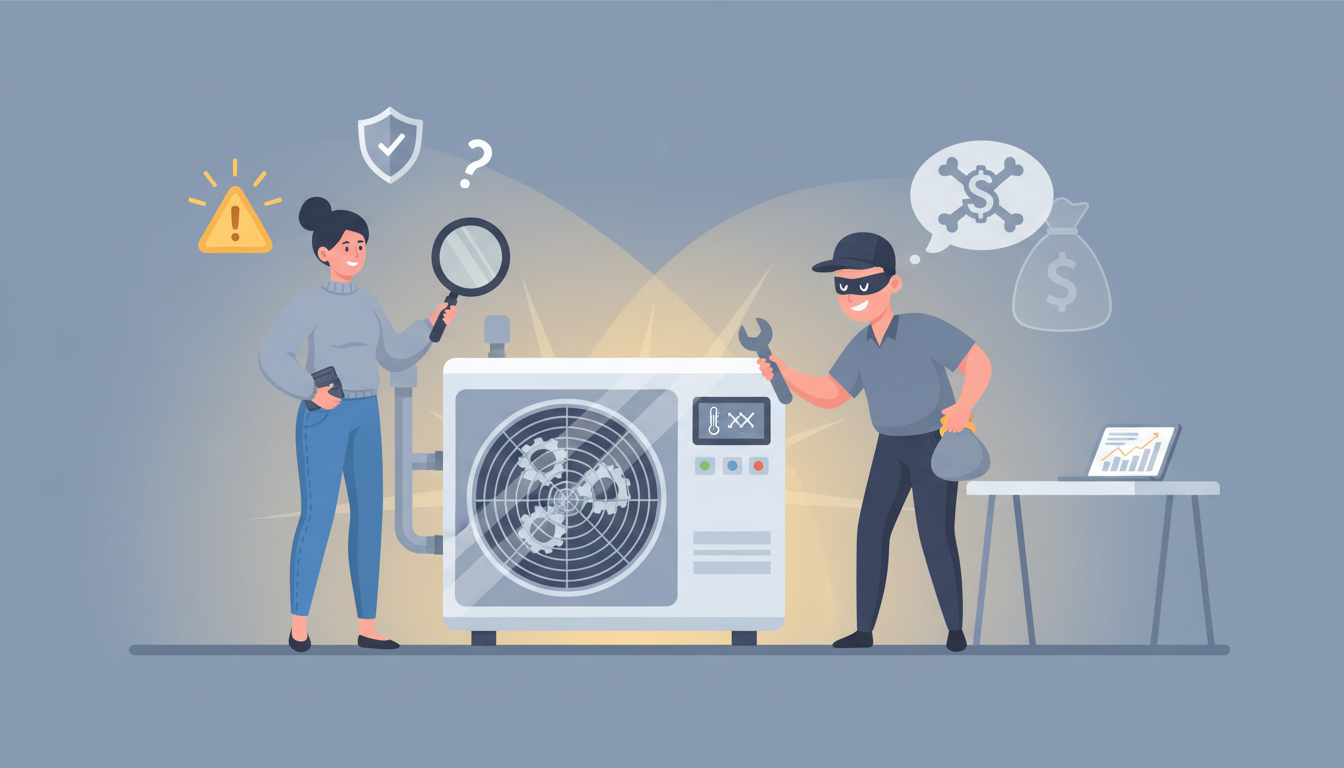
How to Avoid Common HVAC Repair Scams: Protect Your Home and Wallet
When your air conditioner breaks down on the hottest day of summer or your furnace fails during a cold snap, you're vulnerable. Dishonest HVAC contractors know this and use high-pressure tactics, scare strategies, and outright deception to overcharge homeowners. Understanding common HVAC repair scams can save you thousands of dollars and protect you from unnecessary repairs.
The 12 Most Common HVAC Repair Scams
1. The Bait and Switch Tactic
You see an ad promising "$49 AC tune-up" or "Free furnace inspection," but when the technician arrives, the deal suddenly disappears. Instead, they claim your system needs immediate, expensive repairs that weren't part of the original offer.
How to spot it: The advertised price only applies under impossible conditions, or the technician immediately pivots to selling you something completely different.
Protection strategy: Get the promotional terms in writing before scheduling. If the technician changes course, ask them to honor the original offer or leave.
2. Refrigerant Recharge Without Fixing the Leak
Here's a critical fact: refrigerant doesn't get "used up" like gas in your car. If your HVAC system is low on refrigerant, there's a leak somewhere. A dishonest technician will simply recharge your refrigerant without fixing the actual leak, knowing you'll need another recharge in a few months.
How to spot it: The technician adds refrigerant but doesn't mention finding or repairing a leak.
Protection strategy: Always ask, "Where is the leak, and how are you fixing it?" A legitimate HVAC technician will use leak detection equipment and repair the source before adding refrigerant.
3. The R-22 "Illegal Refrigerant" Scare
While R-22 refrigerant production stopped in 2020, using existing R-22 in your system is perfectly legal. Scammers use this confusion to pressure you into replacing your entire HVAC system immediately, claiming it's "illegal" to continue operating.
How to spot it: High-pressure language about "illegal refrigerant" or claims that you must replace your system immediately.
Protection strategy: Understand that while R-22 is more expensive now ($40-$175 per pound), using it remains legal. System replacement should be your choice based on cost-benefit analysis, not fear tactics.
4. The Cracked Heat Exchanger Scam
A cracked heat exchanger is serious—it can leak carbon monoxide into your home. However, this is also one of the most common HVAC contractor scams because most homeowners can't verify the claim themselves.
How to spot it: The technician claims your heat exchanger is cracked but can't or won't show you proof.
Protection strategy: Demand visual proof. Ask the technician to show you the crack with a camera or inspection scope. Better yet, get a second opinion from a trusted HVAC repair company before agreeing to a replacement that could cost $1,500 or more.
5. Unnecessary Parts Replacement
In most HVAC system failures, one faulty component causes the problem. When a technician claims you need multiple parts replaced simultaneously, that's a red flag for HVAC repair scams.
How to spot it: The technician rattles off a list of 4-5 failed parts without clear diagnostic evidence.
Protection strategy: Ask the technician to explain how they diagnosed each problem and why multiple parts would fail at once. Request they show you the defective parts after removal.
6. Pushing an Oversized HVAC Unit
Bigger isn't always better with HVAC systems. An oversized unit cycles on and off frequently, wasting energy and wearing out faster. Dishonest contractors push oversized systems because they're more expensive and generate higher commissions.
How to spot it: The contractor recommends a significantly larger system without performing a Manual J load calculation.
Protection strategy: Insist on a proper load calculation that considers your home's square footage, insulation, windows, and climate zone. This is the industry standard for sizing HVAC equipment correctly.
7. Upfront Cash Payment Demands
No reputable HVAC company demands full payment before starting work. This classic scam involves taking your money and either disappearing entirely or doing substandard work.
How to spot it: Requests for full payment upfront, pressure to pay in cash, or reluctance to provide payment terms.
Protection strategy: Never pay in full before work is completed. Standard payment terms are a deposit (if any) plus final payment upon satisfactory completion. Pay with credit card when possible for fraud protection.
8. No Price Breakdown or Written Estimate
When contractors refuse to provide detailed, written estimates, they're hiding something. Vague pricing allows them to inflate costs or add surprise charges later.
How to spot it: Verbal-only quotes, rough estimates, or invoices that just say "repairs" without itemization.
Protection strategy: Always demand a detailed written estimate that breaks down labor costs, parts costs, and any additional fees. Compare this with other estimates from qualified HVAC repair technicians.
9. Door-to-Door HVAC "Inspectors"
Scammers knock on doors claiming to be from your utility company, local government, or offering "free inspections for the neighborhood." Once inside, they find "problems" that require immediate, expensive repairs.
How to spot it: Unsolicited visits, claims of being from official organizations, or urgent inspection requirements.
Protection strategy: Never let door-to-door solicitors into your home for HVAC inspections. Contact your utility company directly if you have questions about legitimate programs.
10. Fake Emergency or After-Hours Price Gouging
Some contractors dramatically inflate prices for "emergency" or after-hours service calls, charging 3-4 times the normal rate for the same work.
How to spot it: Diagnostic fees over $150, service call charges over $200, or hourly rates that seem extreme.
Protection strategy: Ask about emergency service rates before agreeing to the visit. Unless your situation is truly dangerous (gas leak, carbon monoxide), consider waiting for normal business hours.
11. Warranty Voiding Threats
Dishonest contractors claim that using any other service provider will void your warranty, or that you must purchase their expensive maintenance plan to keep your warranty valid.
How to spot it: Statements like "your warranty requires our annual service" without documentation.
Protection strategy: Read your manufacturer's warranty yourself. Most only require that repairs be done by licensed professionals—not a specific company. Keep your own maintenance records.
12. High-Interest Financing Traps
Some HVAC companies partner with predatory lenders, offering "easy financing" with interest rates of 20-30% or more. They bury these terms in fine print and pressure you to sign quickly.
How to spot it: "Zero percent interest" offers that revert to extremely high rates, pressure to sign financing documents immediately, or reluctance to disclose the APR clearly.
Protection strategy: Never sign financing agreements under pressure. Take the paperwork home, read all terms, and compare with your bank or credit union's rates. For major HVAC repairs, your own financing is usually cheaper.
How to Protect Yourself From HVAC Scams
Verify Credentials Before Hiring
Not all HVAC contractors are created equal. Before allowing anyone to work on your system, verify they have:
- Valid contractor license (check with your state's licensing board)
- EPA certification for handling refrigerants (required by federal law)
- NATE certification (optional but indicates advanced training)
- Proper insurance and bonding (ask for proof of both)
- Better Business Bureau rating and complaint history
Your state's contractor licensing board maintains public records you can check online. This five-minute search can save you from unlicensed scammers.
Always Get Multiple Estimates
For any repair over $300 or system replacement, get at least three written estimates. This helps you:
- Identify outlier pricing (suspiciously high or low)
- Compare diagnostic findings (do they agree on the problem?)
- Leverage competitive pricing
- Spot inconsistent claims about what needs fixing
Remember, the cheapest estimate isn't always the best. Look for detailed explanations, professional presentation, and fair pricing—not just the lowest number.
Read Online Reviews Carefully
Check reviews on multiple platforms: Google Reviews, Yelp, Better Business Bureau, and Angi. Look for:
- Consistent patterns in complaints or praise
- Company responses to negative reviews (do they address concerns professionally?)
- Specific details in reviews (generic 5-star reviews may be fake)
- Recent reviews (a company's quality can change over time)
Be suspicious of companies with only perfect 5-star reviews or numerous reviews posted on the same dates—these are often manipulated.
Demand to See the Problem
Never authorize expensive repairs based solely on a technician's word. For any significant issue, ask them to show you:
- The defective part
- Photos or video of the problem area
- Diagnostic readings that indicate the fault
- Visual evidence of cracks, leaks, or damage
Legitimate HVAC technicians carry cameras, inspection scopes, and diagnostic equipment specifically to document problems for customers.
Get Everything in Writing
Verbal agreements and handshake deals have no legal weight. Protect yourself with written documentation:
- Service agreement outlining exactly what work will be performed
- Itemized estimate with parts, labor, and fees broken down
- Warranty information for both parts and labor
- Payment terms including deposit amount and final payment conditions
- Timeline for completion
Don't sign anything you haven't read completely, and never let yourself be rushed into decisions.
Ask the Right Questions
Before hiring any HVAC contractor, ask these critical questions:
- "Can you provide your license number and proof of insurance?"
- "What diagnostic testing will you perform to identify the problem?"
- "Can you show me the problem and explain why this repair is necessary?"
- "What are my options other than the repair you're recommending?"
- "What's included in your warranty, and how long does it cover parts and labor?"
- "What's the total cost breakdown for parts and labor?"
A trustworthy contractor will answer these questions clearly and patiently. Evasive answers or irritation at these basic questions is a major red flag.
Know When to Get a Second Opinion
Always seek a second opinion when:
- The recommended repair costs more than $500
- The technician recommends complete system replacement
- You feel pressured to make an immediate decision
- Something about the diagnosis doesn't make sense
- The contractor discourages you from getting other estimates
The cost of a second diagnostic fee ($75-$150) is minimal compared to the thousands you could save by avoiding unnecessary repairs.
Understand Fair Pricing
While HVAC repair costs vary by region, here are general benchmarks to help you spot price gouging:
- Diagnostic/service call: $75-$150
- Refrigerant recharge (including leak repair): $200-$600
- Capacitor replacement: $150-$350
- Thermostat replacement: $150-$400
- Blower motor replacement: $400-$1,200
- Compressor replacement: $1,500-$2,500
Prices significantly above these ranges (especially 2x or more) deserve scrutiny. Get additional estimates to confirm whether you're being overcharged.
Trust Your Instincts
If something feels wrong, it probably is. Common warning signs include:
- High-pressure sales tactics
- Scare language about immediate safety risks
- Reluctance to provide references
- Unprofessional appearance or unmarked vehicles
- Requesting unusual payment methods (cash only, gift cards, cryptocurrency)
- Offering unusually large "today only" discounts
Your gut reaction to a contractor is valuable information. Don't ignore red flags just because you're desperate for repairs.
What to Do If You've Been Scammed
If you believe you've fallen victim to HVAC repair scams:
- Stop all payments if work is ongoing
- Document everything: Take photos, save all receipts and communications
- File a complaint with your state's contractor licensing board
- Report to the Better Business Bureau and Federal Trade Commission
- Leave honest reviews to warn other homeowners
- Contact your credit card company if you paid by card (you may be able to dispute the charge)
- Consult an attorney for significant financial losses
Many states have contractor recovery funds that compensate victims of licensed contractors who commit fraud. Check with your state licensing board about recovery options.
Frequently Asked Questions About HVAC Repair Scams
How can I tell if an HVAC technician is legitimate?
Verify their contractor license through your state's licensing board, confirm EPA certification for refrigerant handling, check their Better Business Bureau rating, and ensure they carry proper insurance. Legitimate HVAC repair technicians will readily provide this information.
What should I do if I suspect my HVAC contractor is scamming me?
Stop all work immediately, get a second opinion from another licensed contractor, and document everything. Don't make any payments until you've verified the diagnosis independently. If fraud has occurred, file complaints with your state contractor licensing board and the Better Business Bureau.
Are "too good to be true" HVAC deals always scams?
Not always, but proceed with extreme caution. Some legitimate companies offer promotional pricing to attract new customers during slow seasons. However, verify the company's credentials, read all terms carefully, and understand exactly what the promotion includes before committing.
How much should a basic HVAC repair cost?
Simple repairs like thermostat or capacitor replacement typically cost $150-$400. More complex repairs like blower motor or compressor replacement range from $400-$2,500. Diagnostic fees should be $75-$150. Complete system replacement ranges from $5,000-$12,000 depending on system size and quality. Get multiple estimates for expensive repairs.
Can an HVAC company void my manufacturer's warranty?
No. Only the manufacturer can void their own warranty. However, using unlicensed technicians or improper installation could give the manufacturer grounds to deny warranty claims. Always use licensed, qualified professionals and keep detailed service records to protect your warranty coverage.
Protect Your Investment With Smart Choices
Your HVAC system is one of your home's most expensive components. Protecting it from scammers requires vigilance, but the effort is worthwhile. By understanding common HVAC repair scams, verifying credentials, getting multiple opinions, and trusting your instincts, you can avoid dishonest contractors and find professionals who will treat your home with respect.
Remember, reputable HVAC companies want long-term customers, not quick scores. They provide transparent pricing, detailed explanations, and stand behind their work with solid warranties. When you choose the right HVAC repair company, you're not just avoiding scams—you're building a relationship with professionals who will keep your home comfortable for years to come.
Don't let fear of being scammed prevent you from getting necessary repairs. Instead, arm yourself with knowledge, ask the right questions, and work with qualified professionals. Your comfort, safety, and wallet will thank you.
Need help finding a trustworthy HVAC contractor? Check out our comprehensive HVAC repair guide for more tips on maintaining your system and choosing the right professionals for the job.