
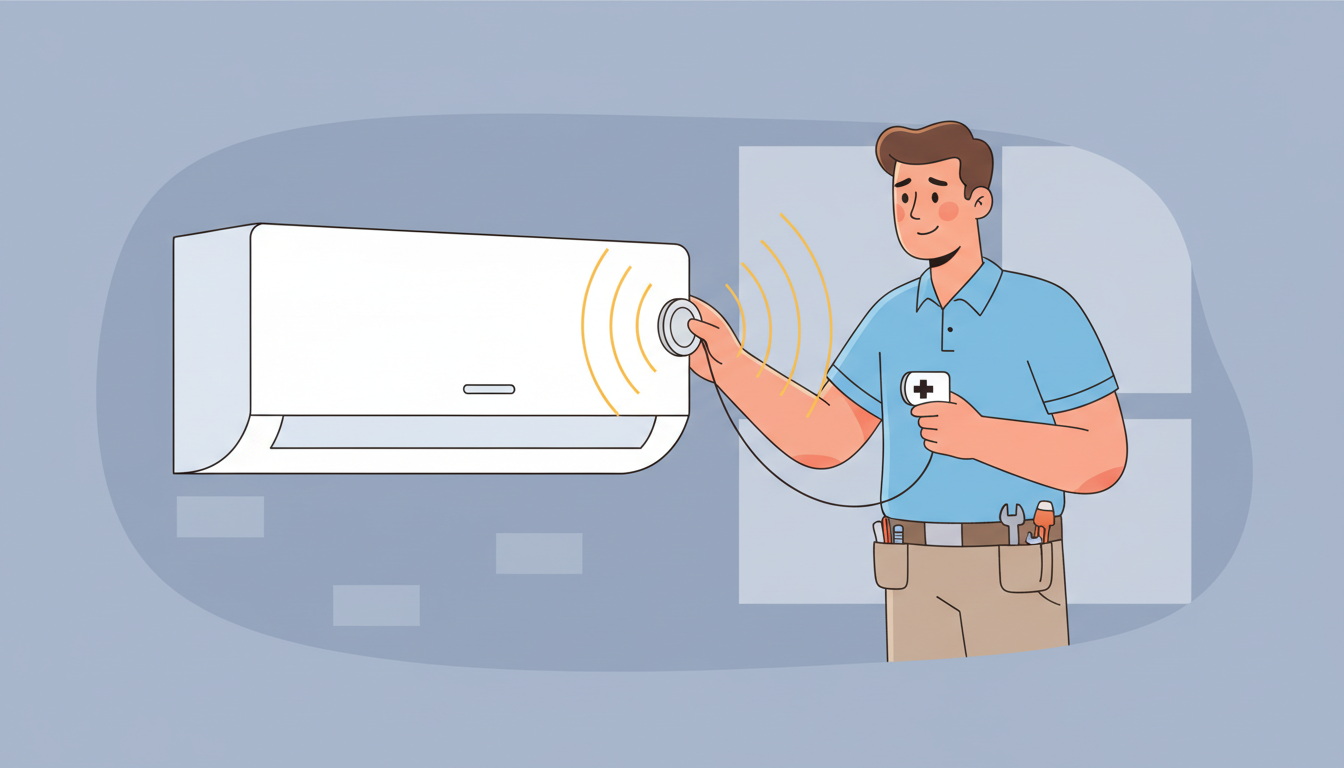
What a Bad AC Capacitor Sounds Like (And What to Do About It)
What a Bad AC Capacitor Sounds Like (And What to Do About It)
Is your air conditioner making a strange humming or buzzing noise? Does it sound like the outdoor unit is trying to start but just can't get going? You might be dealing with a bad AC capacitor. Understanding what a failing capacitor sounds like can help you diagnose the problem quickly and avoid a complete system breakdown during the hottest days of summer.
The Most Common Bad AC Capacitor Sounds
When your AC capacitor starts to fail, it creates distinctive sounds that signal trouble. Here's what you need to listen for.
Humming Noise from the Outdoor Unit
The most telltale sign of a bad AC capacitor is a loud humming noise coming from your outdoor condenser unit. This sound happens when your compressor motor is receiving electrical power but can't start properly because the capacitor isn't providing the necessary electrical boost.
Think of it like trying to push-start a car on a flat battery—the engine wants to turn over, but it just doesn't have enough juice. The humming you hear is the motor straining against resistance, unable to overcome the initial startup load.
What it sounds like: A low-pitched, steady hum similar to a large transformer or motor under strain. The volume is noticeably louder than normal AC operation, and the sound doesn't progress to the usual running noise you'd expect.
Buzzing Instead of Humming
While humming and buzzing might seem similar, there's an important distinction. Buzzing tends to be higher-pitched and may indicate electrical arcing or a more severe capacitor failure.
If you hear a buzzing sound accompanied by a burning smell, turn off your AC immediately and call a professional. This could indicate dangerous electrical problems that pose a fire risk.
Clicking Sounds
A bad AC capacitor can also produce clicking or ticking noises. You might hear repeated clicking sounds as your thermostat tries to signal the outdoor unit to start, but the failing capacitor prevents the compressor from engaging.
Important distinction: A single click when your AC turns on is normal—that's your contactor engaging. What you're listening for is repeated clicking without the system starting, or rapid clicking sounds coming from near the capacitor itself.
The Sound of Silence (When There Should Be Action)
Sometimes a completely dead capacitor produces no sound at all. Your thermostat is calling for cooling, but the outdoor unit sits completely silent. This total failure means the capacitor can no longer store and release the electrical charge needed to start your system.
Why Your AC Capacitor Makes These Sounds
To understand why a bad capacitor sounds the way it does, you need to know what this small but critical component actually does.
The Role of Your AC Capacitor
Your air conditioning system uses capacitors to give electric motors the extra boost they need to start and run efficiently. There are typically two types:
Start Capacitor: Provides a powerful jolt of energy to get the compressor motor spinning from a dead stop. It only operates for a few seconds during startup.
Run Capacitor: Supplies a continuous electrical charge to keep the motor running smoothly and efficiently once it's started. This capacitor stays engaged the entire time your AC operates.
Many modern HVAC systems use a dual run capacitor that serves both functions in a single component.
What Causes the Humming
When a capacitor fails, it loses its ability to store and discharge electrical energy properly. The compressor motor receives power from your electrical panel, but without the capacitor's boost, it can't overcome the mechanical resistance to start spinning.
The motor windings energize and create a magnetic field, but there's insufficient force to initiate rotation. This creates the characteristic humming sound—electrical energy being converted to vibration and heat instead of mechanical motion.
Capacitor Failure Progression
Capacitors don't usually fail instantly. The sounds they make often change as the failure progresses:
- Early failure: Slight humming at startup that resolves after a few seconds
- Mid-stage failure: Louder humming, delayed starts, or short cycling
- Complete failure: Loud continuous humming with no startup, or total silence
This is why catching the problem early—when you first notice unusual sounds—can prevent more extensive electrical problems in your HVAC system.
How to Tell If the Sound Is Your Capacitor (Not Something Else)
Your AC contains many moving parts, and not every strange noise indicates a capacitor problem. Here's how to differentiate capacitor sounds from other common HVAC issues.
Capacitor Sound vs. Compressor Failure
A failing compressor can also create humming sounds, but there are key differences:
- Capacitor failure: Humming comes from the outdoor unit and the compressor never starts. The sound remains constant and doesn't change pitch.
- Compressor failure: You might hear humming followed by a grinding, clanking, or rattling sound. The compressor may attempt to start and create mechanical noises.
Capacitor Sound vs. Fan Motor Issues
If only your outdoor fan motor has a bad capacitor, you'll see different symptoms:
- The compressor may run normally
- The outdoor fan won't spin (but may hum)
- You might be able to manually start the fan with a stick (don't do this—it's dangerous!)
Capacitor Sound vs. Refrigerant Issues
A refrigerant leak creates a hissing or bubbling sound, completely different from capacitor-related humming. Refrigerant issues also won't prevent your system from starting—they'll cause poor cooling performance instead.
Other Symptoms of a Bad AC Capacitor
While sounds are the primary indicator, bad capacitors typically show multiple symptoms simultaneously.
Your AC Won't Turn On
When a capacitor fails completely, your air conditioner simply won't start. The thermostat will click, you might see the indicator light on your outdoor unit, but nothing happens. No humming, no fan movement, no cooling.
Your AC Turns Off Randomly (Short Cycling)
A weak capacitor that hasn't completely failed yet may cause short cycling. Your AC starts successfully but shuts down after just a few minutes of operation. This happens because the failing capacitor can't sustain proper motor operation, leading to overheating and safety shutoffs.
Higher Energy Bills
A struggling capacitor forces your compressor and fan motors to work harder, drawing more electrical current to compensate for the missing capacitor boost. This increased power consumption shows up as unexpectedly high energy bills.
Warm Air Instead of Cold
If your capacitor can't properly power the compressor motor, your AC won't compress refrigerant effectively. The result is weak or warm airflow from your vents, even though the system appears to be running.
Burning Smell
An overworked capacitor can overheat, producing a distinctive electrical burning smell near your outdoor unit. This is often accompanied by visible bulging, leaking, or corrosion on the capacitor itself.
If you smell burning, shut down your system immediately. This indicates a serious electrical issue that requires professional attention.
What to Do When You Hear Bad AC Capacitor Sounds
Hearing these warning sounds doesn't mean you need to panic, but you should take prompt action.
Step 1: Turn Off Your AC
If you hear loud humming or buzzing, especially with a burning smell, turn off your air conditioner at the thermostat. Letting a bad capacitor continue to operate can damage your compressor motor—a much more expensive repair.
For immediate safety, you can also shut off power to the outdoor unit at your electrical panel.
Step 2: Don't Attempt DIY Capacitor Replacement
You might find guides online explaining how to replace capacitors yourself, but this is genuinely dangerous work. Capacitors store electrical charge even when your AC is powered off. Touching a charged capacitor can deliver a serious or even fatal shock.
Additionally, selecting the wrong capacitor rating (measured in microfarads or µF) can damage your motors or create a fire hazard.
Step 3: Call an HVAC Professional
Contact a licensed HVAC technician to diagnose and replace your capacitor. A professional can:
- Safely discharge and remove the failed capacitor
- Test your motors to ensure no damage has occurred
- Install the correct replacement capacitor for your specific system
- Check for underlying issues that may have caused premature failure
Most HVAC companies can complete a capacitor replacement in under an hour. It's one of the most common and straightforward central AC repairs.
Step 4: Consider What Caused the Failure
Capacitors typically last 15-20 years, but several factors can shorten their lifespan:
- Heat exposure: Capacitors located in direct sunlight or poorly ventilated areas fail sooner
- Power surges: Lightning strikes and voltage spikes damage capacitor internals
- Voltage irregularities: Consistently high or low voltage stresses capacitors
- Manufacturing defects: Some capacitors are simply poorly made
Ask your technician to check for these underlying causes to prevent repeat failures.
How to Prevent Capacitor Problems
While capacitors are wear items that eventually need replacement, you can extend their lifespan and catch problems early.
Schedule Annual HVAC Maintenance
During a professional tune-up, your technician will:
- Visually inspect capacitors for bulging, leaking, or corrosion
- Test capacitor strength with a multimeter
- Check electrical connections that could stress your capacitor
- Identify ventilation issues that expose capacitors to excessive heat
Catching a weakening capacitor during maintenance prevents unexpected breakdowns during summer heat waves.
Keep Your Outdoor Unit Shaded and Clear
Excessive heat is a capacitor's enemy. Ensure your outdoor condenser unit has:
- Adequate clearance (at least 2 feet on all sides)
- Protection from direct afternoon sun if possible
- Clean coils that allow proper heat dissipation
- Vegetation trimmed back to maintain airflow
Consider a Surge Protector
If you live in an area with frequent lightning storms or unstable power, a whole-home surge protector or dedicated HVAC surge protection can prevent voltage spikes from damaging your capacitor and other electrical components.
Listen to Your AC
Make it a habit to listen when your air conditioner cycles on. Familiarize yourself with the normal sounds your system makes. This awareness helps you quickly identify when something changes—like the appearance of humming or clicking sounds.
Frequently Asked Questions
Can I run my AC with a bad capacitor?
No, you shouldn't run your AC with a bad capacitor. A failing capacitor forces your compressor motor to work much harder than designed, which can cause the motor to overheat and fail completely. Compressor replacement costs thousands of dollars, while capacitor replacement costs a fraction of that amount.
How much does it cost to replace an AC capacitor?
Professional AC capacitor replacement typically costs between $100-$400, depending on your location, the type of capacitor, and whether you need an emergency service call. The capacitor itself only costs $15-50, but you're paying for the technician's expertise and the safe handling of a potentially dangerous electrical component.
Why does my AC hum but won't start?
When your AC hums but won't start, the most likely cause is a bad start capacitor or dual run capacitor. The motor is receiving power but lacks the electrical boost needed to overcome startup resistance. Less commonly, this symptom can indicate a seized compressor motor or faulty contactor.
Is the humming sound dangerous?
The humming sound itself isn't dangerous, but the condition causing it can be. A motor that can't start properly will overheat quickly. If you hear humming for more than a minute or two, turn off your AC to prevent compressor damage. If you hear buzzing along with the humming or smell burning, shut down immediately—these indicate electrical arcing or severe overheating.
Can extreme heat cause capacitor failure?
Yes, extreme heat is one of the leading causes of premature capacitor failure. Capacitors are rated to operate within specific temperature ranges. When outdoor temperatures exceed 100°F and your outdoor unit is in direct sunlight, the capacitor can overheat and deteriorate rapidly. This is why capacitor failures spike during summer heat waves.
Conclusion: Don't Ignore the Warning Sounds
The sounds your air conditioner makes tell you exactly what's going wrong. When you hear humming, buzzing, or clicking noises coming from your outdoor unit, your AC capacitor is calling for help. These warning sounds give you the opportunity to address the problem before a simple capacitor replacement turns into expensive compressor damage.
At the first sign of unusual AC sounds, turn off your system and contact a qualified HVAC technician. A quick capacitor replacement will have your home cooling comfortably again—and save you from a costly breakdown when you need your AC most.
Don't let a failing capacitor leave you sweating through the summer. Stay alert to these warning sounds, and you'll keep your air conditioning system running smoothly for years to come.