How Blocked Returns Can Make Your HVAC System Struggle
How Blocked Returns Can Make Your HVAC System Struggle
If your heating or cooling system is working overtime but your home still feels uncomfortable, blocked return vents might be the hidden culprit. These often-overlooked grilles play a critical role in your HVAC system's performance, and when they're blocked, your entire system pays the price.
Let's explore exactly how blocked returns can make your HVAC system struggle and what you can do about it.
What Are Return Air Vents and Why Do They Matter?
Return air vents are the unsung heroes of your HVAC system. Unlike supply vents that blow conditioned air into your rooms, return vents pull air back into your system for reconditioning. This creates the continuous air circulation loop that keeps your home comfortable.
Your HVAC system depends on balanced airflow. For every cubic foot of air your system pushes out through supply vents, it needs to pull an equal amount back through return vents. When this balance is disrupted by blocked returns, your system begins to struggle almost immediately.
Most homes have fewer return vents than supply vents, making each one critically important. Block even one return vent, and you're forcing your system to work with one hand tied behind its back.
How Blocked Returns Create System Strain
When return vents get blocked—whether by furniture, curtains, or debris—your HVAC system faces a serious problem: air starvation. Your blower motor doesn't know the return is blocked, so it keeps spinning at the same speed, trying to pull air that can't flow freely.
This creates what HVAC professionals call "high static pressure." Think of it like trying to breathe through a straw versus breathing normally. Your lungs work much harder with the straw, and the same principle applies to your HVAC system.
The blower motor strains to maintain airflow, drawing more electricity and generating excess heat. Over time, this constant strain shortens the motor's lifespan and increases your energy bills. Your system might run 20-30% longer to achieve the same temperature, wasting energy with every cycle.
The Domino Effect on System Components
Blocked return vents don't just affect airflow—they trigger a cascade of problems throughout your entire HVAC system.
Heat Exchanger Damage in Heating Mode
During winter, blocked returns can cause dangerous heat buildup in your furnace's heat exchanger. Without adequate airflow to carry heat away, the exchanger overheats and eventually cracks.
A cracked heat exchanger is a serious safety hazard. It can leak carbon monoxide into your home's air supply. Replacement costs typically range from $1,500 to $3,500, making this one of the most expensive repairs caused by something as simple as blocked returns.
Frozen Evaporator Coils in Cooling Mode
In summer, blocked returns create the opposite problem. Your air conditioner's evaporator coil needs constant airflow to function properly. When return air is restricted, the coil can't absorb enough heat from your home.
The refrigerant inside the coil drops to freezing temperatures, causing ice to form on the coil surface. Once ice builds up, your AC stops cooling entirely. You'll need to thaw the system completely before it works again—a process that can take 24 hours or more.
Learn more about weak airflow issues in HVAC systems to understand related problems.
Compressor Failure Risk
Your AC compressor is designed to compress refrigerant gas, not liquid. When evaporator coils freeze due to blocked returns, liquid refrigerant can flow back to the compressor—a condition called "liquid slugging."
This can destroy your compressor, which is the most expensive component in your AC system. Compressor replacement often costs $1,500 to $2,500, not including labor.
Temperature Control Problems Throughout Your Home
Blocked returns wreak havoc on temperature consistency. You might notice some rooms are too hot while others are freezing, even though your thermostat is set correctly.
Here's why: When returns are blocked, air can't circulate properly through your home. Conditioned air gets trapped in some rooms while other areas never receive adequate heating or cooling. Your thermostat, usually located in a central area, might read 72°F while your bedroom is 68°F and your home office is 76°F.
This temperature imbalance forces your system to run longer cycles trying to satisfy the thermostat. Meanwhile, rooms far from the thermostat remain uncomfortable no matter how long the system runs.
Indoor Air Quality Takes a Hit
Your return vents do more than just circulate air—they're your first line of defense against indoor air pollution. When returns are blocked, air quality suffers in multiple ways.
Fresh air can't circulate properly, allowing allergens, dust, and odors to accumulate. Humidity levels may spike because your system can't process enough air through the dehumidifying evaporator coil. This creates the perfect environment for mold growth and dust mites.
Carbon dioxide levels can also increase in occupied rooms when air circulation is restricted. While not immediately dangerous, elevated CO2 causes drowsiness, headaches, and difficulty concentrating.
Check out these signs your HVAC system has return air problems to identify issues early.
Energy Efficiency Plummets
Blocked return vents are silent energy thieves. When your system struggles against restricted airflow, it consumes significantly more electricity to achieve the same results.
Your blower motor runs longer and works harder, drawing more power. Your compressor cycles on and off more frequently, which is less efficient than steady operation. Some homeowners report energy bill increases of 15-25% solely due to blocked returns.
Run your system with blocked returns for an entire season, and you could waste hundreds of dollars in unnecessary energy costs—money that could've been saved by simply keeping returns clear.
Common Causes of Blocked Return Vents
Understanding how returns get blocked helps you prevent problems before they start.
Furniture Placement
This is the most common culprit. Couches, beds, bookshelves, and entertainment centers often end up pushed against return vents. Even leaving a few inches of clearance isn't always enough—you need at least 6-12 inches for proper airflow.
Curtains and Drapes
Heavy curtains that hang too low can cover floor-level returns. Even lightweight curtains create resistance when they're drawn over return grilles, restricting airflow significantly.
Rugs and Carpeting
Floor-level returns are easily covered by area rugs or carpeting installed during renovations. Homeowners often don't realize they've blocked a return vent until their system starts showing symptoms.
Dust and Debris Buildup
Over time, dust, pet hair, and debris accumulate on return grilles and inside ductwork. This gradual buildup slowly restricts airflow without any obvious blockage from furniture or other objects.
Closed or Covered Vents
Some homeowners intentionally cover returns trying to redirect airflow or reduce drafts. Others accidentally cover them during home renovations with paint, wallpaper, or wall-mounted décor.
Warning Signs Your Returns Are Blocked
Recognizing blocked return symptoms early can save you from expensive repairs. Watch for these telltale signs:
Unusual Noises: Whistling or whooshing sounds near return vents indicate restricted airflow. You might also hear your blower motor straining or running louder than normal.
Weak Airflow from Supply Vents: When returns are blocked, supply vents blow air weakly even though the system is running. Hold your hand near a supply vent—if the airflow feels weak or inconsistent, check your returns.
Longer Run Cycles: Your system should cycle on and off periodically. If it's running continuously for extended periods, blocked returns might be preventing proper air circulation.
Rising Energy Bills: Unexplained increases in heating or cooling costs often point to efficiency problems caused by blocked returns.
Inconsistent Temperatures: Hot and cold spots throughout your home suggest circulation problems stemming from blocked returns.
Visible Ice on AC Lines: If you see frost or ice on refrigerant lines or the outdoor unit, blocked returns may have caused your evaporator coil to freeze.
For comprehensive guidance, read our HVAC repair guide covering common problems and solutions.
How to Keep Your Return Vents Clear
Prevention is simple and costs nothing. Follow these best practices to ensure optimal airflow:
Maintain Proper Clearance: Keep furniture, curtains, and other objects at least 6-12 inches away from all return vents. More clearance is always better.
Regular Visual Inspections: Check all return vents monthly. Look for dust buildup, obstructions, or anything that might restrict airflow.
Clean Return Grilles: Remove return vent covers quarterly and vacuum both the grille and the visible ductwork behind it. Wash plastic or metal grilles with soap and water annually.
Replace Air Filters on Schedule: Dirty air filters force your system to work harder and can create back-pressure that mimics blocked returns. Change filters every 1-3 months depending on usage.
Professional Duct Cleaning: Have your entire duct system professionally cleaned every 3-5 years to remove accumulated dust and debris that standard maintenance can't reach.
Educate Household Members: Make sure everyone in your home understands the importance of keeping returns clear. A five-minute conversation can prevent thousand-dollar repairs.
The Seasonal Impact: Winter vs. Summer
Blocked returns affect your system differently depending on the season, though both scenarios cause serious problems.
Winter Heating Concerns
During heating season, blocked returns trap heat in your furnace. This causes your limit switch to trip repeatedly, shutting down the burners for safety. Your furnace might short-cycle—turning on and off every few minutes—which wastes energy and stresses components.
The heat exchanger risk is highest in winter. Repeated overheating cycles cause metal fatigue, leading to cracks that leak carbon monoxide. This is why blocked returns can be a genuine safety hazard during heating season.
Summer Cooling Challenges
In cooling mode, blocked returns cause refrigerant problems. The evaporator coil gets too cold, causing condensation to freeze. Ice buildup blocks even more airflow, creating a vicious cycle that completely stops cooling.
You might also notice water leaks around your indoor unit. When frozen coils eventually thaw, the ice melts faster than your drain pan can handle, causing water damage to ceilings, walls, or floors.
DIY Inspection and Testing
You don't need professional tools to check for blocked return problems. Try these simple tests:
The Tissue Test: Hold a tissue or piece of paper near each return vent while your system runs. The paper should be firmly pulled toward the vent. If it barely moves, airflow is restricted.
The Hand Test: Place your hand near each return vent. You should feel strong suction pulling air into the grille. Weak suction indicates a blockage somewhere in the system.
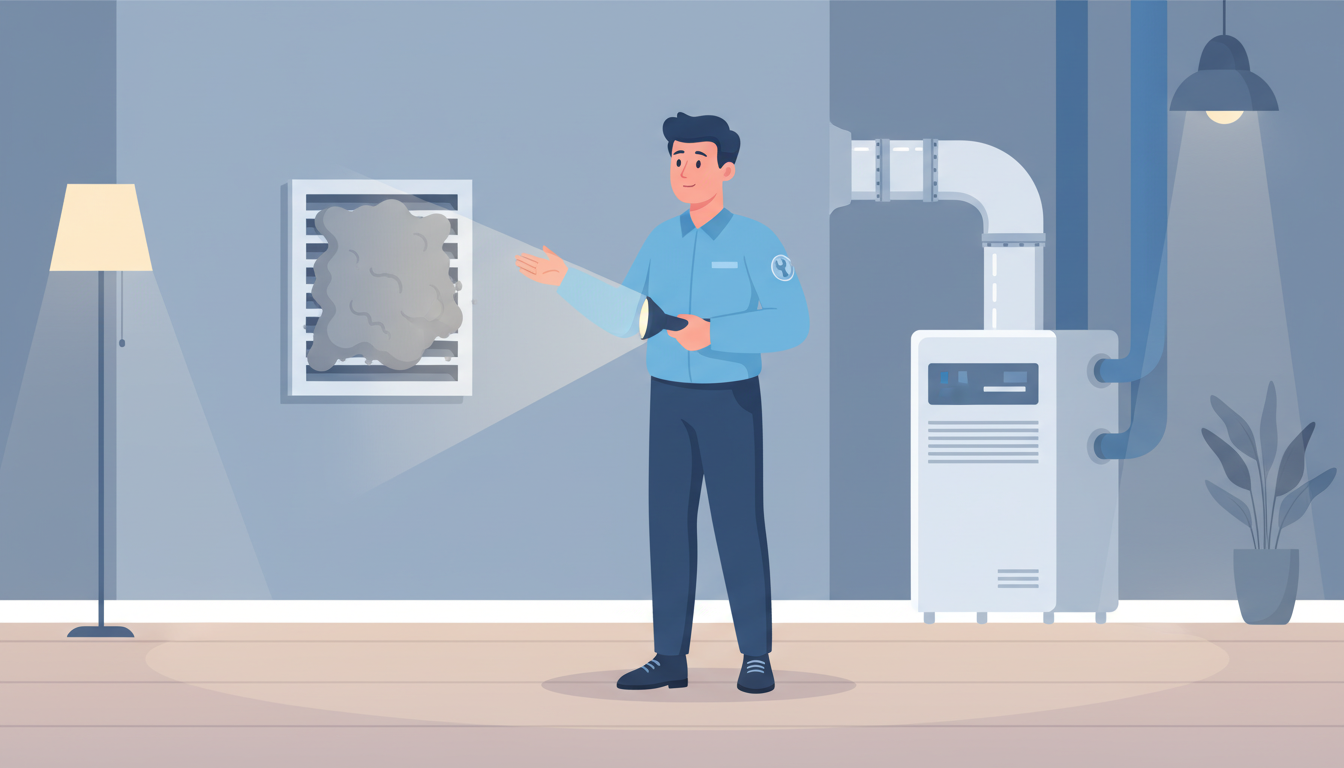
The Visual Test: Remove return grilles and shine a flashlight into the ductwork. You should see clean metal or insulation, not excessive dust, debris, or obstructions.
The Sound Test: Listen carefully to your system while it runs. Unusual whistling, wheezing, or straining sounds often indicate airflow restrictions.
When to Call a Professional
Some blocked return problems require professional HVAC help:
You've cleared visible obstructions but symptoms persist: The blockage might be deep in your ductwork where you can't reach it.
You notice ice buildup on your AC: This requires professional diagnosis to prevent compressor damage.
Your system short-cycles constantly: This could indicate serious problems beyond simple blockages.
You smell gas or detect carbon monoxide: Evacuate immediately and call emergency services, then contact an HVAC professional.
Your energy bills have spiked dramatically: A professional can perform airflow testing to identify hidden restrictions.
You hear grinding or screeching from your system: This suggests motor damage, possibly caused by extended operation with blocked returns.
The True Cost of Ignoring Blocked Returns
Leaving returns blocked might seem harmless at first, but the costs add up quickly:
- Energy waste: $200-500+ annually in higher utility bills
- Premature equipment replacement: 5-10 years shaved off your system's lifespan
- Emergency repairs: $500-3,500 for heat exchanger, compressor, or coil replacement
- Comfort loss: Weeks of discomfort while waiting for repairs during peak season
Compare these costs to the zero dollars it takes to keep returns clear, and the choice becomes obvious.
Frequently Asked Questions
Can I close return vents in unused rooms to save energy?
No, closing return vents creates the same problems as blocking them. Your system is designed to operate with all returns open. Closing vents disrupts airflow balance and forces your system to work harder, actually increasing energy use rather than reducing it.
How many return vents does my home need?
Most homes need at least one return per floor, but larger homes benefit from multiple returns for better air circulation. A professional HVAC load calculation can determine the optimal number for your specific home.
Will blocking one return vent really damage my system?
Yes, even blocking a single return can cause problems, especially in homes with only one or two returns total. The fewer returns you have, the more critical each one becomes to system performance.
How often should I vacuum my return vents?
Monthly visual checks are ideal, with thorough vacuuming every 2-3 months. If you have pets or live in a dusty area, clean returns monthly to prevent buildup.
Can blocked returns cause my system to freeze in winter?
Not directly, but blocked returns in winter cause heat buildup and short-cycling, which stresses your system. The freezing issue is primarily a summer cooling problem when evaporator coils ice over.
Take Action Today
Blocked returns are one of the easiest HVAC problems to prevent. Take ten minutes right now to walk through your home and check every return vent. Move furniture if needed, clean grilles that look dusty, and make sure nothing is covering or restricting airflow.
Your HVAC system will thank you with better performance, lower energy bills, and years of reliable service. Don't let something as simple as a blocked return vent turn into a costly repair or uncomfortable home.
Need help with persistent HVAC issues? Contact a qualified HVAC professional to inspect your system and ensure everything is working as it should. Your comfort and your wallet will both benefit from proper return vent maintenance.