
Why Blower Cleaning Matters for Comfort and Efficiency
Why Blower Cleaning Matters for Comfort and Efficiency
When was the last time you thought about your HVAC blower? If you're like most homeowners, the answer is probably "never." But this hidden component works tirelessly behind the scenes, and when it gets dirty, your comfort and wallet both take a hit. Just 1/10 of an inch of dust can slash your system's efficiency by up to 30%, forcing your heating and cooling system to work overtime while driving up your energy bills.
Let's dive into why blower cleaning deserves a spot on your home maintenance checklist and how this simple service can transform your indoor comfort.
What Your HVAC Blower Does (And Why It Gets So Dirty)
Your HVAC blower is the workhorse of your heating and cooling system. Located inside your air handler or furnace, this component consists of a motor attached to a wheel with dozens of curved blades. Think of it as the lungs of your home—it pulls air through your return vents, pushes it across the heat exchanger or evaporator coil, and then circulates that conditioned air throughout your living spaces.
Every single cubic foot of air in your home passes through this blower multiple times per day. Even with air filters in place, microscopic particles of dust, pet dander, pollen, and other debris make their way past and accumulate on the blower wheel's blades. Over months and years, this buildup transforms the smooth, aerodynamic blades into fuzzy, inefficient paddles that struggle to move air effectively.
Homes with pets, smokers, or located in dusty environments see this accumulation happen even faster. If you've recently completed renovation work, the construction dust can cake onto your blower wheel in just weeks.
The Comfort Problems You'll Notice First
Before you see higher energy bills, you'll likely experience comfort issues that signal your blower needs attention. These problems sneak up gradually, which is why many homeowners don't connect the dots until their HVAC system requires major repairs.
Uneven Temperatures Throughout Your Home
A dirty blower wheel can't move air as efficiently as a clean one. This means some rooms get plenty of airflow while others barely get a trickle. You'll notice certain areas of your home are too hot in summer or too cold in winter, even when your thermostat says the temperature should be perfect.
This happens because the restricted airflow means your HVAC system takes longer to reach all areas of your home. Upstairs bedrooms might be 5-10 degrees warmer than your main floor, or your home office at the end of the hall stays stuffy while the living room is comfortable.
Weak Airflow From Your Vents
Put your hand near a supply vent when your system is running. Does the air feel weak or barely noticeable? Weak airflow from your vents is one of the most common signs of a dirty blower wheel.
The dust coating on the blower wheel blades disrupts their aerodynamic design, making it harder for the motor to push air through your ductwork. You're essentially asking your blower to do the same job while wearing oven mitts—it just can't perform as designed.
Your System Runs Constantly But Doesn't Keep Up
When your blower can't move air efficiently, your HVAC system has to run longer cycles to reach your desired temperature. You might notice your furnace or air conditioner seems to run continuously during hot or cold weather, yet your home never quite feels comfortable.
This constant operation isn't just annoying—it's wearing out your equipment prematurely. Components that should last 15-20 years may fail in 10-12 years when they're forced to work this hard.
Strange Noises Coming From Your System
A clean blower wheel spins smoothly and quietly. When dust accumulates unevenly on the blades, it creates an imbalance—similar to a washing machine with clothes bunched up on one side. This imbalance causes vibration, which you'll hear as rattling, humming, or thumping sounds coming from your air handler or furnace.
These noises often get worse over time as the buildup increases and the imbalance becomes more severe.
The Hidden Efficiency Drain Costing You Money
While comfort problems are annoying, the efficiency losses from a dirty blower are where you really feel the financial impact. Your HVAC system is typically your home's largest energy consumer, accounting for up to 50% of your monthly utility bills during peak heating and cooling seasons.
Energy Consumption Skyrockets
Research shows that a blower wheel with just 1/10 inch of dust buildup can reduce system efficiency by 20-30%. In practical terms, this means if your air conditioner normally uses 3 kilowatt-hours to cool your home to 72°F, a dirty blower might require 4 kilowatt-hours to achieve the same result.
Over a cooling season (typically May through September), this efficiency loss can add $150-300 to your electricity bills. For heating season, the impact on natural gas bills can be even more significant. Many homeowners who invest in regular blower cleaning report energy savings of 10-15% compared to their previous bills.
The Compounding Effect On Other Components
A dirty blower doesn't just work harder itself—it forces every other part of your HVAC system to work harder too. When airflow is restricted, your air conditioner's evaporator coil can't transfer heat effectively, so your compressor runs longer. Your furnace's heat exchanger stays hotter longer because there's less air moving across it to carry heat away.
This extra strain shortens the lifespan of expensive components. A compressor replacement can cost $1,200-2,500. A heat exchanger failure might require a $2,000-4,000 repair or even a complete furnace replacement. When you consider these potential costs, the $150-300 typical cost of professional blower cleaning looks like a bargain.
Frozen Coils and Emergency Repairs
Here's a problem many homeowners don't see coming: severely restricted airflow from a dirty blower can cause your air conditioner's evaporator coil to freeze. When not enough warm air passes over the coil, the refrigerant inside gets too cold, and condensation freezes into a block of ice.
A frozen coil means no cooling, and if you run your system with a frozen coil, you can damage your compressor—the most expensive component in your AC system. Emergency service calls for frozen coils typically cost $200-400 just for the diagnosis and thawing, before any actual repairs.
Indoor Air Quality Takes a Hit
Your HVAC system does more than control temperature—it plays a crucial role in maintaining your home's air quality. A dirty blower undermines this function in several ways.
Dust and Allergens Recirculate
The dust caked onto your blower wheel doesn't just sit there. As the wheel spins, particles break loose and get blown into your ductwork and then into your living spaces. Essentially, your HVAC system becomes a dust distribution network instead of a comfort system.
This is especially problematic for family members with allergies, asthma, or respiratory sensitivities. You might notice more frequent allergy symptoms, increased dust on furniture despite regular cleaning, or worsening asthma symptoms that improve when you're away from home.
Biological Growth Concerns
Dust isn't the only thing that accumulates on blower wheels. In humid climates or during cooling season, condensation can form inside your air handler. When moisture combines with the dust on your blower wheel, you create an ideal environment for mold and bacteria growth.
Some homeowners report musty odors when their HVAC system first turns on—a telltale sign of biological growth somewhere in the system. A dirty blower wheel is often the culprit. These microorganisms then get distributed throughout your home every time your system runs.
Reduced Filter Effectiveness
When your blower can't move air properly, air takes the path of least resistance—and that might not be through your filter. Weak airflow can cause air to bypass your filter through gaps around the filter frame, or it reduces the filter's contact time with the air, making it less effective at capturing particles.
You end up with a double problem: a dirty blower reduces airflow, and the reduced airflow means your filter doesn't work as well, allowing more dust to accumulate on the blower. It's a vicious cycle that only gets worse until someone breaks it with a thorough cleaning.
System Longevity: Protecting Your Investment
Your HVAC system represents a significant investment—typically $5,000-12,000 for a complete system replacement. Protecting that investment should be a priority, and blower cleaning plays a crucial role in maximizing your equipment's lifespan.
Reduced Motor Wear
A dirty blower wheel forces your blower motor to work much harder to move the same amount of air. Motors are rated for a certain workload, and consistently exceeding that workload generates extra heat and accelerates wear on motor bearings and windings.
Blower motors typically cost $300-600 to replace, plus labor. Motors that should last 15-20 years might fail in 8-10 years when they're constantly overworked due to a dirty wheel.
Preventing Premature System Failures
High-efficiency HVAC equipment fails more often from airflow problems than any other cause. Modern systems are designed with tighter tolerances and more precise airflow requirements than older equipment. When a dirty blower disrupts that carefully engineered airflow, the entire system struggles.
Variable-speed blowers, two-stage compressors, and modulating furnaces all depend on proper airflow to function as designed. A dirty blower wheel can prevent these advanced features from delivering their promised efficiency and comfort benefits.
The Domino Effect on Connected Components
Your HVAC system is a carefully balanced network of components that all depend on each other. When one part fails to do its job properly, the stress cascades to other parts:
- Poor airflow from a dirty blower means your evaporator coil can't transfer heat effectively
- An inefficient coil forces your compressor to work harder and longer
- Your compressor cycling more frequently puts stress on electrical components and contactors
- Heat exchanger hot spots can develop when airflow is insufficient, leading to cracks
- Your thermostat may struggle to maintain accurate temperature control
Each of these problems can lead to expensive repairs, and all trace back to something as simple as a dirty blower wheel.
How Often Should You Clean Your Blower?
The ideal cleaning schedule depends on your specific situation, but here are general guidelines that work for most homes:
Every 2-3 Years for Average Homes: If you have good-quality air filters, change them regularly, don't have pets, and don't live in an particularly dusty area, cleaning your blower every 2-3 years during routine maintenance is usually sufficient.
Annually for High-Use Situations: Schedule yearly blower cleaning if you have:
- Multiple pets (especially dogs or long-haired cats)
- Smokers in the home
- Ongoing allergies or respiratory issues
- A home in a dusty or high-pollen area
- Recent renovation or construction work nearby
- A vacation home that sits vacant for extended periods
After Major Events: Consider an extra cleaning after:
- Home renovation projects (even minor ones generate surprising amounts of dust)
- Switching from rarely-used backup heat to primary heating system
- Discovering mold or water damage anywhere in your HVAC system
- Moving into a previously occupied home
Many HVAC professionals include blower inspection as part of routine maintenance visits. They can assess the buildup level and recommend whether cleaning is needed before your next scheduled service.
DIY vs. Professional Blower Cleaning: What You Need to Know
You might be wondering whether you can clean your blower yourself or if you need professional help. The honest answer is: it depends on your comfort level with home maintenance and your specific HVAC system.
When DIY Might Work
If you're handy, have basic tools, and your blower is easily accessible, you can potentially clean it yourself. You'll need:
- Screwdrivers to remove access panels
- A shop vacuum with attachments
- Soft brushes
- Gloves and safety glasses
- Good lighting
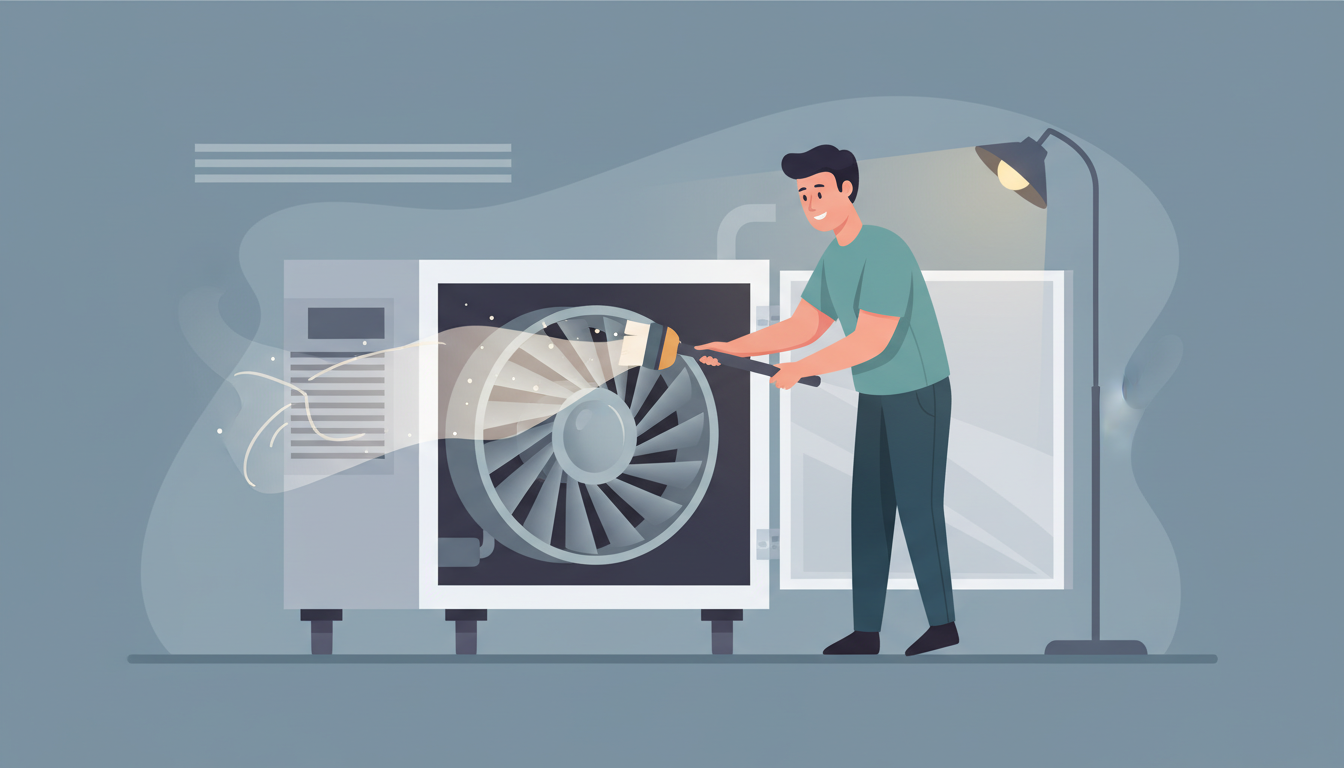
The basic process involves shutting off power to your system, removing access panels to reach the blower assembly, carefully brushing and vacuuming the blower wheel while supporting it to prevent damage, and reassembling everything properly.
Why Professional Cleaning Often Makes Sense
However, many homeowners choose professional service for good reasons:
Safety: HVAC systems involve high voltage electricity, sharp metal edges, and heavy components. A mistake can result in injury or damage to expensive equipment.
Access Issues: In many systems, reaching the blower wheel requires removing multiple components or even pulling the entire blower assembly from the unit. This often requires special tools and knowledge of how to properly disconnect and reconnect electrical connections and mounting hardware.
Thoroughness: Professionals have specialized brushes, cleaning solutions, and techniques that remove buildup more completely than typical household tools. They also clean related components like the blower housing and evaporator coil while they have the system open.
Warranty Concerns: Some HVAC manufacturers require professional maintenance to keep warranties valid. DIY work might void your coverage.
Complete System Inspection: When a professional cleans your blower, they're also inspecting your entire system for other potential problems—worn belts, loose electrical connections, refrigerant leaks, or other issues that could lead to breakdowns.
The typical cost for professional blower cleaning ranges from $150-300 depending on your location and whether it's part of a comprehensive maintenance visit. Given the potential energy savings and avoided repair costs, this investment typically pays for itself within a single heating or cooling season.
Maximizing Blower Cleanliness Between Services
You can't eliminate blower cleaning needs, but you can extend the time between cleanings and reduce buildup:
Use Quality Air Filters: Higher-efficiency filters (MERV 8-13 for residential systems) capture more particles before they reach your blower. Just make sure your system is designed to handle the airflow restriction of higher MERV filters.
Change Filters on Schedule: Even the best filter won't help if it's clogged. Most homes should change filters every 1-3 months depending on filter type, system usage, and environmental factors.
Keep Your Home Clean: Regular dusting, vacuuming, and keeping return vents clear reduces the amount of debris your HVAC system needs to handle.
Seal Air Leaks: Gaps around return air ducts can allow unfiltered air (and dust) to enter your system. Seal these leaks with proper HVAC tape or mastic.
Consider Air Purification: Whole-home air purifiers or UV lights can reduce the biological growth on blower wheels and improve overall air quality.
Maintain Outdoor Units: Keep your outdoor condenser unit clean and clear of debris. A clean outdoor unit works more efficiently, reducing runtime and system strain.
Signs You Need Blower Cleaning Right Now
Don't wait for your scheduled maintenance if you notice these warning signs:
- Visible dust blowing from vents when the system first starts
- Drastically reduced airflow compared to normal operation
- Unusual noises like rattling, humming, or thumping from your air handler
- Rising energy bills without a corresponding change in usage or weather
- Frequent system cycling where your HVAC turns on and off more often than usual
- Musty or moldy odors when your system runs
- Some rooms much warmer or cooler than others despite proper thermostat settings
- Ice forming on your air conditioner's refrigerant lines or indoor coil
Any of these symptoms suggests your blower may be dirty enough to affect performance, and addressing the problem now can prevent more serious issues down the road.
The Bottom Line: Small Investment, Big Returns
Blower cleaning might not be the most exciting home maintenance task, but it's one of the most cost-effective ways to improve your home's comfort and efficiency. For an investment of $150-300 every few years, you can:
- Reduce energy bills by 10-15% or more
- Enjoy more consistent temperatures throughout your home
- Breathe cleaner air with fewer allergens and particles
- Extend your HVAC system's lifespan by years
- Avoid expensive emergency repairs from system failures
- Maintain your equipment warranty requirements
Think of blower cleaning as preventive maintenance for one of your home's most expensive and important systems. You change your car's oil to prevent engine damage—cleaning your HVAC blower serves the same purpose.
When your HVAC technician recommends blower cleaning during a routine maintenance visit, they're not trying to sell you unnecessary services. They're helping you protect your comfort, your health, and your wallet.
Frequently Asked Questions
How long does professional blower cleaning take?
Most professional blower cleaning services take 1-2 hours as part of a comprehensive maintenance visit. The technician needs time to safely access the blower assembly, clean it thoroughly, inspect related components, and reassemble everything properly. If your blower is particularly dirty or difficult to access, it might take longer.
Will I notice an immediate difference after blower cleaning?
Yes, most homeowners notice improved airflow from their vents right away. You might also notice that your system reaches your desired temperature faster and doesn't run as long. Energy bill improvements take a full billing cycle to see, but the comfort benefits are often immediate.
Can a dirty blower permanently damage my HVAC system?
While the blower wheel itself usually isn't permanently damaged by dirt buildup, the strain it puts on other components can cause permanent damage. Burned-out motors, cracked heat exchangers, and failed compressors can all result from chronic airflow problems caused by a dirty blower. The good news is that catching and cleaning a dirty blower before it causes these secondary problems prevents permanent damage.
Is blower cleaning included in standard HVAC maintenance?
This varies by service provider. Some companies include blower inspection in their standard maintenance but charge extra for cleaning if needed. Others include full cleaning as part of a comprehensive maintenance plan. Always ask what's included when scheduling maintenance visits.
Can I prevent my blower from getting dirty?
You can't prevent dirt accumulation entirely—it's a natural result of moving air through your home. However, using high-quality air filters and changing them regularly can significantly slow the accumulation rate and extend the time between needed cleanings.
Ready to improve your home's comfort and efficiency? Schedule a professional HVAC inspection to assess your blower's condition and get your system running at peak performance.