
Why Your Blower Motor May Not Be the Only Airflow Problem
Why Your Blower Motor May Not Be the Only Airflow Problem
When weak airflow starts coming from your vents, it's easy to assume your blower motor is dying. After all, the blower motor pushes air through your ducts, so weak air means a weak motor, right? Not always. Many homeowners spend hundreds or even thousands on blower motor replacements only to find the airflow problem persists. The truth is, your HVAC system is complex, and multiple components can cause the same symptom: poor airflow from vents.
Before you call for an expensive motor replacement, you need to understand that HVAC airflow problems not blower motor related are actually quite common. This guide will walk you through the other culprits that might be strangling your airflow and show you how to identify them.
Understanding Your HVAC Airflow System
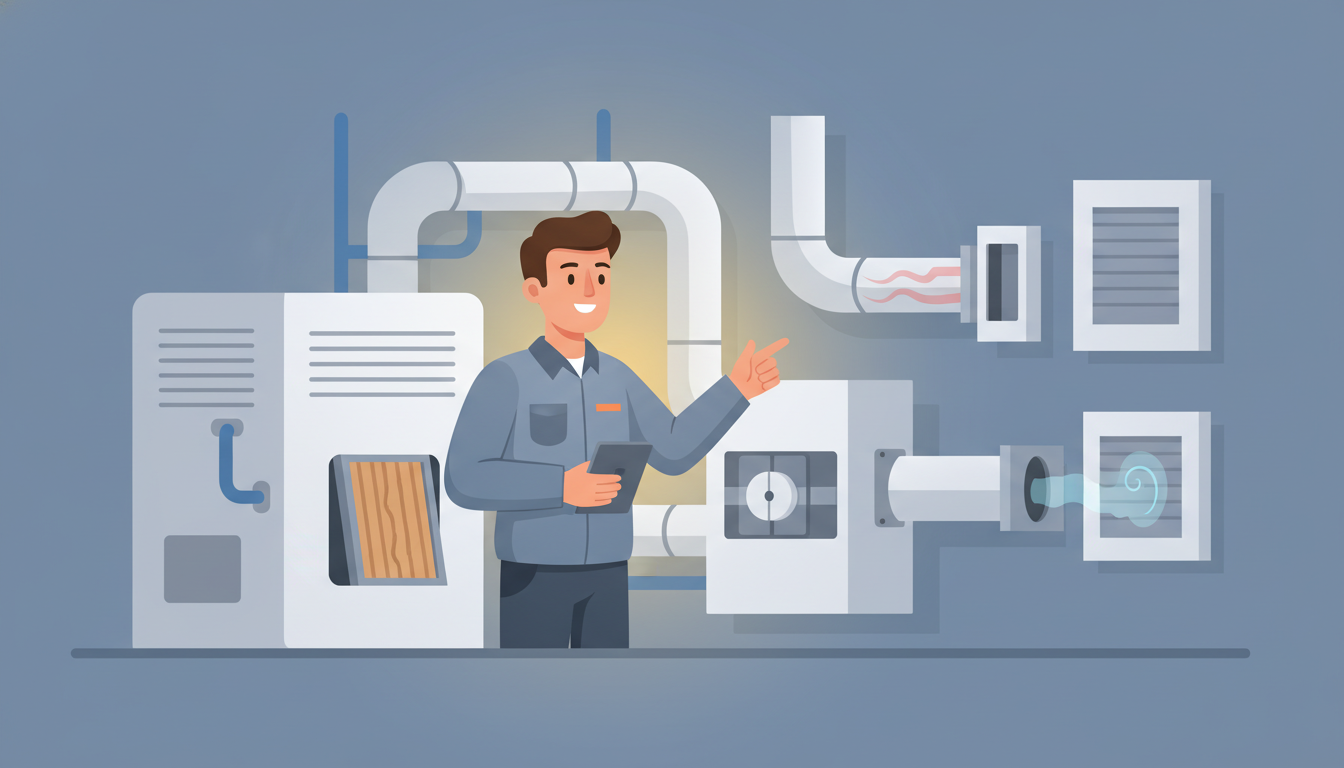
Your heating and cooling system moves air through several stages. The blower motor is just one part of this journey. Air enters through return vents, passes through filters, moves across coils, gets pushed by the blower through ductwork, and finally exits through supply vents in your rooms.
Each stage can develop problems. When any component fails or gets restricted, your entire system suffers. That's why focusing only on the blower motor misses the bigger picture.
The average blower motor replacement costs between $400 and $1,500 depending on your system. Compare that to a $30 air filter or a $150 duct cleaning, and you can see why proper diagnosis matters for your wallet.
The Most Common Non-Motor Airflow Problems
Clogged or Wrong Air Filters
Air filters are the number one cause of weak airflow HVAC causes that homeowners overlook. Your filter sits right before the blower motor, trapping dust, pollen, and debris. When it gets clogged, air can't pass through easily.
Here's what happens: Your blower motor runs at full power, but the filter creates a bottleneck. Less air gets through, and what does make it feels weak at the vents. Your motor is working fine—it's just starved for air.
Check your filter every month. If it looks gray or brown instead of white, replace it immediately. Using a filter with too high a MERV rating can also restrict airflow even when clean. Most residential systems work best with MERV 8-11 filters. Going higher might seem better for air quality, but it can choke your system.
Pro tip: Write the installation date on your filter with a marker. This helps you track when it needs changing.
Blocked or Leaking Ductwork
Your ductwork is like a highway system for air. When sections get blocked, crimped, or disconnected, air never reaches its destination. You might have a perfectly functioning blower motor pushing air that's escaping into your attic or crawl space.
Common ductwork problems include:
- Disconnected sections at joints
- Crushed flexible ducts in tight spaces
- Blocked ducts from construction debris
- Leaks at seams and connections
- Poorly designed duct runs with too many turns
The Department of Energy estimates that 20-30% of air moving through duct systems is lost to leaks and poor connections. That's a huge amount of conditioned air you're paying for that never reaches your living space.
Signs your ductwork needs attention include rooms that are always hotter or colder than others, visible dust around vent covers, and whistling sounds from ducts when your system runs.
For a deeper dive into weak airflow issues, check out our guide on weak airflow from HVAC vents and common causes.
Dirty Blower Wheel
Here's where it gets interesting: The blower wheel can be the problem even when the blower motor itself works perfectly. The motor spins the wheel, but if the wheel's blades are caked with dust and grime, it can't move air efficiently.
Think of it like a ceiling fan with dust on the blades. The motor runs fine, but those dusty blades don't push much air. Your blower wheel works the same way.
Blower wheel cleaning requires accessing your air handler. You'll see a cylindrical cage with dozens of curved blades. When dirty, these blades lose their ability to grab and move air. A professional cleaning takes about an hour and costs much less than motor replacement.
Frozen Evaporator Coils
Your evaporator coil sits in the airflow path, absorbing heat from the air passing over it. When this coil freezes over, it becomes a solid barrier of ice that blocks airflow completely.
Coils freeze for several reasons:
- Low refrigerant levels
- Dirty air filters restricting airflow
- Blocked return air vents
- Running AC when outdoor temperatures are too low
- Dirty coils that can't absorb heat properly
If you notice ice on your refrigerant lines or weak airflow that gets progressively worse, frozen coils might be your problem. Turn off your system and let it thaw completely before investigating further. Never chip ice off coils—you'll damage them.
Closed or Blocked Vents and Registers
This one seems obvious, but you'd be surprised how often closed vents cause airflow complaints. Furniture pushed against vents, closed registers in unused rooms, or childproof vent covers can all reduce your overall airflow.
Some homeowners close vents in unused rooms thinking they'll save energy. This actually hurts your system. Modern HVAC systems are designed to heat and cool a specific square footage. When you close vents, you increase static pressure in your ducts, making your blower motor work harder.
Walk through your home and check every vent. Make sure they're open, unobstructed by furniture or curtains, and that air flows freely when your system runs.
Undersized or Oversized Ductwork
Duct sizing is a science. Ducts that are too small create excessive resistance, while ducts that are too large don't maintain adequate air velocity. Both problems make your system underperform.
Unfortunately, many homes have improperly sized ductwork from the original installation. Contractors sometimes cut corners or make calculation errors. Other times, homeowners add rooms or renovations without updating the duct system to match.
Professional duct sizing involves calculating the right CFM (cubic feet per minute) for each room and ensuring ducts can deliver that volume without excessive pressure drop. If your home has always had weak airflow in certain rooms, duct sizing might be the root cause.
Inadequate Return Air Vents
Your HVAC system needs balanced airflow. For every cubic foot of air your blower pushes out through supply vents, the same amount needs to return through return vents. When you don't have enough return air capacity, your system literally suffocates.
Signs of inadequate return air include:
- Doors that are hard to open when the HVAC runs
- Whistling sounds at door frames
- Pressure differences between rooms
- Weak airflow despite a clean filter
Many homes only have one or two return vents for the entire house. This creates a bottleneck where the system can't pull in enough air to circulate. Adding return vents requires professional installation but solves the problem permanently.
For more information on keeping your blower motor healthy when it is the issue, read our article on why your blower motor keeps going bad.
Thermostat Settings and Malfunctions
Your thermostat controls when and how your blower runs. If settings are wrong or the thermostat malfunctions, you might think you have an airflow problem when it's really a control problem.
Check these settings:
- Fan setting: "Auto" only runs the fan when heating or cooling. "On" runs it continuously. If set to "On," you'll get weak airflow between cycles because the fan runs without the heating or cooling element.
- Temperature differential: Some thermostats have a setting for how much the temperature can vary before the system kicks on. If set too high, your system runs less frequently.
- Dead batteries: Low batteries can cause erratic thermostat behavior.
Smart thermostats add another layer of complexity. Scheduling features, geofencing, and eco modes might prevent your system from running when you expect it to.
Low Refrigerant Levels
Refrigerant doesn't just cool the air—it's part of your system's airflow performance. When refrigerant levels drop too low, your evaporator coil can't absorb heat properly. This causes the coil to get too cold, potentially freezing, which blocks airflow.
Low refrigerant always means you have a leak. Refrigerant doesn't get "used up" like fuel. If your levels are low, a professional needs to find the leak, repair it, and then recharge your system to the correct levels.
Signs of low refrigerant include:
- Ice forming on refrigerant lines
- System running constantly but not cooling well
- Hissing or bubbling sounds from the refrigerant lines
- Higher than normal electric bills
Dirty or Restricted Outdoor Unit
Your outdoor condenser unit needs proper airflow too. When the outdoor unit can't breathe, it affects your entire system's performance. The outdoor unit contains the condenser coil, which needs to release the heat it removed from your home.
Common outdoor unit problems:
- Leaves, grass clippings, and debris in the fins
- Bushes or plants growing too close
- Dirt and pollen coating the coils
- Bent fins from weed whackers or hail
Keep at least two feet of clearance around your outdoor unit. Gently spray it with a garden hose from the inside out to remove debris (never use a pressure washer—you'll bend the fins). This simple maintenance improves efficiency and prevents problems.
Improperly Set or Closed Dampers
If your home has a zoned HVAC system, it uses dampers inside the ductwork to control airflow to different areas. These dampers are like gates that open and close to direct air where needed. When dampers stick closed or are set wrong, entire zones of your home get weak airflow.
Even homes without zone systems sometimes have manual dampers installed during construction. These might have been adjusted for seasonal comfort and never changed back. A damper that's mostly closed will dramatically reduce airflow to that section of ductwork.
Finding dampers requires looking inside your ductwork, usually near the main trunk lines. They have a small handle or lever on the outside of the duct. Make sure dampers serving rooms you want conditioned are fully open.
How to Diagnose Your Specific Airflow Problem
HVAC airflow troubleshooting works best with a systematic approach. Start with the easiest and least expensive possibilities, then work your way to more complex issues.
Step 1: Check the Obvious Stuff First
Before assuming you need professional help, verify these basics:
- Replace your air filter
- Check that all vents are open and unblocked
- Verify your thermostat is set correctly
- Make sure your circuit breaker hasn't tripped
These simple checks solve airflow problems in about 30% of cases. You can do them all in 15 minutes with no tools.
Step 2: Listen and Observe
Pay attention to your system's behavior:
- Does weak airflow affect all vents equally or just some rooms?
- Do you hear unusual sounds like whistling, grinding, or squealing?
- Is there ice anywhere on your system?
- Does the problem get worse as the system runs longer?
The pattern of symptoms points you toward specific causes. Weak airflow in just one room suggests ductwork problems in that branch. Weak airflow everywhere that gets progressively worse points to a freezing coil.
Step 3: Feel Your Supply Vents
Hold your hand in front of each supply vent when your system runs. You should feel strong, consistent airflow. Note which vents are weak and which are normal.
Also check the temperature of the air. In cooling mode, supply air should be 15-20 degrees cooler than the return air. In heating mode, it should be 40-60 degrees warmer. If the temperature difference is wrong, you have a heating or cooling problem, not just an airflow problem.
Step 4: Inspect What You Can See
Look at your visible ductwork in the basement, attic, or crawl space. Check for:
- Disconnected sections
- Visible holes or tears
- Excessive dust around joints
- Crimped or crushed flexible duct
Even a small disconnection can lose a huge amount of air. If you find problems, they need professional sealing or repair.
Step 5: Consider the Pattern
If your home has always had airflow issues, the problem is likely design-related: undersized ducts, inadequate return air, or poor duct layout. These problems won't suddenly develop—they've been there since installation.
If weak airflow is a new problem, look for things that have changed: a dirtier filter than usual, recent work in your attic that might have damaged ducts, or a failing component like the blower capacitor.
When to Call a Professional
Some airflow problems are DIY-friendly, but others require professional expertise. Call a qualified HVAC technician when:
- You've checked the basics but still have weak airflow
- You see ice forming anywhere on your system
- Your system makes grinding, squealing, or unusual noises
- Airflow is weak across all vents
- You suspect ductwork damage in walls or ceilings
- Your system is more than 10-15 years old and showing multiple symptoms
A professional HVAC troubleshooting visit costs $75-$150 for diagnosis. That's money well spent compared to replacing a blower motor you didn't need to replace.
Good technicians will measure airflow, check static pressure, inspect all major components, and give you a comprehensive diagnosis. They should explain what they find and provide options for repair, not just push the most expensive solution.
For comprehensive guidance on various HVAC issues, visit our main HVAC repair guide.
Preventing Future Airflow Problems
Once you've solved your current airflow issue, keep your system healthy with regular maintenance:
Monthly Tasks
- Inspect and replace air filters as needed
- Check that all vents are open and unobstructed
- Listen for unusual sounds when your system runs
Seasonal Tasks
- Clean around your outdoor unit in spring and fall
- Have your system professionally serviced twice a year
- Check visible ductwork for damage or disconnection
Annual Professional Maintenance
A professional tune-up includes:
- Cleaning the blower wheel and housing
- Checking refrigerant levels
- Inspecting electrical connections
- Measuring airflow and static pressure
- Cleaning coils
- Lubricating motors and bearings
Regular maintenance catches small problems before they become big ones. The cost of annual service ($150-$300) is far less than emergency repairs or premature equipment failure.
The Cost of Misdiagnosis
Here's why understanding these multiple causes matters financially:
| Issue | Typical Cost to Fix |
|---|---|
| Replace air filter | $15-$40 |
| Clean blower wheel | $100-$200 |
| Seal duct leaks | $150-$500 |
| Clean coils | $100-$400 |
| Fix minor duct damage | $200-$500 |
| Add return air vents | $300-$700 per vent |
| Replace blower motor | $400-$1,500 |
| Replace ductwork | $2,000-$5,000+ |
Notice how blower motor replacement is toward the expensive end? Many of the other issues cost a fraction of that amount. Jumping to the motor replacement conclusion without checking other possibilities wastes your money.
Even worse, if you replace the motor but the real problem is elsewhere, you'll still have weak airflow after spending $1,000 or more. That's why systematic diagnosis is so important.
Common Questions About HVAC Airflow Problems
Can a dirty filter cause weak airflow even if the blower motor is fine?
Absolutely. A severely clogged filter is one of the most common causes of weak airflow. The filter creates so much resistance that even a perfectly functioning motor can't push much air through it. Change your filter and see if airflow improves before assuming you need a motor.
How do I know if my blower motor or something else is the problem?
Start by eliminating other causes. Replace the filter, check all vents are open, and verify thermostat settings. If airflow is still weak across all vents with no improvement, the motor might be failing. Listen for unusual sounds from the motor—grinding, squealing, or struggling to start suggest motor problems.
What happens if I ignore weak airflow from my vents?
Ignoring airflow problems causes several issues. Your system runs longer to reach the desired temperature, increasing energy bills. Components work harder, shortening their lifespan. Temperature imbalances make some rooms uncomfortable. In extreme cases, restricted airflow can cause your system to overheat and shut down.
How often should I replace my HVAC air filter?
Standard 1-inch filters need replacement every 30-60 days. If you have pets, allergies, or lots of dust, change them monthly. Thicker 4-5 inch filters can last 6-12 months. Check your filter monthly—if it looks dirty, replace it regardless of how long it's been installed.
Can closing vents in unused rooms improve airflow to other rooms?
No. Closing vents increases pressure in your ductwork, which can actually reduce overall airflow and make your system less efficient. Modern HVAC systems are designed to heat or cool your entire home. Closing vents disrupts this balance and can damage your system over time.
Take Action on Your Airflow Problem Today
Weak airflow is frustrating, but now you understand it's not always about the blower motor. By working through the causes systematically—starting with filters and vents, then moving to ductwork and coils—you'll identify the real problem without wasting money on unnecessary repairs.
Remember: The most expensive repair isn't always the right one. Your blower motor might be perfectly fine while a $20 filter change or $200 cleaning solves your airflow problem completely.
Start with the simple checks today. Replace your filter, verify your vents are open, and check your thermostat settings. These three steps alone fix many airflow complaints. If you've checked everything and still have weak airflow, call a qualified HVAC professional for a comprehensive diagnosis.
Your comfort matters, and so does your budget. Understanding the full range of airflow problems helps you make informed decisions about your HVAC system's health.