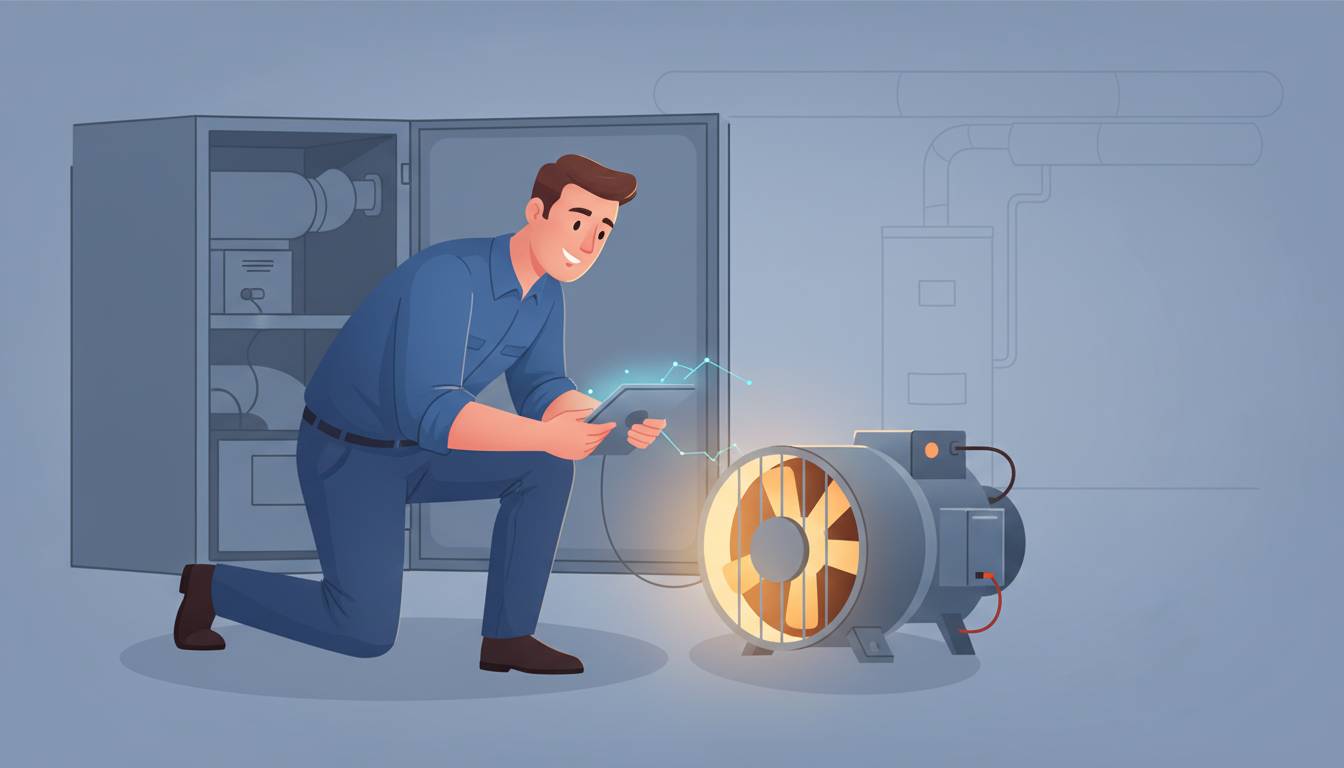
Blower Motor Not Working? Common Causes and Fixes
Blower Motor Not Working? Common Causes and Fixes
Your HVAC system suddenly stopped blowing air, and you're left wondering what went wrong. When your blower motor isn't working, your home quickly becomes uncomfortable—whether it's sweltering in summer or freezing in winter. The good news? Many blower motor problems have straightforward fixes, and understanding what's happening can save you time and money.
What Is a Blower Motor and Why Does It Matter?
Your blower motor is the heart of your HVAC system's air circulation. This essential component powers the fan that pushes heated or cooled air through your ductwork and into every room of your home. Without a functioning blower motor, even if your furnace or air conditioner is running perfectly, you won't feel any conditioned air.
The blower motor works alongside the blower wheel (also called a squirrel cage fan) to create the airflow you rely on daily. Modern HVAC systems use either single-speed or variable-speed motors, with variable-speed models offering better energy efficiency and more consistent temperatures.
When your blower motor stops working, you'll notice immediately—no air coming from your vents, uncomfortable temperatures, and a silent system that should be humming along.
Common Signs Your Blower Motor Is Failing
Before your blower motor completely fails, it usually gives you warning signs. Recognizing these symptoms early can prevent a complete breakdown:
Strange Noises: Squealing, grinding, or clicking sounds often indicate worn bearings or a loose blower wheel. A humming noise without any airflow typically points to a seized motor or capacitor failure.
Weak Airflow: If air is barely trickling from your vents, your blower motor might be struggling due to electrical issues, a clogged filter, or mechanical wear.
Intermittent Operation: A blower motor that starts and stops randomly suggests problems with the capacitor, control board, or overheating issues.
No Airflow At All: Complete silence from your system means the blower motor has stopped entirely, requiring immediate attention.
Higher Energy Bills: A failing blower motor works harder to push air, consuming more electricity and driving up your utility costs.
Understanding the common causes of weak airflow from your HVAC vents can help you diagnose whether your blower motor is the culprit.
Top Causes of Blower Motor Problems
1. Faulty Capacitor
The capacitor is one of the most common reasons for blower motor failure. This small cylindrical component stores and releases electrical energy to start your motor and keep it running. There are two types:
- Start capacitor: Provides the initial jolt to get the motor spinning
- Run capacitor: Maintains steady operation once the motor is running
When a capacitor fails, you'll typically hear a clicking or humming sound, but the motor won't spin. Capacitors wear out over time, especially in areas with frequent temperature fluctuations or power surges. The good news? Capacitor replacement is relatively inexpensive, usually costing between $120-$250 including labor.
2. Electrical Issues
Electrical problems account for a significant percentage of blower motor failures. Common electrical culprits include:
Blown Fuses or Tripped Breakers: Power surges or system overloads can trip your circuit breaker or blow the fuse that protects your HVAC system. Check your electrical panel first—it's the easiest fix.
Faulty Wiring: Loose connections, corroded wires, or damaged insulation can interrupt power to your blower motor. Look for signs of burning, discoloration, or exposed wires.
Bad Connections: Over time, wire connections can loosen due to vibration, especially if your system wasn't installed properly.
Always turn off power at the breaker before inspecting any electrical components. If you're not comfortable working with electricity, call a professional HVAC technician.
3. Blower Motor Burnout
Motors don't last forever. A typical blower motor lasts 10-20 years with proper maintenance, but several factors can shorten this lifespan:
- Overheating: Restricted airflow from dirty filters forces your motor to work harder and run hotter
- Age and wear: Bearings wear down, windings deteriorate, and components fatigue over time
- Lack of lubrication: Some older motors require periodic lubrication; without it, friction increases
Signs of motor burnout include burning smells, excessive heat around the blower compartment, and complete motor failure. Unfortunately, burned-out motors usually need replacement rather than repair.
4. Dirty or Clogged Air Filters
This is the easiest problem to fix and the most preventable. When your air filter becomes clogged with dust, pet hair, and debris, it restricts airflow to your blower motor. The motor compensates by working harder, which leads to:
- Overheating and automatic shutdowns
- Increased wear on motor components
- Higher energy consumption
- Eventually, complete motor failure
Changing your air filter every 1-3 months is the single most important maintenance task you can perform. During peak heating or cooling seasons, check filters monthly.
5. Thermostat Problems
Sometimes the issue isn't your blower motor at all—it's your thermostat. Common thermostat-related problems include:
- Incorrect fan settings: If your thermostat fan is set to "Auto" instead of "On," the blower only runs during heating or cooling cycles
- Faulty wiring: Loose or damaged thermostat wires prevent signals from reaching your blower motor
- Dead batteries: For battery-powered thermostats, dead batteries mean no communication with your system
- Calibration issues: An improperly calibrated thermostat may not call for the blower to run
Before assuming blower motor failure, verify your thermostat settings and battery status.
6. Control Board Failure
Your HVAC system's control board acts as the brain, sending signals to various components including the blower motor. A malfunctioning control board might fail to send the start signal to your blower, even though the motor itself is fine.
Control board problems are more common in systems that experience frequent power fluctuations or lightning strikes. Replacing a control board typically costs $200-$600 depending on your system.
7. Limit Switch Malfunction
The limit switch is a safety device that prevents your furnace from overheating. If your furnace gets too hot, the limit switch shuts down the burners but keeps the blower running to cool things down.
When a limit switch fails in the "open" position, it can prevent your blower from starting. This often happens due to dirty filters, blocked vents, or other issues that cause overheating. Understanding what causes your blower motor to overheat can help you prevent limit switch problems.
8. Blower Motor Relay Problems
The blower motor relay acts as an electrical switch, controlling when your motor turns on and off. A faulty relay can cause several symptoms:
- Blower won't start at all
- Blower runs continuously without stopping
- Intermittent operation
Testing a relay requires a multimeter and some electrical knowledge. If the relay doesn't show continuity when activated, it needs replacement.
9. Stuck or Damaged Blower Wheel
The blower wheel (squirrel cage fan) can become stuck due to:
- Debris accumulation
- Seized bearings
- Bent or damaged fan blades
- Loose mounting
If your motor hums but doesn't spin, the blower wheel might be stuck. Never force a stuck wheel—you could damage the motor. Instead, turn off power and carefully inspect for obstructions.
10. Belt Drive Issues (Older Systems)
While most modern systems use direct-drive motors, older HVAC systems use belts to connect the motor to the blower wheel. Belt problems include:
- Broken or snapped belts
- Worn or frayed belts slipping
- Misaligned pulleys
If you hear squealing during startup, your belt likely needs adjustment or replacement. Belt replacement is straightforward and inexpensive, usually costing $100-$200.
How to Troubleshoot a Blower Motor Not Working
Before calling a professional, you can perform several diagnostic steps safely:
Step 1: Check Your Thermostat
- Verify the system is set to "Heat" or "Cool" (not "Off")
- Set the fan to "On" instead of "Auto" to see if the blower runs
- Replace batteries if you have a battery-powered model
- Make sure the temperature setting requires heating or cooling
Step 2: Inspect Your Circuit Breaker
Go to your electrical panel and look for tripped breakers. A tripped breaker will be in the middle position or pointing the opposite direction from other breakers. Reset it by switching it fully off, then back on.
Also check for a secondary breaker or fuse at your furnace. Many systems have an additional disconnect switch or fuse near the unit.
Step 3: Replace Your Air Filter
A clogged filter is an extremely common cause of blower problems. Replace it with the correct size and MERV rating for your system. After installing a fresh filter, wait 30 minutes and see if your blower starts working normally.
Step 4: Listen for Unusual Sounds
Turn on your system and listen carefully:
- Humming without spinning: Likely a bad capacitor or stuck blower wheel
- Clicking: Could be a failing relay or capacitor
- Grinding or squealing: Worn bearings or belt issues
- Complete silence: Electrical problem, failed motor, or control board issue
Step 5: Inspect Visible Components
With the power OFF at the breaker, remove your furnace access panel and look for:
- Burnt or melted wires
- Loose connections
- Signs of overheating (discoloration, burning smell)
- Debris around the blower wheel
If you see any of these, don't attempt repairs yourself—call a professional.
Step 6: Test the Capacitor (Advanced)
If you have a multimeter and electrical experience, you can test your capacitor. However, capacitors store dangerous electrical charges even when power is off. If you're not comfortable doing this, skip this step and call a technician.
Repair vs. Replacement: What You Need to Know
When facing blower motor problems, you'll need to decide between repair and replacement.
Repair Costs
Common blower motor repairs and their typical costs:
- Capacitor replacement: $120-$250
- Blower motor relay: $150-$300
- Thermostat replacement: $150-$450
- Control board replacement: $200-$600
- Belt replacement: $100-$200
- Cleaning and lubrication: $100-$200
Replacement Costs
Full blower motor replacement typically costs:
- Single-speed motor: $400-$800 installed
- Variable-speed motor: $600-$1,200 installed
- Complete blower assembly: $800-$1,500 installed
Labor usually accounts for $150-$300 of the total cost, depending on accessibility and system complexity.
Making the Decision
Consider replacement over repair if:
- Your motor is more than 15 years old
- Repair costs exceed 50% of replacement cost
- You've had multiple repairs in the past year
- Your system is inefficient and driving up energy bills
- You're planning to sell your home soon
Repair makes sense when:
- Your system is relatively new (under 10 years)
- The fix is simple and inexpensive
- The rest of your HVAC system is in good condition
- You've maintained your system properly
For comprehensive guidance on maintaining your entire system, check out our complete HVAC repair guide.
When to Call a Professional HVAC Technician
Some blower motor problems require professional expertise:
Electrical Work: If you're not experienced with electrical systems, don't risk electrocution or damaging your system. Licensed HVAC technicians have the training and tools to work safely.
Refrigerant-Related Issues: If your AC isn't cooling and the blower isn't running, refrigerant problems might be involved. Handling refrigerant requires EPA certification.
Warranty Concerns: DIY repairs often void manufacturer warranties. Check your warranty terms before attempting repairs.
Complex Diagnostics: Control board issues, intermittent problems, and mysterious failures require diagnostic tools and expertise.
Safety Issues: Burning smells, frequent breaker trips, or visible damage to electrical components indicate serious problems requiring immediate professional attention.
Emergency Situations: During extreme weather (heat waves or cold snaps), a non-working blower motor is an emergency. Many HVAC companies offer 24/7 emergency service.
Preventing Blower Motor Failures
Preventive maintenance is your best defense against blower motor problems:
Regular Filter Changes: Change filters every 1-3 months. Use the right MERV rating for your system—higher isn't always better.
Annual Professional Maintenance: Schedule tune-ups twice yearly (spring for AC, fall for heating). Technicians will:
- Clean blower components
- Lubricate moving parts (if applicable)
- Test capacitors and electrical connections
- Inspect belts and bearings
- Verify proper airflow
Keep Vents Clear: Don't block return or supply vents with furniture, curtains, or storage items. Restricted airflow forces your blower motor to work harder.
Monitor Your System: Pay attention to unusual sounds, smells, or performance changes. Early detection prevents small problems from becoming expensive failures.
Upgrade Your Thermostat: A programmable or smart thermostat reduces unnecessary runtime, extending your motor's lifespan.
Address Problems Quickly: Don't ignore warning signs. A small issue like a bad capacitor can destroy your motor if left unresolved.
Maintain Proper Home Humidity: Excessive humidity can corrode electrical components. Use a dehumidifier if needed.
Protect Against Power Surges: Install a whole-home surge protector or at minimum, a surge protector for your HVAC system. Lightning strikes and power fluctuations damage sensitive components like control boards and capacitors.
Understanding Blower Motor Lifespan
Knowing what to expect from your blower motor helps you plan for the future:
Average Lifespan: 10-20 years with proper maintenance
Factors That Extend Lifespan:
- Regular filter changes
- Annual professional maintenance
- Variable-speed motors (less wear)
- Proper installation
- Stable electrical supply
- Appropriate system sizing
Factors That Shorten Lifespan:
- Neglected maintenance
- Dirty filters
- Oversized or undersized systems
- Poor installation
- Frequent power outages or surges
- Extreme climate conditions
If your blower motor is approaching 15 years old, start budgeting for replacement. Proactive replacement is less stressful than emergency replacement during a heat wave or cold snap.
FAQ About Blower Motor Problems
Why is my blower motor humming but not spinning?
A humming sound without rotation typically indicates either a failed capacitor or a stuck blower wheel. The capacitor provides the electrical boost needed to start the motor spinning. When it fails, the motor receives power (creating the humming sound) but can't generate enough torque to spin. Alternatively, debris or seized bearings might physically prevent the wheel from turning.
Can I run my furnace if the blower motor isn't working?
No, you should never run your furnace without a working blower motor. The blower circulates air across the heat exchanger to distribute warmth and prevent dangerous overheating. Without the blower, your heat exchanger can overheat, crack, and potentially release carbon monoxide into your home. Modern furnaces have safety switches that prevent operation without the blower, but never override these safety features.
How much does blower motor repair typically cost?
Blower motor repair costs vary depending on the issue. Simple fixes like capacitor replacement run $120-$250, while control board replacement can cost $200-$600. Complete motor replacement ranges from $400-$1,200 depending on motor type and system accessibility. Labor typically adds $150-$300 to parts costs. Get quotes from multiple licensed HVAC contractors for accurate pricing.
How long do blower motors usually last?
With proper maintenance, blower motors typically last 10-20 years. Variable-speed motors often outlast single-speed models because they experience less wear from constant on-off cycling. Regular filter changes, annual professional maintenance, and proper system sizing all extend motor lifespan. Neglected systems with dirty filters may need motor replacement in as little as 5-8 years.
What's the difference between a blower motor and a blower fan?
The blower motor is the electric motor that generates rotational power. The blower fan (or blower wheel) is the actual component with blades that moves air. They work together as a unit—the motor spins the fan, and the fan pushes air through your ductwork. When people say "blower motor problems," they might mean issues with either the motor itself or the entire blower assembly including the fan.
Conclusion: Don't Ignore Blower Motor Problems
A blower motor not working isn't just an inconvenience—it affects your comfort, energy bills, and even your safety. Whether you're dealing with a simple capacitor failure or facing complete motor replacement, addressing the problem quickly prevents further damage and costly repairs.
Start with simple troubleshooting steps like checking your thermostat, circuit breaker, and air filter. These account for many blower motor problems and cost nothing to fix. For electrical issues, motor replacement, or complex diagnostics, trust a licensed HVAC professional to diagnose and repair your system safely.
Remember, preventive maintenance is your best investment. Regular filter changes and annual professional tune-ups keep your blower motor running efficiently for years to come. When problems do arise, you'll have the knowledge to make informed decisions about repair versus replacement.
Ready to get your blower motor back up and running? Schedule a diagnostic service with a qualified HVAC technician today. Your comfort is worth the investment, and addressing blower motor problems now prevents expensive emergency repairs down the road.