When to Call 911, the Utility Company, or an HVAC Contractor: Your Emergency Decision Guide
When to Call 911, the Utility Company, or an HVAC Contractor: Your Emergency Decision Guide
When your heating or cooling system malfunctions, knowing who to call can mean the difference between a quick fix and a life-threatening situation. Should you dial 911, contact your utility company, or call an HVAC contractor? The answer depends on the type of emergency you're facing, and making the wrong choice could put your family at risk.
This guide will help you understand exactly when to call 911 for an HVAC emergency, when your utility company should be your first call, and when a professional HVAC contractor is the right choice. You'll learn to recognize the warning signs that demand immediate action and which situations can wait until business hours.
Understanding the Critical Difference: Life-Threatening vs. System Failure
Not all HVAC problems are emergencies. The key distinction is simple: if there's an immediate threat to life, property, or safety, it's a true emergency. Everything else, while uncomfortable or inconvenient, can typically wait for regular service.
Life-threatening emergencies include gas leaks, carbon monoxide exposure, electrical fires, and extreme temperature situations affecting vulnerable family members. System failures like a broken air conditioner on a mild day or a furnace that won't start when it's 50°F outside are problems that need fixing, but they're not emergencies requiring immediate response.
Understanding this difference will help you make the right call and potentially save on emergency service fees when a standard appointment would suffice.
When to Call 911 Immediately: Life-Threatening HVAC Emergencies
Certain HVAC-related situations require immediate emergency response from 911. Don't hesitate or try to troubleshoot these problems yourself—evacuate and call for help.
Natural Gas Leaks
If you smell a rotten egg odor (the sulfur-like scent added to natural gas), hear hissing sounds near gas lines, or suspect a gas leak for any reason, take these steps immediately:
- Evacuate everyone from the building, including pets
- Don't touch any electrical switches, including light switches, thermostats, or appliances
- Don't use your phone inside the building—even cell phones can create a spark
- Move at least 350 feet away (roughly the length of a football field)
- Call 911 from a safe location using your cell phone or a neighbor's phone
Never attempt to locate the leak source yourself, and never try to ventilate the area by opening windows. Gas is explosive, and any spark—even from static electricity—can trigger a catastrophic event.
Should you call 911 or your gas company for a gas leak? The answer is both. Call 911 first if you're unsure about the severity, then contact your utility company's emergency line. The fire department will secure the scene and check for dangerous gas levels, while the utility company will shut off the gas supply and inspect the main line.
Carbon Monoxide Alarms
When your carbon monoxide detector sounds, this is always a 911-level emergency. Carbon monoxide is an odorless, colorless gas that can be fatal within minutes at high concentrations. Your combustion appliances—furnaces, boilers, water heaters, and gas stoves—can produce carbon monoxide if they're not functioning properly.
If your carbon monoxide alarm goes off:
- Immediately evacuate all people and pets
- Call 911 from outside the building
- Don't go back inside until emergency responders declare it safe
- Seek medical attention if anyone experiences symptoms like headaches, dizziness, nausea, confusion, or fatigue
The fire department will bring specialized equipment to measure carbon monoxide levels and ventilate your home safely. Only after they've given the all-clear should you contact an HVAC contractor to identify and repair the source of the carbon monoxide.
Electrical Fires or Active Smoking
If you see flames, smoke, or sparks coming from your HVAC equipment, circuit breaker panel, or any electrical components, call 911 immediately. Don't attempt to extinguish an electrical fire with water, and only use a fire extinguisher if you have a Class C extinguisher designed for electrical fires and feel safe doing so.
Electrical fires can spread rapidly through walls and ceilings, making them particularly dangerous. Your priority is getting everyone out safely and letting trained firefighters handle the situation.
Severe Health Risks from Temperature Extremes
When your heating or cooling system fails during extreme weather, it becomes a 911 emergency if:
- Infants, elderly family members, or people with medical conditions are at risk
- Indoor temperatures reach dangerous levels (below 50°F or above 95°F)
- Anyone shows signs of hypothermia (shivering, confusion, drowsiness) or heat stroke (hot dry skin, rapid pulse, confusion)
In these cases, call 911 for immediate medical assistance while also arranging for emergency HVAC repair. The health and safety of vulnerable family members always takes priority over property concerns.
When to Call Your Utility Company: Gas and Power Emergencies
Your utility company handles the infrastructure that delivers gas and electricity to your home. Certain HVAC-related problems fall under their responsibility, not your HVAC contractor's.
Gas-Related Issues Requiring Utility Company Response
Call your gas utility company's emergency line when:
- You detect a gas odor outside your home, particularly near the meter or street
- You suspect damage to the gas meter or outside gas lines
- Construction or digging has occurred near gas lines on your property
- You need the main gas supply shut off to your home
- The gas meter is making unusual sounds or showing signs of damage
Your utility company is responsible for the gas service line running from the street to your meter, as well as the meter itself. They provide 24/7 emergency response for gas-related issues at no charge, as this is part of their service obligation.
After your utility company has secured the gas supply and inspected their equipment, you may then need an HVAC contractor to inspect and repair the appliances inside your home, such as your furnace, boiler, or gas water heater.
Power and Electrical Service Issues
If your HVAC system isn't working due to power issues, determine whether the problem is inside your home or with the utility service:
Call your electric utility company if:
- Your entire home has lost power (not just individual circuits)
- You see damaged power lines or equipment near your property
- Your neighbors have power but your entire home doesn't
- The utility meter appears damaged or isn't functioning
Call an electrician or HVAC contractor if:
- Only your HVAC system isn't working, but other appliances are fine
- Specific circuit breakers keep tripping when your HVAC runs
- You hear buzzing or see sparks at your electrical panel when the HVAC operates
The distinction is important: utility companies handle the power infrastructure up to your meter, while licensed electricians and HVAC contractors handle the wiring and equipment inside your home.
When to Call an Emergency HVAC Contractor: Urgent System Failures
An emergency HVAC contractor should be your call when you have a serious system problem that threatens comfort, safety, or equipment, but doesn't require 911 or utility company intervention first.
True HVAC Emergencies Requiring Immediate Professional Help
Complete heating failure in cold weather (temperatures below 40°F outside) is an emergency, especially with young children, elderly family members, or anyone with health conditions in the home. While uncomfortable for everyone, extreme cold poses serious health risks to vulnerable individuals.
Complete cooling failure during heat waves (temperatures above 90°F) similarly qualifies as an emergency. Heat-related illnesses can develop quickly, particularly in children, the elderly, and those with cardiovascular conditions.
Strange burning smells from your HVAC system (excluding the normal dusty smell when you first turn on your furnace each season) indicate potential electrical problems or overheating components that could lead to fire.
Continuous water leaks from your HVAC system can cause significant water damage to your home, ruining floors, ceilings, and personal property. Air conditioning condensate leaks, refrigerant line leaks, or furnace condensate problems all require prompt attention.
Refrigerant leaks not only reduce your system's efficiency but can also pose health risks. If you notice ice buildup on your air conditioning lines, hear hissing sounds, or your system isn't cooling despite running continuously, you may have a refrigerant leak.
Repeated circuit breaker trips indicate your HVAC system is drawing too much power, which can damage your electrical system and potentially cause a fire. If resetting the breaker doesn't solve the problem, don't keep resetting it—call for emergency service.
What Qualifies as After-Hours Emergency Service?
Most HVAC companies charge premium rates for after-hours, weekend, and holiday service calls. These emergency service fees can be 50-100% higher than regular rates, so it's worth considering whether your situation truly requires immediate attention.
Call for emergency after-hours service if:
- Your heating fails when outdoor temperatures are below 40°F
- Your cooling fails when temperatures exceed 90°F
- You detect burning smells or smoking equipment
- Your system is leaking water and causing active damage
- You hear loud grinding, banging, or screeching sounds indicating imminent equipment failure
Schedule regular business hours service if:
- The weather is mild (50-80°F)
- You can maintain reasonable comfort with space heaters, fans, or alternative methods
- The system is running but just not performing optimally
- You've discovered the problem late in the evening but can wait until morning
- There's no immediate safety risk or property damage
Being honest about the urgency helps you avoid unnecessary emergency fees while still getting help when you truly need it. For guidance on assessing your HVAC repair needs, check out our comprehensive HVAC repair guide.
Creating Your Emergency Response Plan: A Homeowner's Checklist
Having a plan in place before an emergency occurs ensures you'll respond correctly when every second counts.
Essential Information to Keep Accessible
Create a document or note on your phone with the following emergency contacts:
- 911 (for life-threatening emergencies)
- Gas utility emergency line (usually on your gas bill or meter)
- Electric utility emergency line (usually on your electric bill or meter)
- Trusted HVAC contractor's 24/7 emergency line
- Poison Control: 1-800-222-1222
- Your home insurance provider's emergency line
Also note these locations in your home:
- Main gas shutoff valve location
- Main water shutoff valve location
- Electrical panel location
- HVAC system filter location and size
- Emergency shutoff switch for your furnace
Quick Assessment Steps Before Calling
When you notice an HVAC problem, take 30 seconds to assess the situation:
- Check your thermostat: Is it set correctly? Does it have power?
- Check your circuit breakers: Has the HVAC breaker tripped?
- Check your air filter: Is it extremely dirty and restricting airflow?
- Look and listen: Do you see smoke, smell gas, or hear unusual sounds?
- Check the emergency shutoff switch: Is it accidentally turned off?
These quick checks can sometimes identify simple fixes that don't require professional help. However, if you detect any signs of gas, carbon monoxide, electrical hazards, or fire, skip these steps and evacuate immediately.
For more detailed guidance on handling urgent situations, see our article on HVAC repair emergencies.
The Role of Different Professionals: Who Does What?
Understanding each professional's area of expertise helps you call the right person for your specific problem.
HVAC Contractors: Your Heating and Cooling Specialists
Licensed HVAC technicians specialize in heating, ventilation, and air conditioning systems. They handle:
- Furnaces, boilers, and heat pumps
- Air conditioners and ductwork
- Thermostats and zone controls
- Indoor air quality equipment
- Combustion appliance testing and repair
- Refrigerant line work
- Gas connections to appliances (after the meter)
HVAC contractors can diagnose system failures, perform repairs, and conduct preventive maintenance. Many offer 24/7 emergency service, though at premium rates outside business hours.
Utility Companies: Infrastructure and Supply
Your gas and electric utility companies maintain the infrastructure that delivers energy to your home:
- Gas lines from the street to your meter
- Gas meters and associated equipment
- Electric service lines to your home
- Electric meters and connection equipment
- Emergency response for gas leaks and power outages
Utility companies typically provide emergency services at no additional charge, as this is part of their regulated service obligation. However, they're not responsible for appliances or systems inside your home—only the delivery infrastructure up to and including the meter.
Fire Department: Emergency Response and Safety
The fire department responds to immediate safety threats:
- Active fires or smoke conditions
- Gas leak verification and scene safety
- Carbon monoxide level measurement
- Hazardous conditions assessment
- Emergency ventilation
- Medical emergencies related to environmental conditions
Fire departments have specialized detection equipment and training to handle dangerous situations safely. They'll secure the scene and ensure it's safe before any repair work begins.
Electricians: When It's a Power Problem
Sometimes what appears to be an HVAC problem is actually an electrical issue. Licensed electricians handle:
- Circuit breaker and panel problems
- Wiring issues between your panel and HVAC equipment
- Dedicated circuit installation for HVAC systems
- Electrical safety inspections
- Ground fault and surge protection
If your HVAC contractor identifies an electrical problem beyond basic system wiring, they'll recommend bringing in a licensed electrician to address the power supply issues.
Recognizing Warning Signs Before They Become Emergencies
Many HVAC emergencies give warning signs days or weeks before complete failure. Recognizing these early indicators can help you schedule regular service instead of requiring emergency calls.
Warning Signs to Never Ignore
Yellow or flickering flames in your gas furnace (instead of steady blue flames) indicate incomplete combustion, which produces carbon monoxide. Schedule immediate service.
Persistent strange odors—burning smells, electrical odors, or musty smells—all indicate problems that will worsen if ignored.
Increasing utility bills without explanation often signal efficiency problems that will eventually lead to system failure.
Weak airflow from your vents indicates filter problems, duct issues, or blower motor failure developing.
Unusual noises like grinding, squealing, or banging mean components are wearing out and will soon fail completely.
Short cycling (your system turning on and off every few minutes) indicates a serious problem that's stressing your equipment and driving up energy costs.
Ice formation on your air conditioning lines or coils signals refrigerant or airflow problems that reduce efficiency and can damage your compressor.
Addressing these warning signs during business hours with regular service calls saves you money compared to emergency service and prevents small problems from becoming dangerous situations.
Cost Considerations: Emergency Service vs. Regular Appointments
Emergency HVAC service typically costs significantly more than regular business hours appointments. Understanding the cost structure helps you make informed decisions.
Typical Emergency Service Premium
Most HVAC companies charge:
- After-hours rates: 50-100% premium over regular rates
- Holiday rates: 100-150% premium over regular rates
- Emergency trip fees: $150-$300 just for the service call
- Diagnostic fees: $75-$150, sometimes waived if you proceed with repairs
- Overtime labor rates: $150-$250 per hour (vs. $75-$150 regular hours)
A repair that might cost $300 during business hours could easily cost $500-$700 as an emergency call. However, when facing a true emergency—particularly in extreme weather or safety situations—the premium is worth paying to protect your family and property.
Insurance Considerations
Homeowners insurance typically covers HVAC emergency damage to your home (like water damage from a broken system) but not routine repairs or maintenance. However, some home warranty plans cover emergency HVAC repairs. Check your coverage before an emergency occurs so you understand your out-of-pocket costs.
Some insurance companies offer discounts for homes with carbon monoxide detectors and regular HVAC maintenance records, as these reduce emergency claims.
Prevention: The Best Emergency Response is Avoiding Emergencies
The most effective emergency strategy is preventing emergencies in the first place through regular maintenance and smart homeowner practices.
Annual Professional Maintenance
Schedule professional HVAC maintenance twice yearly:
- Fall heating system inspection before winter
- Spring cooling system inspection before summer
Professional technicians check for gas leaks, carbon monoxide production, electrical problems, refrigerant levels, and component wear. They catch small issues before they become expensive emergencies. Our emergency HVAC repair checklist for homeowners provides more details on preventive measures.
Safety Equipment Installation and Testing
Install and maintain critical safety equipment:
- Carbon monoxide detectors on every floor (test monthly, replace batteries annually)
- Smoke detectors near HVAC equipment (test monthly)
- Smart thermostats with alerts for temperature extremes or system malfunctions
- Water leak detectors near HVAC equipment in basements or attics
These devices provide early warning of problems, often before they become emergencies.
Simple Monthly Homeowner Maintenance
Perform these simple tasks yourself:
- Check and change air filters monthly during heavy use seasons
- Clear debris from around outdoor AC units
- Listen for unusual sounds when your system runs
- Test your thermostat to ensure it's controlling temperatures properly
- Inspect visible areas for water leaks, rust, or damage
These quick checks take less than 10 minutes but can identify problems early when they're cheaper and easier to fix.
Frequently Asked Questions
Should I call 911 if I smell gas from my furnace?
Yes, evacuate immediately and call 911 from outside. A gas smell (like rotten eggs) always indicates a potential gas leak, which is an explosive hazard. Don't try to determine if it's serious—let the fire department assess the situation with proper detection equipment.
Can an HVAC contractor fix a gas leak, or do I need the utility company?
Both may be needed. The utility company handles leaks in their infrastructure (the service line and meter), while HVAC contractors handle leaks in your appliances and the gas piping inside your home. Always call the utility company first to secure the gas supply, then have an HVAC contractor inspect your equipment.
What's the difference between an HVAC emergency and a non-emergency?
An HVAC emergency involves immediate risk to health, safety, or property—gas leaks, carbon monoxide, electrical hazards, or system failure during extreme weather. Non-emergencies are problems that need fixing but don't pose immediate dangers, like reduced efficiency, minor noise issues, or system failures during mild weather.
Is it worth paying for emergency HVAC service at night?
If temperatures are extreme (below 40°F or above 90°F), you detect safety hazards, or your system is causing property damage, emergency service is worth the premium cost. If the weather is mild and there's no immediate danger, waiting until business hours can save 50-100% on service costs.
Who responds when a carbon monoxide detector goes off?
Call 911 immediately. The fire department will respond with carbon monoxide detection equipment to measure gas levels, identify the source, and ventilate your home safely. After they've given the all-clear, contact an HVAC contractor to repair or replace the malfunctioning equipment producing carbon monoxide.
How can I tell if my HVAC problem requires utility company or contractor?
If the problem involves the gas meter, gas service line to your home, or complete power loss affecting your entire home, call the utility company. If the problem is isolated to your HVAC system—like a furnace that won't start, an AC that's not cooling, or unusual noises—call an HVAC contractor. When in doubt, utility companies can assess and redirect you if needed.
Making the Right Call: Your Emergency Decision Framework
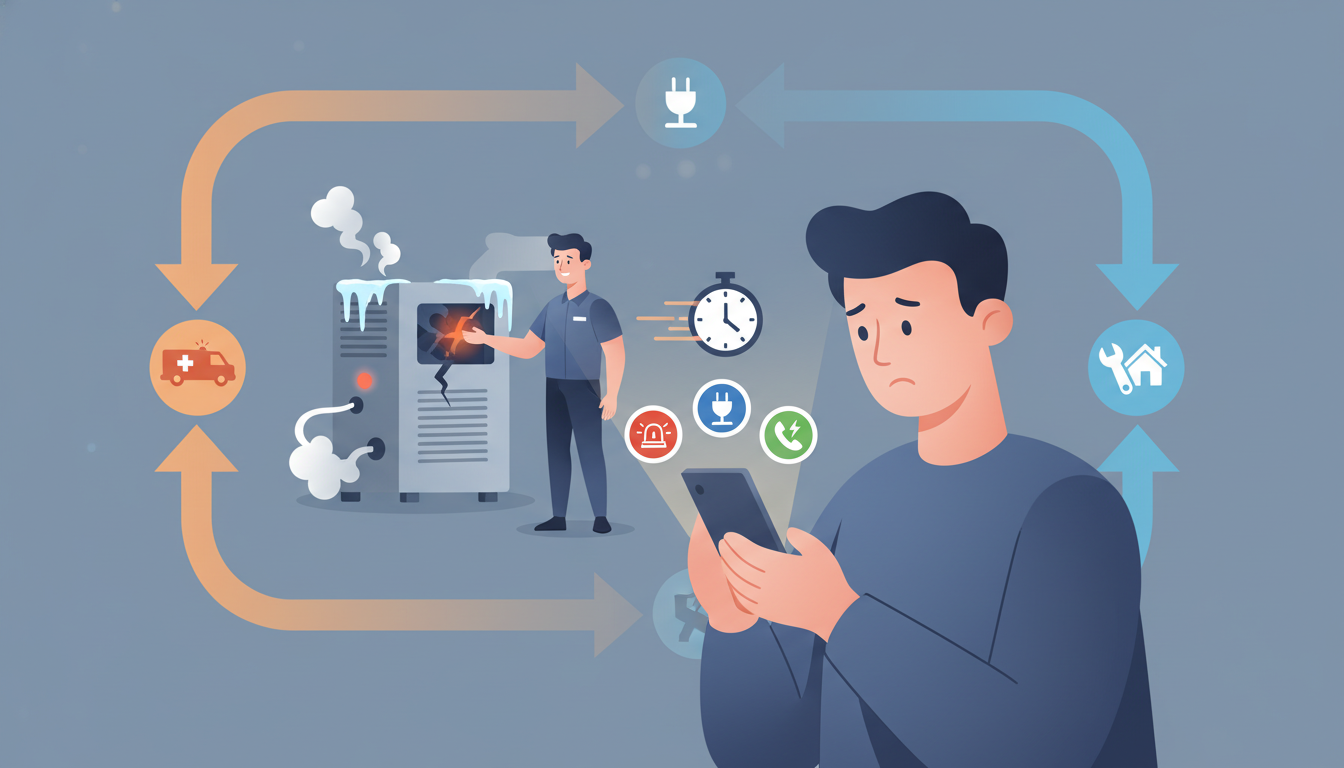
When facing an HVAC problem, use this decision framework:
Step 1: Assess Immediate Danger
- Gas smell, carbon monoxide alarm, fire, or smoke? → Evacuate and call 911
- Someone showing signs of heat stroke or hypothermia? → Call 911
Step 2: Determine Infrastructure vs. Equipment
- Problem with gas meter, service lines, or total power loss? → Call utility company emergency line
- Gas secured but appliance needs repair? → Call HVAC contractor
Step 3: Evaluate True Emergency Status
- Extreme weather + system failure + vulnerable family members? → Call emergency HVAC service
- Safety hazard like burning smell or repeated breaker trips? → Call emergency HVAC service
- Mild weather + no safety issues? → Schedule regular business hours appointment
Step 4: Take Immediate Safety Measures
- Turn off system at emergency shutoff switch if safe to do so
- Use space heaters or fans as temporary measures (safely)
- Keep family in the safest areas of your home
- Don't attempt repairs beyond basic troubleshooting
Protecting Your Home and Family
Knowing when to call 911, your utility company, or an HVAC contractor isn't just about convenience—it's about protecting your family's safety and your home's integrity. Life-threatening situations like gas leaks and carbon monoxide exposure require immediate emergency response. Utility infrastructure problems need your gas or electric company's emergency services. And HVAC system failures, while uncomfortable and sometimes urgent, typically require professional contractor expertise.
Keep emergency numbers accessible, maintain your HVAC system with regular professional service, and trust your instincts. If a situation feels dangerous, treat it as an emergency. The cost of a false alarm is minimal compared to the potential consequences of delaying action when facing a real threat.
By understanding these distinctions and preparing your emergency response plan now, you'll be ready to make the right call when problems arise—keeping your family safe and your home comfortable year-round.