What Causes an AC to Trip the Breaker in Summer?
What Causes an AC to Trip the Breaker in Summer?
Nothing's more frustrating than your air conditioner shutting down on the hottest day of the year. If your AC keeps tripping the breaker in summer, you're dealing with more than just an inconvenience—you're facing a warning sign that something's wrong with your cooling system.
When your air conditioner trips the circuit breaker repeatedly, it's telling you that it's drawing too much power or experiencing an electrical fault. Understanding why this happens during summer heat can help you identify the problem quickly and get your home comfortable again.
Why Summer Makes AC Breaker Problems Worse
Your air conditioner works harder during summer than any other time of year. When outdoor temperatures soar into the 90s and beyond, your AC unit runs longer cycles and draws more electricity to keep your home cool. This increased demand puts extra stress on every component in your system.
Summer humidity also plays a role. High humidity forces your AC to remove moisture from the air while cooling, which requires additional energy. The combination of high heat and humidity creates the perfect conditions for breaker trips.
Most breaker trips happen during peak cooling season because that's when minor issues that went unnoticed during spring suddenly become major problems. A slightly dirty air filter might not matter in April, but it can cause a breaker trip in July when your system is running at full capacity.
What Happens When Your AC Trips the Breaker
When your air conditioner draws more current than the circuit breaker is rated for, the breaker automatically shuts off power to protect your home's electrical system from overheating or fire. This safety mechanism is designed to prevent electrical damage and potential hazards.
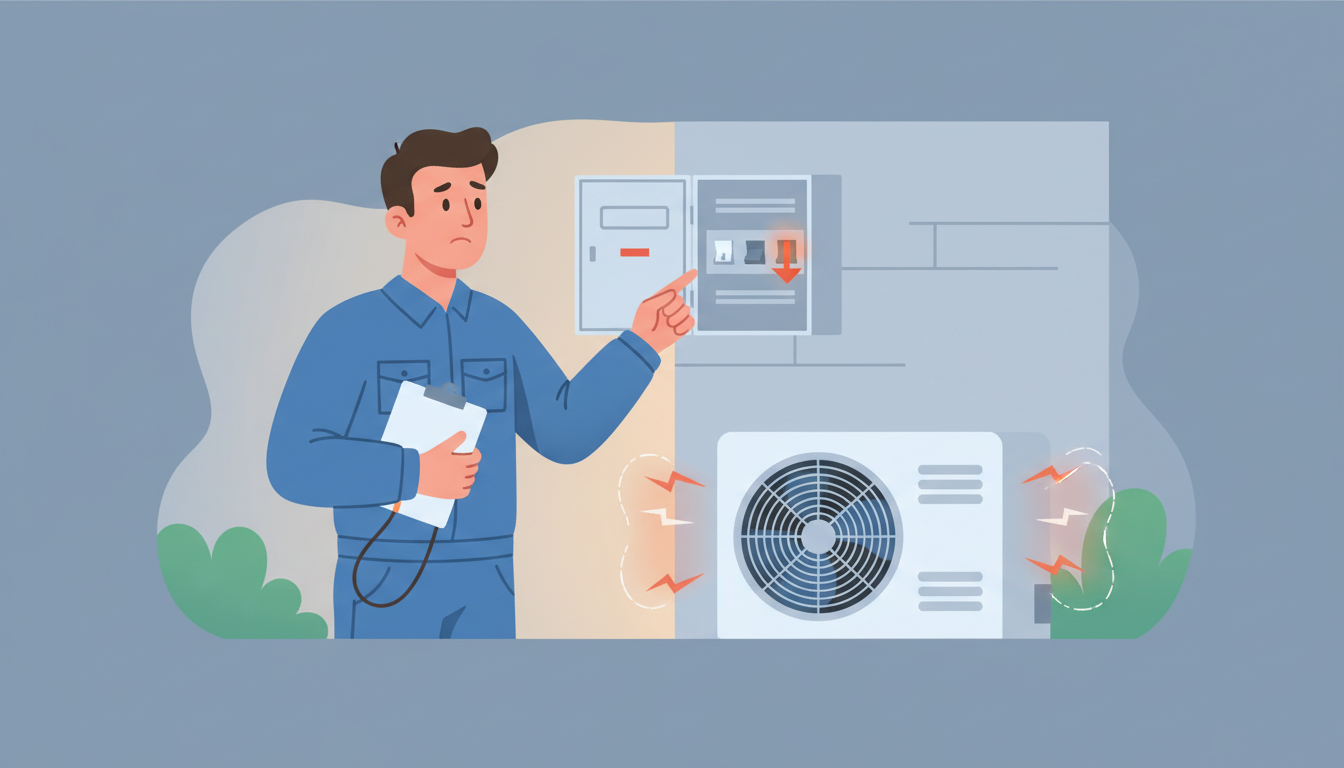
You'll know your AC has tripped the breaker when your system stops running completely and won't restart. The breaker switch in your electrical panel will be in the "off" or middle position. Your home will stop cooling, and you'll notice the temperature rising quickly on hot summer days.
Many homeowners make the mistake of simply resetting the breaker and hoping the problem goes away. While this might provide temporary relief, repeatedly resetting a tripped breaker without addressing the underlying cause can damage your AC equipment and create safety risks. If you need guidance on troubleshooting your system, check out our HVAC repair guide for comprehensive tips.
Top Causes Your AC Trips the Breaker in Summer
Dirty or Clogged Air Filter
A dirty air filter is the most common and easily fixable cause of AC breaker trips. When your filter becomes clogged with dust, pet hair, and debris, it restricts airflow through your system. This restriction forces your blower motor to work harder and draw more electrical current to push air through the blocked filter.
During summer, your AC runs constantly, which means your filter gets dirty faster than during other seasons. A filter that might last three months in winter could need replacement every 30 days in peak summer heat.
The extra electrical draw from the overworked blower motor can exceed your circuit breaker's amperage rating, causing it to trip. Replace your air filter every 1-2 months during summer, or more frequently if you have pets or suffer from allergies.
Low Refrigerant Levels
Low refrigerant is a serious problem that forces your compressor to work overtime. When refrigerant levels drop due to a leak in your system, your AC can't absorb heat efficiently. The compressor continues running in an attempt to reach your thermostat's set temperature, but it never quite gets there.
This continuous operation causes the compressor to overheat and draw excessive electrical current. The breaker trips to protect the circuit from this overload. Low refrigerant also causes your evaporator coil to freeze, which compounds the problem and can lead to additional electrical issues.
Refrigerant doesn't simply deplete over time—if your levels are low, you have a leak that needs professional repair. Adding more refrigerant without fixing the leak is a temporary solution that wastes money and doesn't address the root cause.
Dirty Condenser Coils
Your outdoor condenser unit sits exposed to the elements all year long. During summer, pollen, grass clippings, leaves, and dirt accumulate on the condenser coils. This coating of debris acts like an insulating blanket, preventing your AC from releasing heat effectively.
When the condenser coils can't dissipate heat properly, your entire system works harder and draws more power. The compressor runs longer cycles trying to achieve the cooling your thermostat demands. This extended operation increases electrical consumption and can cause the circuit breaker to trip.
Clean your outdoor condenser unit at the beginning of each cooling season. Remove debris from around the unit, and gently spray the coils with a garden hose to wash away dirt. For heavily soiled coils, consider professional coil cleaning as part of your annual maintenance.
Faulty or Failing Capacitor
The capacitor in your AC unit provides the electrical jolt needed to start the compressor and fan motors. Think of it as a battery that stores energy and releases it in short bursts. During hot summer days, capacitors work overtime, starting your AC system dozens of times per day.
When a capacitor begins to fail, it can't provide the proper voltage to start the motors efficiently. The motors struggle to start, drawing significantly more current than normal. This surge in electrical demand trips your circuit breaker as a protective measure.
Capacitors have a limited lifespan of 10-20 years, and extreme heat accelerates their deterioration. If your AC is older or you hear a clicking sound before the breaker trips, a failing capacitor is likely the culprit. Capacitor replacement is a common repair that should only be performed by licensed HVAC technicians due to the dangerous electrical charge these components hold.
Compressor Hard Starting or Grounded Compressor
The compressor is the heart of your air conditioning system, and it's also the component that draws the most electrical power. As compressors age, they develop hard-starting problems where they struggle to begin operation. This difficulty causes a temporary spike in electrical current that can trip your breaker.
A grounded compressor is a more serious issue. This occurs when electrical windings inside the compressor break down and make contact with the compressor housing, creating a direct short circuit to ground. When this happens, you'll typically see sparks or smell burning oil, and your breaker will trip immediately every time you try to run the AC.
Grounded compressors usually require complete compressor replacement or, in many cases, replacement of the entire outdoor condensing unit. This is one of the more expensive AC repairs, often costing $1,500-$3,000 depending on your system size and type. If you're dealing with compressor issues, our central AC repair guide can help you understand your options.
Shorted or Damaged Electric Motor
Your AC system contains multiple motors: the compressor motor, condenser fan motor, and blower fan motor. Any of these motors can develop electrical shorts over time due to insulation breakdown, overheating, or physical damage.
When motor windings short circuit, they create a path of very low electrical resistance. This allows excessive current to flow through the circuit, instantly tripping your breaker. A shorted motor often produces a burning smell and may cause your breaker to trip the moment you turn on your AC.
Summer heat accelerates motor failure because the motors already generate heat during operation, and high ambient temperatures compound this thermal stress. Older AC units are more susceptible to motor problems, especially if they haven't received regular maintenance.
Electrical Wiring Issues
Loose electrical connections are dangerous and can cause your AC breaker to trip intermittently. As your AC system vibrates during operation, wire connections can gradually work themselves loose. Loose wires create resistance, which generates heat and can cause arcing.
Damaged or undersized wiring also causes problems. If previous homeowners or unlicensed contractors installed your AC with wire that's too thin for the amperage requirements, the circuit will overheat during peak demand and trip the breaker.
Rodents sometimes chew through AC wiring, especially in outdoor disconnect boxes and attics where indoor air handlers are located. Even minor damage to wire insulation can cause shorts that trip breakers. Any electrical wiring issues require immediate attention from a licensed electrician or HVAC technician.
Faulty Circuit Breaker
Sometimes the problem isn't your AC at all—it's the circuit breaker itself. Breakers wear out over time, and older breakers become more sensitive, tripping at lower current levels than their rating indicates.
A breaker that's been repeatedly reset after trips can develop internal damage that makes it unreliable. The heat generated during each trip gradually degrades the breaker's internal components. If your breaker feels hot to the touch or you notice scorch marks around it, the breaker itself may need replacement.
Testing a breaker requires electrical expertise and proper equipment. Never attempt to troubleshoot breaker panels yourself if you're not qualified. An electrician can test your breaker's actual trip point and determine if it needs replacement.
Frozen Evaporator Coil
When your indoor evaporator coil freezes, it creates multiple problems that can lead to breaker trips. Ice buildup occurs when airflow across the coil is restricted (usually due to dirty filters) or when refrigerant levels are low.
A frozen coil blocks airflow completely, forcing your blower motor to work much harder. The motor draws excessive current trying to push air through the ice blockage. Additionally, ice buildup can cause liquid refrigerant to flow back to the compressor, damaging it and causing electrical problems.
If you see ice on your refrigerant lines or around your indoor unit, turn off your AC immediately and let it thaw completely. Once thawed, check and replace your air filter. If the problem returns, you need professional help to diagnose the underlying cause.
What to Do When Your AC Trips the Breaker
When your air conditioner trips the circuit breaker, follow these steps before calling for professional help:
Step 1: Turn off your AC at the thermostat. Don't simply reset the breaker while the system is calling for cooling.
Step 2: Go to your electrical panel and identify the tripped breaker. It will be in the "off" or middle position.
Step 3: Check your air filter. If it's dirty, replace it immediately.
Step 4: Inspect your outdoor condenser unit. Remove any debris, leaves, or grass clippings blocking airflow.
Step 5: Wait 30 minutes to allow capacitors to discharge and your system to reset.
Step 6: Reset the breaker by switching it fully to the "off" position, then back to "on."
Step 7: Return to your thermostat and turn your AC back on.
If the breaker trips again immediately or within a few minutes, turn off your AC and call a professional HVAC technician. Repeatedly resetting a tripping breaker without fixing the underlying problem can damage your equipment and create safety hazards. For more troubleshooting steps, visit our guide on what to check when your AC won't turn on.
When DIY Fixes Aren't Enough
Some AC breaker problems are beyond DIY solutions. Call a professional HVAC technician if:
- The breaker trips immediately every time you reset it
- You smell burning odors or see smoke
- Your breaker feels hot or shows scorch marks
- The problem persists after replacing the air filter
- You hear unusual sounds like buzzing, clicking, or grinding before the breaker trips
- Your AC is more than 10-15 years old and experiencing frequent issues
Professional HVAC technicians have specialized tools to measure electrical current, test capacitors, check refrigerant levels, and diagnose complex electrical problems. They can safely identify issues that would be dangerous for homeowners to troubleshoot.
Preventing Summer AC Breaker Trips
Prevention is always cheaper than repair. Follow these maintenance tips to minimize the risk of breaker trips:
Schedule annual professional maintenance every spring before cooling season begins. Technicians will clean coils, check electrical connections, test capacitors, and verify refrigerant levels.
Replace air filters regularly. During summer, check your filter monthly and replace it when it looks dirty. High-quality pleated filters often last longer than cheap fiberglass filters.
Keep your outdoor unit clean. Trim vegetation at least 2 feet away from all sides of your condenser unit. Remove leaves and debris regularly.
Don't set your thermostat too low. Setting your thermostat to 68°F on a 100°F day forces your system to run continuously. Aim for 75-78°F for efficient cooling that won't overstress your equipment.
Install a smart thermostat that can prevent your system from short-cycling and provide diagnostic information about your AC's operation.
Monitor your system's performance. If you notice reduced cooling, unusual sounds, or higher electric bills, address these warning signs before they lead to breaker trips.
Understanding Repair Costs
If professional repair is needed, here are typical cost ranges for common causes of AC breaker trips:
- Air filter replacement: $20-40 (DIY)
- Capacitor replacement: $150-400
- Coil cleaning: $100-400
- Refrigerant recharge with leak repair: $200-1,500
- Fan motor replacement: $300-700
- Compressor replacement: $1,500-3,000
- Full system replacement: $3,500-7,500
Many HVAC companies offer service agreements that include annual maintenance and discounts on repairs. These plans typically cost $150-300 per year and can save you money in the long run by catching small problems before they become expensive failures.
FAQ: AC Tripping Breaker in Summer
Why does my AC only trip the breaker in summer?
Your AC trips the breaker in summer because it runs longer cycles and draws more power in hot weather. Minor issues that don't cause problems in spring become critical when your system operates at full capacity during peak heat. The combination of extended runtime, high outdoor temperatures, and maximum electrical demand exposes underlying problems.
Can I just use a bigger circuit breaker?
No, never upgrade to a larger circuit breaker without professional guidance. Circuit breakers are sized to match your wiring gauge and AC unit's specifications. Installing an oversized breaker eliminates the safety protection that prevents electrical fires. If your current breaker is properly sized and still trips, you have an equipment problem that needs repair, not a larger breaker.
How many times can I reset my AC breaker before calling a professional?
Reset your breaker once. If it trips again, turn off your AC and call a professional. Repeatedly resetting a tripping breaker can damage your compressor, overheat wiring, and create fire hazards. Each trip indicates that excessive current is flowing through your electrical system—continuing to reset it doesn't fix the problem and can make it worse.
Is it dangerous if my AC keeps tripping the breaker?
Yes, repeatedly tripping breakers indicates an electrical problem that could damage your AC equipment or create fire hazards. While the breaker itself is a safety device, the underlying cause—whether it's a short circuit, overheating motor, or damaged wiring—needs immediate attention. Don't ignore this warning sign.
Will low refrigerant cause my AC to trip the breaker?
Yes, low refrigerant forces your compressor to run continuously without effectively cooling your home. This extended operation causes overheating and excessive electrical draw that can trip your breaker. Low refrigerant also causes your evaporator coil to freeze, which creates additional problems that compound the electrical issues.
Conclusion: Keep Your Cool This Summer
When your AC trips the breaker in summer, it's alerting you to a problem that needs attention. While some causes like dirty air filters are easy DIY fixes, others require professional expertise to repair safely and effectively.
Don't wait until a minor issue becomes a major breakdown during the hottest week of summer. Regular maintenance, prompt attention to warning signs, and professional repairs when needed will keep your air conditioner running reliably all season long.
If your AC is repeatedly tripping the breaker and you've already checked the simple fixes, it's time to call in the professionals. A qualified HVAC technician can diagnose the exact cause, recommend the most cost-effective solution, and get your cooling system back to reliable operation.
Stay comfortable this summer—address AC breaker trips promptly, maintain your system regularly, and don't hesitate to seek professional help when you need it.