
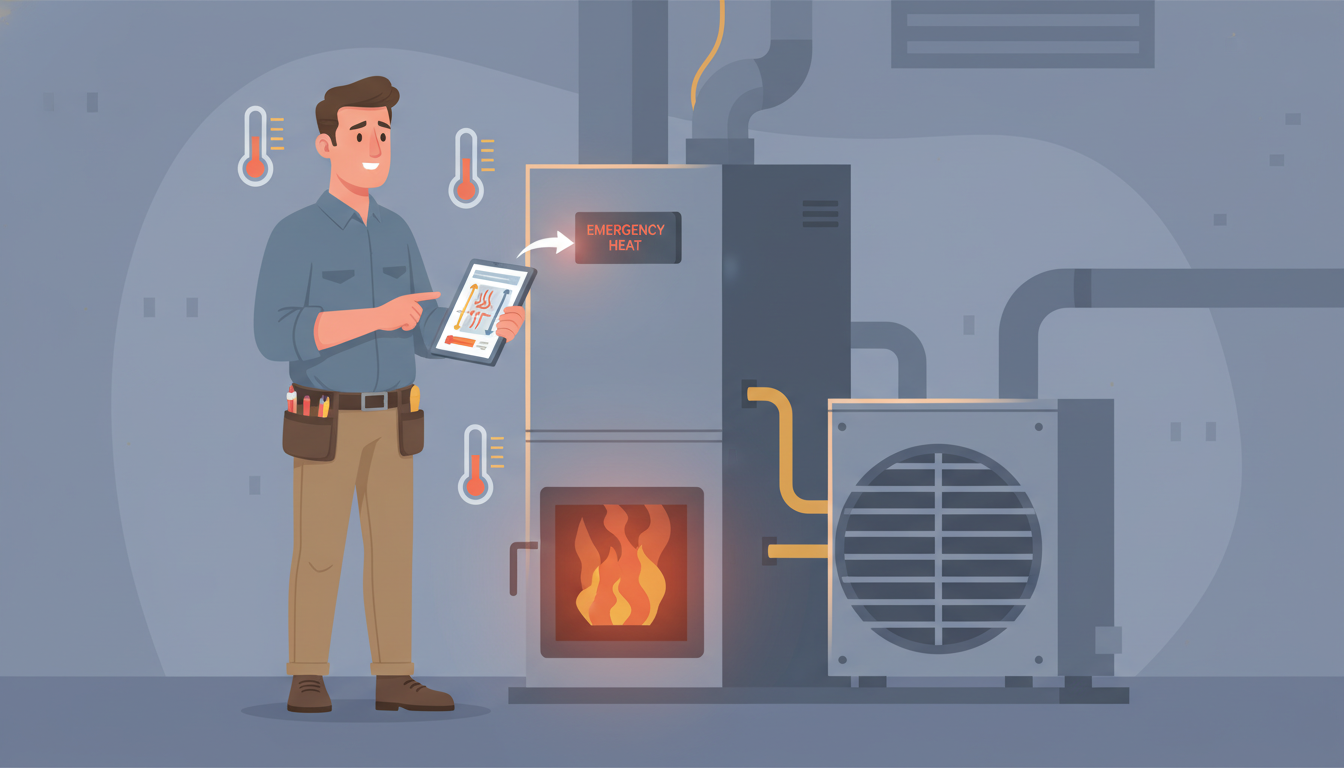
Why Does My Emergency Heat Keep Running? Common Causes and Solutions
Why Does My Emergency Heat Keep Running? Common Causes and Solutions
Is your emergency heat running too often, driving up your energy bills and leaving you confused? You're not alone. Many homeowners notice their thermostat switching to emergency heat mode more frequently than it should, and understanding why this happens is the first step to fixing the problem.
Emergency heat is designed as a backup heating source for your heat pump system, but it shouldn't be running constantly. When it does, you're facing higher electricity costs and potentially underlying issues with your HVAC system. In this guide, we'll walk you through the common causes of emergency heat activation, help you identify when it's normal versus problematic, and show you practical solutions to get your system running efficiently again.
What Is Emergency Heat and How Does It Work?
Before diving into the causes, let's clarify what emergency heat actually does in your HVAC system.
Emergency heat (also called EM heat or backup heat) is an alternative heating method that bypasses your heat pump's normal operation. Instead of using the heat pump's refrigerant cycle to extract warmth from outdoor air, emergency heat relies on electric resistance heating strips inside your air handler.
Think of it like the heating element in a toaster—it generates warmth directly through electricity rather than moving heat from one place to another. While this method is reliable, it's significantly more expensive to operate than your heat pump's standard heating mode.
Emergency Heat vs. Auxiliary Heat: What's the Difference?
Many homeowners confuse emergency heat with auxiliary heat, but they're not quite the same:
- Auxiliary heat turns on automatically when your heat pump needs help keeping up with heating demand. This is normal and expected during cold weather.
- Emergency heat is manually activated (or triggered by a system malfunction) and completely shuts down your heat pump compressor, relying solely on electric resistance heating.
Both use the same heating strips, but auxiliary heat works alongside your heat pump while emergency heat replaces it entirely.
When Emergency Heat Running Is Actually Normal
Not every instance of emergency heat activation means something's wrong. Here are legitimate scenarios when you might see emergency heat kick in:
During the Defrost Cycle
Your heat pump periodically needs to defrost ice buildup on the outdoor unit. When this happens, the system temporarily reverses its operation, and emergency heat runs to keep your home warm during the defrost cycle. This typically lasts 5-15 minutes and is completely normal.
In Extremely Cold Weather
When outdoor temperatures drop below 35°F (some systems trigger at 30°F or 25°F depending on your unit), your heat pump struggles to extract enough heat from the cold air. The system may automatically switch to auxiliary or emergency heat to maintain indoor comfort. This is especially common during cold snaps or in northern climates.
When You Make Large Thermostat Adjustments
If you increase your thermostat setting by 3 degrees or more, your system might activate emergency heat to reach the new temperature quickly. Once the desired temperature is achieved, it should switch back to normal heat pump operation.
If You Manually Switched It On
Check your thermostat display. Some thermostats have a dedicated emergency heat switch that can be accidentally activated, especially by curious children or during cleaning. If you see "EM heat" or "Emergency" on your display, verify that you didn't manually engage this mode.
Common Causes of Emergency Heat Running Too Often
When emergency heat runs constantly or activates more frequently than the scenarios above, you're likely dealing with one of these issues:
1. Thermostat Problems
Your thermostat is the brain of your heating system, and several thermostat-related issues can cause emergency heat to run excessively:
Incorrect Settings or Programming
- Temperature differential set too low (causing the system to overwork)
- Emergency heat threshold temperature configured improperly
- Staging settings that trigger backup heat too soon
Faulty Wiring or Connections
- Loose wire connections at the thermostat
- Damaged wires between the thermostat and heat pump
- Incorrect wiring during installation (especially after a thermostat replacement)
Calibration Issues
- Thermostat reading temperature inaccurately
- Temperature sensor malfunction causing false readings
- Placement in a location that doesn't represent your home's actual temperature (near drafts, in direct sunlight, etc.)
Solution: Check your thermostat settings first, then inspect visible wiring for damage. If you have a smart thermostat, verify it's compatible with heat pump systems. For calibration issues, you may need to relocate the thermostat or have it professionally recalibrated.
2. Heat Pump Outdoor Unit Issues
Problems with your outdoor unit can prevent your heat pump from operating correctly, forcing the system to rely on emergency heat:
Dirty or Frozen Coils
- Ice buildup preventing heat exchange
- Debris, leaves, or snow blocking airflow
- Defrost cycle failing to activate when needed
Blocked or Restricted Airflow
- Vegetation growing too close to the unit
- Accumulated dirt and debris on the coils
- Snow drifts covering the outdoor unit during winter
Solution: Clear at least 2 feet of space around your outdoor unit. Gently rinse the coils with a garden hose (never use a pressure washer). If you see excessive ice buildup, turn the system off and call a professional—your defrost cycle may be malfunctioning.
3. Reversing Valve Malfunction
The reversing valve is a critical component that switches your heat pump between heating and cooling modes. When it fails or gets stuck, your system can't operate in normal heating mode and may default to emergency heat.
Signs of Reversing Valve Problems:
- Heat pump running but not producing heat
- System stuck in one mode (heating or cooling)
- Strange hissing sounds from the outdoor unit
- Emergency heat running constantly even in mild weather
Solution: Reversing valve issues require professional diagnosis and repair. This isn't a DIY fix, as it involves refrigerant system components. Learn more about heat pump repair to understand what to expect.
4. Low Refrigerant Levels
Your heat pump needs the proper refrigerant charge to transfer heat effectively. When refrigerant levels drop due to a leak, your system can't heat efficiently, causing it to rely more heavily on emergency heat.
Refrigerant Leak Symptoms:
- Heat pump running longer cycles without reaching temperature
- Ice forming on indoor coils during heating mode
- Hissing or bubbling sounds near refrigerant lines
- Decreased heating capacity even in moderate weather
- Emergency heat running to compensate for reduced output
Solution: Refrigerant leaks must be repaired by a licensed HVAC technician. Simply adding refrigerant without fixing the leak is a temporary (and illegal in many jurisdictions) solution. The technician will locate and repair the leak, then recharge the system to manufacturer specifications.
5. Dirty Air Filter or Restricted Airflow
A clogged air filter is one of the most common—and easiest to fix—causes of emergency heat running excessively. When airflow is restricted, your heat pump has to work much harder, potentially triggering safety switches that activate emergency heat.
How Dirty Filters Cause Problems:
- Reduced airflow limits heat distribution
- System overheats and safety switches activate
- Heat pump can't maintain set temperature efficiently
- Strain on the compressor reduces heating capacity
Solution: Check your air filter monthly and replace it every 1-3 months depending on usage, pets, and air quality. This simple maintenance task can prevent many HVAC problems. For comprehensive maintenance guidance, see our HVAC repair guide.
6. Incorrectly Sized Heat Pump
If your heat pump is too small for your home's square footage and heating needs, it will struggle to maintain comfortable temperatures, especially during peak heating season. An undersized unit may frequently fall back on emergency heat to keep up.
Signs Your System Is Undersized:
- Constant running without reaching set temperature
- Emergency heat activating frequently in moderate weather
- Uneven heating throughout your home
- System installed when you added square footage to your home
Solution: Unfortunately, if your system is truly undersized, the only permanent fix is upgrading to a properly sized unit. A load calculation by an HVAC professional will determine the correct size for your home.
7. Outdoor Temperature Sensor Failure
Your heat pump's outdoor temperature sensor tells the system how cold it is outside, which determines when to activate supplemental heating. If this sensor fails or provides incorrect readings, your system might think it's colder than it actually is, triggering emergency heat unnecessarily.
Sensor Problems:
- Sensor damaged by weather or debris
- Wiring connections corroded
- Sensor reading inaccurately due to poor placement
- Calibration drift over time
Solution: An HVAC technician can test the sensor's readings and replace it if necessary. This is typically a quick, affordable repair.
8. Aging or Worn Components
As heat pumps age, various components wear out and lose efficiency. An older system may increasingly rely on emergency heat because the compressor, fan motor, or other parts can no longer handle the heating load effectively.
Age-Related Issues:
- Compressor losing efficiency (typical after 10-15 years)
- Contactor or relay failures causing irregular operation
- Worn fan motors reducing airflow
- Capacitors weakening and affecting startup
Solution: If your heat pump is over 10 years old and requiring frequent repairs, it may be more cost-effective to replace the system rather than continuing to patch aging components. Modern heat pumps are significantly more efficient and will reduce your energy bills.
How to Troubleshoot Emergency Heat Issues
Before calling a professional, try these DIY troubleshooting steps:
Step 1: Check Your Thermostat Display
Look for "EM Heat," "Emergency," or "Aux Heat" messages. If you see emergency heat indicated, check if someone accidentally activated it manually. Most thermostats have a dedicated switch or setting.
Step 2: Verify Your Thermostat Settings
- Ensure the system is set to "Heat" mode (not "Emergency Heat")
- Check that your temperature setting is reasonable (don't jump from 65°F to 75°F)
- Look at advanced settings for emergency heat thresholds if your thermostat allows customization
Step 3: Inspect Your Air Filter
Remove and examine your air filter. If you can't see light through it when held up to a lamp, it's too dirty and needs replacement.
Step 4: Examine the Outdoor Unit
- Clear any debris, snow, or ice around the unit
- Look for obvious ice buildup on the coils
- Listen for unusual sounds (grinding, hissing, or clicking)
- Check that the fan is spinning when the system runs
Step 5: Check the Circuit Breakers
Both your indoor and outdoor units have dedicated circuit breakers. Verify both are in the "on" position. A tripped outdoor breaker would force your system to rely entirely on emergency heat.
Step 6: Monitor System Behavior
Pay attention to when emergency heat activates:
- Does it happen at specific outdoor temperatures?
- Does it occur after the system has been running for a while?
- Is it constant or intermittent?
This information will be valuable if you need to call a technician.
Step 7: Try a System Reset
Turn off your system at the thermostat, flip the circuit breakers for both indoor and outdoor units to "off," wait 5 minutes, then restore power and restart the system. This can clear minor electronic glitches.
The Cost Impact of Running Emergency Heat
Understanding the financial impact of emergency heat running excessively can motivate you to address the problem quickly.
Energy Consumption Comparison
Electric resistance heating (emergency heat) is approximately 2-3 times more expensive than heat pump operation. Here's why:
- Heat pump: For every 1 unit of electricity consumed, you get 2-3 units of heat output (200-300% efficiency)
- Emergency heat: For every 1 unit of electricity consumed, you get 1 unit of heat output (100% efficiency)
Cost Example
Let's say your heat pump costs $3 per hour to run in normal mode. Emergency heat running for the same period would cost $6-9 per hour—that's an extra $72-144 per day if it's running constantly!
For a typical home in a moderate climate, running emergency heat exclusively for a full month could add $200-500 to your electricity bill compared to normal heat pump operation.
When to Call a Professional
While some issues are DIY-friendly, certain problems require professional expertise:
Call an HVAC technician if:
- Emergency heat won't turn off after trying basic troubleshooting
- You hear unusual noises from your outdoor unit
- You see ice buildup that doesn't clear within 30 minutes of turning the system off
- Your system is over 10 years old and increasingly relying on emergency heat
- You smell burning or electrical odors
- Circuit breakers repeatedly trip
- You've checked all the basics and still can't identify the problem
A qualified technician has specialized tools to diagnose refrigerant levels, test electrical components, measure airflow, and identify problems that aren't visible to homeowners. To understand what to expect during emergency repairs, check out our guide on emergency heat running time.
Preventive Maintenance to Avoid Emergency Heat Problems
Regular maintenance is your best defense against excessive emergency heat use:
Monthly Tasks
- Change or clean air filters
- Check thermostat batteries (if applicable)
- Clear debris from around outdoor unit
- Listen for unusual system sounds
Seasonal Tasks
Before Winter:
- Schedule professional heat pump inspection
- Test emergency heat function manually
- Clean outdoor coils
- Verify all vents are open and unobstructed
Spring and Fall:
- Clean or replace air filters
- Check refrigerant lines for damage
- Inspect electrical connections
- Test system in both heating and cooling modes
Annual Professional Maintenance
Schedule yearly maintenance with a qualified HVAC technician who will:
- Check refrigerant charge
- Test all electrical components
- Clean coils thoroughly
- Calibrate thermostats
- Lubricate motors
- Inspect and test defrost cycle
- Verify proper airflow throughout the system
Regular professional maintenance can prevent 85% of HVAC emergencies and extend your system's lifespan by 5-10 years.
FAQ: Emergency Heat Running Too Often
How long should emergency heat run before turning off?
During a defrost cycle, emergency heat typically runs for 5-15 minutes. If manually activated in extremely cold weather, it might run for the entire heating period. However, if it's running constantly for hours or days, you have a problem that needs addressing.
Can I manually turn off emergency heat if it won't stop?
Yes, at your thermostat, switch the system mode back to "Heat" or "Auto" if it's stuck in "Emergency Heat" mode. If the emergency heat continues running after changing the setting, you have a system malfunction that requires professional repair.
Will running emergency heat damage my heat pump?
Running emergency heat itself won't damage your heat pump, but the underlying cause might. If emergency heat is running because your heat pump has failed, continuing to run the system without repairs could worsen the problem. Additionally, the high electricity costs will damage your budget significantly.
What temperature triggers emergency heat to activate?
This varies by system and thermostat settings, but most heat pumps activate auxiliary or emergency heat when outdoor temperatures drop below 30-35°F. Smart thermostats often allow you to customize this threshold. Check your system's manual for specific settings.
How much more expensive is emergency heat compared to normal operation?
Emergency heat typically costs 2-3 times more to operate than your heat pump's normal heating mode. For a system that costs $3/hour in heat pump mode, emergency heat would cost $6-9/hour. Over a month of continuous operation, this could add $200-500 to your electricity bill.
Can a bad thermostat cause emergency heat to run constantly?
Absolutely. Thermostat problems are among the most common causes of emergency heat issues. Faulty wiring, incorrect programming, calibration problems, or a stuck relay can all cause your thermostat to signal for emergency heat when it shouldn't.
Conclusion: Take Control of Your Heating Costs
Emergency heat running too often is more than an inconvenience—it's a sign that something's wrong with your HVAC system and a drain on your wallet. Whether it's a simple fix like changing your air filter or a more complex issue like a refrigerant leak or reversing valve failure, identifying and addressing the problem quickly will save you money and restore your home's comfort.
Start with the basic troubleshooting steps we've outlined: check your thermostat, inspect your air filter, clear debris from your outdoor unit, and monitor when the issue occurs. Many emergency heat problems have simple solutions that you can handle yourself.
For issues beyond basic maintenance, don't hesitate to call a qualified HVAC professional. The cost of a service call is minimal compared to the ongoing expense of running emergency heat inefficiently—not to mention the potential for more serious damage if underlying problems go unaddressed.
Remember, regular preventive maintenance is your best defense against emergency heat issues and HVAC problems in general. A well-maintained heat pump should rarely need to rely on emergency heat, keeping your home comfortable and your energy bills reasonable all winter long.
Is your emergency heat still running when it shouldn't? Don't let high energy bills continue—take action today to diagnose and fix the problem, and get your heat pump running efficiently again.