
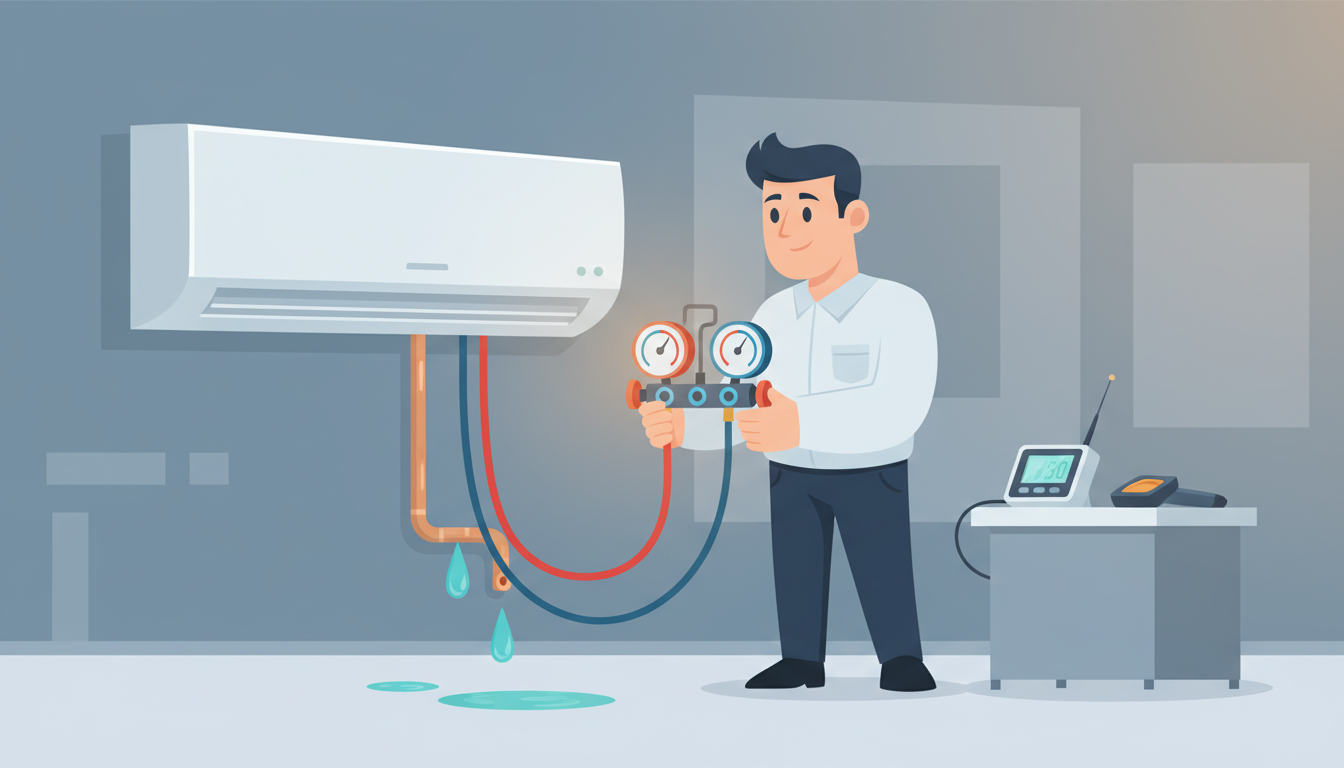
What Causes Repeated Refrigerant Loss After a Repair?
What Causes Repeated Refrigerant Loss After a Repair?
You've been down this road before. Your air conditioner wasn't cooling properly, so you called a technician. They found a refrigerant leak, fixed it, recharged the system, and everything worked great—for a while. Now, months or even weeks later, you're facing the same problem: warm air, poor cooling, and another expensive service call. If your AC keeps losing refrigerant after repair, you're not alone, and you're right to be frustrated. Let's explore why repeated refrigerant loss after repair happens and what you can do about it.
Why Your AC Shouldn't Need Regular Refrigerant Refills
Before we dive into the causes of repeated refrigerant loss after repair, let's clear up a common misconception. Your air conditioning system is a closed-loop system, meaning refrigerant circulates continuously between the indoor and outdoor units without being consumed. Unlike gasoline in your car, refrigerant doesn't get "used up" during normal operation.
If your system is losing refrigerant, it means there's a leak somewhere in the refrigerant circuit. A properly functioning AC should maintain the same refrigerant charge for its entire lifespan—often 15 to 20 years or more. When you need refrigerant added year after year, that's a clear sign something is wrong with either the system itself or the quality of the repair work.
Understanding this fundamental truth helps you recognize when you're being told something that doesn't add up. Any technician who suggests "topping off" your refrigerant annually as routine maintenance is either uninformed or dishonest. Refrigerant loss always indicates a leak that needs to be found and fixed.
Primary Reason #1: Multiple Refrigerant Leaks in Your System
The most common reason for repeated refrigerant loss after repair is simple: your system has more than one leak, and the technician only fixed one of them. This is especially common in older HVAC systems where corrosion and wear have affected multiple components.
How Multiple Leaks Develop
Your air conditioning system contains several components where refrigerant leaks commonly occur:
- Evaporator coils (indoor unit) - Susceptible to corrosion from moisture and airborne chemicals
- Condenser coils (outdoor unit) - Exposed to weather, debris, and physical damage
- Refrigerant line connections - Vibration and thermal expansion can loosen fittings over time
- Schrader valves - Service ports can develop leaks if valve cores wear out or aren't properly sealed
- Copper refrigerant lines - Can develop pinhole leaks from corrosion, especially at weld joints
When your system is 10+ years old, it's entirely possible that corrosion has affected multiple areas. If a technician finds one obvious leak at a line connection and repairs it without thoroughly checking other vulnerable spots, you'll experience refrigerant loss again when one of those hidden leaks becomes active.
The Problem with Incomplete Leak Detection
Many service calls are rushed. A technician might use a basic electronic leak detector to find the most obvious leak—often the one that's hissing audibly or visible with bubbles—and stop there. However, smaller leaks in hard-to-reach areas like the evaporator coil or buried refrigerant lines might not show up during a quick inspection.
Professional leak detection should include multiple methods:
- Electronic leak detectors for accessible areas
- UV dye injection and inspection with UV light
- Nitrogen pressure testing to verify the entire system holds pressure
- Soap bubble testing on all connection points
If your technician skipped these thorough leak detection methods, multiple refrigerant leaks could be lurking in your system, waiting to cause problems after the first repair. For more information on recognizing early warning signs, check out our guide on refrigerant leak symptoms every homeowner should recognize.
Primary Reason #2: Incomplete or Poor Quality Refrigerant Leak Repairs
Not all refrigerant leak repairs are created equal. The quality of the repair work directly impacts whether your AC will continue losing refrigerant after the service call.
Temporary Fixes vs. Permanent Solutions
Some repair methods are inherently less reliable than others:
Quick "patch" jobs - Using sealant products or quick patches might temporarily stop a leak, but these rarely provide long-lasting results. Sealants can clog other parts of your system and often fail within months.
Improper brazing or soldering - Repairing copper refrigerant lines requires skill. The copper must be properly cleaned, the right filler material used, and the joint heated to the correct temperature. Rushed or inexperienced work creates weak joints that fail under normal operating pressure.
Not replacing worn components - Sometimes the right answer isn't repair but replacement. An aging evaporator coil with multiple pinhole leaks can be patched once or twice, but eventually needs replacement. Repeatedly repairing deteriorating components wastes your money.
Skipping Critical Post-Repair Steps
A proper refrigerant leak repair doesn't end when the technician finishes brazing a joint. The system must be:
- Pressure tested - The system should be pressurized with nitrogen (not refrigerant) to verify the repair holds under pressure
- Evacuated - A vacuum pump removes air and moisture from the refrigerant circuit
- Recharged accurately - The correct amount of refrigerant must be added based on manufacturer specifications, not guesswork
Technicians who skip these steps might deliver your AC back to you with the leak still present or with improper refrigerant charge. You might get a few weeks of cooling before the problem resurfaces.
Why Technician Experience Matters
Refrigerant leak repair is skilled work. An experienced HVAC technician knows where leaks commonly occur, uses proper leak detection methods, and follows manufacturer repair procedures. Unfortunately, not all service companies maintain the same standards.
If you're experiencing repeated refrigerant loss after repair, consider whether the technician who performed the work:
- Spent adequate time diagnosing the problem
- Used professional leak detection equipment
- Explained what was found and how it would be repaired
- Performed pressure testing after the repair
- Provided documentation of the work completed
Poor quality repair work is one of the most preventable causes of recurring refrigerant leaks. Our comprehensive HVAC repair guide can help you understand what to expect from professional service.
Primary Reason #3: New Leaks Developing in Aging HVAC Systems
Even when the initial repair was done correctly and all existing leaks were found, new leaks can develop—especially in older systems where multiple components are nearing the end of their service life.
The Reality of System Age
HVAC systems age like any other mechanical equipment. If your air conditioner is 12-15 years old and you're dealing with repeated refrigerant loss after repair, you might be fighting a losing battle. Here's why:
Corrosion is progressive - The same conditions that caused your first leak (moisture, chemicals in the air, galvanic corrosion) continue affecting other parts of the system. Fixing one corroded section doesn't stop corrosion elsewhere.
Multiple components age simultaneously - Your evaporator coil, condenser coil, and refrigerant lines are all the same age. When one starts leaking, others are likely in similar condition.
Repair costs add up - If you're paying $500-800 for repeated leak repairs, you might be better off investing in a new system that comes with warranty protection.
Formicary Corrosion: The Hidden Enemy
One particularly problematic type of corrosion affects copper refrigerant lines in many homes. Formicary corrosion (also called "ant nest corrosion") creates networks of tiny pinhole leaks inside copper tubing. It's caused by exposure to formaldehyde and other volatile organic compounds commonly found in homes.
The frustrating thing about formicary corrosion is that it often affects long sections of copper tubing. A technician might repair one pinhole leak, only to have another develop nearby weeks or months later. In systems with extensive formicary corrosion, replacing the affected refrigerant lines—or the entire system—is often more cost-effective than endless repairs.
When New Problems Aren't the Technician's Fault
It's important to distinguish between poor repair work and the natural progression of system aging. If your AC is older and develops a new leak in a completely different component six months after a quality repair, that's not necessarily the technician's fault—it's the system showing its age.
However, if refrigerant loss resumes within days or weeks of a repair, or if it's leaking from the same spot that was supposedly fixed, that points to repair quality issues. To better understand what might be causing your issues, read about the common causes of refrigerant leaks in AC systems.
How to Verify Your Refrigerant Leak Repair Was Done Properly
You're not an HVAC technician, but you can still take steps to ensure you're getting quality work. Here's how to verify that your refrigerant leak repair was done right:
Questions to Ask Your Technician
Don't be shy about asking questions during and after the repair:
-
"Where was the leak located?" - The technician should be able to show you the exact location and explain what caused it.
-
"How did you detect the leak?" - Look for answers that include electronic leak detectors, UV dye, or nitrogen pressure testing—not just visual inspection.
-
"Did you check for additional leaks?" - A thorough technician inspects all vulnerable areas, not just the obvious problem spot.
-
"What repair method did you use?" - Brazing or replacing components are generally more reliable than sealants or temporary patches.
-
"Did you pressure test the system after the repair?" - This is a critical step that verifies the repair holds under normal operating pressure.
-
"How much refrigerant did you add, and is that the correct charge for my system?" - The amount should match manufacturer specifications, typically based on system size and type.
Documentation You Should Receive
Professional HVAC companies provide documentation that includes:
- Description of the leak location and cause
- Repair method used
- Refrigerant type and amount added
- Pressure readings before and after repair
- Any additional issues discovered during inspection
If your technician can't or won't provide this information, that's a red flag about the quality of work you're receiving.
The 30-Day Test
A properly repaired refrigerant leak should result in immediate and sustained cooling performance. Within the first 30 days, your AC should:
- Produce consistently cold air from all vents
- Cycle normally (not short-cycling or running constantly)
- Maintain comfortable temperatures without struggling
- Show no signs of ice formation on indoor or outdoor coils
- Operate quietly without hissing or bubbling sounds
If any of these problems appear within the first month, contact the service company immediately. Most reputable companies warranty their repair work for at least 30-90 days.
Warning Signs Your Repair Didn't Work
How do you know if you're experiencing repeated refrigerant loss after repair? Watch for these warning signs:
Immediate Red Flags (Within Days or Weeks)
Warm air from vents - If your AC isn't producing cold air within a week or two of the repair, refrigerant is likely leaking again.
Ice formation on refrigerant lines or coils - Low refrigerant causes the evaporator coil to freeze, which can damage the system further.
Hissing or bubbling sounds - These noises indicate refrigerant escaping under pressure, suggesting an active leak.
Short cycling - The system turns on and off rapidly because it can't build sufficient pressure with low refrigerant.
Longer-Term Indicators (Within Months)
Gradually declining cooling performance - Slow refrigerant loss might not be immediately obvious but becomes apparent over weeks as cooling capacity diminishes.
Rising energy bills - Your system works harder and runs longer when refrigerant charge is low, increasing electricity consumption.
Compressor runs constantly - The system struggles to reach the thermostat setting because of insufficient refrigerant.
Return of previous symptoms - If you're experiencing the exact same problems that prompted the original service call, the repair likely failed.
What to Do When Problems Return
If you experience repeated refrigerant loss after repair:
-
Contact the original service company first - If the work was recent, it should be covered under warranty.
-
Request a different technician - If available, ask for a senior technician or service manager to review the previous repair.
-
Consider a second opinion - If you're not confident in the original company's work, get an independent assessment from another reputable HVAC contractor.
-
Document everything - Keep records of all service calls, dates, amounts paid, and problems experienced.
-
Know your rights - Many states have consumer protection laws regarding repair work. If a company repeatedly fails to fix a problem they were paid to address, you may have legal recourse.
When to Consider System Replacement Instead of Continued Repairs
There comes a point when repeated refrigerant leak repairs stop making financial sense. Here's how to know when it's time to replace your AC instead of continuing to repair it:
The 50% Rule
HVAC professionals often use the "50% rule" for repair decisions. If the cost of repair exceeds 50% of the replacement cost, and your system is more than halfway through its expected lifespan, replacement is usually the smarter investment.
For example:
- Your AC is 12 years old (expected lifespan: 15-20 years)
- A new system costs $5,000 installed
- The leak repair quote is $2,800 (56% of replacement cost)
In this scenario, replacement makes more sense because you're investing heavily in an aging system that could develop other expensive problems soon.
Multiple Repair Incidents
If you've already paid for refrigerant leak repairs twice, a third incident is a strong signal to consider replacement. The cumulative cost of repeated repairs often exceeds the down payment on a new, efficient system with warranty protection.
Obsolete Refrigerant (R-22)
If your system uses R-22 refrigerant (commonly called "Freon"), you face additional considerations. R-22 was phased out of production in 2020 due to environmental concerns, making it expensive and increasingly difficult to obtain.
Recharging an R-22 system can cost $1,500-3,000 or more due to refrigerant scarcity. If you have repeated refrigerant loss in an R-22 system, replacement with a modern R-410A system is almost always the better choice.
Signs Your System Is Beyond Economical Repair
Consider replacement when you're experiencing:
- Multiple refrigerant leaks in different components (evaporator and condenser both leaking)
- Age over 12-15 years combined with any major repair need
- Rising energy bills even when the system appears to work (efficiency has degraded)
- Frequent repairs of various components (not just refrigerant leaks)
- Difficulty finding replacement parts for older equipment
The Benefits of Replacement
A new HVAC system offers advantages beyond just stopping refrigerant leaks:
Energy efficiency - Modern systems use 30-50% less energy than units from the 2000s, reducing your monthly bills.
Reliability - New equipment comes with manufacturer warranties (typically 5-10 years on major components) and shouldn't need repairs for years.
Better comfort - Improved technology provides more consistent temperatures and better humidity control.
Environmental responsibility - New refrigerants have lower environmental impact than older R-22 systems.
Peace of mind - No more wondering if this will be the year your AC fails during the hottest week of summer.
How to Prevent Future Refrigerant Loss
Whether you choose to repair your current system one more time or invest in a new one, taking preventive steps can help you avoid repeated refrigerant loss:
Choose Quality Service Providers
The single most important factor in avoiding repeated refrigerant loss after repair is working with qualified, experienced HVAC technicians. Look for:
- Proper licensing and EPA certification - All technicians handling refrigerants must be EPA certified.
- Company reputation - Check online reviews, Better Business Bureau ratings, and ask for references.
- Written estimates - Reputable companies provide detailed written estimates before work begins.
- Warranty on labor - Look for companies that stand behind their work with at least a 90-day labor warranty.
Regular Maintenance Prevents Problems
Annual maintenance visits help catch small problems before they become expensive failures:
- Technicians inspect refrigerant lines and connections for early signs of wear
- Coils are cleaned, reducing corrosion risk
- Refrigerant charge is verified
- Small leaks can be caught and repaired before significant refrigerant loss occurs
Maintenance contracts typically cost $150-300 annually but can save thousands in prevented emergency repairs.
Address Environmental Factors
Some causes of refrigerant leaks are within your control:
Keep the outdoor unit clear - Maintain at least 2 feet of clearance around your condenser unit. Trim vegetation, remove debris, and protect it from lawn equipment damage.
Ensure proper drainage - Standing water around your indoor or outdoor units accelerates corrosion. Make sure condensate drains freely and the area drains well.
Reduce indoor air pollutants - Limit use of harsh cleaning chemicals near your indoor unit, as some can contribute to coil corrosion over time.
Protect refrigerant lines - If your refrigerant lines run through attics, crawlspaces, or outdoors, ensure they're properly insulated and protected from damage.
Understand What's Normal Wear vs. Warning Signs
Not every minor issue means disaster, but knowing what requires immediate attention helps you act quickly:
Normal: Slight temperature variations, occasional cycling, condensation around outdoor unit
Warning signs: Warm air, ice formation, unusual noises, short cycling, refrigerant odors
When you catch problems early, repairs are simpler and less expensive.
Frequently Asked Questions
How long should a refrigerant leak repair last?
A properly performed refrigerant leak repair on otherwise healthy components should last for many years—potentially the remaining life of your system. If you experience repeated refrigerant loss within a year of repair, the repair was likely incomplete or poorly executed. However, in older systems (12+ years), new leaks may develop in different components even after a successful repair due to general system aging.
Is it normal to need refrigerant added every year?
No, it's absolutely not normal to need refrigerant added annually. Your AC operates on a closed-loop system where refrigerant circulates continuously without being consumed. Annual refrigerant additions indicate one or more leaks in your system. Any technician suggesting routine yearly refrigerant "top-offs" is either uninformed or taking advantage of you. The underlying leaks must be found and repaired.
Can I just keep adding refrigerant instead of fixing the leak?
While technically possible, repeatedly adding refrigerant without fixing leaks is a terrible idea for several reasons. First, it's expensive—you're literally paying for refrigerant that escapes into the atmosphere. Second, running with low refrigerant damages your compressor, potentially leading to complete system failure that costs thousands to replace. Third, it's illegal under EPA regulations to knowingly add refrigerant to a leaking system without attempting repair. Finally, released refrigerants harm the environment. Always fix the leak first.
How much does a refrigerant leak repair typically cost?
Refrigerant leak repair costs vary widely based on the leak location and repair method required. Simple repairs like replacing a Schrader valve core might cost $150-300. Repairing an accessible refrigerant line connection typically runs $300-600. Fixing leaks in hard-to-reach evaporator coils can cost $800-1,500 if the coil can be repaired, or $1,500-3,000 if replacement is needed. These estimates typically include leak detection, repair work, and recharging the system with refrigerant.
Should I get a second opinion if my technician says I need another refrigerant repair?
Yes, absolutely get a second opinion if you're facing repeated refrigerant loss after a recent repair, especially if it's from the same company. An independent assessment from a different reputable HVAC contractor can reveal whether the original repair was incomplete, identify multiple leak points, or help you determine if system replacement makes more sense than continued repairs. A second opinion typically costs $75-150 for a diagnostic visit but can save you from throwing good money after bad.
Stop the Cycle of Repeated Refrigerant Loss
Dealing with repeated refrigerant loss after repair is frustrating and expensive, but now you understand the main causes: multiple leak points that weren't all found, poor quality repair work that didn't hold up, or new leaks developing in aging system components. You also know how to verify repair quality, recognize warning signs of continued leaks, and make informed decisions about whether to repair or replace your system.
The key takeaway is that refrigerant loss is never normal and always indicates a problem requiring professional attention. Don't accept routine annual refrigerant additions as "just how AC works"—insist on thorough leak detection and quality repairs. Choose experienced HVAC technicians who use proper diagnostic methods, follow manufacturer repair procedures, and stand behind their work.
If you're facing your second or third refrigerant leak repair on an aging system, seriously consider whether replacement might be the smarter financial decision. While the upfront cost is higher, a new energy-efficient system provides years of reliable, worry-free cooling with warranty protection.
Ready to solve your refrigerant leak problem once and for all? Contact a certified HVAC professional for a thorough system evaluation. A qualified technician can identify all leak points, recommend the most cost-effective solution, and help you decide whether repair or replacement is right for your situation and budget. Don't waste another season—or another dollar—on temporary fixes that don't address the root cause of your repeated refrigerant loss.