What Causes Rust in an HVAC Drain Pan? (Prevention Guide)
What Causes Rust in an HVAC Drain Pan? (Prevention Guide)
Is your air conditioner leaking water? Have you noticed orange stains or corrosion under your indoor unit? You might be dealing with rust in your HVAC drain pan—a common problem that can lead to costly water damage if left unchecked. Understanding what causes rust in HVAC drain pans is the first step to protecting your home and keeping your cooling system running efficiently.
What Is an HVAC Drain Pan and What Does It Do?
Your HVAC drain pan (also called a condensate pan or drip pan) is a shallow metal or plastic tray located directly beneath your air handler's evaporator coil. When your air conditioner runs, the evaporator coil gets ice-cold, causing moisture in the warm air to condense into water droplets—just like a cold glass of lemonade "sweats" on a hot day.
The drain pan catches all this condensation and channels it toward a drain line that carries the water away from your home. A typical residential HVAC system can produce anywhere from 5 to 20 gallons of condensate water every day during peak cooling season, depending on your climate and humidity levels.
Most systems actually have two drain pans:
- Primary drain pan: Built into the air handler unit, sits directly under the evaporator coil
- Secondary drain pan (overflow pan): Installed beneath the entire air handler as a backup safety measure
The secondary pan includes a separate drain line that discharges water in a visible location—often near a window or exterior wall—to alert you when the primary drain system isn't working properly.
What Causes Rust in HVAC Drain Pans?
Rust in an HVAC drain pan doesn't happen overnight. It's the result of specific conditions that create the perfect environment for metal corrosion. Here are the main culprits:
1. Constant Moisture Exposure
The primary cause of rust is prolonged exposure to moisture. While drain pans are designed to handle water, they're meant to drain quickly—not hold standing water. When water sits in contact with metal for extended periods, oxidation begins. This chemical reaction between iron (in steel drain pans), oxygen, and water creates iron oxide—what we call rust.
2. Clogged Condensate Drain Lines
This is the number one reason drain pans develop rust. When your condensate drain line becomes clogged, water can't flow out properly. Instead, it pools in the drain pan, creating constant moisture contact with the metal surface.
What clogs drain lines? The moist, dark environment inside condensate lines is perfect for:
- Algae growth: Green or brown slimy buildup that thrives in standing water
- Bacteria colonies: Form biofilm that gradually restricts water flow
- Dirt and debris: Dust particles that settle and accumulate over time
- Mold and mildew: Fungal growth that can block narrow drain openings
Even a partial clog can slow drainage enough to leave water sitting in your pan between cooling cycles.
3. Poor Drain Pan Material Quality
Not all drain pans are created equal. The material and coating quality directly affect how quickly rust develops:
- Uncoated steel: Rusts very quickly when exposed to moisture
- Thin galvanized steel: The zinc coating wears away over time, exposing bare steel underneath
- Aluminum: More corrosion-resistant but can still oxidize
- Plastic or composite: Don't rust but can crack with age
Cheaper drain pans or those installed as replacements may lack proper rust-resistant coatings, making them vulnerable from day one.
4. High Humidity and Climate Factors
If you live in a humid climate like Florida, Louisiana, or coastal regions, your HVAC system works overtime to remove moisture from the air. This means:
- More condensate water flowing through your drain pan daily
- Higher ambient humidity keeping metal surfaces damp
- Longer cooling seasons that extend exposure time
- Less opportunity for the drain pan to fully dry out
5. Water Quality and pH Levels
The chemical composition of your condensate water can accelerate rust formation. Condensate is naturally slightly acidic (around 5.5-6.0 pH) because it absorbs carbon dioxide from the air. This mild acidity slowly eats away at protective coatings on metal drain pans.
In some cases, minerals in your indoor air or HVAC system components can make condensate even more corrosive.
6. Age and Wear of Protective Coatings
Even high-quality galvanized steel drain pans have a finite lifespan. Over years of service:
- Protective zinc or epoxy coatings gradually wear thin
- Scratches or impact damage expose bare metal
- Chemical breakdown of coatings accelerates
- Normal wear creates weak spots where rust begins
Most metal drain pans begin showing signs of rust after 10-15 years of service, though this varies based on usage and maintenance.
7. Lack of Preventative Maintenance
Regular HVAC maintenance is your best defense against rust. When drain pans and condensate lines aren't cleaned and inspected annually, small problems snowball:
- Minor clogs become complete blockages
- Early rust spots spread across the entire pan
- Protective treatments aren't reapplied
- Small leaks turn into major water damage
Types of HVAC Drain Pan Materials (And Which Rust)
Understanding drain pan materials helps you assess your rust risk:
Galvanized Steel Drain Pans
Most common type in residential HVAC systems. These pans are regular steel coated with a thin layer of zinc for corrosion protection.
- Pros: Durable, affordable, withstands weight of air handler components
- Cons: Zinc coating eventually wears away, leading to rust
- Typical lifespan: 10-15 years before rust appears
- Rust risk: HIGH after coating deteriorates
Stainless Steel Drain Pans
Premium option found in higher-end systems or commercial installations.
- Pros: Excellent corrosion resistance, very long lifespan
- Cons: More expensive, not standard in most residential systems
- Typical lifespan: 20+ years
- Rust risk: LOW (but can still corrode under certain conditions)
Aluminum Drain Pans
Mid-range option that offers better corrosion resistance than galvanized steel.
- Pros: Lightweight, naturally corrosion-resistant
- Cons: Can develop white aluminum oxide (similar to rust)
- Typical lifespan: 15-20 years
- Rust risk: MODERATE (oxidation rather than true rust)
Plastic and Composite Drain Pans
Rust-proof alternative increasingly common in newer systems.
- Pros: Cannot rust, resistant to corrosion, affordable
- Cons: Can crack or warp over time, less structural strength
- Typical lifespan: 15-20 years
- Rust risk: ZERO (but can develop cracks and leaks)
Early Warning Signs of Drain Pan Rust
Catching rust early can save you from expensive repairs and water damage. Watch for these warning signs:
Visual Indicators
- Orange or reddish-brown discoloration on or around the drain pan
- Flaking or peeling metal where rust has eaten through protective coatings
- Visible corrosion spots that feel rough or pitted to the touch
- Rust stains on walls or ceilings below your air handler
Water-Related Signs
- Standing water in the drain pan that doesn't drain away between cooling cycles
- Water pooling around your indoor unit on the floor
- Damp spots or water stains on walls near your HVAC system
- Active dripping from the secondary drain line outside your home
Odor and Air Quality Clues
- Musty or moldy smell coming from your air vents
- Stale odor near your air handler unit
- Increased allergy symptoms that worsen when the AC runs
System Performance Issues
- Frequent system shutdowns triggered by the overflow float switch
- Reduced cooling efficiency if water damage affects other components
- Higher humidity levels indoors even when the AC runs
If you notice water coming from your HVAC system leaking water, investigate immediately—rust may already be developing.
The Hidden Dangers of a Rusty Drain Pan
A rusty drain pan isn't just an eyesore—it can create serious problems for your home and health:
Water Damage to Your Property
Rust weakens metal, eventually creating holes that allow water to leak through. Even small leaks can cause:
- Ceiling damage if your air handler is in the attic
- Drywall deterioration and staining
- Flooring damage from water pooling underneath
- Structural wood rot if leaks persist undetected
- Insulation saturation that reduces R-value and promotes mold
A slow leak from a rusty drain pan can go unnoticed for months, causing thousands of dollars in hidden water damage.
Mold and Mildew Growth
The combination of moisture and organic material (dust, pollen) creates ideal conditions for mold growth. When drain pans rust and leak:
- Black mold can colonize damp drywall and insulation
- Airborne mold spores circulate through your ductwork
- Indoor air quality deteriorates significantly
- Health problems worsen for those with allergies or asthma
Homes with moldy smells from HVAC systems often have underlying drain pan or moisture problems.
Reduced HVAC System Efficiency
Rust isn't always confined to the drain pan. Corrosion can spread to:
- Evaporator coil fins that contact the rusty pan
- Drain fittings and connections that develop leaks
- Other metal components in the air handler cabinet
Corroded coils work less efficiently, forcing your system to run longer and consume more energy to maintain your desired temperature.
Complete System Failure
In severe cases, rust-related water damage can:
- Short out electrical components in the air handler
- Destroy the blower motor from water intrusion
- Damage the control board (expensive to replace)
- Require complete air handler replacement if corrosion is extensive
What starts as a simple drain pan rust issue can escalate into a $3,000-$8,000 air handler replacement if ignored.
How to Inspect Your Drain Pan for Rust
You don't need to be an HVAC technician to check your drain pan. Here's how to do a basic inspection:
Safety First
- Turn off power to your HVAC system at the breaker
- Wear gloves to protect your hands from sharp metal edges
- Use a flashlight for better visibility in tight spaces
- Have towels ready in case water spills during inspection
Locating Your Drain Pan
Most indoor air handlers are located in:
- Attics (most common in warm climates)
- Basements or crawl spaces
- Utility closets
- Garages
The drain pan sits at the bottom of the air handler cabinet, directly under the evaporator coil.
What to Look For
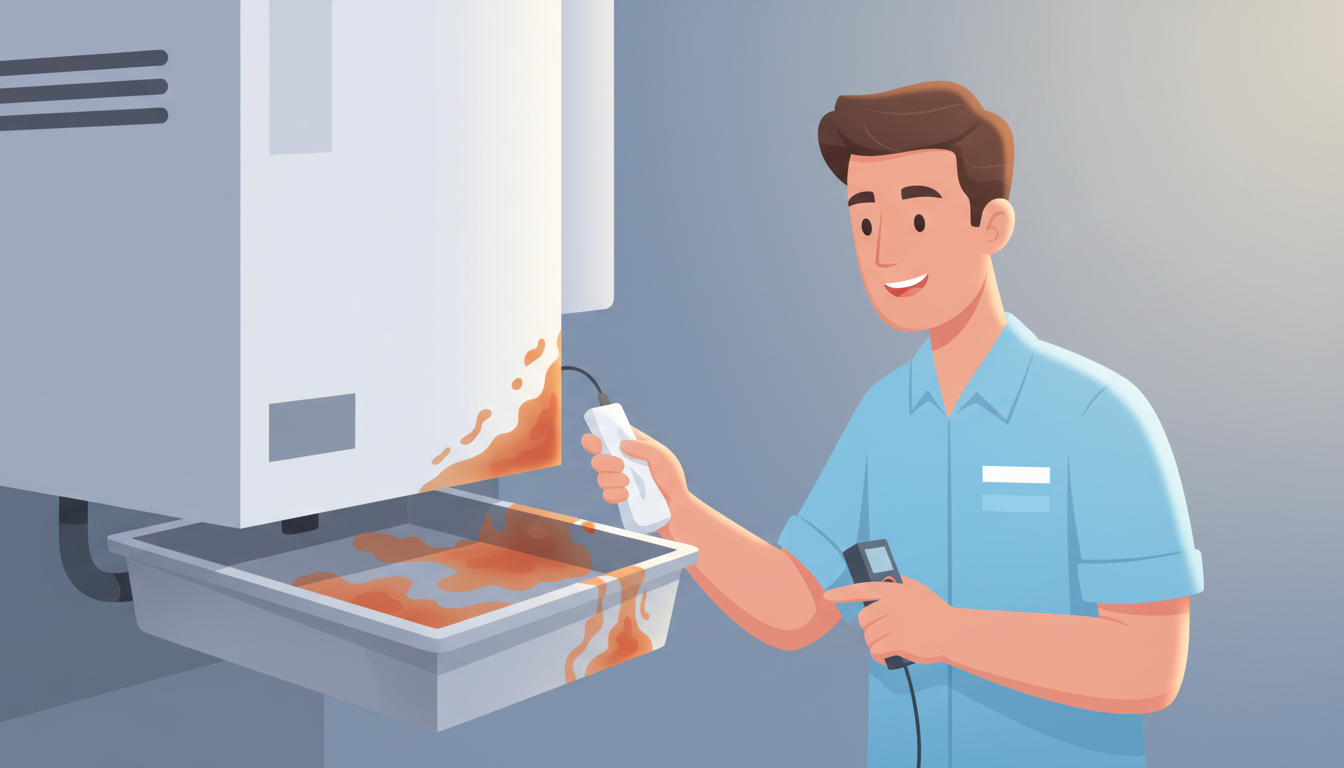
- Remove the access panel on your air handler (usually held by screws or clips)
- Check for standing water in the pan—there should be none between cooling cycles
- Look for discoloration—orange, brown, or red stains indicate rust
- Feel the pan surface (carefully)—rough, pitted areas suggest corrosion
- Check drain line connections—ensure water can flow freely
- Inspect the secondary pan underneath the entire unit if you have one
Testing Drainage
Pour a cup of water directly into the drain pan and watch what happens:
- Should drain within seconds if the line is clear
- Slow drainage or pooling indicates a clog forming
- No drainage at all means complete blockage
If drainage is slow or stopped, your pan is at high risk for rust development.
When to Call a Professional
Some inspections require professional expertise:
- Air handler is in a hard-to-reach location
- You're not comfortable working around electrical components
- You find significant rust or water damage
- Drain pan is built into the unit and can't be easily accessed
Can You Repair a Rusty HVAC Drain Pan?
Whether you can repair or must replace a rusty drain pan depends on the extent of damage:
Minor Rust (Repairable)
Conditions: Surface rust only, no holes, less than 25% of pan surface affected
Repair steps:
- Clear the drain line using a wet/dry vacuum or drain brush
- Remove standing water from the pan completely
- Scrub the rust with a wire brush or steel wool
- Clean the surface with diluted bleach solution (1 part bleach to 16 parts water)
- Dry thoroughly with towels and let air dry
- Apply rust inhibitor coating like PAN SEAL or rust-resistant epoxy paint
- Recoat annually to maintain protection
Cost: $50-$150 for DIY supplies, $150-$300 if professionally done
Moderate Rust with Small Holes
Conditions: Some surface pitting, small holes (pinhole size), 25-50% affected
Repair options:
- Metal epoxy putty: Fill small holes and seal pinhole leaks
- PAN SEAL coating: Seals small holes and prevents new rust (popular product)
- Fiberglass patch kit: For slightly larger holes (similar to auto body repair)
These are temporary fixes that buy you 1-3 more years before replacement becomes necessary.
Cost: $100-$200 for DIY, $200-$400 professional
Severe Rust (Replacement Required)
Conditions: Large holes, structural weakness, more than 50% affected, pan bending or warping
Why replacement is necessary:
- Repairs won't hold long-term
- Risk of catastrophic leak and water damage
- Rust has likely spread to other components
- Pan integrity is compromised
Replacement cost: $300-$800 depending on pan type and labor
When to Replace vs. Repair Your Drain Pan
Use this decision framework:
Choose Repair If:
✓ Rust is caught early (surface level only)
✓ No holes or only tiny pinholes exist
✓ The pan structure is still solid
✓ Your HVAC system is relatively new (under 10 years old)
✓ You're on a tight budget and need a temporary solution
Choose Replacement If:
✓ Large rust holes are present
✓ The pan is warped, cracked, or structurally compromised
✓ Rust covers more than 50% of the pan surface
✓ Your system is older (15+ years) and may need replacement soon anyway
✓ Previous repairs have failed
✓ You want a long-term solution
Consider Full System Upgrade If:
✓ Your air handler is 15-20+ years old
✓ Multiple components show rust or corrosion
✓ Repair costs approach 50% of new equipment cost
✓ Your system uses outdated, inefficient technology
✓ You're planning to sell your home soon
A complete air handler replacement costs $2,000-$5,000 installed, while a drain pan replacement alone runs $300-$800—sometimes it makes financial sense to invest in new equipment.
How to Prevent Rust in Your HVAC Drain Pan
Prevention is far easier and cheaper than repair. Here's your complete rust prevention strategy:
1. Schedule Annual Professional Maintenance
Professional HVAC maintenance should include:
- Drain pan inspection for early rust signs
- Condensate line clearing to prevent clogs
- Drain trap cleaning to ensure proper flow
- Pan treatment application to protect metal surfaces
- Water flow testing to verify proper drainage
Schedule maintenance before cooling season begins (late spring) for best results.
Cost: $80-$150 per visit, but prevents $1,000+ in damage
2. Clear Your Condensate Drain Line Regularly
Between professional visits, clear your drain line yourself:
Every 3 months:
- Pour 1 cup of distilled white vinegar down the drain line
- Wait 30 minutes
- Flush with 1 cup of water
Every 6 months:
- Use a wet/dry vacuum on the outside drain line terminus to suck out clogs
- OR use a condensate drain line brush to physically remove buildup
This simple maintenance prevents the clogs that cause standing water and rust.
3. Apply Protective Coatings
If you have a metal drain pan, protect it with:
- Rust inhibitor spray: Apply annually to dry pan surfaces
- PAN SEAL coating: Professional-grade sealant that prevents rust and seals small leaks
- Epoxy paint: Creates a waterproof barrier on metal surfaces
Always clean and dry the pan thoroughly before applying any coating.
4. Install a Condensate Drain Line Treatment System
Several automatic treatment options exist:
- Drain pan tablets: Slow-dissolving tablets that release antimicrobial agents to prevent algae/bacteria (replace every 3-6 months)
- UV lights: Installed in the air handler to kill mold, algae, and bacteria before they can grow
- Automatic dispensers: Release small amounts of treatment solution into the drain line continuously
Cost: $15-$50 for tablets, $200-$600 for UV light systems
5. Improve Drain Line Slope and Routing
Condensate lines should slope downward at least 1/4 inch per foot for proper drainage. If your line:
- Runs uphill at any point
- Has low spots where water can pool
- Makes unnecessary loops or bends
Ask an HVAC technician to reroute it properly. Proper slope prevents standing water that leads to clogs and rust.
6. Consider Upgrading to a Plastic Drain Pan
If your metal pan is showing early rust signs but doesn't need immediate replacement, plan for a plastic or composite pan upgrade when it does fail. Modern plastic pans:
- Never rust or corrode
- Cost about the same as metal pans
- Last 15-20+ years
- Work with any HVAC system
7. Control Indoor Humidity Levels
Excessive humidity makes your HVAC system work harder and produce more condensate:
- Use bathroom and kitchen exhaust fans when showering or cooking
- Run a whole-home dehumidifier if humidity regularly exceeds 60%
- Ensure proper attic ventilation if your air handler is located there
- Fix any home moisture problems (leaky roofs, foundation issues)
Reducing humidity extends drain pan life and improves overall system efficiency.
8. Monitor Your Secondary Drain Line
The secondary drain line exists to warn you of problems. Check the discharge point monthly:
- Should be completely dry if everything is working properly
- Any water discharge means your primary drain is clogged or backing up
- Investigate immediately to prevent drain pan overflow and rust
Don't ignore water coming from your secondary drain—it's your early warning system.
FAQ: Common Questions About HVAC Drain Pan Rust
How long does an HVAC drain pan last before rusting?
Most galvanized steel drain pans last 10-15 years before showing rust, though this varies by climate, usage, and maintenance. Systems in humid climates or poorly maintained units may develop rust in 7-10 years. Stainless steel and plastic pans typically last 15-20+ years without rust issues.
Can a rusty drain pan make you sick?
Yes, indirectly. While rust itself isn't harmful, a rusty drain pan often accompanies mold, mildew, and bacteria growth from standing water. These contaminants circulate through your ductwork, potentially causing respiratory problems, allergies, and other health issues—especially in children, elderly individuals, and those with compromised immune systems.
How much does it cost to replace an HVAC drain pan?
Drain pan replacement typically costs $300-$800, depending on your system type, drain pan material, and labor rates in your area. Built-in pans that are part of the air handler assembly are more expensive to replace ($600-$1,200) than secondary overflow pans ($200-$400). If extensive corrosion has damaged other components, costs can escalate significantly.
Should I use bleach in my HVAC drain pan?
Yes, but properly. Pour 1/4 cup of bleach diluted in 1 cup of water down your condensate drain line every 3-6 months to kill algae and bacteria. Never use undiluted bleach directly on the drain pan as it can accelerate metal corrosion. Vinegar is a safer, gentler alternative that also prevents clogs without corroding metal.
Will homeowners insurance cover rust damage to HVAC drain pans?
Usually not. Most homeowners insurance policies consider drain pan rust to be the result of "normal wear and tear" or "lack of maintenance," which are typically excluded from coverage. However, if a sudden rust-related leak causes significant water damage to your home, the resulting property damage (not the pan itself) might be covered. Review your specific policy or contact your insurance agent for clarification.
Protect Your Home from Drain Pan Rust Today
Rust in your HVAC drain pan is preventable with proper maintenance and early intervention. By understanding what causes rust—from clogged drain lines to poor material quality—you can take action before minor corrosion becomes major water damage.
The key takeaways:
- Inspect your drain pan annually for early rust signs
- Keep condensate lines clear with regular cleaning
- Apply protective coatings to metal drain pans
- Address drainage problems immediately to prevent standing water
- Replace severely rusted pans before they fail catastrophically
Don't wait until you see water stains on your ceiling or smell mold in your home. A simple drain pan inspection and preventative maintenance visit today can save you thousands in water damage repairs tomorrow.
Need help with a rusty drain pan or other HVAC issues? Check out our complete HVAC repair guide for more troubleshooting tips and maintenance advice. Your air conditioner works hard to keep your home comfortable—give it the care it needs to last for years to come.