The Most Common HVAC Repairs Every Homeowner Should Know
The Most Common HVAC Repairs Every Homeowner Should Know
Is your heating or cooling system acting up? You're not alone. Every year, millions of homeowners face unexpected HVAC breakdowns that disrupt their comfort and drain their wallets. The good news? Most common HVAC repairs are preventable when you know what to look for. Understanding these frequent issues can help you catch problems early, save money on repairs, and keep your home comfortable year-round.
Why Understanding Common HVAC Repairs Matters
Your HVAC system is one of the hardest-working systems in your home. It runs thousands of hours each year, moving air, managing temperature, and keeping your family comfortable. With all that wear and tear, components naturally break down over time.
Knowing the most common HVAC problems helps you spot warning signs before minor issues become major repairs. It also helps you communicate better with technicians and make informed decisions about maintenance and replacement.
1. Dirty or Clogged Air Filters
The Problem
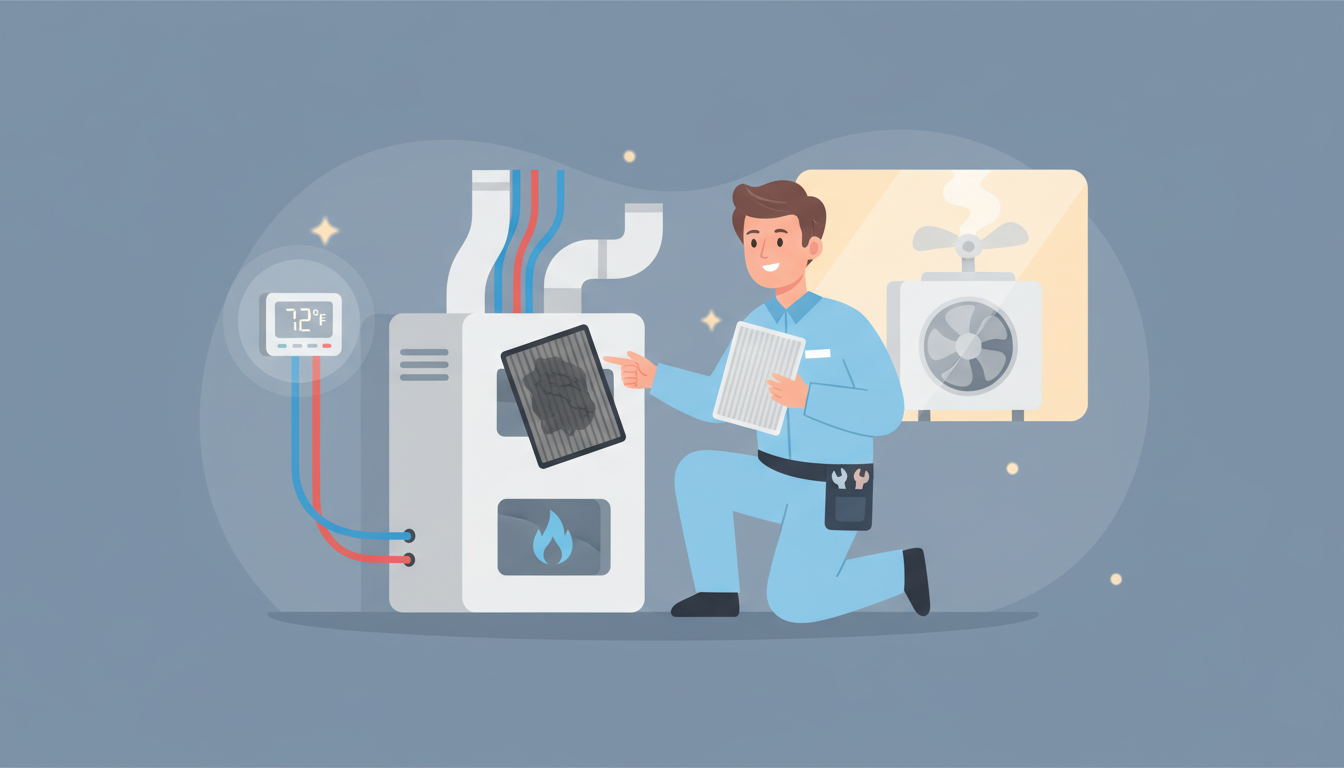
Clogged air filters are hands-down the most common HVAC issue homeowners face. Your air filter traps dust, pollen, pet dander, and other airborne particles to keep your indoor air clean. Over time, these particles build up and restrict airflow through your system.
Why It Happens
Most homeowners simply forget to change their filters. Life gets busy, and a filter that should be replaced every 1-3 months ends up sitting there for six months or longer. Homes with pets, smokers, or high dust levels clog filters even faster.
Warning Signs
- Reduced airflow from vents
- System running longer than usual
- Higher energy bills
- Dust buildup around vents
- More dust in your home than normal
The Fix
This is one HVAC repair you can handle yourself. Check your filter monthly and replace it when it looks dirty or every 1-3 months as a general rule. Standard filters cost just a few dollars, making this the cheapest maintenance task you can do.
For a complete guide on maintaining your HVAC system, check out our comprehensive HVAC repair guide.
2. Thermostat Malfunctions
The Problem
Your thermostat is the brain of your HVAC system. When it malfunctions, it can't properly tell your heating or cooling system when to turn on or off. This leads to uneven temperatures, short cycling, or a system that won't run at all.
Why It Happens
Thermostat problems stem from several causes:
- Dead batteries in battery-powered models
- Dust buildup inside the thermostat
- Incorrect calibration or settings
- Loose wiring connections
- Age-related sensor failure
- Poor thermostat placement (near heat sources or drafts)
Warning Signs
- Temperature doesn't match thermostat setting
- System won't turn on or off
- Short cycling (frequent on-off cycles)
- Blank thermostat display
- Unresponsive controls
The Fix
Start simple: replace the batteries if you have a battery-powered model. Clean dust from the thermostat housing using compressed air. Verify your settings are correct and the thermostat is set to "heat" or "cool" mode as appropriate.
If these steps don't work, the thermostat may need recalibration or replacement. A professional can diagnose sensor issues or wiring problems. Modern smart thermostats offer better accuracy and control but require proper installation.
3. Refrigerant Leaks
The Problem
Refrigerant is the chemical substance that absorbs heat from your indoor air and releases it outside. When refrigerant leaks from your air conditioning system, cooling performance drops dramatically. Your AC will run constantly but struggle to reach the temperature you set.
Why It Happens
Refrigerant leaks typically occur at connection points, service valves, or due to corrosion in the copper tubing. Vibration over years of operation can loosen fittings. Formic acid from cleaning products or building materials can corrode coils, creating tiny leak points.
Warning Signs
- AC runs constantly but doesn't cool effectively
- Ice buildup on refrigerant lines or coils
- Hissing or bubbling sounds near the outdoor unit
- Higher electric bills without increased usage
- Warm air blowing from vents when AC is running
The Fix
Refrigerant leaks require professional repair. An HVAC technician will locate the leak, repair it, and recharge the system with the correct amount of refrigerant. Simply adding more refrigerant without fixing the leak wastes money and doesn't solve the problem.
Important: Refrigerant is regulated by the EPA and requires special handling. Never attempt to recharge your system yourself.
4. Dirty Condenser and Evaporator Coils
The Problem
Your HVAC system has two types of coils: evaporator coils (inside) that absorb heat from your home, and condenser coils (outside) that release that heat outdoors. When these coils get dirty, they can't transfer heat efficiently, forcing your system to work harder and use more energy.
Why It Happens
Evaporator coils collect dust and debris from indoor air, especially when filters aren't changed regularly. Condenser coils get dirty from outdoor elements—grass clippings, cottonwood, leaves, pollen, and general debris. Even if you can't see it, a microscopic film can reduce efficiency by 30% or more.
Warning Signs
- Reduced cooling or heating performance
- System running longer cycles
- Ice forming on evaporator coils
- Higher energy bills
- Uneven temperatures in different rooms
The Fix
Outdoor condenser coils can be gently cleaned with a garden hose (spray from inside out to avoid pushing debris deeper). Turn off power first and avoid using high pressure that could damage the delicate fins.
Indoor evaporator coils require professional cleaning. They're located inside your air handler and need specialized tools and cleaners. Professional coil cleaning typically costs $100-400 but can restore 95% of your system's original efficiency.
To understand more about how these components work together, read our beginner's guide to HVAC components and common failures.
5. Clogged Condensate Drain Line
The Problem
Your air conditioner produces condensation as it removes humidity from indoor air. This water drips into a drain pan and exits through a condensate drain line. When this line gets clogged with algae, mold, or debris, water backs up and can overflow into your home or trigger a safety switch that shuts down your AC.
Why It Happens
The dark, damp environment inside the drain line is perfect for algae and mold growth. Over time, this biological growth combines with dust and debris to form clogs. Some drain lines also lack proper pitch or have traps that collect sediment.
Warning Signs
- Water pooling around indoor air handler
- Musty odors near the furnace or air handler
- AC shuts off unexpectedly (float switch activated)
- Water stains on ceiling or walls near the unit
- Standing water in the drain pan
The Fix
You can prevent most drain line clogs by pouring a cup of white vinegar or a bleach-water solution down the drain line every few months. This kills algae and prevents buildup.
For existing clogs, you can try using a wet/dry vacuum to suction the clog from the outdoor end of the drain line. Stubborn clogs may require a professional to use specialized tools or blow out the line with compressed air.
6. Capacitor and Contactor Failures
The Problem
Capacitors are electrical components that provide the energy boost needed to start your AC compressor and fan motors. Contactors are electrical switches that control power to these components. When capacitors fail, motors can't start or run properly. Failed contactors prevent the system from turning on at all.
Why It Happens
Capacitors have a limited lifespan—typically 10-20 years, but heat stress can shorten this significantly. They're one of the most frequently replaced HVAC parts. Contactors wear out from the constant electrical arcing that occurs when they open and close thousands of times per season.
Warning Signs
- AC compressor or fan won't start
- Humming sound from outdoor unit but fan not spinning
- System tries to start but immediately shuts off
- Intermittent operation
- Burning smell near outdoor unit
The Fix
Capacitor and contactor replacement requires a trained technician. These components store electrical charge even when power is off, creating a serious shock hazard. The parts are relatively inexpensive ($20-100), but labor brings the total repair cost to $150-400.
Regular maintenance inspections catch failing capacitors before they leave you without cooling on the hottest day of summer.
7. Blower Motor Problems
The Problem
Your blower motor circulates air throughout your home via the ductwork. When it fails or runs improperly, you'll notice reduced airflow, strange noises, or complete system shutdown. The blower motor runs whenever your heating or cooling is active, making it one of the hardest-working components.
Why It Happens
Blower motor issues stem from several causes:
- Worn bearings from years of continuous operation
- Overheating due to restricted airflow (dirty filters)
- Electrical problems with the motor or capacitor
- Belt slippage or breakage (on belt-driven models)
- Accumulated dust and debris on the motor or wheel
Warning Signs
- Weak airflow from vents
- Squealing, grinding, or rattling noises
- Blower runs constantly and won't shut off
- No air movement when system is running
- Burning smell from vents
The Fix
Some blower motor issues can be resolved by cleaning the blower wheel and housing or replacing the belt on belt-driven units. Motor bearing problems or electrical failures require motor replacement.
A new blower motor costs $300-600 installed. Variable-speed motors cost more but offer better comfort and efficiency. If your system is over 15 years old and needs a motor replacement, it's worth discussing whether full system replacement makes more financial sense.
8. Ignition or Pilot Light Failures (Furnaces)
The Problem
Gas furnaces need a reliable ignition source to burn fuel and produce heat. Older furnaces use standing pilot lights, while newer models use electronic ignition systems. When ignition fails, your furnace won't heat your home, even though the blower may still run.
Why It Happens
Pilot lights can blow out from drafts, dirty thermocouples, or gas supply issues. Electronic ignition systems fail due to carbon buildup on the igniter, cracked igniter elements, flame sensor problems, or electrical issues.
Warning Signs
- Furnace blows cold air
- Clicking sound but no ignition
- Furnace starts briefly then shuts off
- Yellow or flickering pilot light (should be blue)
- Multiple ignition attempts before starting
The Fix
Never attempt to fix gas-related issues yourself—call a professional. Gas leaks are serious safety hazards.
A technician can clean or replace dirty flame sensors, replace cracked igniters, or adjust gas pressure. Igniter replacement costs $150-350. Older systems with pilot lights may benefit from upgrading to electronic ignition for better efficiency and reliability.
If you're wondering about typical repair timelines, our article on how long common HVAC repairs take provides detailed timeframes for these fixes.
9. Leaky or Blocked Ductwork
The Problem
Your ductwork distributes conditioned air throughout your home. When ducts have leaks, holes, or disconnected sections, you lose expensive heated or cooled air into unconditioned spaces like attics or crawl spaces. Blocked ducts prevent proper airflow to specific rooms.
Why It Happens
Duct problems develop from:
- Poor initial installation
- Deteriorating duct tape or mastic sealant
- Pest damage
- Crushed or kinked flex ducts
- Furniture or storage blocking vents
- Insulation falling into ductwork
Warning Signs
- Rooms that are consistently too hot or cold
- High energy bills despite normal usage
- Dusty rooms or excessive dust around vents
- Whistling sounds from ductwork
- Uneven airflow between rooms
The Fix
Visual inspection of accessible ductwork in attics, basements, or crawl spaces can reveal obvious disconnections or damage. Professional duct sealing using mastic (not regular duct tape) stops leaks and can improve efficiency by 20-30%.
Duct sealing costs $300-1,500 depending on home size and duct accessibility. For significant duct problems, professional duct testing using a blower door and pressure measurements identifies exactly where air is escaping.
10. Worn Belts and Bearings
The Problem
Many HVAC systems use belts to connect motors to blower fans or other moving parts. Over time, these belts stretch, crack, fray, or break. Bearings that support rotating parts wear out from continuous use, creating friction and noise.
Why It Happens
Belts are wear items—they're designed to be replaced periodically. Heat exposure, continuous tension, and normal aging cause deterioration. Bearings wear out from years of constant rotation, especially if they're not properly lubricated.
Warning Signs
- Squealing or screeching sounds when system starts
- Belt fragments near the furnace or air handler
- Reduced airflow
- Grinding or rumbling noises
- System vibration
The Fix
Belt replacement is a straightforward repair that costs $100-200 including labor. A technician will check belt tension and alignment when installing the new belt.
Worn bearings may require replacing the entire motor or fan assembly, depending on the design. This costs $200-600 depending on which component needs replacement.
How to Prevent Common HVAC Repairs
Prevention is always cheaper than repair. Here's how to avoid most of these common HVAC problems:
Monthly Tasks:
- Check and replace air filters as needed
- Clear debris from around outdoor condenser unit
- Listen for unusual sounds or changes in operation
Seasonal Tasks:
- Schedule professional maintenance twice yearly (spring and fall)
- Test thermostat accuracy
- Inspect visible ductwork for obvious issues
- Clean condenser coils
- Pour vinegar down condensate drain line
Annual Professional Maintenance Includes:
- Complete system inspection
- Electrical connection tightening
- Refrigerant level check
- Combustion analysis (gas furnaces)
- Thermostat calibration
- Lubrication of moving parts
- Condensate drain cleaning
- Coil cleaning
- Belt inspection and adjustment
Regular maintenance costs $80-200 per visit but can prevent 95% of common HVAC repairs. Most HVAC companies offer maintenance agreements that include priority service and discounts on repairs.
When to Repair vs. Replace Your HVAC System
Not every problem warrants a full system replacement, but sometimes replacement makes more financial sense than repair. Use this guideline:
Repair if:
- Your system is less than 10 years old
- Repair costs less than 30% of replacement cost
- Your system has been reliable with few previous repairs
- Energy efficiency isn't a major concern
Consider replacement if:
- Your system is over 15 years old
- Repair costs exceed 50% of replacement cost
- You've had multiple repairs in the past two years
- Your energy bills keep climbing
- Refrigerant type is being phased out (R-22)
- Your system uses outdated, inefficient technology
The "5,000 rule" helps with this decision: multiply the age of your system by the repair cost. If the result exceeds $5,000, replacement often makes better long-term sense. For example, a 12-year-old system needing a $500 repair = 6,000, suggesting replacement may be the smarter choice.
Frequently Asked Questions About HVAC Repairs
What is the most common HVAC repair?
Dirty or clogged air filters cause the most HVAC service calls. Fortunately, this is also the easiest and cheapest issue to prevent with regular filter changes every 1-3 months.
How much do common HVAC repairs typically cost?
Common repair costs range widely:
- Air filter replacement: $5-30 (DIY)
- Thermostat replacement: $100-300
- Capacitor replacement: $150-400
- Coil cleaning: $100-400
- Refrigerant leak repair: $200-1,500
- Blower motor replacement: $300-600
- Condensate drain cleaning: $75-250
Prices vary based on your location, system type, and repair complexity.
How can I tell if my HVAC problem is serious?
Call a professional immediately if you notice:
- Gas or burning odors
- Electrical sparking or burning smells
- Complete system failure during extreme weather
- Water leaking inside your home
- Ice completely covering outdoor unit
- Loud banging or grinding noises
These indicate potentially dangerous or expensive problems that worsen quickly if ignored.
Can I do any HVAC repairs myself?
Homeowners can safely handle:
- Changing air filters
- Cleaning around outdoor condenser units
- Replacing thermostat batteries
- Clearing condensate drain lines with vinegar
- Resetting tripped breakers
Leave these repairs to professionals:
- Anything involving refrigerant
- Electrical component replacement
- Gas system repairs
- Internal component cleaning or replacement
- Ductwork repairs
How often should I have my HVAC system serviced?
Schedule professional maintenance twice yearly—once before cooling season (spring) and once before heating season (fall). Regular maintenance catches small problems before they become expensive repairs and keeps your system running efficiently.
Get Your HVAC System Running Smoothly Again
Understanding these common HVAC repairs empowers you to spot problems early, communicate effectively with technicians, and make informed repair decisions. While some homeowners can handle basic maintenance like filter changes, most HVAC repairs require professional expertise to ensure safety and proper operation.
Don't wait until a minor issue becomes a major breakdown. Regular maintenance and prompt attention to warning signs keep your heating and cooling system running reliably for years to come.
Need help with an HVAC issue? Contact a qualified HVAC technician to diagnose the problem and recommend the best solution for your home comfort system. Your family's comfort is too important to leave to chance.