
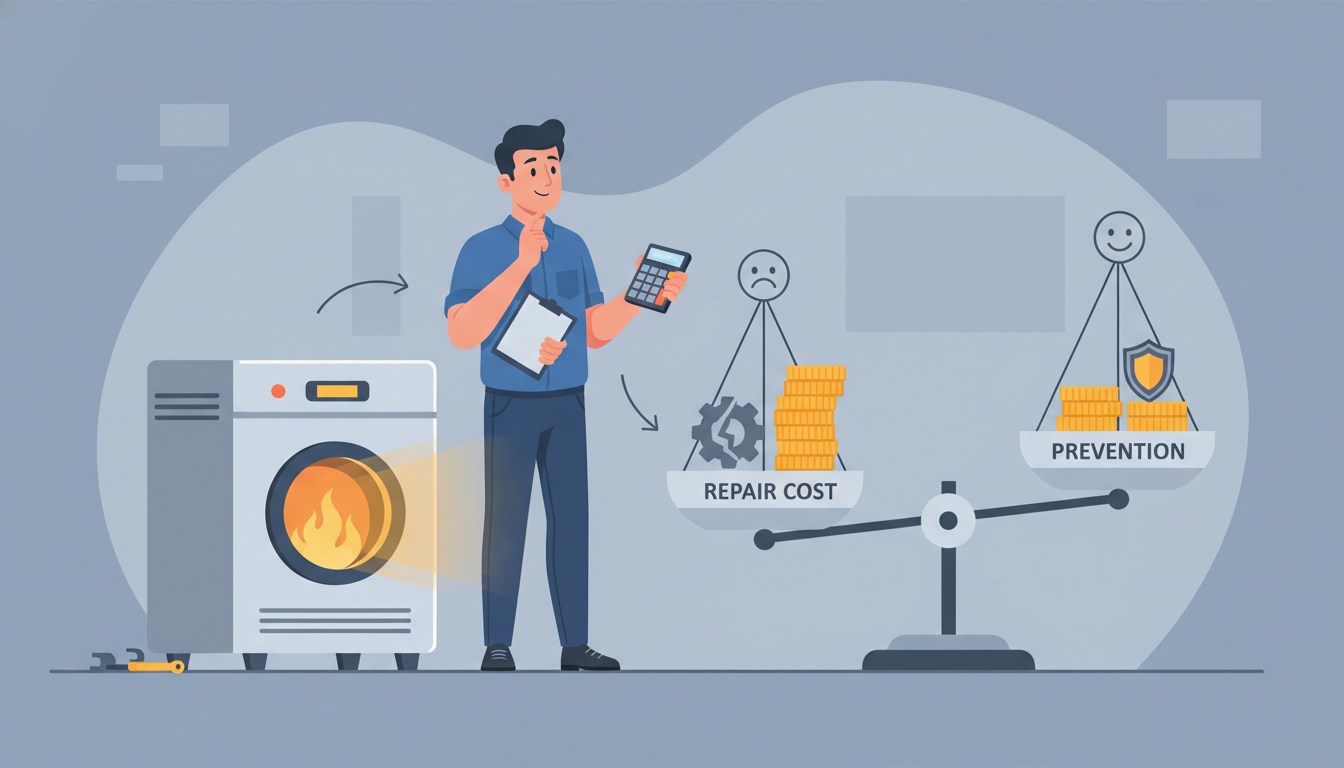
How to Compare the Cost of a Repair to the Cost of Future Breakdowns
How to Compare the Cost of a Repair to the Cost of Future Breakdowns
Your HVAC system just broke down, and you're staring at a repair estimate that makes your wallet hurt. But here's the real question: Is this repair just the first domino in a series of costly breakdowns, or will it buy you several more years of reliable comfort?
Learning how to compare the cost of a repair to the cost of future breakdowns isn't just about the immediate fix—it's about understanding the total financial picture and making the smartest decision for your home and budget.
Understanding the True Cost of HVAC Repairs
When your technician hands you a repair quote, that number only tells part of the story. The real cost includes not just today's repair, but the likelihood of additional failures, rising energy bills from an aging system, and the stress of unexpected breakdowns during the hottest summer days or coldest winter nights.
Most homeowners focus solely on the immediate repair cost without considering future breakdown expenses. This short-term thinking often leads to spending thousands on multiple repairs over a year or two—money that could have gone toward a reliable new system.
The Hidden Costs of Repeated Repairs
Every time your HVAC system breaks down, you're paying for more than just the broken part. You're also paying for:
- Emergency service calls (often 50-100% more than regular rates)
- Lost work time waiting for technicians
- Temporary cooling or heating solutions
- Higher energy bills from an inefficient, struggling system
- Potential water damage or safety issues from malfunctioning equipment
According to industry data, homeowners who delay replacement often spend $1,200 to $3,000 in multiple repair visits over 18-24 months before finally replacing their system anyway.
The $5,000 Rule: Your First Decision-Making Tool
The most widely used method to compare repair costs to future breakdown potential is the $5,000 Rule. Here's how it works:
Multiply your system's age (in years) by the current repair cost.
- If the result is less than $5,000, the repair likely makes financial sense
- If the result is more than $5,000, replacement is usually the smarter long-term investment
Example Calculations
Scenario 1: Your 7-year-old system needs a $400 repair
- Calculation: 7 years × $400 = $2,800
- Decision: Repair makes sense
Scenario 2: Your 12-year-old system needs a $600 repair
- Calculation: 12 years × $600 = $7,200
- Decision: Consider replacement
Scenario 3: Your 15-year-old system needs a $350 repair
- Calculation: 15 years × $350 = $5,250
- Decision: Replacement likely better value
This rule works because it accounts for both the system's remaining lifespan and the increasing likelihood of additional failures as equipment ages. For more guidance on when repairs make sense, check out our comprehensive HVAC repair guide.
The 50% Rule: Comparing Direct Costs
Another essential comparison method is the 50% Rule. This straightforward approach compares your immediate repair cost to the cost of a new system.
If your repair cost exceeds 50% of what a new system would cost, replacement typically offers better value.
Why the 50% Rule Works
New HVAC systems typically cost between $5,500 and $14,000 depending on size, efficiency, and features. If you're facing a $3,000 repair on a system that's already 10+ years old, you're halfway to a brand-new system that comes with:
- 10-year parts warranty
- 1-2 year labor warranty
- Modern energy efficiency (15-20% lower energy bills)
- Current refrigerant (no R-22 phase-out issues)
- Smart thermostat compatibility
- Reliable performance for 15+ years
Learn more about the factors that influence major repair costs in our article on what drives the cost of major HVAC repairs.
Predicting Future Breakdown Costs
The biggest challenge in comparing repair costs to future breakdown expenses is predicting what will fail next. While you can't see the future, you can assess risk based on several key factors.
System Age and Component Lifespan
HVAC systems have predictable lifespans for major components:
Typical Component Lifespans:
- Compressor: 12-15 years (most expensive component)
- Evaporator coil: 10-15 years
- Condenser coil: 10-15 years
- Air handler/blower motor: 12-15 years
- Capacitors: 10-20 years
- Contactors: 5-10 years
- Thermostats: 10+ years
If your system is 12 years old and the compressor just failed, other major components of similar age are approaching their failure point too. This is where cascading failures become expensive.
The Cascading Failure Pattern
When one major component fails, it often signals that other parts are under stress. Here's why:
Compressor failure example: A failing compressor forces other components to work harder. The condenser fan motor, capacitors, and contactors all experience increased strain. Within 6-12 months, one or more of these parts often fail too.
Refrigerant leak example: Low refrigerant levels cause the compressor to run longer and hotter, accelerating wear. Even after fixing the leak and recharging refrigerant, the compressor may fail within a year from the previous strain.
This domino effect explains why systems often require multiple repairs in quick succession once they reach 10-12 years old.
Calculating Your Total Cost of Ownership
To truly compare repair costs to future breakdown expenses, you need to estimate your total cost of ownership over the next 3-5 years.
Step-by-Step TCO Calculation
Step 1: Assess Your Current Situation
- Current repair cost: $______
- System age: _____ years
- Previous repairs in last 2 years: $______
- Average age of major components: _____ years
Step 2: Estimate Future Repair Probability
Use this probability framework based on system age:
- 0-5 years old: 10-20% chance of additional major repair in next 2 years
- 6-10 years old: 30-40% chance of additional major repair in next 2 years
- 11-15 years old: 60-75% chance of additional major repair in next 2 years
- 16+ years old: 85-95% chance of additional major repair in next 2 years
Step 3: Calculate Expected Future Repair Costs
Multiply the probability by the average major repair cost ($800-$1,500):
Example: 12-year-old system
- Probability: 65%
- Average repair cost: $1,200
- Expected future repair cost: 0.65 × $1,200 = $780
Step 4: Add Hidden Costs
- Energy waste: Older systems run 15-25% less efficiently = $150-$400/year in extra utility costs
- Emergency service premiums: Add 30% to repair costs if failures happen during peak season
Step 5: Compare to Replacement
Repair Path (3-year estimate):
- Current repair: $______
- Expected future repairs: $______
- Extra energy costs: $______
- Total: $______
Replacement Path:
- New system cost: $______
- Energy savings: -$______
- Total: $______
For a detailed comparison of repair versus replacement scenarios, visit our guide on HVAC repair vs replacement.
Maintenance History: The Reliability Indicator
Your system's maintenance history strongly predicts future breakdown frequency. Well-maintained systems last 3-5 years longer than neglected ones and experience fewer emergency failures.
Red Flags in Maintenance History
High-Risk Indicators:
- No professional maintenance in 2+ years
- Dirty or never-changed air filters
- Outdoor unit surrounded by debris or vegetation
- Visible rust, corrosion, or refrigerant staining
- Strange noises (grinding, squealing, banging)
- Inconsistent temperatures or weak airflow
If your system shows multiple red flags AND is over 10 years old, expect a 40-50% increase in the likelihood of future breakdowns compared to well-maintained systems.
The Maintenance Investment Factor
If you're considering repair, factor in the cost of bringing your system up to proper maintenance standards:
- Professional tune-up: $80-$150
- Coil cleaning: $100-400
- Ductwork sealing: $300-$1,000
- Smart thermostat upgrade: $120-$250
These investments can extend system life by 2-4 years if done before major component failure.
Seasonal Breakdown Considerations
When your system breaks down significantly impacts your total cost. Understanding seasonal factors helps you make smarter decisions.
Peak Season Emergency Costs
Breakdowns during extreme weather cost substantially more:
Summer breakdown (90°F+ days):
- Emergency service call: $200-$400 (vs. $75-$150 regular rate)
- Same-day/weekend premium: +50-100%
- Limited contractor availability
- Higher likelihood of settling for expensive temporary fixes
Winter breakdown (Below 32°F):
- Similar emergency premiums apply
- Safety concerns with heating system failures
- Potential frozen pipe damage from lack of heat
Strategic Timing
If your system is borderline (failing the $5,000 rule by a small margin), timing matters:
Off-season advantages for replacement:
- Lower installation costs (contractors offer discounts)
- Better scheduling flexibility
- More time for research and quotes
- Ability to negotiate better terms
Off-season advantages for repair:
- Standard service rates (no emergency premiums)
- Parts readily available
- Time to budget for future replacement
If you're facing a major repair in July or January, seriously consider whether struggling through peak season with a failing system is worth the stress and premium pricing.
Warranty Status: The Game-Changer
Warranty coverage dramatically changes the repair vs. future breakdown equation.
What Warranties Typically Cover
Parts warranty (5-10 years):
- Compressor
- Coils
- Heat exchangers
- Most major components
What warranties DON'T cover:
- Labor costs ($75-$150/hour)
- Refrigerant (often $50-$100 per pound)
- Minor components (capacitors, contactors)
- Damage from lack of maintenance
The Warranty Calculation
Example: Compressor failure on 8-year-old system
With warranty:
- Parts: $0 (covered)
- Labor: $400-$800
- Refrigerant: $150
- Total: $550-$950
Without warranty:
- Parts: $1,200-$2,000
- Labor: $400-$800
- Refrigerant: $150
- Total: $1,750-$2,950
If you're within warranty and the system is under 10 years old, repair usually makes financial sense. Once warranty expires, replacement becomes more attractive.
The Refrigerant Factor
Your system's refrigerant type significantly impacts future breakdown costs.
R-22 Systems (Pre-2010)
R-22 refrigerant was phased out in 2020. Current costs:
- $100-$150 per pound (limited supply)
- Most systems need 6-15 pounds for recharge
- Prices will continue rising
Future breakdown reality: Any refrigerant leak on an R-22 system makes replacement the clear winner. Paying $600-$2,000 to recharge an old system with expensive, obsolete refrigerant rarely makes financial sense.
R-410A Systems (2010+)
Modern refrigerant is readily available and affordable ($20-$40 per pound), making repairs more economical on newer systems.
Decision Framework: Putting It All Together
Use this decision tree to compare repair costs to future breakdown potential:
Start here: System age
Under 7 years old:
- Apply $5,000 rule
- If under warranty, almost always repair
- If passing $5,000 rule, repair and maintain properly
7-12 years old:
- Apply both $5,000 rule AND 50% rule
- Consider maintenance history
- Calculate 3-year total cost of ownership
- If both rules pass: repair
- If both rules fail: replace
- If mixed results: get second opinion and consider budget
Over 12 years old:
- Apply both rules with bias toward replacement
- Factor in refrigerant type (R-22 = replace)
- Consider seasonal timing
- Unless warranty covers most of repair cost, replacement usually better
Special circumstances favoring repair:
- Major repair fully covered by warranty
- Recent major component replacement (under 3 years)
- Excellent maintenance history
- Budget constraints requiring time to save for replacement
- System under 8 years old
Special circumstances favoring replacement:
- Multiple repairs in past 12 months
- R-22 refrigerant system
- Poor energy efficiency (high utility bills)
- Inconsistent comfort issues
- Planning to sell home soon (new system adds value)
How to Get Accurate Estimates
Making the right decision requires accurate cost information for both repair and replacement.
Getting Repair Quotes
Ask your technician:
- Exact diagnosis of the failure
- Cost breakdown (parts vs. labor)
- Warranty coverage on repair work
- Likelihood of related component failures
- Expected remaining system lifespan
- Their honest recommendation
Red flags:
- Vague diagnosis
- Pressure to decide immediately
- Unwillingness to provide written estimate
- Significantly higher than typical costs for that repair
Getting Replacement Quotes
Request quotes from 3-5 licensed contractors including:
- System size (properly calculated load, not just matching old unit)
- SEER/AFUE efficiency ratings
- Specific equipment brands/models
- Warranty terms (parts and labor)
- Installation timeline
- Total installed cost
Compare quotes carefully—the cheapest often cuts corners on sizing, installation quality, or equipment grade.
Frequently Asked Questions
Q: Should I repair my 15-year-old HVAC system?
Generally no, unless the repair is very minor (under $300) and your system has excellent maintenance history. At 15 years, you're past the typical lifespan, and additional failures are highly likely. Most homeowners spend less over 3-5 years by replacing now rather than limping along with repeated repairs.
Q: How many repairs before I should replace my HVAC system?
If you've had 2-3 significant repairs (over $300 each) in the past 18 months, replacement makes better financial sense. Each repair increases the likelihood that other components will soon fail, creating a costly cycle of breakdowns.
Q: What if I can't afford a replacement right now?
If you must repair due to budget constraints, do the minimum necessary repair and immediately start budgeting for replacement. Consider HVAC financing options, seasonal promotions, or energy efficiency rebates that can reduce replacement costs by $500-$2,000. Many contractors offer payment plans with 0% financing for 12-24 months.
Q: Does a new HVAC system really save money on energy bills?
Yes. Modern systems with SEER ratings of 16-20 use 15-30% less energy than 10-15 year old systems (typical SEER 10-13). For an average home spending $150-$250/month on heating and cooling, that translates to $300-$750 in annual savings—$3,000-$7,500 over the system's lifespan.
Q: Should I get a second opinion before deciding?
Absolutely, especially for repairs over $500 on systems over 8 years old. Different contractors may identify different issues or offer varying perspectives on repair vs. replacement. Just be sure to get second opinions quickly to avoid emergency-rate repairs if your system fails completely.
Making Your Decision with Confidence
Comparing the cost of a repair to the cost of future breakdowns requires looking beyond today's estimate to understand the full financial picture. By applying the $5,000 rule, the 50% rule, and calculating your total cost of ownership over the next 3-5 years, you'll make a decision based on solid financial analysis rather than emotion or pressure.
Remember: a repair that makes sense today but leads to three more repairs over the next 18 months isn't really a good deal. The goal is minimizing your total cost while maximizing comfort and reliability.
When in doubt, trust the numbers. If multiple decision frameworks point toward replacement, your aging system is likely telling you it's time to move on.
Ready to make the right choice for your HVAC system? Contact a licensed HVAC professional for a thorough assessment and honest recommendations based on your specific situation, budget, and comfort needs. The right decision today saves thousands tomorrow.