The Connection Between Duct Design and HVAC Repair Calls
The Connection Between Duct Design and HVAC Repair Calls
If you're constantly calling your HVAC technician for repairs, your ductwork might be the hidden culprit. Poor duct design doesn't just waste energy—it creates a domino effect of problems that lead to frequent breakdowns, costly repairs, and shortened equipment lifespan. Understanding this connection can save you thousands in unnecessary service calls.
Why Duct Design Matters More Than You Think
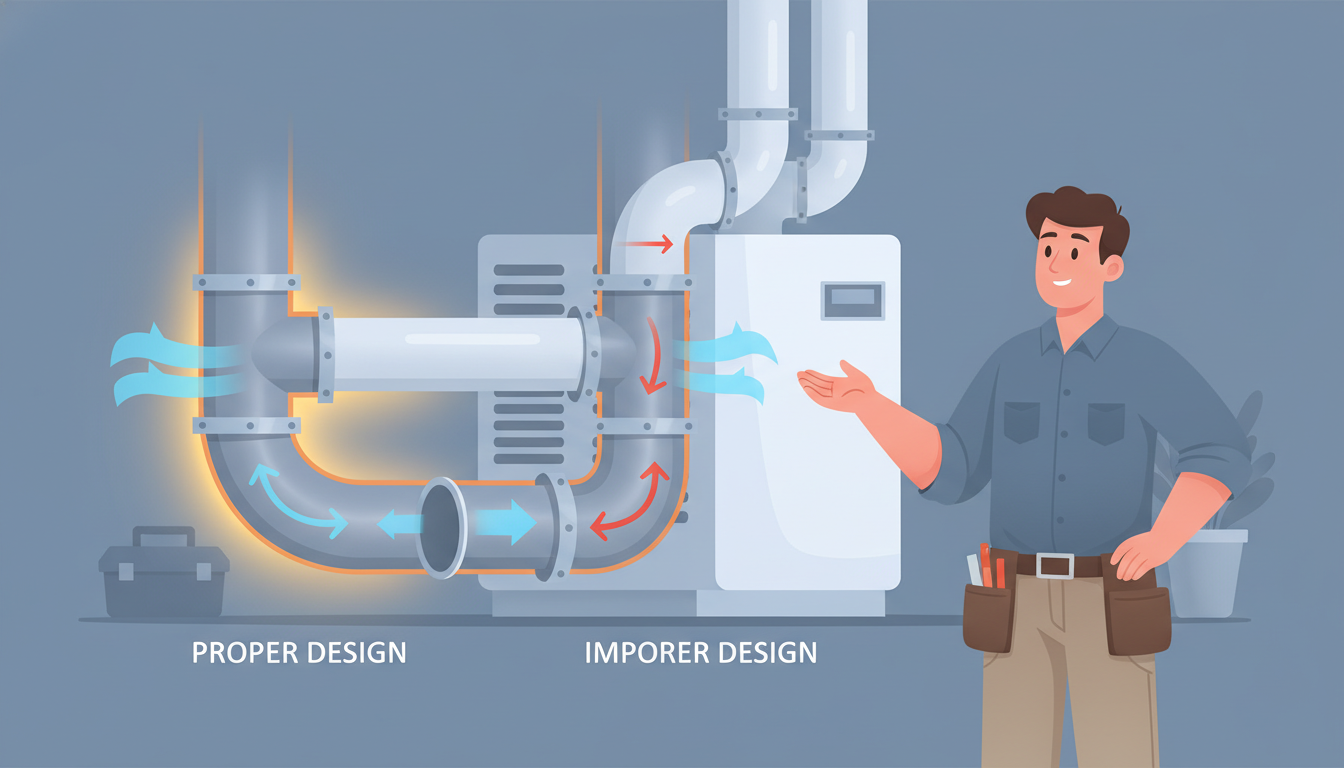
Your HVAC system is only as good as the ductwork that distributes conditioned air throughout your home. Even the most advanced, energy-efficient heating and cooling equipment will underperform if the duct system is poorly designed. Think of your ducts as the circulatory system of your home—when arteries are blocked or improperly sized, the entire system struggles.
According to industry research, approximately 80% of residential duct systems are undersized. This widespread problem means your HVAC equipment is working harder than it should, leading to premature wear and frequent repair calls. When ducts can't deliver adequate airflow, your system compensates by running longer cycles, putting excessive strain on critical components.
The National Comfort Institute found that typical HVAC systems only deliver 57% of their rated capacity due to duct problems. This means you're getting half the performance you paid for while your equipment wears out twice as fast.
How Poor Duct Design Triggers Repair Calls
1. Undersized Ducts Cause Compressor Failure
When ducts are too small for your system's capacity, airflow becomes restricted. Your air conditioner or heat pump needs a specific volume of air moving across the evaporator coil to function properly. Without adequate airflow, several problems cascade:
Frozen evaporator coils: Restricted airflow causes the coil to get too cold, leading to ice buildup. This is one of the most common repair calls related to duct design issues.
Compressor overheating: Your compressor works harder to compensate for poor airflow, generating excessive heat. Compressor replacement is one of the most expensive HVAC repairs, often costing $1,500 to $2,500.
Short cycling: The system turns on and off frequently because it can't maintain proper temperatures. This constant starting and stopping wears out electrical components and reduces equipment lifespan by years.
If you're experiencing these issues, comprehensive HVAC repair guidance can help you understand what's happening with your system.
2. Improper Duct Sizing Creates Blower Motor Problems
Your blower motor is designed to push a specific volume of air (measured in CFM—cubic feet per minute) against normal resistance. When ductwork creates excessive resistance through undersizing, sharp bends, or poor layout, your blower motor suffers:
Increased static pressure: Think of this like your heart pumping against clogged arteries. The motor strains against the resistance, overheating and wearing out faster.
Motor burnout: Continuous operation under high static pressure causes premature motor failure. Blower motor replacement typically costs $450 to $800.
Capacitor failure: The extra load burns out capacitors more frequently, leading to repair calls every cooling season.
Measuring static pressure during routine maintenance can reveal duct design problems before they cause expensive failures. Professional technicians should test static pressure at every service call to catch these issues early.
3. Return Air Design Mistakes Double Your Repair Frequency
Most homeowners focus on supply ducts, but return air design is equally critical. Inadequate return air pathways create negative pressure in rooms, forcing your system to work against itself. Common return air mistakes include:
Single return for multiple rooms: When doors close, rooms become pressurized, dramatically reducing airflow and forcing equipment to strain.
Undersized return ducts: Even more common than supply duct problems, restricted return air starves your system of the airflow it needs.
Return air leaks in unconditioned spaces: When return ducts leak in attics or crawl spaces, your system draws in hot, humid air (or cold air in winter), making equipment work overtime.
These return air problems cause your system to run longer cycles, increasing wear on every component. If you've noticed weak airflow from your vents, return air issues may be the root cause.
4. Air Leakage Drives Up Repair Costs
Energy Star estimates that 20% to 30% of conditioned air escapes through leaks in typical duct systems. This massive air loss doesn't just waste energy—it causes direct equipment damage:
System oversizing effect: When ducts leak, contractors often respond by installing larger equipment to compensate. This creates an oversized system that short cycles, reducing efficiency and lifespan.
Moisture infiltration: Leaky ducts in attics or crawl spaces allow humid air to enter the system. This moisture can cause mold growth, corrosion, and frozen coils.
Contaminant entry: Negative pressure from duct leaks pulls dust, insulation fibers, and other debris into your system, clogging filters quickly and damaging components.
Over 50% of new ductwork systems don't perform to their rated efficiency because of improper sealing during installation. This translates directly into more frequent filter changes, coil cleaning, and component replacements.
The Real Cost of Poor Duct Design
Understanding the financial impact helps put duct design in perspective:
Typical scenario without duct issues:
- Equipment lifespan: 15-20 years
- Annual repair costs: $150-$300
- Total 15-year repair costs: $2,250-$4,500
Typical scenario with poor duct design:
- Equipment lifespan: 8-12 years (reduced by 40-50%)
- Annual repair costs: $400-$800
- Total 10-year repair costs: $4,000-$8,000
- Premature equipment replacement: $5,000-$10,000
Poor duct design can cost you an extra $7,000 to $14,000 over the life of your HVAC system through increased repairs and premature replacement.
Design Flaws That Lead to Specific Repairs
Excessive Duct Runs and Sharp Bends
Long duct runs with multiple turns create friction that restricts airflow. Each 90-degree elbow reduces airflow efficiency by approximately 20%. When your system has three or four sharp bends, airflow drops dramatically.
Repair consequences: Overheating, frozen coils, and blower motor failure from increased static pressure.
Poor Insulation in Unconditioned Spaces
Ducts running through attics, crawl spaces, or garages need adequate insulation (minimum R-6 rating). Without it, you lose conditioned air to temperature transfer before it reaches living spaces.
Repair consequences: System runs continuously trying to meet thermostat settings, causing wear on contactors, relays, and compressors.
Incorrect Duct Material Selection
Flexible duct is popular because it's inexpensive and easy to install, but it's often misused. When flex duct sags, compresses, or gets crushed, it dramatically reduces airflow.
Repair consequences: Similar to undersized ducts—restricted airflow causes frozen coils, compressor strain, and blower motor problems.
Missing or Poorly Designed Zoning
Adding zoning to an existing system without proper duct modifications creates problems. Zone dampers restrict airflow to unused zones, but if the duct system wasn't designed for zoning, this creates excessive static pressure.
Repair consequences: Premature damper motor failure, increased noise, and strain on the main blower motor.
Why Airflow Testing Matters for Reducing Repairs
Professional airflow testing reveals duct design problems before they cause equipment failure. During testing, technicians measure:
Static pressure: The resistance your blower motor works against. High static pressure indicates duct design problems.
Actual CFM delivery: Comparing measured airflow to manufacturer specifications reveals undersizing issues.
Temperature differential: The difference between supply and return air temperatures indicates system efficiency and potential airflow problems.
Testing typically costs $150-$300 but can identify problems that would cost thousands in repairs if left unaddressed. Many HVAC companies include basic airflow measurement in their tune-up services.
Signs Your Duct Design Is Causing Repair Calls
Watch for these warning signs that indicate duct problems are damaging your equipment:
-
Frequent compressor issues: If you've replaced your compressor or had refrigerant pressure problems multiple times, ductwork may be the underlying cause.
-
Recurring frozen coils: Ice forming on your evaporator coil more than once suggests chronic airflow restriction from duct design.
-
Hot and cold spots that never resolve: Temperature imbalances persisting despite repairs indicate fundamental airflow distribution problems.
-
High repair frequency: If you're calling for service more than once per year for non-maintenance issues, ductwork could be stressing your equipment.
-
Premature equipment replacement: Needing new HVAC equipment before 12-15 years suggests accelerated wear from duct problems.
-
Excessive system noise: Rumbling, whistling, or rushing air sounds indicate turbulence and high velocity from undersized or poorly designed ducts.
Should You Fix Ductwork Before Replacing HVAC Equipment?
If you're facing an expensive HVAC replacement, addressing duct problems first can save you money long-term. Here's why:
New equipment won't fix duct problems: Installing a high-efficiency system on poor ductwork means you'll never achieve the rated efficiency or lifespan. You're essentially pouring money into equipment that's handicapped from day one.
Properly sized equipment requires proper ducts: When technicians perform Manual J load calculations and Manual D duct design, they often discover existing ducts are inadequate for the new equipment. Addressing this during installation prevents future problems.
Combined replacement saves money: Doing ductwork and equipment replacement together typically costs 15-20% less than doing them separately. You save on labor, permits, and logistics.
Warranty protection: Some equipment manufacturers require proper duct design for warranty coverage. If your system fails prematurely and ducts don't meet specifications, warranty claims may be denied.
Preventive Solutions to Reduce Repair Frequency
Professional Duct Design Assessment
Before problems escalate, have an HVAC professional perform a comprehensive duct evaluation including:
- Manual D duct design calculations
- Static pressure testing
- Airflow measurement at registers
- Visual inspection for damage, leaks, and poor installation
- Thermal imaging to identify insulation problems
This assessment typically costs $200-$500 but provides a roadmap for improvements that will reduce repair calls.
Strategic Duct Modifications
Not all duct problems require complete replacement. Targeted improvements can dramatically reduce repair frequency:
Seal major leaks: Professional duct sealing with mastic or Aeroseal technology can reduce air leakage by 80-90%, often paying for itself within 2-3 years through reduced repairs and energy costs.
Add return air pathways: Installing additional returns or jump ducts between rooms relieves pressure imbalances and reduces equipment strain.
Upgrade flex duct sections: Replacing compressed or damaged flex duct in critical areas restores airflow without complete duct replacement.
Improve insulation: Adding insulation to ducts in unconditioned spaces reduces thermal loss and system runtime.
Regular Maintenance with Airflow Focus
Standard HVAC maintenance should include airflow verification:
- Filter changes every 1-3 months depending on conditions
- Annual static pressure testing
- Register airflow measurement
- Duct inspection for new damage or disconnections
- Cleaning of return air grilles and registers
This proactive approach catches duct-related problems before they cause equipment damage.
The Manual D Difference: Proper Design Prevents Repairs
ACCA Manual D provides the industry standard for duct system design. When properly followed, Manual D calculations determine:
- Correct duct sizes for each run based on CFM requirements
- Maximum acceptable static pressure for your equipment
- Optimal supply and return register placement
- Necessary insulation R-values
- Proper air distribution for comfort and efficiency
Systems designed using Manual D experience 40-60% fewer repair calls compared to systems with ductwork installed using "rules of thumb" or guesswork. The upfront investment in proper design pays dividends in reduced maintenance and extended equipment life.
Unfortunately, many HVAC installations skip Manual D calculations to save time and cost. This penny-wise, pound-foolish approach sets homeowners up for years of repair expenses.
Questions to Ask Your HVAC Contractor
When hiring for installation or major repairs, ask these questions to ensure proper duct design:
-
"Will you perform Manual J and Manual D calculations?" - This ensures proper system and duct sizing.
-
"What is the static pressure of my current system?" - High readings (above 0.5 inches water column) indicate duct problems.
-
"Can you measure actual CFM delivery at each register?" - This verifies airflow matches design specifications.
-
"What duct sealing method do you use?" - Mastic or Aeroseal are professional standards; duct tape is inadequate.
-
"Will you provide a duct design drawing?" - Professional contractors document their duct layout and sizing.
Frequently Asked Questions
What duct problems cause the most HVAC repairs?
Undersized ducts are the leading cause of HVAC repairs related to duct design. They restrict airflow, causing frozen evaporator coils, compressor overheating, and blower motor strain. Return air inadequacy is the second most common issue, creating negative pressure that starves the system of proper airflow.
How much do duct issues cost in repairs over time?
Poor duct design typically adds $400-$600 per year in extra repair costs and reduces equipment lifespan by 40-50%. Over 10-15 years, this translates to $7,000-$14,000 in additional expenses through increased repairs and premature equipment replacement.
Can fixing ductwork really reduce repair calls?
Yes, dramatically. Studies show that correcting major duct design flaws can reduce repair frequency by 40-60%. Professional duct sealing alone typically reduces service calls by 30-40% by eliminating air leakage that causes equipment strain.
What are the most obvious signs ductwork is causing problems?
Frequent frozen coils, recurring compressor issues, temperature imbalances that persist despite repairs, and excessive system noise are clear indicators. If you're calling for repairs more than once annually (excluding routine maintenance), duct problems are likely contributing.
Should I repair ducts or replace my HVAC system first?
Address both simultaneously if possible. Installing new HVAC equipment on poor ductwork wastes money because you'll never achieve rated efficiency or lifespan. If you must prioritize, fix critical duct problems (major leaks, severe undersizing) before equipment replacement to protect your investment.
Take Action to Reduce Your Repair Calls
The connection between duct design and HVAC repair frequency is clear: poor ductwork creates a cascade of problems that damage equipment and drain your wallet. If you're tired of frequent service calls, start by having a professional assess your duct system.
A comprehensive evaluation including static pressure testing and airflow measurement reveals whether duct problems are causing your repair issues. Many homeowners are surprised to learn that investing $1,500-$3,000 in duct improvements eliminates $5,000-$10,000 in future repair costs.
Don't wait until your compressor fails or your system needs premature replacement. Addressing duct design now protects your HVAC investment and ensures comfortable, efficient operation for years to come. Contact a qualified HVAC professional who performs Manual D duct design to evaluate your system and recommend improvements that will reduce your repair frequency and extend your equipment's lifespan.