How to Create an HVAC Maintenance Calendar for Your Home
How to Create an HVAC Maintenance Calendar for Your Home
Your HVAC system works tirelessly to keep your home comfortable year-round, but without regular maintenance, even the best systems fail prematurely. Studies show that 82% of HVAC system failures stem from restricted airflow caused by dirty filters—a problem that's completely preventable with a proper maintenance calendar. Whether you're a new homeowner or looking to extend your system's lifespan, creating an HVAC maintenance calendar is your roadmap to lower energy bills, fewer breakdowns, and a more comfortable home.
Why You Need an HVAC Maintenance Calendar
Reactive maintenance costs you more in the long run. When you wait for your system to break down before calling a professional, you're not just facing expensive emergency repairs—you're also dealing with uncomfortable temperatures, potential property damage, and shortened equipment lifespan.
A well-planned home HVAC maintenance schedule transforms your approach from reactive to proactive. Properly maintained systems operate up to 25% more efficiently, which translates to significant savings on your utility bills. Plus, most HVAC manufacturers require proof of regular maintenance to honor warranty claims, making your maintenance calendar a financial safety net.
Beyond cost savings, preventive maintenance ensures better indoor air quality for your family. Regular filter changes and system cleanings remove dust, allergens, and pollutants that circulate through your home, creating a healthier living environment.
Understanding Your HVAC System's Maintenance Needs
Before creating your HVAC maintenance calendar, you need to understand what type of system you have and its specific requirements.
Different Systems, Different Needs
Not all HVAC systems follow the same maintenance schedule. Central air conditioning systems require different care than heat pumps, ductless mini-splits, or geothermal systems. Your system's age also matters—older units typically need more frequent attention than newer, high-efficiency models.
Heat pumps, for example, work year-round for both heating and cooling, so they need more frequent inspections than systems that only operate seasonally. Ductless mini-split systems have individual air handlers that each require filter cleaning, while central systems have one main filter location.
Climate and Environmental Factors
Your local climate significantly impacts your HVAC maintenance calendar. Homes in hot, humid climates put more strain on air conditioning systems and may need monthly filter changes during peak summer months. Coastal properties face salt air corrosion that demands more frequent outdoor unit cleaning.
If you live in an area with high pollen counts, your filters will clog faster during spring and fall. Homes surrounded by trees may need more frequent outdoor unit cleaning to remove leaves, seeds, and debris.
Lifestyle Considerations
Your household composition affects maintenance frequency. Pet owners need to change filters more often—sometimes every 30-45 days instead of every 90 days—because pet hair and dander quickly clog filters. Large families that constantly use the system will also need more frequent maintenance.
If anyone in your home has allergies, asthma, or other respiratory conditions, maintaining pristine air quality through regular filter changes becomes even more critical. Home offices that keep systems running during traditionally "off" hours also increase maintenance demands.
Monthly HVAC Maintenance Tasks You Can Handle
Your HVAC maintenance calendar should include simple monthly tasks that any homeowner can perform. These quick checks take just 10-15 minutes but prevent major problems down the road.
Check and Replace Air Filters
This is the single most important monthly task on your DIY HVAC maintenance list. Walk to your air return vent (usually in a hallway or on a wall), remove the filter, and hold it up to the light. If you can't see light passing through, it's time for a replacement.
Standard 1-inch filters typically need replacing every 30-90 days, depending on usage and household factors. Thicker 4-inch or 5-inch filters can last 6-12 months. Always buy the correct size—check your current filter's dimensions or consult your system's manual.
Keep a supply of filters on hand so you're never caught without a replacement. Write the installation date on each new filter with a permanent marker to track when it's due for replacement.
Inspect Your Outdoor Unit
Walk outside and examine your condenser unit. Clear away any leaves, grass clippings, debris, or vegetation within two feet of the unit. Plants and shrubs should be trimmed back to ensure proper airflow—your system needs adequate space to expel heat efficiently.
Check for signs of damage like bent fins, rust, or unusual wear. Listen for strange noises when the system is running. Loud grinding, squealing, or rattling sounds indicate mechanical problems that need professional attention.
During heavy pollen seasons or after storms, you may need to gently rinse the outdoor coils with a garden hose (on a gentle setting) to remove accumulated debris. Never use a pressure washer, as it can damage the delicate fins.
Test Your Thermostat
Ensure your thermostat is responding correctly to temperature changes. If you have a programmable or smart thermostat, verify that your settings are appropriate for the current season. Replace batteries if your model requires them—most should be changed annually or when the low-battery indicator appears.
Check that the display is clear and the controls are responsive. If you notice temperature discrepancies or the system cycling on and off too frequently, your thermostat may need recalibration or replacement.
Listen for Unusual Sounds
Spend a few minutes listening to your system while it's running. Normal operation produces a steady, consistent hum. Warning signs include:
- Grinding or squealing (often indicates belt or motor issues)
- Rattling or clanking (loose components or debris)
- Hissing (potential refrigerant leak)
- Clicking that doesn't stop (electrical problem)
Any persistent unusual noise warrants a call to an HVAC professional. Catching these issues early through your monthly maintenance calendar prevents costly breakdowns.
Quarterly Maintenance for Deeper System Care
Every three months, your HVAC preventive maintenance checklist should include more thorough inspections that go beyond basic monthly tasks.
Inspect and Clean Drain Lines
Your air conditioner produces condensation that drains through a line near the indoor unit. Over time, algae, mold, and debris can clog this line, causing water damage or system shutdowns.
Locate your condensate drain line (usually a PVC pipe near your indoor unit) and check for standing water or slow drainage. Pour a cup of white vinegar or a specialized drain line cleaner down the line to prevent clogs. If you notice water backing up or pooling around your indoor unit, call a professional immediately.
Check Refrigerant Lines
Inspect the refrigerant lines running from your outdoor unit to your indoor unit. These insulated copper lines should be intact with no visible damage, moisture, or ice formation. Ice buildup on these lines indicates low refrigerant levels or airflow problems—both require professional service.
Never attempt to add refrigerant yourself. This requires specialized equipment and EPA certification. If you suspect a refrigerant issue, contact a licensed HVAC technician.
Examine Electrical Connections
While detailed electrical work requires a professional, you can visually inspect accessible electrical connections at your outdoor unit. Turn off power to the unit at your circuit breaker first, then look for signs of corrosion, loose wires, or burnt connectors.
If you spot any electrical issues, leave repairs to qualified technicians. Electrical problems can cause system failures or create fire hazards.
Seasonal HVAC Maintenance: Spring and Fall Tune-Ups
Your seasonal HVAC maintenance schedule should include comprehensive professional tune-ups twice yearly—once before cooling season and once before heating season.
Spring AC Preparation (April-May)
Schedule your air conditioning tune-up in April or early May, before summer heat waves arrive. This timing ensures your system is ready for peak cooling season and prevents the disappointment of discovering problems on the first 95-degree day.
During a professional spring tune-up, technicians will:
- Clean and inspect condenser and evaporator coils
- Check refrigerant levels and test for leaks
- Calibrate thermostat for accurate temperature control
- Test electrical components and tighten connections
- Lubricate moving parts to reduce friction and wear
- Measure airflow and adjust if necessary
- Inspect ductwork for leaks or damage
- Test safety controls and system operation
Professional coil cleaning is particularly important. Dirty coils reduce your system's ability to transfer heat, forcing it to work harder and consume more energy. This single service can improve efficiency by 15-20%.
Fall Heating System Preparation (September-October)
Before temperatures drop, schedule your furnace or heat pump inspection in September or October. This ensures safe, efficient operation throughout winter and identifies potential carbon monoxide risks in combustion systems.
Professional fall maintenance includes:
- Inspecting and cleaning burners and heat exchangers
- Testing ignition systems and safety controls
- Checking gas pressure and connections (for gas furnaces)
- Examining flue pipes for proper venting
- Testing carbon monoxide detectors
- Lubricating motors and bearings
- Checking belts for wear and proper tension
- Testing heating capacity and efficiency
For heat pumps, technicians will also verify the reversing valve operates correctly and check the defrost cycle functionality. These systems work harder than furnaces since they extract heat from outdoor air, making fall maintenance even more critical.
Annual HVAC Maintenance Tasks
Some maintenance tasks only need attention once per year but are crucial for long-term system health.
Complete Ductwork Inspection
Schedule a thorough ductwork inspection every year or two. Leaky ducts waste 20-30% of your conditioned air, driving up energy bills while reducing comfort. Professional duct inspection identifies:
- Air leaks at joints and connections
- Disconnected or damaged duct sections
- Inadequate insulation in unconditioned spaces
- Buildup of dust, mold, or debris inside ducts
If inspection reveals significant issues, duct sealing and cleaning provide excellent return on investment through improved efficiency and air quality. For homes with persistent HVAC problems, ductwork often proves to be the hidden culprit.
Professional System Performance Testing
Annual comprehensive testing provides a complete picture of your system's health. Technicians use specialized equipment to measure:
- Temperature differential across coils
- Airflow volume and distribution
- Electrical current draw on motors
- Combustion efficiency (for gas systems)
- Overall system capacity
These measurements identify declining performance before it causes complete failure. Think of this as an annual physical exam for your HVAC system—catching small problems before they become expensive emergencies.
Review and Update Your Maintenance Records
Once a year, review your maintenance log. Document all service performed, parts replaced, and issues resolved. This creates a valuable history that helps technicians diagnose future problems and proves maintenance compliance for warranty claims.
Your maintenance records also increase your home's value. Prospective buyers appreciate documented proof that major systems received proper care.
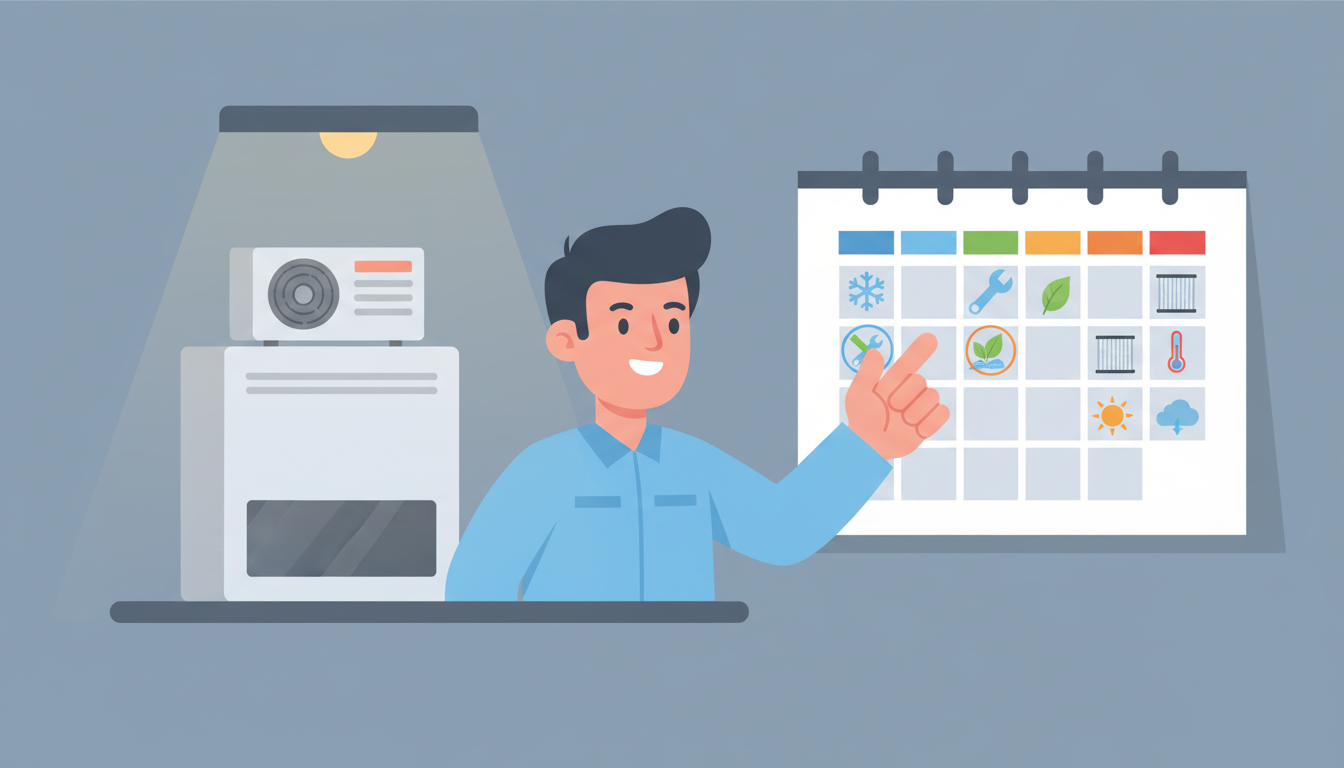
Creating Your Personalized HVAC Maintenance Calendar
Now that you understand what needs doing and when, it's time to build your customized maintenance calendar.
Choose Your Tracking Method
Select a system that works for your lifestyle:
Digital Calendar Apps: Use your phone's calendar app to set recurring reminders. Create separate entries for monthly, quarterly, seasonal, and annual tasks. Enable notifications 1-2 days before each task is due.
Smart Home Integration: Many smart thermostats offer maintenance reminders based on runtime hours. These systems automatically alert you when filters need changing based on actual usage, not arbitrary time intervals.
Dedicated Home Maintenance Apps: Apps like HomeZada, BrightNest, or Centriq let you track all home maintenance, not just HVAC. They often include task libraries, photo storage for receipts and manuals, and service provider contacts.
Paper Calendar: Traditional paper calendars work perfectly if you prefer tangible reminders. Mark your monthly, quarterly, and seasonal tasks at the beginning of each year.
HVAC Service Plans: Many contractors offer maintenance plans that automatically schedule your biannual tune-ups. This removes the burden of remembering these important appointments.
Template for Your Annual HVAC Maintenance Calendar
Here's a comprehensive yearly template you can customize:
January
- Monthly: Check/replace filter, inspect outdoor unit, test thermostat
- Note: Peak heating season—monitor system performance closely
February
- Monthly: Check/replace filter, inspect outdoor unit, test thermostat
- Quarterly: Clean drain lines, inspect refrigerant lines, check electrical connections
March
- Monthly: Check/replace filter, inspect outdoor unit, test thermostat
- Prepare: Schedule spring AC tune-up for April
April
- Monthly: Check/replace filter, inspect outdoor unit, test thermostat
- Professional: Spring AC tune-up and inspection
- Switch thermostat to cooling mode
May
- Monthly: Check/replace filter, inspect outdoor unit, test thermostat
- Quarterly: Clean drain lines, inspect refrigerant lines, check electrical connections
June
- Monthly: Check/replace filter, inspect outdoor unit, test thermostat
- Note: Peak cooling season begins—increase filter check frequency if needed
July
- Monthly: Check/replace filter, inspect outdoor unit, test thermostat
- Clear extra debris from outdoor unit due to summer storms
August
- Monthly: Check/replace filter, inspect outdoor unit, test thermostat
- Quarterly: Clean drain lines, inspect refrigerant lines, check electrical connections
- Prepare: Schedule fall heating tune-up for September
September
- Monthly: Check/replace filter, inspect outdoor unit, test thermostat
- Professional: Fall heating system tune-up and inspection
- Test carbon monoxide detectors
October
- Monthly: Check/replace filter, inspect outdoor unit, test thermostat
- Switch thermostat to heating mode
- Clear fallen leaves from outdoor unit
November
- Monthly: Check/replace filter, inspect outdoor unit, test thermostat
- Quarterly: Clean drain lines, inspect refrigerant lines, check electrical connections
- Annual: Review maintenance records, update service log
December
- Monthly: Check/replace filter, inspect outdoor unit, test thermostat
- Note: Peak heating season—monitor for any unusual performance
- Plan next year's maintenance schedule
Adjusting for Your Specific Situation
Modify this template based on your circumstances:
For Pet Owners: Increase filter checks to every 2-3 weeks instead of monthly. Keep extra filters on hand.
For Allergy Sufferers: Use high-MERV filters and change them every 30-45 days maximum. Consider adding whole-home air purifiers to your system.
For Vacation Homes: Schedule maintenance before arrival periods. If the home sits vacant for months, have a professional inspect before restarting the system.
For Older Systems: Add monthly visual inspections of all accessible components. Watch for rust, unusual wear, or declining performance that signals approaching replacement needs.
For Newer High-Efficiency Systems: Follow manufacturer-specific maintenance intervals in your owner's manual, which may differ from standard recommendations.
The True Cost of Maintenance vs. Neglect
Understanding the financial impact of your HVAC maintenance calendar helps you stay committed to the schedule.
Investment in Preventive Maintenance
A typical homeowner spends $200-400 annually on preventive HVAC maintenance:
- Two professional tune-ups: $150-300 total
- Air filters (12 per year): $30-60
- Minor supplies (drain cleaner, etc.): $20-40
This $200-400 annual investment delivers significant returns through lower energy bills, fewer repairs, and extended equipment life. Many homeowners save more than this amount annually through improved efficiency alone.
Cost of Neglect
Compare preventive maintenance costs to the expenses of neglect:
- Emergency repair visits: $300-800 per incident (often with premium after-hours rates)
- Compressor replacement: $1,200-2,500
- Full system replacement: $5,000-12,000+
- Higher energy bills from inefficient operation: $200-600+ annually
- Voided manufacturer warranties: Potentially thousands in uncovered repairs
A single emergency repair often costs more than several years of preventive maintenance. The question isn't whether you can afford maintenance—it's whether you can afford to skip it.
ROI of Proper Maintenance
Properly maintained HVAC systems deliver impressive returns:
- Extended lifespan: Well-maintained systems last 15-20 years vs. 10-12 years for neglected systems
- Energy savings: 15-25% reduction in utility costs through efficient operation
- Fewer repairs: Preventive care catches small issues before they cause system failures
- Warranty protection: Documented maintenance keeps manufacturer warranties valid
- Home value: Maintained systems are attractive selling points for prospective buyers
Knowing the difference between HVAC maintenance and repair helps you understand which issues require immediate professional attention versus routine care.
Common Mistakes That Undermine Your Maintenance Calendar
Even with good intentions, homeowners often make mistakes that reduce maintenance effectiveness.
Mistake #1: Using the Wrong Filter Size or Type
Not all filters are interchangeable. Using filters that don't fit properly allows unfiltered air to bypass, while overly restrictive filters can starve your system of airflow. Always use the exact size specified by your system's manufacturer.
MERV ratings indicate filtration efficiency—higher numbers capture smaller particles but also restrict airflow more. For most homes, MERV 8-11 filters balance filtration and airflow effectively. Allergy sufferers may benefit from MERV 13, but check your system's specifications first.
Mistake #2: Skipping Biannual Professional Service
Some homeowners believe monthly DIY tasks eliminate the need for professional tune-ups. This false economy backfires when trained technicians don't inspect refrigerant levels, test safety controls, or catch early warning signs of component failure.
Professional equipment detects problems invisible to homeowners. Thermal imaging reveals hot electrical connections, refrigerant gauges identify leaks, and airflow meters expose duct problems. These preventive discoveries save thousands in avoided repairs.
Mistake #3: Inconsistent Record Keeping
Many homeowners start strong with their HVAC maintenance calendar but abandon record-keeping after a few months. Without documentation, you forget when you last changed filters, what issues technicians found during tune-ups, or which parts were replaced.
This amnesia costs money when you can't prove warranty-required maintenance or when technicians need your system's service history to diagnose new problems efficiently. Learn from common maintenance mistakes that create preventable HVAC problems.
Mistake #4: Treating All Seasons Equally
Your HVAC system doesn't work equally hard year-round. During peak cooling and heating seasons, increase your inspection frequency. The system running 8-12 hours daily in July or January needs more attention than it does during mild spring or fall weather when it barely runs.
Adjust your maintenance calendar to reflect actual usage. Check filters every 2-3 weeks during peak seasons rather than waiting the full month.
Mistake #5: Ignoring Warning Signs
Your HVAC maintenance calendar provides structure, but don't ignore problems that arise between scheduled maintenance. Unusual noises, weak airflow, temperature inconsistencies, or higher utility bills signal issues requiring immediate attention.
Waiting for your next scheduled maintenance when warning signs appear allows minor problems to escalate into major failures. When your HVAC needs repair, prompt attention prevents small issues from becoming expensive emergencies.
Technology Tools to Streamline Your Maintenance Calendar
Modern technology makes HVAC maintenance easier and more reliable than ever.
Smart Thermostats
Devices like Nest, Ecobee, or Honeywell Home learn your preferences while monitoring system performance. Many offer maintenance reminders based on actual runtime hours rather than calendar dates, providing more accurate filter replacement alerts.
Smart thermostats also detect performance issues. If your system runs longer than usual to reach target temperatures, the thermostat alerts you to potential problems before they cause complete failures.
HVAC Maintenance Apps
Dedicated home maintenance apps help you:
- Set recurring reminders for all maintenance tasks
- Store photos of equipment model numbers and serial numbers
- Keep digital copies of service receipts and warranties
- Track maintenance expenses over time
- Contact service providers directly from the app
Apps like HomeZada and BrightNest include comprehensive task libraries that remind you of seasonal HVAC tasks you might otherwise forget.
Filter Subscription Services
Several companies offer automatic filter delivery on customized schedules. You specify your filter size and delivery frequency, and fresh filters arrive at your door before you run out. This removes the excuse of forgetting to buy filters and ensures you always use the correct size.
While slightly more expensive than buying filters yourself, the convenience and consistency often justify the premium for busy homeowners.
Frequently Asked Questions About HVAC Maintenance Calendars
How often should I really change my HVAC filter?
Standard 1-inch filters typically need changing every 30-90 days, but several factors affect this timeline. Pet owners, large families, and allergy sufferers should change filters every 30-45 days. Homes without pets and with just 1-2 occupants can stretch to 60-90 days. Check your filter monthly—if it looks dirty, change it regardless of how much time has passed.
Can I skip professional maintenance if I do everything myself?
No. While monthly DIY tasks are crucial, homeowners lack the specialized equipment and training to perform comprehensive system inspections. Professionals check refrigerant levels, test electrical components, inspect heat exchangers for cracks, and calibrate controls—tasks requiring certification and tools you don't have. Think of DIY maintenance as brushing your teeth and professional tune-ups as dental cleanings—you need both.
What happens if I miss a scheduled maintenance task?
Don't panic if you occasionally miss a monthly filter check or quarterly drain line cleaning. Simply complete the task as soon as you remember and resume your regular schedule. However, never skip your biannual professional tune-ups. These seasonal inspections are critical for system longevity and warranty compliance.
How do I find a reliable HVAC contractor for maintenance?
Look for contractors with proper licensing, insurance, and certification from organizations like NATE (North American Technician Excellence). Read online reviews, but focus on comments about professionalism, punctuality, and communication rather than just price. Ask for flat-rate maintenance pricing rather than hourly rates, and inquire about maintenance plans that bundle biannual tune-ups at discounted rates.
Should I sign up for an HVAC maintenance plan?
Maintenance plans (sometimes called service agreements) offer excellent value for most homeowners. You pay an annual fee—typically $150-300—and receive priority scheduling, discounted repairs, and guaranteed biannual tune-ups without needing to remember to schedule them. If you tend to forget preventive maintenance or prefer the convenience of automatic scheduling, these plans are worthwhile investments.
Take Action: Start Your HVAC Maintenance Calendar Today
Creating your HVAC maintenance calendar is straightforward—the key is starting right now, not waiting for the "perfect" time.
Step 1: Choose your tracking method today. Open your phone's calendar app, download a home maintenance app, or get a paper calendar dedicated to home maintenance.
Step 2: Input all recurring tasks using the annual template provided above. Set notifications for 1-2 days before each task to give yourself time to gather supplies.
Step 3: Schedule your next professional tune-up right now. If it's March-May, book an AC inspection. If it's August-October, schedule heating system service. Don't wait—spring and fall are busy seasons for HVAC contractors.
Step 4: Stock up on supplies. Buy a 3-6 month supply of the correct filters for your system. Purchase a bottle of condensate drain line cleaner. Having supplies on hand removes excuses for skipping maintenance.
Step 5: Create your maintenance log. Start a simple spreadsheet or use a notebook to record every filter change, professional service, and issue that arises. This documentation becomes invaluable over your system's lifetime.
Your home's comfort, your family's health, and your wallet all benefit from a well-executed HVAC maintenance calendar. The system that keeps you comfortable deserves the consistent care that prevents breakdowns, reduces costs, and extends its useful life. Start your maintenance calendar today—your future self will thank you every time the system runs efficiently through another harsh summer or freezing winter without issues.