What Credentials Should an HVAC Repair Technician Have?
What Credentials Should an HVAC Repair Technician Have?
When your air conditioner breaks down on the hottest day of summer or your heating system fails during a winter freeze, you need help fast. But before you hire just any HVAC repair technician, it's crucial to verify they have the right credentials. Hiring an unqualified technician can lead to poor workmanship, safety hazards, voided warranties, and costly repairs down the line.
Understanding what credentials your HVAC technician should have protects your home, your family, and your investment. In this guide, we'll break down the essential certifications, licenses, and qualifications that separate professional, trustworthy HVAC contractors from unlicensed operators.
Why HVAC Technician Credentials Matter
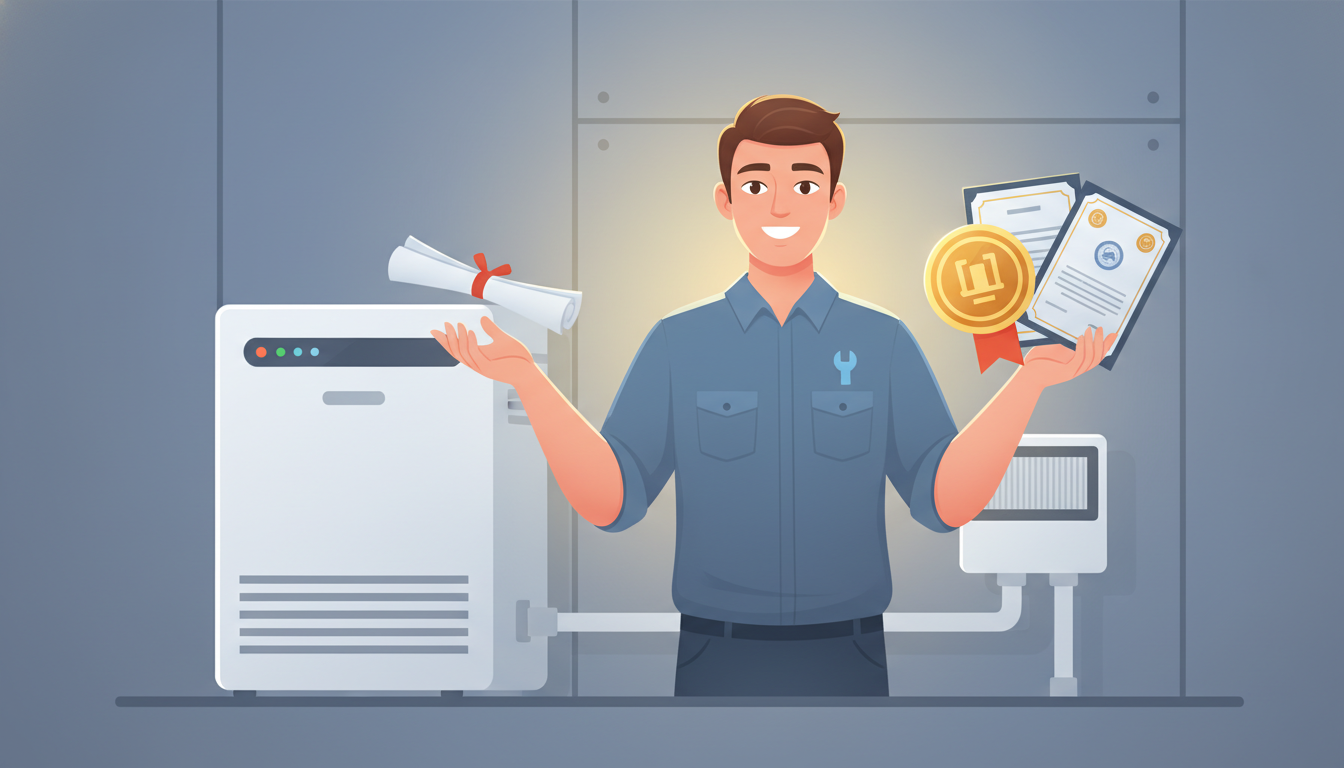
HVAC technician credentials aren't just pieces of paper—they're proof that your service provider has the knowledge, training, and legal authorization to work on your heating and cooling systems safely and effectively.
Here's why credentials are so important:
Safety First: HVAC systems involve electrical components, natural gas, combustible fuels, and potentially harmful refrigerants. A qualified technician knows how to handle these safely, protecting your home from fire hazards, gas leaks, and refrigerant exposure.
Quality Workmanship: Proper certifications mean your technician has undergone rigorous training and passed industry-standard exams. This translates to better diagnostics, more accurate repairs, and longer-lasting solutions.
Legal Compliance: Many states and municipalities require HVAC technicians to hold specific licenses. Hiring an unlicensed contractor could leave you liable if something goes wrong, and you might not be able to file insurance claims for damages.
Warranty Protection: Most HVAC equipment manufacturers require certified technicians to perform installation and repairs. Using an unqualified technician can void your equipment warranty, leaving you responsible for expensive replacement costs.
For more guidance on finding reliable service, check out our guide on how to choose an HVAC repair company you can trust.
Essential HVAC Certifications and Licenses
EPA Section 608 Certification (Federal Requirement)
The Environmental Protection Agency (EPA) Section 608 certification is the most important credential any HVAC repair technician must have. This federal certification is legally required for anyone who works with refrigerants in air conditioning and refrigeration systems.
Why it matters: The Clean Air Act mandates this certification to prevent harmful refrigerants from being released into the atmosphere. Technicians must know how to properly recover, recycle, and handle refrigerants without environmental damage.
Certification types: EPA 608 comes in four levels:
- Type I: Small appliances (refrigerators, window AC units)
- Type II: High-pressure equipment (residential and commercial AC systems)
- Type III: Low-pressure equipment (large chillers)
- Universal: All of the above (most professional technicians hold this)
What to ask: Request to see your technician's EPA 608 certification card before they begin work. This certification never expires, so once earned, it's valid for life.
Any HVAC technician who claims they don't need EPA certification is either uninformed or dishonest—and you should avoid hiring them.
State Licensing Requirements
Unlike EPA certification, state licensing varies significantly by location. Most states require HVAC contractors to obtain a state-issued license before they can legally perform heating and cooling work.
Licensing levels typically include:
- Apprentice License: Entry-level technicians working under supervision
- Journeyman License: Mid-level technicians with several years of experience who can work independently
- Master/Contractor License: Experienced professionals who can run their own HVAC businesses, pull permits, and supervise other technicians
Why state licensing matters: Licensed technicians have proven they understand local building codes, safety regulations, and proper installation procedures. They've typically completed thousands of hours of supervised training and passed comprehensive exams.
How to verify: Most states maintain online databases where you can check a contractor's license status. Search for "[your state] HVAC contractor license lookup" to find your state's verification system.
Before hiring any technician, confirm they hold the appropriate license level for your project. Major installations typically require a master or contractor-level license, while routine repairs may only need a journeyman.
NATE Certification (Industry Gold Standard)
North American Technician Excellence (NATE) certification is the leading industry credential that demonstrates technical competence and expertise. While not legally required, NATE certification is highly valued by consumers and employers alike.
What makes NATE special: NATE tests are developed by industry experts and focus on real-world knowledge of HVAC systems. Technicians can earn specialty certifications in areas like:
- Air conditioning
- Heat pumps
- Gas heating
- Oil heating
- Air distribution
- Light commercial refrigeration
Consumer benefits: Studies show that NATE-certified technicians complete repairs correctly more often, reducing callback rates and ensuring your system runs efficiently. Many homeowners report higher satisfaction when working with NATE-certified professionals.
How to verify: Ask to see your technician's NATE certification card, or verify their certification online at the NATE website. NATE certifications must be renewed every two years, ensuring technicians stay current with industry changes.
For insights into what to expect from a credible professional, read our article on what to expect from an honest HVAC technician.
OSHA Safety Certification
Occupational Safety and Health Administration (OSHA) training isn't always legally required, but many reputable HVAC companies require their technicians to complete OSHA safety courses.
Common OSHA certifications:
- OSHA 10-Hour: Basic safety training covering hazard recognition, fall protection, electrical safety, and personal protective equipment
- OSHA 30-Hour: More comprehensive training for supervisors and experienced technicians
Why it matters: OSHA-trained technicians are less likely to have workplace accidents, which means safer service for your home. They understand proper ladder use, electrical safety protocols, and how to work safely in confined spaces like attics and crawl spaces.
Additional Professional Certifications
Beyond the essential credentials above, look for technicians with these valuable certifications:
HVAC Excellence: Similar to NATE, HVAC Excellence offers certifications that validate technical knowledge and hands-on skills. Technicians can earn employment competency credentials and specialty certifications.
RSES (Refrigeration Service Engineers Society): Offers advanced certifications for technicians specializing in refrigeration, including commercial systems.
Manufacturer Certifications: Many equipment manufacturers like Carrier, Trane, Lennox, and Goodman offer specialized training programs. Manufacturer-certified technicians receive factory training on specific equipment, which can be especially valuable for complex installations or warranty work.
Insurance and Bonding Requirements
Credentials go beyond certifications and licenses—your HVAC technician should also carry proper insurance and bonding.
Liability Insurance
General liability insurance protects you if the technician accidentally damages your property during service. For example, if they drop a tool through your ceiling or cause water damage while replacing a coil, their insurance covers the repairs.
What to request: Ask for a certificate of insurance (COI) showing current general liability coverage. Most reputable contractors carry at least $500,000 to $1 million in coverage.
Workers' Compensation Insurance
If a technician gets injured while working in your home and they don't have workers' compensation coverage, you could be held liable for their medical bills and lost wages.
Protection for you: Always verify that your HVAC company carries workers' compensation insurance for all employees. This protects you from potential lawsuits if someone gets hurt on your property.
Bonding
Bonded contractors have purchased a surety bond that provides financial protection if they fail to complete work as agreed or violate local regulations. While not always required, bonding demonstrates a commitment to professional standards.
How to Verify HVAC Technician Credentials
Don't just take a technician's word that they're qualified. Here's how to verify credentials before allowing work to begin:
Before Hiring
- Ask directly: Request to see their EPA 608 certification, state license, and any additional certifications like NATE
- Check online databases: Most states allow you to search contractor licenses online
- Verify insurance: Request certificates of insurance for both general liability and workers' compensation
- Read reviews: Check online reviews mentioning credentials, professionalism, and quality of work
During the Service Call
- Ask for identification: Professional technicians should have company uniforms and ID badges
- Request credentials: Don't be shy about asking to see certification cards—legitimate technicians expect this
- Get written estimates: Qualified contractors provide detailed, written estimates before beginning work
- Ask questions: Test their knowledge by asking about your specific system and what repairs they recommend
For a comprehensive overview of what to look for during a service call, visit our HVAC repair guide.
Background Checks and References
Beyond technical credentials, consider the technician's professional background:
- Company reputation: How long has the company been in business?
- References: Ask for recent customer references and follow up with them
- Better Business Bureau: Check for complaints or unresolved issues
- Background checks: Some homeowners prefer companies that conduct criminal background checks on technicians
Red Flags: Warning Signs of Unqualified Technicians
Watch out for these warning signs that indicate a technician may not have proper credentials:
Immediate red flags:
- Refuses to show licenses or certifications when asked
- Can't provide proof of insurance
- Offers prices significantly lower than competitors (often a sign of unlicensed work)
- Pressures you to pay in cash only
- Avoids pulling required permits for installations
- Can't explain their diagnosis or recommended repairs
- Lacks professional uniforms, marked vehicles, or identification
- Provides only a P.O. Box address or no physical business location
Trust your instincts: If something feels off or a technician seems evasive about credentials, get a second opinion. The money you save by hiring the cheapest contractor is rarely worth the risk of poor workmanship or safety hazards.
The Cost of Credentials: Are Certified Technicians More Expensive?
Many homeowners wonder if hiring a fully credentialed HVAC technician costs more. The short answer: sometimes, but it's worth it.
Why qualified technicians charge more:
- Years of training and education
- Ongoing certification renewal and continuing education costs
- Higher insurance premiums for proper coverage
- Business licenses and permits
- Professional tools and equipment
What you get for the price:
- Accurate diagnostics the first time
- Repairs done right, reducing callbacks
- Warranty protection on equipment and labor
- Peace of mind about safety and code compliance
- Legal protection if something goes wrong
The false economy of cheap service: Hiring an unlicensed or underqualified technician might save money upfront, but often leads to:
- Misdiagnosed problems and unnecessary repairs
- Safety hazards that require expensive corrections
- Voided equipment warranties
- Failed inspections requiring complete reinstallation
- Potential legal liability
Quality HVAC service is an investment in your home's comfort, safety, and value.
Continuing Education and Recertification
The HVAC industry constantly evolves with new refrigerants, efficiency standards, smart home technology, and building codes. The best HVAC technicians commit to ongoing education.
Look for technicians who:
- Renew NATE certifications every two years
- Attend manufacturer training on new equipment
- Stay current with refrigerant transition requirements (like the shift from R-22 to R-410A)
- Learn about smart thermostats and home automation integration
- Understand current energy efficiency standards and rebate programs
Technicians who invest in continuing education provide better service because they're familiar with the latest equipment and techniques.
Frequently Asked Questions
What is the most important credential for an HVAC technician?
The EPA Section 608 certification is the most critical credential because it's federally required for anyone handling refrigerants. Without it, a technician is working illegally and could face significant fines. State licensing is also essential and legally required in most locations.
How can I verify an HVAC technician's license online?
Most states maintain online license verification databases. Search for "[your state name] contractor license lookup" or visit your state's contractor licensing board website. You'll typically need the contractor's name or license number to search.
What's the difference between licensed and certified HVAC technicians?
Licensing is a legal requirement issued by state or local governments that grants permission to perform HVAC work. Certification (like NATE or HVAC Excellence) is a voluntary professional credential that demonstrates technical competence and expertise. The best technicians have both.
Do HVAC technicians need insurance?
Yes, reputable HVAC companies should carry both general liability insurance and workers' compensation insurance. Liability insurance protects your property if damage occurs during service, while workers' comp protects you from liability if a technician gets injured on your property.
Are manufacturer certifications important?
Manufacturer certifications demonstrate specialized training on specific equipment brands. They're especially valuable for complex installations, warranty work, and troubleshooting brand-specific features. While not essential for basic repairs, they indicate a technician's commitment to expertise.
Make the Right Choice for Your Home
When it comes to your HVAC system, credentials matter. The right certifications, licenses, and insurance protect your home, ensure quality workmanship, and provide peace of mind.
Before hiring any HVAC repair technician, verify they have:
- Current EPA Section 608 certification
- Valid state contractor license
- General liability and workers' compensation insurance
- Professional certifications like NATE (highly recommended)
- A solid reputation with verifiable references
Don't let an emergency rush you into hiring an unqualified contractor. Taking a few extra minutes to verify credentials can save you thousands of dollars in the long run and ensure your HVAC system receives the professional service it deserves.
Remember: the cheapest option is rarely the best option when it comes to HVAC repair. Invest in qualified professionals who bring the right credentials, experience, and commitment to quality that your home deserves.
Need reliable HVAC service from qualified professionals? Start by asking the right questions about credentials—your comfort and safety depend on it.