
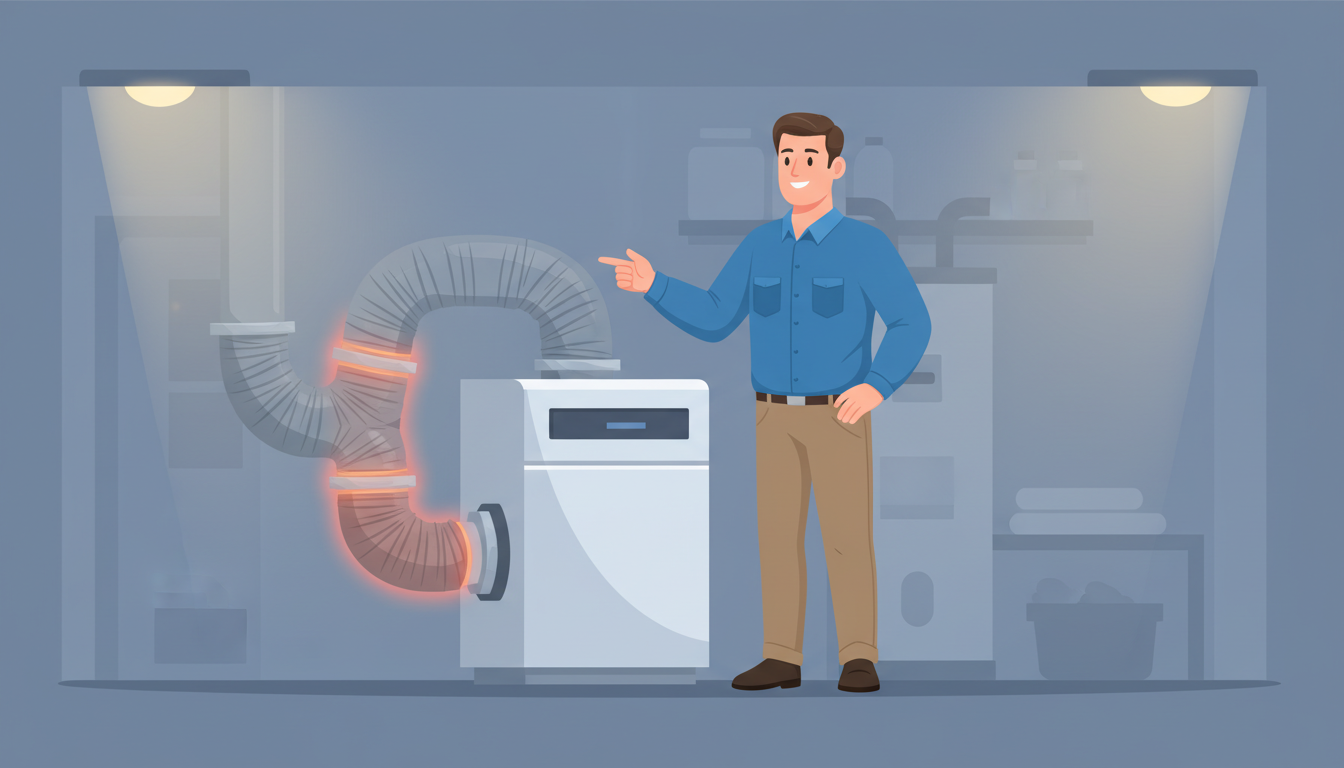
How Crushed or Kinked Ducts Affect HVAC Performance
How Crushed or Kinked Ducts Affect HVAC Performance
Have you noticed some rooms in your home are always too hot while others stay cold? Or maybe your energy bills have been creeping up even though you haven't changed how you use your HVAC system. The problem might be hiding in your ductwork—specifically, crushed or kinked ducts that are silently sabotaging your comfort and costing you money every month.
When ductwork gets crushed, kinked, or bent beyond normal angles, it creates serious airflow restrictions that force your heating and cooling system to work overtime. In this guide, you'll learn exactly how damaged ductwork affects HVAC performance, what warning signs to watch for, and what you can do to fix the problem before it causes expensive damage to your system.
What Causes Ducts to Become Crushed or Kinked?
Understanding how ductwork gets damaged in the first place helps you prevent future problems. Crushed or kinked ducts typically result from a few common causes that affect both new installations and existing systems.
Poor Installation Practices
The most frequent culprit is improper installation. When HVAC contractors rush through installations or lack proper training, they may stretch flexible ductwork too tightly around corners, create sharp bends that exceed the recommended 90-degree limit, or fail to support ducts adequately. Cost-cutting measures during installation often lead to undersized ducts being forced into tight spaces where they inevitably get compressed.
Attic and Crawlspace Activity
Storage boxes, insulation work, or other construction projects in attics and crawlspaces can accidentally crush ductwork. Homeowners walking through attics sometimes step on or lean against flexible ducts, creating permanent kinks or compression damage. Even pest control work or electricians running new wiring can inadvertently damage your air distribution system.
Age and Material Deterioration
Over time, flexible ductwork can sag if support straps fail or spacing between hangers is too wide. This sagging creates low points where ducts can rest on joists or other obstructions, eventually forming permanent kinks. Temperature fluctuations in unconditioned spaces like attics accelerate material breakdown, making ducts more susceptible to crushing.
Building Settling and Structural Changes
Your home naturally settles over the years, and this movement can shift ductwork into positions where it gets compressed against structural elements. Additions, renovations, or repairs to your home's structure may require repositioning ducts in ways that create problematic bends or compression points.
How Crushed Ducts Restrict Airflow
When ductwork becomes crushed or kinked, it creates a bottleneck in your home's air distribution system. Think of it like pinching a garden hose—the pump has to work much harder to push the same amount of water through a restricted opening.
Reduced Air Volume (CFM)
Your HVAC system is designed to move a specific volume of air measured in cubic feet per minute (CFM). When ducts are crushed, the cross-sectional area available for airflow decreases dramatically. A flexible duct compressed by just 25% can lose up to 50% of its airflow capacity. This means rooms served by damaged ducts receive far less conditioned air than they need.
Increased Static Pressure
As airflow meets resistance at crushed or kinked sections, static pressure builds up throughout your duct system. This increased pressure forces your blower motor to work harder, consuming more electricity and generating more heat. High static pressure is like asking your HVAC system to breathe through a straw—technically possible, but incredibly inefficient and stressful on the equipment.
Turbulent Airflow Patterns
Smooth, laminar airflow becomes chaotic and turbulent when forced through bent or compressed ductwork. This turbulence creates noise, further reduces efficiency, and can cause whistling or rushing sounds at vents. The energy lost to turbulence translates directly into wasted electricity and reduced system performance.
Impact on HVAC System Efficiency
Crushed or kinked ducts don't just affect comfort—they fundamentally undermine your entire HVAC system's ability to operate efficiently.
Longer Run Times and Higher Energy Bills
When damaged ductwork restricts airflow, your system must run longer to reach the temperature set on your thermostat. If you normally need 15 minutes of cooling to reach 72°F, crushed ducts might require 25 or 30 minutes instead. This extended runtime shows up directly on your utility bills, potentially increasing cooling and heating costs by 20-40% depending on the severity of ductwork damage.
Understanding weak airflow from vents helps you identify when ductwork issues are impacting your system efficiency. Poor airflow is often the first noticeable symptom of crushed or damaged ducts.
Reduced System Capacity
Your HVAC system has a rated capacity measured in BTUs (British Thermal Units) or tons of cooling. Crushed ductwork can reduce effective capacity by 30% or more, meaning your 3-ton system might only deliver the cooling power of a 2-ton unit. On the hottest or coldest days of the year, your damaged duct system may prevent your HVAC equipment from keeping up with demand, leaving you uncomfortable despite having a properly-sized system.
Uneven Temperature Distribution
Rooms served by crushed ducts receive insufficient airflow while other areas may get too much air as the system compensates. This creates the classic hot and cold spot problem where your bedroom stays stuffy while the living room freezes. Some family members constantly adjust the thermostat trying to find a comfortable middle ground, but the real issue is damaged ductwork preventing proper air distribution throughout your home.
Serious HVAC Equipment Damage From Restricted Airflow
The consequences of crushed or kinked ducts extend far beyond comfort and energy bills. Inadequate airflow can cause serious mechanical failures that require expensive repairs or premature system replacement.
Frozen Evaporator Coils
Your air conditioning system's evaporator coil needs sufficient airflow to absorb heat properly. When crushed ducts restrict airflow below design specifications, the coil temperature drops below freezing, causing frost and ice buildup. This ice blocks even more airflow, creating a destructive cycle. A frozen coil can't cool your home effectively, and the ice can damage the coil fins, refrigerant lines, and drain pan.
Compressor Overheating and Failure
The compressor is the heart of your air conditioning system and one of its most expensive components. When restricted airflow causes the evaporator coil temperature to drop, refrigerant returns to the compressor in liquid form instead of as vapor. This liquid refrigerant can damage compressor valves and bearings, leading to premature failure. Compressor replacement often costs $1,500-$3,000 or more, sometimes making economic sense to replace the entire outdoor unit instead.
Furnace Overheating and Heat Exchanger Cracks
On the heating side, crushed ducts create equally serious problems. When your furnace can't push enough air through restricted ductwork, heat builds up inside the heat exchanger. Modern furnaces have limit switches that shut the system down when temperatures get too high, causing short cycling where your furnace runs for brief periods then shuts off.
Repeated overheating cycles can crack the heat exchanger—a failure that often requires complete furnace replacement due to safety concerns about carbon monoxide leaks. Heat exchanger replacement costs frequently exceed the value of the furnace itself, making this one of the most expensive consequences of neglected ductwork problems.
Blower Motor Burnout
Your blower motor works against increased resistance when ductwork is crushed or kinked. This extra strain generates excessive heat in the motor windings and shortens bearing life. A blower motor laboring against high static pressure draws more amperage, runs hotter, and fails sooner than one operating under normal conditions. Replacing a failed blower motor typically costs $400-$1,500 depending on the system.
Warning Signs Your Ducts May Be Crushed or Kinked
Recognizing the symptoms of damaged ductwork early can save you from expensive repairs and uncomfortable living conditions. Watch for these telltale signs that indicate crushed or kinked ducts may be affecting your HVAC performance.
Weak or Inconsistent Airflow From Vents
Place your hand in front of each vent in your home and compare the airflow strength. If some vents have noticeably weaker airflow than others, crushed ductwork might be restricting air to those rooms. The airflow should feel consistent across all supply vents when your system is running. Dramatically reduced flow from specific vents often indicates damage in the duct run serving that area.
Unusual Noises From Ductwork
Listen for whistling, rushing, or rattling sounds coming from your ducts when the system runs. These noises indicate turbulent airflow trying to squeeze through restricted sections. You might hear popping or banging sounds as ducts expand and contract under unusual pressure. These acoustic clues often lead you directly to problem areas in your duct system.
Rooms That Never Reach Comfortable Temperatures
If one or more rooms consistently stay too hot in summer or too cold in winter no matter how long the system runs, damaged ductwork is a likely cause. This is especially suspicious if the problem rooms were comfortable in the past but gradually became problematic over time. Sudden comfort issues after recent attic or crawlspace work strongly suggest someone accidentally damaged ducts during other projects.
Higher Than Normal Energy Bills
Track your utility bills month-to-month and year-over-year. If your energy costs have increased significantly without corresponding changes in weather, usage patterns, or electricity rates, your HVAC system may be working overtime to compensate for ductwork problems. A 20-40% increase in heating or cooling costs compared to the previous year warrants investigation.
System Runs Constantly But Can't Reach Set Temperature
When your thermostat shows the system running continuously but the temperature never reaches your setting, airflow restriction from crushed ducts might be the culprit. The system physically cannot deliver enough conditioned air to satisfy the thermostat, so it runs indefinitely trying to hit the target temperature. This constant operation wastes enormous amounts of energy and indicates a serious problem requiring immediate attention.
Visible Duct Damage in Accessible Areas
If you can access your attic, basement, or crawlspace, perform a visual inspection of exposed ductwork. Look for obvious kinks, compression, sagging sections resting on surfaces, or sharp bends. Flexible ductwork should maintain a smooth, rounded shape without any pinched or flattened sections. Support straps should be spaced no more than 4 feet apart to prevent sagging that leads to kinks.
How to Inspect Your Ductwork for Damage
While comprehensive duct inspection requires professional equipment, homeowners can perform basic checks to identify obvious problems. Taking time to inspect accessible ductwork can reveal issues before they cause system damage.
Visual Inspection Checklist
Grab a flashlight and inspect any visible ductwork in your attic, basement, or crawlspace. Look for these specific problems:
- Compression or flattening: Flexible ducts should maintain their round shape. Any section that looks oval or flat indicates compression that restricts airflow.
- Sharp bends or kinks: Measure the angle at bends. Anything sharper than 90 degrees restricts airflow significantly.
- Sagging sections: Ducts should be supported every 4 feet maximum. Sagging between supports creates low points where kinks form.
- Disconnected sections: Check that all connections are secure with no gaps where air can leak.
- Insulation damage: Damaged insulation exposes inner duct liner to temperature extremes, accelerating deterioration.
Airflow Testing at Vents
Use a simple tissue paper test at each supply vent in your home. Hold a single tissue about 6 inches from the vent when your system runs. The tissue should be pulled firmly toward the vent by the airflow. Compare results across all vents—inconsistent tissue pull indicates uneven air distribution often caused by ductwork problems.
For a more quantitative approach, consider purchasing an inexpensive anemometer (airflow meter) to measure CFM at each vent. Record the measurements and compare them to expected values based on your system size and duct design. Significant variations between vents signal distribution problems.
Temperature Differential Checks
Measure the temperature of air coming from each supply vent using a thermometer. In cooling mode, all vents should deliver air approximately 15-20°F cooler than your home's temperature. In heating mode, supply air should be 40-70°F warmer than room temperature. Vents delivering air that's warmer or cooler than expected indicate airflow or distribution issues.
Regular airflow testing helps catch ductwork problems before they cause expensive damage to your HVAC equipment. Professional technicians use specialized equipment to measure static pressure and airflow precisely, identifying restrictions that may not be visible during basic inspections.
Professional Duct Repair vs. DIY Solutions
Once you've identified crushed or kinked ductwork, you need to decide whether to attempt repairs yourself or call a professional HVAC contractor. The right choice depends on the location and severity of the damage.
When DIY Repair Makes Sense
Simple fixes in easily accessible locations might be suitable for handy homeowners:
- Repositioning storage items: If boxes or insulation are compressing ducts, simply moving the obstruction solves the problem.
- Adding support straps: Installing additional support straps to prevent sagging is straightforward with proper materials and spacing.
- Straightening minor kinks: Gently reshaping flexible ductwork that's slightly kinked but not damaged can restore airflow.
However, even these simple repairs require caution. Never pull or stretch ductwork aggressively, as this can tear the inner liner or separate connections. Make sure any repairs maintain proper duct insulation and vapor barriers to prevent condensation issues.
When to Call an HVAC Professional
Most ductwork repairs are best left to trained technicians who have the tools and knowledge to do the job correctly:
- Inaccessible duct locations: Ducts behind walls, above ceilings, or in tight crawlspaces require professional tools and experience to access safely.
- Severely crushed or torn ducts: Sections with major damage need replacement, not repair. Professionals can source matching materials and install them to code.
- System performance problems: If crushed ducts are part of broader HVAC efficiency issues, technicians can perform comprehensive diagnostics including static pressure testing, airflow measurements, and duct leakage testing.
- Multiple problem areas: When damage affects multiple duct runs, professional assessment helps prioritize repairs and may reveal underlying design flaws that need correction.
A complete HVAC repair guide helps you understand when professional service is necessary versus when simple maintenance can solve the problem. Ductwork repairs often require specific technical knowledge about proper sizing, support methods, and sealing techniques that ensure long-lasting results.
Expected Repair Costs
Understanding typical costs helps you budget for repairs:
- Minor repairs (adding supports, repositioning ducts): $150-$400
- Section replacement (replacing 10-20 feet of damaged duct): $400-$800
- Extensive repairs (multiple sections, access challenges): $800-$2,500
- Complete duct system replacement: $3,000-$10,000+ depending on home size
These costs are far less than repairing or replacing HVAC equipment damaged by prolonged airflow restriction. Heat exchanger replacement ($1,500-$3,500), compressor failure ($1,500-$3,000), or full system replacement ($5,000-$12,000) make ductwork repair look economical by comparison.
Preventing Future Duct Damage
Once you've addressed existing crushed or kinked ductwork, prevention strategies help avoid recurring problems.
Proper Duct Support Systems
Ensure all ductwork is supported according to code requirements—typically every 4 feet for flexible ducts and every 10 feet for rigid ductwork. Support straps should be wide enough to prevent cutting into the duct material. Metal straps or specialized duct support systems work better than wire or string that can cut through insulation.
Protecting Ducts During Other Work
Before starting attic storage projects, insulation improvements, or any construction work near ductwork, mark duct locations clearly. Place protective barriers or plywood walkways to prevent accidentally stepping on or crushing ducts. Communicate with contractors about duct locations before they begin work in areas where ductwork runs.
Regular Professional Inspections
Include ductwork inspection as part of your annual HVAC maintenance. Technicians can spot early signs of sagging, compression, or connection problems before they become serious. Many issues caught early require only minor adjustments rather than expensive repairs.
Maintaining Proper Attic Conditions
Control attic temperature and humidity to minimize stress on ductwork materials. Proper attic ventilation reduces extreme temperature swings that accelerate flexible duct deterioration. Address roof leaks immediately to prevent water damage that weakens duct materials and support systems.
The Connection Between Duct Design and Performance
Understanding proper duct design helps you recognize when your system has underlying problems beyond simple crushing or kinking.
Sizing and Air Distribution
Every HVAC system needs ductwork sized to match its capacity. Undersized ducts create high static pressure even without any crushing or kinking. If your ductwork was improperly sized during original installation, you might experience chronic airflow problems that minor repairs can't fully resolve. Proper duct design follows Manual D calculations that account for system capacity, building layout, and airflow requirements for each room.
Minimizing Bends and Transitions
Each bend, transition, or fitting in your duct system adds resistance to airflow. Good duct design minimizes these restrictions by using the straightest, shortest paths possible. When bends are necessary, gradual curves work better than sharp angles. Avoid multiple bends in close succession—each additional bend compounds the airflow restriction.
The Importance of Return Air Paths
Many homeowners focus on supply ducts while neglecting return air pathways. Your HVAC system needs adequate return air to operate efficiently. Undersized return ducts or blocked return paths create problems similar to crushed supply ducts, including reduced airflow, higher energy consumption, and equipment strain. Make sure return air grilles aren't blocked by furniture and that return ductwork is free from obstruction.
Frequently Asked Questions
Can crushed ducts cause my HVAC system to freeze up?
Yes, crushed or kinked ducts that severely restrict airflow can cause your air conditioning system to freeze. When insufficient air moves across the evaporator coil, its temperature drops below freezing, causing frost and ice buildup. This ice blocks even more airflow, creating a destructive cycle that prevents cooling and can damage your equipment.
How much can crushed ductwork increase my energy bills?
Depending on the severity and location of duct damage, crushed or kinked ductwork can increase heating and cooling costs by 20-40% or more. Your system must run significantly longer to deliver the same amount of conditioned air when ductwork restricts flow. This extended runtime translates directly into higher electricity or gas consumption.
Is it worth repairing crushed ducts or should I replace my entire duct system?
If damage is limited to one or two accessible sections, repair makes economic sense. However, if you have multiple crushed sections, chronic sagging throughout the system, or your ductwork is more than 20 years old, complete replacement might offer better long-term value. A professional assessment including airflow testing and static pressure measurements helps you make an informed decision.
How can I tell if my ducts are crushed if I can't see them?
Watch for indirect symptoms including weak airflow from specific vents, rooms that never reach comfortable temperatures, unusual noises from ductwork when the system runs, and higher than normal energy bills. Professional HVAC technicians can perform diagnostic tests including static pressure measurement and airflow testing to identify restrictions even in inaccessible duct locations.
Can I fix crushed ductwork myself or do I need a professional?
Simple issues in accessible locations—like repositioning storage boxes that are compressing ducts or adding support straps to prevent sagging—can be DIY projects for handy homeowners. However, most ductwork repairs require professional expertise, especially those in tight spaces, situations requiring duct replacement, or problems affecting overall system performance. Improper repairs can make problems worse or create new issues like air leaks or inadequate support.
Take Action to Restore Your HVAC Performance
Crushed or kinked ductwork silently undermines your home comfort and wastes energy every day it goes unaddressed. The airflow restrictions cause your HVAC system to work harder, run longer, and wear out faster while leaving some rooms uncomfortably hot or cold. Worse yet, prolonged operation with inadequate airflow can cause expensive damage to your compressor, heat exchanger, or other critical components.
Start by performing a basic visual inspection of accessible ductwork in your attic, basement, or crawlspace. Look for obvious kinks, compression, sagging, or sharp bends that restrict airflow. Compare the airflow strength at different vents throughout your home to identify rooms receiving inadequate air distribution.
If you spot damaged ductwork or notice symptoms like weak airflow, uneven temperatures, or rising energy bills, don't wait for the problem to worsen. Contact a qualified HVAC professional to perform comprehensive diagnostics including static pressure testing and airflow measurement. These tests precisely identify restrictions and help prioritize repairs for maximum impact on your comfort and efficiency.
Remember that addressing ductwork problems now costs far less than repairing equipment damage caused by months or years of restricted airflow. Your HVAC system is a major investment in your home—proper ductwork ensures that investment delivers reliable comfort and efficiency for years to come.