How to Describe Your HVAC Problem So a Technician Can Diagnose It Faster
How to Describe Your HVAC Problem So a Technician Can Diagnose It Faster
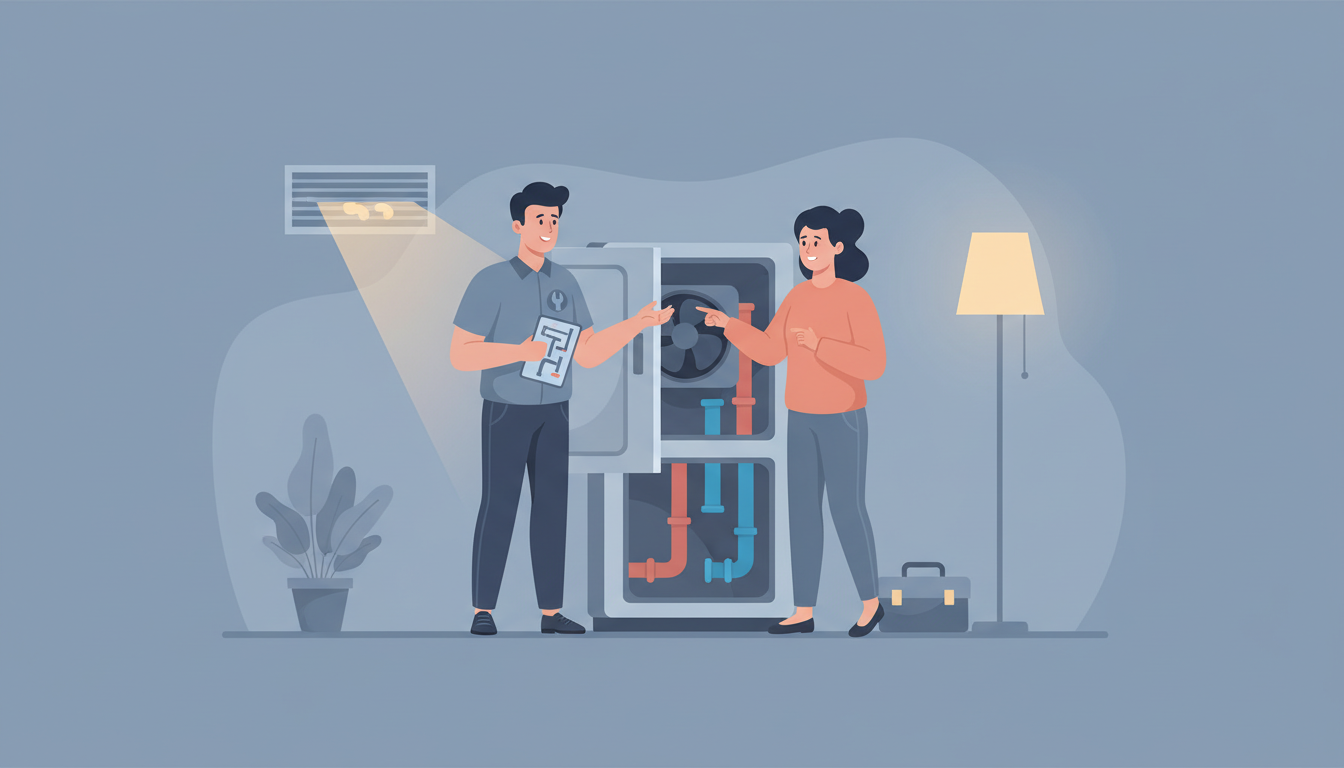
You hear a strange banging noise from your furnace at 2 AM. Your air conditioner runs constantly but your home stays warm. When you call an HVAC technician, the conversation matters more than you think. How you describe HVAC problem symptoms directly impacts how quickly and accurately the technician can diagnose your issue—and that affects both your comfort and your wallet.
Most homeowners struggle to explain what's wrong with their heating and cooling system. You might say "it's just not working right" or "something sounds weird." While that's a start, it doesn't give your HVAC technician the diagnostic information they need to arrive prepared with the right tools and parts.
This guide teaches you exactly how to communicate with HVAC technicians effectively, what details help them diagnose faster, and how to prepare for your service call to get better results.
Why Clear Communication Saves Time and Money
When you describe HVAC issues accurately, your technician arrives better prepared. They bring the right diagnostic tools, order potential replacement parts in advance, and allocate appropriate time for your repair.
Poor communication leads to multiple visits, extended downtime, and higher costs. If you simply say "my AC doesn't work," the technician must start from scratch with basic diagnostics. That's billable time spent gathering information you could have provided upfront.
According to industry professionals, homeowners who provide detailed problem descriptions help technicians diagnose issues 30-40% faster. That translates to lower service call costs and faster restoration of your comfort.
The Five Categories of Information Technicians Need
Before your service appointment, gather information in these five critical categories. Each one helps narrow down potential causes and speeds up diagnosis.
1. Describe Unusual Sounds Accurately
HVAC systems make normal operating sounds, but unusual noises signal specific problems. Learning to describe strange HVAC noises accurately gives technicians immediate clues about what's failing.
Banging or clanking usually indicates loose or broken internal components. Note whether the sound comes from your indoor unit, outdoor unit, or ductwork.
Hissing or whistling often points to air leaks in ductwork or refrigerant leaks in your AC system. Describe the volume and whether it's constant or intermittent.
Screeching or squealing typically means a worn blower motor belt or motor bearings. Mention if the sound stops after the system warms up.
Rattling or vibrating suggests loose screws, panels, or debris in your outdoor unit. Try to pinpoint the exact location of the vibration.
Clicking or buzzing can indicate electrical issues, failing capacitors, or relay problems. Note whether the clicking prevents your system from starting.
Don't just say "it makes a weird noise." Instead, say something like: "There's a loud banging sound from the furnace that happens about 30 seconds after it starts, then stops after a minute."
2. Document When Problems Occur
The timing and pattern of HVAC symptoms provides crucial diagnostic information. Keep a simple log for 24-48 hours before your appointment.
Time of day patterns: Does your air conditioner struggle more in the afternoon heat? Does your furnace act up mainly at night? These patterns help identify capacity issues or thermostat problems.
System cycle behavior: Note when issues happen during the heating or cooling cycle. Problems at startup suggest different causes than problems during continuous operation or shutdown.
Weather-related patterns: If problems worsen during extreme temperatures, that indicates your system may be undersized or losing efficiency.
Duration and frequency: Track how long the problem lasts and how often it occurs. Intermittent issues require different troubleshooting than constant failures.
For example: "The AC runs for about 5 minutes, then shuts off for 3 minutes, then repeats this cycle all day. It started two days ago when we had that heat wave."
3. Identify and Report Strange Smells
Your nose provides valuable diagnostic data. Different odors indicate different HVAC problems, and some require immediate attention.
Burning smell (electrical or plastic): This could indicate overheating components, electrical shorts, or motor problems. If you smell this, turn off your system immediately and call for emergency service.
Musty or moldy odor: This suggests mold or mildew growth in your ductwork, drain pan, or evaporator coil. Mention how long you've noticed the smell and whether it's worse when the system first starts.
Rotten egg smell: This indicates a natural gas leak, which is dangerous. Leave your home immediately and call your gas company and HVAC repair company from outside.
Sweet or chemical smell: This could be a refrigerant leak. While not immediately dangerous, it requires professional repair.
Dusty or burning dust smell: If this only happens at the start of heating season, it's normal—dust burning off heat exchangers. If it persists, mention it.
Be specific: "There's a musty smell that comes from the vents every time the AC starts, strongest in the upstairs bedrooms. We've noticed it for about a week."
4. Measure and Report Temperature Issues
Actual temperature measurements help tremendously. Instead of saying "it's not cooling enough," provide specific data.
Thermostat reading vs. actual temperature: Use a reliable thermometer to measure actual room temperature and compare it to your thermostat setting. A difference of 3-5 degrees might be normal, but 10+ degrees indicates a problem.
Temperature differences between rooms: If some rooms are comfortable while others aren't, note which specific rooms and by how many degrees they differ.
Supply vent temperature: You can measure air temperature at supply vents. For cooling, air should be 15-20 degrees cooler than room temperature. For heating, it should be 25-40 degrees warmer.
Outdoor temperature correlation: Note if the problem gets worse at specific outdoor temperatures.
For example: "The thermostat is set to 72°F but my kitchen thermometer reads 78°F. The bedroom is even warmer at 81°F. The air from the vents feels barely cool—I measured about 65°F."
5. Observe Visual Symptoms and System Behavior
Your observations about how your HVAC system behaves provide context that narrows down potential causes.
Ice formation: Ice on your outdoor AC unit, indoor coil, or refrigerant lines indicates airflow problems, refrigerant issues, or both. Note exactly where you see ice.
Water leaks: Describe where water is leaking, how much, and when it happens. Water from the indoor unit usually indicates a clogged condensate drain.
Short cycling: If your system turns on and off frequently without completing normal cycles, count how many minutes it runs before shutting off.
Won't start at all: Note whether you hear any sounds when it tries to start, if lights come on, or if it's completely silent.
Runs constantly: If your system never shuts off, note whether it's achieving the set temperature or just running endlessly without reaching it.
Airflow issues: Describe whether airflow seems weak from all vents or just specific ones. Weak airflow throughout indicates a blower problem, while weak airflow from specific vents suggests ductwork issues.
Example: "My outdoor AC unit has ice building up on the copper lines. The system runs for about 3 minutes, then shuts off for 2 minutes, then repeats. The air from the vents is very weak—barely any pressure."
Essential Information to Have Ready
When you call to schedule service or when the technician arrives, have this information readily available. Preparation shows you're serious about solving the problem and helps the technician work efficiently.
Equipment Details
- System age: When was your HVAC system installed?
- Equipment brand and model: Check the label on your indoor and outdoor units
- System type: Central air, heat pump, gas furnace, electric heat, etc.
- Recent changes: Any new thermostats, recent repairs, or system modifications?
Maintenance History
- Last professional service: When did a technician last inspect your system?
- Filter changes: When did you last replace your air filter?
- Previous similar problems: Has this happened before? What fixed it then?
- Recent DIY work: Did you attempt any troubleshooting or repairs yourself?
Understanding what HVAC repair includes and how technicians approach diagnostics helps you provide better information and ask better questions.
Your Observations Checklist
Before calling, check these items and note your findings:
- Thermostat settings and display (is it showing error codes?)
- Circuit breakers (are they all in the "on" position?)
- Air filter condition (is it visibly dirty or clogged?)
- Outdoor unit (is it clear of debris, plants, or obstructions?)
- Indoor vents and registers (are they open and unblocked?)
- Unusual sounds, smells, or visual issues (as detailed above)
How to Take Helpful Photos and Videos
Visual documentation helps tremendously, especially for intermittent problems that might not occur when the technician arrives.
For sounds: Record a video with audio when the unusual noise occurs. Get as close as safely possible to the source of the sound.
For visual issues: Take clear, well-lit photos of:
- Ice formation on coils or lines
- Water leaks and puddles
- Error codes or unusual thermostat displays
- Damaged or disconnected components
- The equipment label showing make and model
For performance issues: Record a video showing:
- Weak airflow from vents
- Temperature readings from your thermometer
- The system behavior during the problem cycle
Most technicians appreciate receiving photos via text or email before they arrive. It helps them prepare and might even allow them to diagnose simple issues remotely.
Common Communication Mistakes to Avoid
These common mistakes waste time and lead to confusion. Avoid them by being specific and factual.
Mistake 1: Using vague descriptions
- Bad: "It's making a weird noise"
- Good: "There's a high-pitched squealing sound that starts about 10 seconds after the furnace ignites and continues until it shuts off"
Mistake 2: Diagnosing the problem yourself
- Bad: "I think the compressor is broken"
- Good: "The outdoor unit isn't running, but I can hear humming from it when the thermostat calls for cooling"
Mistake 3: Leaving out important context
- Bad: "It stopped working"
- Good: "It stopped working yesterday afternoon right after we had that thunderstorm. The circuit breaker tripped and I reset it, but the AC still won't start"
Mistake 4: Exaggerating or minimizing
- Bad: "It's been making that noise forever" (when it's been 2 days)
- Good: "I first noticed the noise on Tuesday evening, so about 3 days ago"
Mistake 5: Not mentioning recent changes
- Always mention recent work, new thermostats, filter changes, electrical issues, or anything else that changed around the time the problem started
Questions Your Technician Will Ask
Prepare answers to these common questions before your appointment:
-
When did you first notice the problem?
- Be as specific as possible with dates and times
-
Has anything changed recently?
- New thermostat, filter change, electrical work, storm damage, etc.
-
Is the problem constant or intermittent?
- If intermittent, describe the pattern
-
Have you checked the basics?
- Thermostat settings, breakers, filter, outdoor unit clearance
-
What have you tried already?
- Be honest about any DIY troubleshooting attempts
-
When was your last professional maintenance?
- Provide the approximate date if you remember
-
Are you noticing any other symptoms?
- Even seemingly unrelated issues might be connected
Sample Problem Descriptions (Good Examples)
Here are examples of well-described HVAC problems that give technicians excellent diagnostic starting points:
Example 1 - Cooling Issue: "My AC runs constantly but the house won't cool below 76°F even though the thermostat is set to 72°F. This started 3 days ago during the heat wave. The air from the vents feels cool but not as cold as normal—I measured it at about 60°F when it used to be around 50°F. The outdoor unit is running and sounds normal. I changed the filter last week and all vents are open."
Example 2 - Heating Issue: "My gas furnace makes a loud banging sound about 30 seconds after it ignites. The bang happens once, then the furnace runs normally and heats fine. This started about a week ago. I haven't noticed any other problems, and the last maintenance was in September before heating season."
Example 3 - Noise Issue: "There's a squealing sound coming from inside the air handler in my closet. It starts as soon as the blower turns on and continues the whole time it's running. The sound is high-pitched, almost like a belt slipping. This just started yesterday. The system is still heating okay, but the noise is loud and getting worse."
Example 4 - Intermittent Problem: "My heat pump runs for about 5 minutes, then shuts off completely for 2-3 minutes, then starts again. This short cycling happens all day long. I also noticed ice forming on the outdoor unit, specifically on the larger copper line going into the unit. This started 2 days ago. The house isn't cooling properly—it's staying about 6 degrees warmer than the thermostat setting."
Preparing for the Service Call
Once you've scheduled your appointment, take these steps to ensure a smooth, efficient service call:
Clear the area: Remove items stored around your indoor air handler and create a clear path to your outdoor unit. Technicians need easy access to work efficiently.
Secure pets: Put dogs and cats in a separate room so the technician can work safely and focus on your HVAC system.
Write it down: Create a brief written summary of the problem including key symptoms, when it started, and what you've observed. This ensures you don't forget important details when speaking with the technician.
Note your questions: Write down any questions you want to ask about your system, recommended maintenance, or whether replacement might be more cost-effective than repair.
Be present: If possible, be home when the technician arrives so you can describe the problem in person and answer questions in real time.
Show the problem: If the issue is intermittent, let the technician know when it typically occurs. If you have photos or videos, have them ready to show.
FAQ: Describing HVAC Problems
How do I know if my HVAC problem is an emergency?
An HVAC emergency requires immediate attention. Call for emergency service if you smell gas, smell burning/melting plastic, see flames or smoke, notice electrical sparking, or experience complete heating failure in freezing weather. All other issues can wait for normal business hours.
What if the problem doesn't happen when the technician is there?
This is common with intermittent issues. Your detailed description, photos, and videos become especially important. Describe the pattern clearly: "It only happens in the afternoon when it's above 90°F outside" or "It only occurs on the first startup of the morning." Good technicians can often diagnose intermittent problems from detailed descriptions and diagnostic testing.
Should I try to fix the problem myself before calling?
Check the simple things first: thermostat settings and batteries, circuit breakers, air filter condition, and outdoor unit clearance. However, don't attempt repairs if you're not qualified. Opening refrigerant lines, working with electrical components, or disassembling your system can be dangerous and may void your warranty. If basic checks don't solve the problem, call a professional.
How much detail is too much detail?
More detail is always better than too little. Technicians can quickly sort through information and identify what's relevant. Err on the side of providing more context rather than less. The 10 minutes you spend describing symptoms in detail might save an hour of diagnostic time.
Will describing the problem accurately reduce my service call cost?
While most companies charge a flat diagnostic fee, accurate descriptions help technicians diagnose faster, which reduces labor time for the actual repair. More importantly, it helps them arrive with the right parts, potentially eliminating a second trip. Fewer visits and less time spent diagnosing translates to lower overall costs.
Conclusion: Better Communication Leads to Better Service
Learning to describe HVAC problem symptoms effectively is a skill that pays dividends every time you need service. You'll get faster diagnoses, more accurate repairs, and better value for your service dollar.
Remember the five key categories: sounds, timing patterns, smells, temperature measurements, and visual observations. Be specific, factual, and thorough. Prepare before your service call by checking basic items and documenting what you observe.
When you communicate clearly with your HVAC technician, you become a partner in solving the problem rather than just a customer waiting for answers. That partnership leads to better outcomes, lower costs, and a more comfortable home.
If you're experiencing HVAC issues and need professional help, don't wait until a minor problem becomes a major breakdown. Clear communication starts with that first phone call—use these strategies to describe your problem and get the expert diagnosis you need.