Quick Fix vs Proper HVAC Repair: What You Need to Know
Quick Fix vs Proper HVAC Repair: What You Need to Know
Your air conditioner stops working on the hottest day of summer. A technician arrives, makes a quick adjustment, and your system roars back to life. Problem solved, right? Not necessarily. While quick fixes might get your HVAC system running again, they often mask deeper problems that can cost you thousands of dollars down the road.
Understanding the difference between a quick fix and proper HVAC repair can save you money, extend your system's lifespan, and keep your home comfortable year-round. Let's explore what separates temporary solutions from lasting repairs—and why it matters for your wallet and your comfort.
What Is a Quick Fix in HVAC Repair?
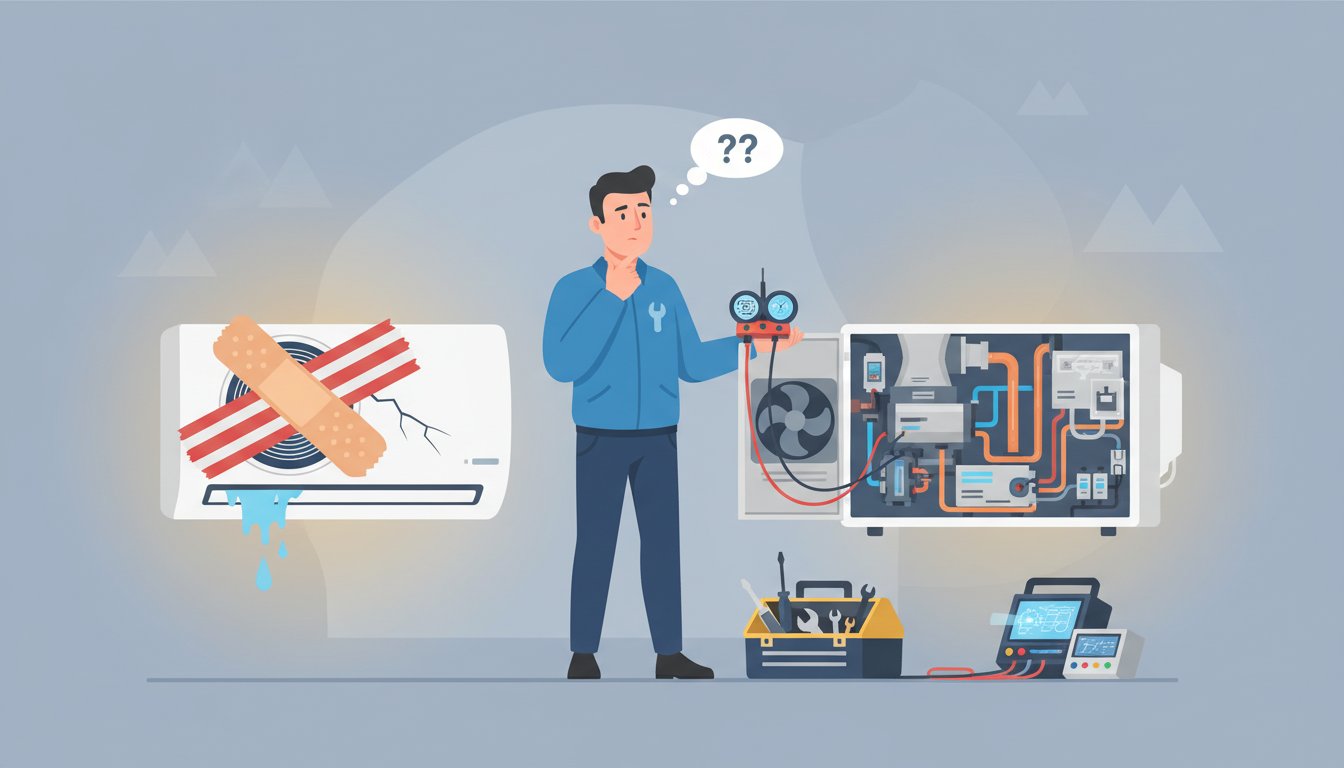
A quick fix addresses only the immediate symptom without investigating or solving the underlying problem. Think of it as putting a bandaid on a wound that needs stitches.
Common examples of quick HVAC fixes include:
- Resetting a tripped circuit breaker without checking why it tripped
- Adding refrigerant to a system without finding and fixing the leak
- Thawing a frozen coil without addressing airflow problems
- Replacing a blown fuse without testing electrical components
- Cleaning a dirty filter but ignoring ductwork issues
These temporary solutions might restore functionality for a few days or weeks, but the root cause remains. When the problem returns—and it usually does—the damage may be significantly worse.
What Makes a Proper HVAC Repair?
Proper HVAC repair starts with comprehensive diagnosis to identify the root cause of the problem, not just the symptom. A certified technician performs system diagnostics, tests multiple components, and addresses the underlying issue.
A proper repair typically includes:
- Complete system inspection to identify all affected components
- Root cause analysis to understand why the problem occurred
- Quality replacement parts that meet manufacturer specifications
- Thorough testing after repair to ensure proper operation
- Documentation of work performed and warranty coverage
- Preventive recommendations to avoid future problems
When you invest in a proper HVAC repair, you're not just fixing today's problem—you're protecting your system's long-term performance and efficiency.
The Hidden Costs of Quick HVAC Fixes
Quick fixes may seem affordable upfront, but they often lead to much higher costs over time. Here's why temporary hvac repair vs permanent repair makes such a big financial difference.
Cascading Component Failures
HVAC systems have interconnected components that depend on each other. When one part fails and you only patch the symptom, the stress transfers to other components.
For example, a capacitor replacement might cost $200. But if the technician doesn't investigate why the capacitor failed, voltage fluctuations could destroy the new capacitor along with your compressor motor—a repair that can exceed $2,000.
Energy Efficiency Losses
According to Department of Energy studies, poorly repaired HVAC systems can consume up to 40% more energy than properly serviced units. That's an extra $50-100 per month on your utility bills for many homeowners.
When repairs don't address airflow restrictions, refrigerant levels, or electrical issues, your system works harder to maintain the same temperature. You're paying more every month while your equipment wears out faster.
Shortened System Lifespan
A properly maintained HVAC system should last 12-15 years for air conditioners and heat pumps, or 15-20 years for furnaces. Quick fixes that ignore underlying problems can cut that lifespan in half.
Replacing your entire system 5-7 years early means spending $5,000-10,000 sooner than necessary—far more than the cost of proper repairs along the way.
Voided Warranties
Most HVAC manufacturer warranties require professional installation and certified repairs. If you attempt DIY quick fixes or use unlicensed technicians, you may void your warranty coverage.
That means when a major component fails—something that would have been covered—you'll pay the full replacement cost out of pocket.
Quality Parts vs. Cheap Replacements
Not all replacement parts are created equal. The difference between OEM parts and aftermarket components can determine whether your repair lasts years or months.
OEM (Original Equipment Manufacturer) Parts:
- Designed specifically for your system model
- Meet exact manufacturer specifications
- Include warranty coverage
- Expected lifespan of 5-10+ years
- Cost 100% (baseline)
Economy Aftermarket Parts:
- Generic fit for multiple models
- May not meet original specifications
- Limited or no warranty
- Higher failure rates
- Cost 30-50% less initially
While economy aftermarket parts seem like a bargain, their failure rates mean you often need multiple replacements during the period a single OEM part would last. You end up paying more in service calls and labor costs.
Proper HVAC repair uses quality parts that match your system's requirements. The upfront cost is higher, but the long-term value is significantly better.
Common Quick Fix Scenarios and Their Proper Solutions
Let's look at specific situations where quick fixes fail and what proper repair looks like.
Scenario 1: Refrigerant Leak
Quick Fix Approach: Add refrigerant to restore cooling without finding the leak. Cost: $150-300. Works for 2-4 weeks until refrigerant leaks out again.
Proper Repair: Perform leak detection using specialized equipment, repair or replace the leaking component, evacuate the system, and recharge with the correct amount of refrigerant. Cost: $500-1,500. Provides a permanent solution.
Why It Matters: Running a system with low refrigerant damages the compressor—the most expensive component to replace. The "cheap" approach can lead to a $2,000+ compressor replacement.
Scenario 2: Frozen Evaporator Coil
Quick Fix Approach: Turn off the system and wait for ice to melt. Cost: $0. Works until the underlying problem causes freezing again (usually within days).
Proper Repair: Diagnose the cause—typically restricted airflow from dirty filters, blocked vents, or low refrigerant. Address the root cause with filter replacement, ductwork cleaning, or refrigerant repair. Cost: $200-800 depending on the cause.
Why It Matters: Repeated freezing can crack the coil, requiring complete replacement ($1,000-2,000). It also forces your system to run constantly, spiking energy bills.
Scenario 3: Strange Noises
Quick Fix Approach: Ignore the noise or turn up the thermostat to mask it. Cost: $0. Problem worsens over time until complete system failure.
Proper Repair: Identify the source—loose fan blades, worn bearings, damaged belts, or failing motors. Replace or repair the specific component. Cost: $150-600.
Why It Matters: Strange noises indicate mechanical problems that worsen under stress. A $200 bearing replacement caught early prevents a $1,500 blower motor replacement later.
Scenario 4: System Short Cycling
Quick Fix Approach: Adjust thermostat settings or reset the system. Cost: $0. Cycling continues, wasting energy and wearing components.
Proper Repair: Diagnose cause—oversized equipment, thermostat issues, refrigerant problems, or electrical faults. Address the specific issue. Cost: $200-1,000.
Why It Matters: Short cycling dramatically reduces system efficiency and lifespan. Your equipment experiences the stress of dozens of extra start-up cycles each day—the hardest wear on motors and compressors.
Warning Signs You Need Proper Repair, Not a Quick Fix
How do you know when a quick fix won't cut it? Watch for these red flags:
- Repeated failures of the same component within months
- Multiple problems appearing in quick succession
- Rising energy bills without changes in usage
- Uneven temperatures between rooms
- Poor air quality or increased dust
- System age over 10 years with first major problem
- Frequent cycling on and off
- Moisture or leaks around equipment
- Burning smells or electrical odors
- Loud or unusual noises during operation
If you notice any of these signs, request a comprehensive system diagnosis instead of asking for the minimum repair. The diagnostic fee (typically $75-150) may reveal problems that would cost thousands if left unaddressed.
Questions to Ask Your HVAC Technician
Not all HVAC companies prioritize proper repairs over quick fixes. Here's how to ensure you're getting quality service:
Before the repair:
- "What diagnostic tests will you perform to identify the root cause?"
- "Are you licensed and certified for HVAC work?"
- "Will you use OEM parts or aftermarket components?"
- "What warranty do you offer on parts and labor?"
After diagnosis:
- "What caused this problem to occur?"
- "Are there other components affected that we should address?"
- "What happens if we only fix the immediate symptom?"
- "How will this repair affect my system's efficiency and lifespan?"
During the estimate:
- "Does this estimate include testing and verification after repair?"
- "What preventive maintenance do you recommend?"
- "Are there any rebates or financing options available?"
A reputable HVAC company will welcome these questions and provide clear, detailed answers. If a technician seems rushed or dismissive, consider getting a second opinion.
The True Cost Comparison
Let's look at a real-world example of quick fix vs proper HVAC repair costs over time.
Scenario: AC not cooling properly
Quick Fix Path:
- Year 1: Add refrigerant - $250
- Year 1 (3 months later): Add refrigerant again - $250
- Year 2: Replace damaged compressor due to running low on refrigerant - $2,500
- Total: $3,000 + system downtime + higher energy bills
Proper Repair Path:
- Year 1: Diagnose leak, repair evaporator coil leak, properly recharge system - $800
- Years 2-5: Routine maintenance only - $400
- Total: $1,200 with reliable operation and normal efficiency
The proper repair costs more initially but saves $1,800 over five years while providing better comfort and reliability.
When a Quick Fix Is Acceptable
There are situations where temporary solutions make sense:
End of season: If your air conditioner fails in late September and you're in a mild climate, a quick fix might get you through until you can schedule a proper repair in the off-season when rates are lower.
System near replacement: If your system is 15+ years old and you're planning to replace it next season, a minimal repair to lifeboat it through might be practical.
Emergency availability: If you need immediate cooling or heating for health reasons and comprehensive repair requires parts that won't arrive for several days, a temporary fix provides comfort while you wait.
Budget constraints with a plan: If you genuinely can't afford the proper repair today, a quick fix with a clear plan and timeline for comprehensive repair may be necessary.
Even in these situations, make sure you understand the risks and have a plan for proper repair. Don't let temporary become permanent.
How Proper Repair Protects Your Home Value
When it comes time to sell your home, HVAC system condition matters to buyers and inspectors. A well-maintained HVAC system with documented proper repairs adds value and confidence.
Home inspectors look for:
- Service records showing regular professional maintenance
- Warranties on recent repairs
- Proper installation and code compliance
- Signs of deferred maintenance or quick fixes
A history of bandaid repairs raises red flags. Buyers may request inspection credits, negotiate lower prices, or walk away entirely if they see evidence of poor maintenance.
Investing in proper HVAC repair protects your largest financial asset while ensuring comfort and efficiency today.
The Indoor Air Quality Connection
Quick fixes often overlook how HVAC problems affect your indoor air quality. When repairs don't address airflow issues, ductwork leaks, or moisture problems, you may experience:
- Increased dust and allergens circulating through your home
- Mold growth from humidity imbalances
- Poor ventilation leading to stuffiness
- Contaminant buildup in ductwork
Proper HVAC repair includes checking ventilation, humidity levels, and air filtration—not just making the temperature right. Your family's health depends on clean air, not just cool air.
Making the Right Choice for Your System
The difference between quick fix vs proper HVAC repair comes down to this: do you want to solve today's symptom or prevent tomorrow's breakdown?
Quick fixes have their place in rare circumstances, but relying on them as a maintenance strategy costs more in the long run through:
- Higher energy bills
- More frequent breakdowns
- Shortened system lifespan
- Voided warranties
- Decreased home value
- Poor indoor air quality
Proper HVAC repair costs more upfront but delivers better value through reliable operation, energy efficiency, and peace of mind. When you invest in quality diagnosis, quality parts, and quality workmanship, you're protecting a major home system that affects your comfort every single day.
Frequently Asked Questions
What is the main difference between a quick fix and proper HVAC repair?
A quick fix addresses only the immediate symptom without diagnosing or repairing the root cause. Proper HVAC repair includes comprehensive diagnostics to identify why the problem occurred, uses quality parts that meet manufacturer specifications, and includes thorough testing to ensure the repair solves the underlying issue permanently.
How much does a proper HVAC repair typically cost?
Proper HVAC repair costs vary widely based on the problem, ranging from $200-800 for common issues like thermostat replacement or minor refrigerant leaks, to $1,500-3,000 for major component replacements like compressors or evaporator coils. While more expensive upfront than quick fixes, proper repairs save money long-term by preventing repeat failures and protecting other components.
Can I do quick HVAC fixes myself safely?
Some simple maintenance tasks are safe for homeowners—changing air filters, clearing debris around outdoor units, and adjusting thermostat settings. However, repairs involving refrigerant, electrical components, or gas lines require EPA certification and specialized training. DIY attempts on these systems can cause injury, void warranties, and create code violations that affect home insurance and resale value.
How can I tell if my previous HVAC repair was just a quick fix?
Signs of a quick fix include: the same problem returning within weeks or months, no diagnostic fee charged, repair completed in under 30 minutes, no documentation provided, economy parts used instead of OEM components, and the technician didn't explain what caused the problem. If you're unsure whether to call for HVAC repair, request a second opinion with comprehensive diagnostics.
How long should a proper HVAC repair last?
A proper HVAC repair using quality parts should last for years, not months. Most OEM components carry warranties of 1-5 years on parts, with labor warranties of 1-2 years from reputable companies. If you're experiencing the same problem within a year of repair, the initial fix likely didn't address the root cause.
Take Action Today
Don't wait for a quick fix to become a costly emergency. If your HVAC system is showing warning signs or you've been patching the same problem repeatedly, it's time for a comprehensive evaluation.
Schedule a diagnostic inspection with a licensed HVAC professional who will identify underlying issues, provide transparent estimates, and recommend solutions that protect your investment for years to come. Your comfort, your wallet, and your peace of mind are worth the difference between quick and proper.