How Dirty Filters Restrict Airflow and Trigger HVAC Problems
How Dirty Filters Restrict Airflow and Trigger HVAC Problems
Your HVAC system works hard to keep your home comfortable year-round. But when your air filter gets clogged with dust and debris, it creates a cascade of problems that can damage expensive components and drive up your energy bills. Understanding how dirty filters restrict airflow helps you prevent costly repairs and keep your system running efficiently.
What Happens When a Filter Gets Dirty
Air filters trap dust, pollen, pet dander, and other airborne particles before they enter your HVAC system. Over time, these particles accumulate on the filter surface, creating a thick barrier that blocks airflow.
Think of it like trying to breathe through a pillow. As more dust builds up, less air can pass through the filter material. Your system has to work harder and harder to pull air through this obstruction, straining every component in the process.
The Physics of Airflow Restriction
When a filter becomes clogged, it increases what's called "static pressure" in your HVAC system. This means your blower motor has to work against greater resistance to move air through the filter and into your ductwork.
Your system is designed to move a specific amount of air measured in cubic feet per minute (CFM). A dirty filter can reduce this airflow by 30% or more, forcing your equipment to run longer cycles to reach your desired temperature.
8 Major HVAC Problems Caused by Restricted Airflow
1. Blower Motor Damage and Failure
Your blower motor is designed to move air under normal conditions. When a dirty filter causes restricted airflow, the motor has to work significantly harder, drawing more electrical current and generating excess heat.
This constant strain shortens the motor's lifespan and can lead to complete failure. Replacing a blower motor typically costs between $300 and $600, compared to just $15-30 for a new filter.
2. Frozen Evaporator Coils in Summer
During cooling season, your evaporator coil needs adequate airflow to absorb heat from your home. When dirty filters restrict airflow, the coil doesn't receive enough warm air passing over it.
The refrigerant inside becomes too cold, causing moisture in the air to freeze on the coil surface. Ice buildup blocks even more airflow, creating a vicious cycle. Your system stops cooling effectively, and you might notice water leaking as the ice melts.
Frozen coils can damage the compressor, leading to repairs that cost $1,200 to $2,500 or more.
3. Overheated Heat Exchanger in Winter
The opposite problem occurs during heating season. Your furnace's heat exchanger needs proper airflow to dissipate heat. Restricted airflow from a clogged filter causes the heat exchanger to overheat.
Modern furnaces have safety sensors that shut down the system when temperatures get too high. This causes short cycling where your furnace turns on and off repeatedly without completing a full heating cycle.
Repeated overheating can crack the heat exchanger, a serious safety issue that requires immediate replacement. This repair often costs $1,500 to $3,000.
4. Skyrocketing Energy Bills
According to the U.S. Department of Energy, a dirty air filter can increase your HVAC system's energy consumption by 15% or more. When airflow is restricted, your system runs longer to heat or cool your home.
Those extended run times translate directly to higher utility bills. If you're spending $200 per month on heating and cooling, a clogged filter could add $30 or more to each bill.
Over a year, that's $360+ in wasted energy, all because of a filter that costs less than $30 to replace.
5. Reduced Indoor Air Quality
A saturated filter loses its ability to trap new particles effectively. Dust, allergens, and pollutants bypass the filter and circulate throughout your home through your ductwork.
You might notice:
- More dust settling on furniture
- Increased allergy symptoms
- Musty odors from your vents
- Visible dust blowing from registers
People with asthma or allergies suffer the most when dirty filters fail to maintain good indoor air quality.
6. Short Cycling and Constant On-Off Operation
Restricted airflow causes temperature sensors to give false readings. Your thermostat might show your home reaching the set temperature while parts of your system overheat.
This triggers short cycling, where your HVAC system turns on, runs briefly, shuts off, then repeats the cycle minutes later. Each startup puts stress on electrical components and the compressor.
Short cycling also fails to properly dehumidify your home in summer, leaving you feeling clammy even when the temperature seems right.
7. Uneven Heating and Cooling
When airflow is restricted, rooms farther from your air handler receive even less conditioned air. You'll notice some rooms feel too warm while others stay cold.
Your upstairs might be 10 degrees warmer than downstairs in summer. Or certain rooms never seem to heat up properly in winter.
These temperature inconsistencies make your whole family uncomfortable and tempt you to constantly adjust the thermostat, wasting even more energy.
8. Complete System Failure
Dirty filters are the number one preventable cause of HVAC system failure. The cumulative stress on motors, coils, and other components eventually leads to a breakdown.
When multiple parts fail due to prolonged strain, repairs become so expensive that complete system replacement makes more financial sense. A new HVAC system costs $5,000 to $10,000 or more.
Regular filter changes costing $100-200 per year seem like a bargain compared to premature system replacement.
Warning Signs Your Filter Is Restricting Airflow
Catching a dirty filter early prevents serious damage. Watch for these symptoms:
Weak Airflow from Vents
Hold your hand up to supply registers in different rooms. If the airflow feels weak or has noticeably decreased, check your filter immediately.
Strange Noises
A whistling sound near the return vent often indicates air trying to squeeze past a clogged filter. Groaning or straining sounds from your air handler suggest the blower motor is working too hard.
Longer Run Times
Pay attention to how long your system runs. If it's operating constantly without reaching the set temperature, airflow restriction is a likely cause.
Visible Dust on the Filter
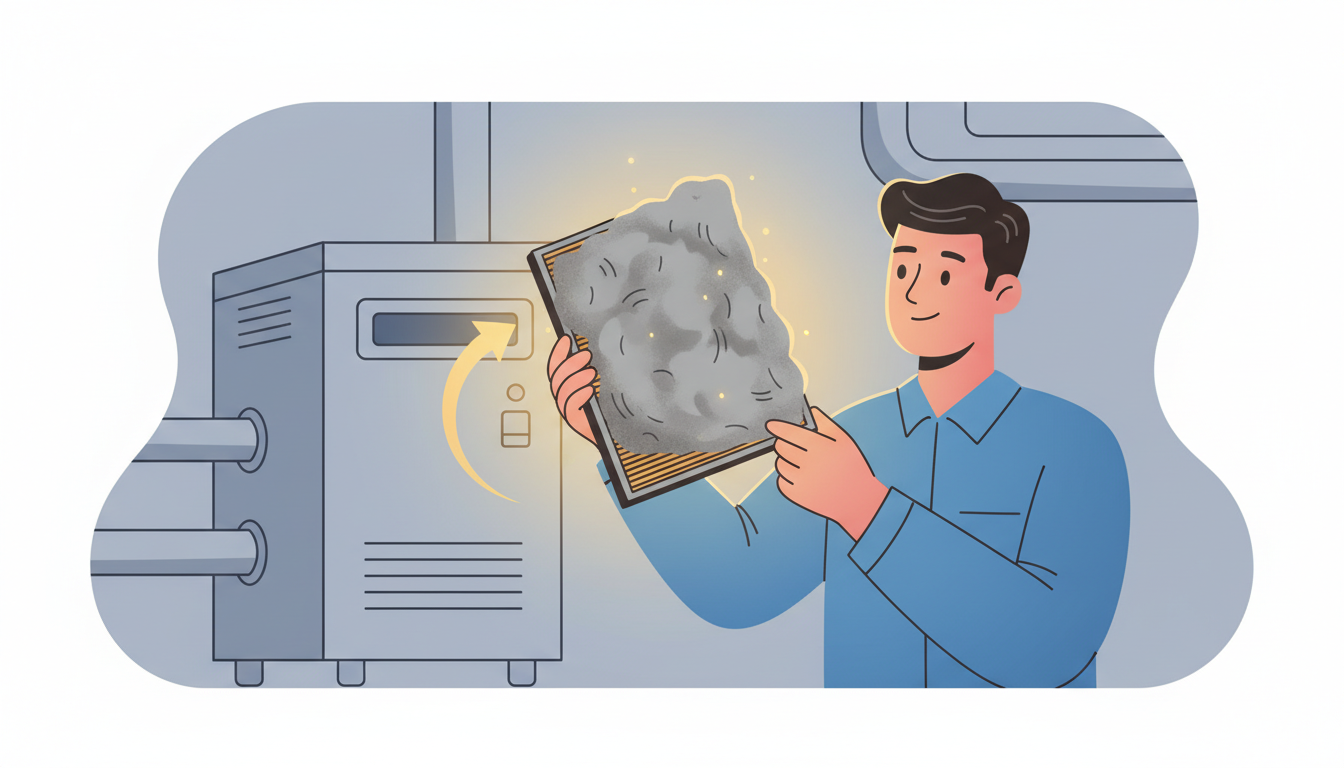
Pull out your filter and hold it up to a light. If you can't see light passing through, it's too dirty. Dark gray or black filters need immediate replacement.
Dust Buildup Around Vents
Check your supply and return vents. Visible dust accumulation, especially on return grilles, indicates your filter isn't catching particles effectively.
How Quickly Can a Dirty Filter Cause Damage?
The timeline for damage depends on several factors, but problems can develop faster than most homeowners realize.
In a typical home, a standard 1-inch pleated filter becomes fully saturated in 60-90 days under normal conditions. Once saturated, damage begins accumulating with every hour your system operates.
High-use periods accelerate this timeline. During summer and winter when your HVAC runs constantly, a filter might clog in just 30-45 days.
Homes with pets, construction dust, or poor outdoor air quality can overwhelm filters even faster, sometimes in just 2-3 weeks.
The key takeaway: don't wait for your filter to fail. Check it monthly and replace it based on its actual condition, not just a calendar schedule.
Can You Clean and Reuse a Dirty Filter?
This depends entirely on the filter type you have.
Disposable fiberglass and pleated filters should never be cleaned and reused. These filters use delicate fibers that trap particles. Washing them damages the filter material and reduces effectiveness even if they look clean.
The cost savings aren't worth the risk. A new disposable filter costs $5-30, far less than potential repair bills.
Permanent washable filters are designed for cleaning and reuse. If you have this type:
- Vacuum loose dust from both sides
- Rinse with low-pressure water (high pressure damages fibers)
- Let dry completely before reinstalling (24 hours minimum)
- Never use harsh chemicals or put in a dishwasher
Check your filter's packaging or frame. It will clearly state if it's washable. When in doubt, replace it.
Different Filter Types and Airflow Restriction
Not all filters restrict airflow equally. Understanding the differences helps you make informed choices.
Fiberglass Filters (MERV 1-4)
These basic filters offer minimal particle capture but excellent airflow. They're the cheapest option ($1-5) but provide little protection for your indoor air quality or system components.
Replace monthly.
Pleated Filters (MERV 7-13)
These strike a balance between filtration and airflow. The pleated design increases surface area, allowing better particle capture without excessive restriction when clean.
Replace every 60-90 days for most homes. High-quality pleated filters cost $15-30 but provide significantly better protection.
High-Efficiency Filters (MERV 14-16)
These hospital-grade filters capture very small particles but can restrict airflow even when clean if your system isn't designed for them.
Only use high-MERV filters if your HVAC professional confirms your system can handle the increased resistance. Otherwise, you'll create airflow problems even with a brand-new filter.
The Real Cost of Neglecting Filter Changes
Let's look at the numbers over just one year of filter neglect:
Increased energy costs: $360+ annually (15% increase on $200/month bills)
Potential repairs:
- Blower motor replacement: $300-600
- Frozen coil repair: $1,200-2,500
- Heat exchanger replacement: $1,500-3,000
- Compressor replacement: $1,500-3,000
Compare this to:
- Annual filter costs: $60-180 (monthly replacement)
- 5 minutes per month for replacement
The choice is clear. A few dollars and minutes each month prevents thousands in repairs and energy waste.
Your Filter Maintenance Action Plan
Protect your HVAC investment with this simple routine:
Monthly Inspection
Mark your calendar for the first day of each month. Check your filter's condition. If you can't see light through it or it's visibly dirty, replace it immediately.
Know Your Filter Size
Write down your filter size (it's printed on the frame) and keep spares on hand. Common sizes include 16x20x1, 20x20x1, and 16x25x1.
Having replacements ready means you won't delay changes due to a trip to the store.
Set Up Automatic Delivery
Many online retailers offer subscription services that ship filters to your door every 60-90 days. This eliminates the excuse of forgetting to buy them.
Upgrade Gradually
If you're currently using cheap fiberglass filters, upgrade to mid-range pleated filters (MERV 8-11). You'll notice better air quality and system performance without excessive airflow restriction.
Consider Seasonal Changes
Increase replacement frequency during high-use seasons (summer and winter) and reduce it during mild spring and fall months when your system runs less.
When to Call a Professional
Sometimes filter problems indicate larger issues with your HVAC system:
Call a professional if:
- Filters clog within days or weeks despite regular replacement
- You notice ice on refrigerant lines or outdoor unit
- Your system repeatedly triggers safety shutdowns
- Energy bills spike even with clean filters
- You hear grinding, squealing, or banging noises
- Airflow remains weak after filter replacement
These symptoms suggest problems beyond the filter, such as ductwork leaks, refrigerant issues, or failing components that need expert diagnosis.
Frequently Asked Questions
How long does it take for a dirty filter to cause damage?
Serious damage can begin within 30-60 days of a filter becoming fully clogged, especially during high-use seasons. Components like blower motors experience increased wear immediately when airflow is restricted, though complete failure typically takes months of continuous strain.
What does restricted airflow sound like?
You might hear whistling or hissing near return vents as air struggles to pass through a clogged filter. The blower motor may produce groaning or labored sounds. Some systems make a high-pitched squeal from the motor bearing working under excessive load.
Will a dirty filter cause my system to leak water?
Yes, dirty filters can cause leaks. In summer, restricted airflow leads to frozen evaporator coils. When the ice melts, it can overwhelm the drain pan and leak into your home. The leak typically appears near your indoor air handler or from ceiling vents directly below it.
Does filter direction matter for airflow?
Absolutely. Filters have arrows indicating airflow direction. The arrow should point toward your air handler (the direction air flows into your system). Installing a filter backwards increases resistance and reduces filtration effectiveness.
Can expensive filters restrict airflow too much?
Yes. High-MERV filters (13 and above) can restrict airflow in systems not designed for them. Your blower motor must be strong enough to pull air through denser filter material. Use the filter MERV rating recommended in your system's manual, not necessarily the highest available.
Protect Your Investment Today
Your HVAC system is one of your home's most expensive appliances. Dirty filters restrict airflow in ways that damage multiple components simultaneously, creating a domino effect of failures.
The solution is surprisingly simple: check your filter monthly and replace it when dirty. This five-minute task prevents thousands of dollars in repairs, cuts your energy bills, and extends your system's lifespan by years.
Don't wait until you hear strange noises or feel weak airflow. Pull out your filter right now and check its condition. If it's dirty, replace it today.
Your HVAC system will thank you with reliable performance, lower energy bills, and years of trouble-free operation. And when you do need professional service for maintenance or repairs, addressing filter issues first ensures technicians can focus on your system's actual condition rather than problems created by neglect.
Take control of your home comfort and HVAC longevity with one simple habit: clean filters, better airflow, no problems.