Why DIY Electrical HVAC Repairs Are So Risky
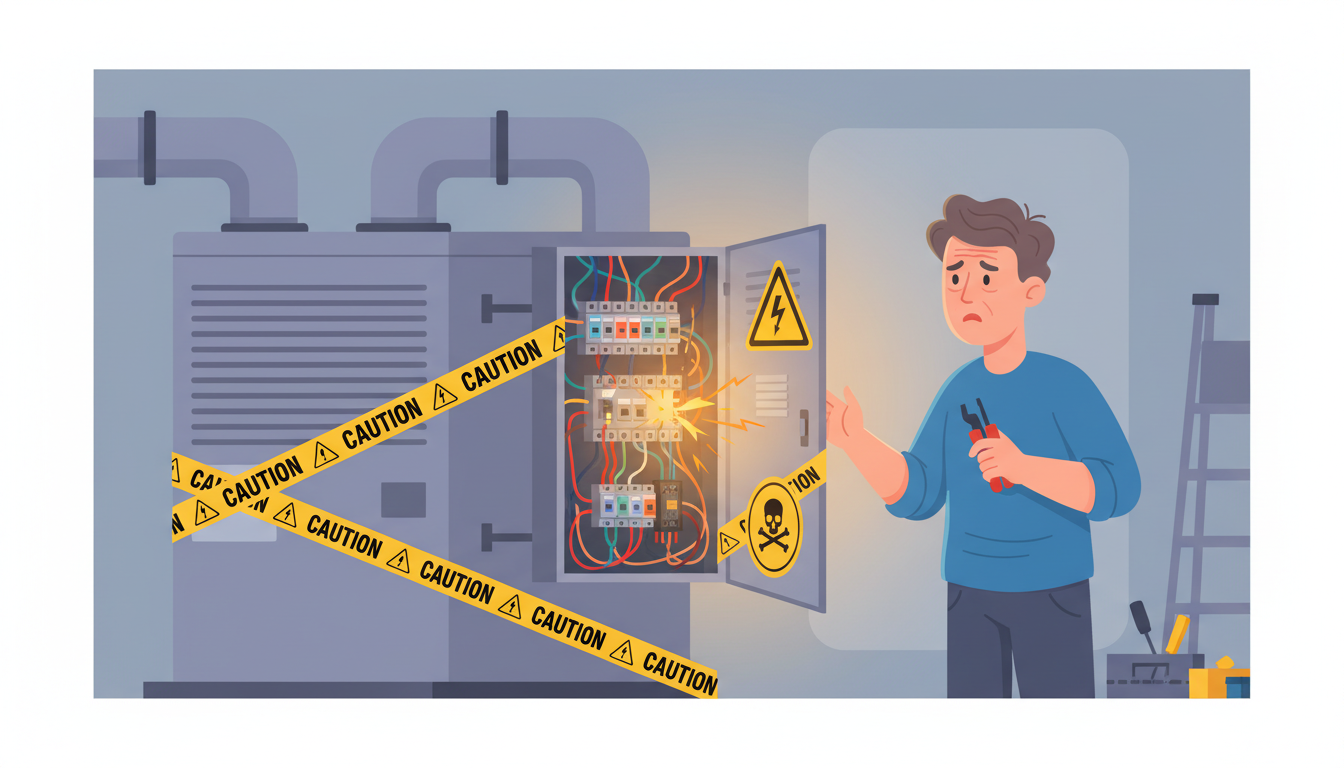
Why DIY Electrical HVAC Repairs Are So Risky
Your air conditioner suddenly stops working on the hottest day of summer. Your furnace quits in the middle of winter. The temptation to grab a screwdriver and fix it yourself is strong—especially when you're facing an expensive repair bill.
But when it comes to DIY electrical HVAC repairs, that "quick fix" could cost you far more than money. It could cost you your safety, your home, or even your life.
The Hidden Dangers of HVAC Electrical Systems
HVAC systems aren't like changing a light bulb or resetting a tripped outlet. These systems operate on high-voltage electricity that demands specialized knowledge and training to handle safely.
High-Voltage Components Can Kill
Your HVAC system runs on 240-volt circuits—double the voltage of standard household outlets. That's enough power to cause severe electrical shock, cardiac arrest, or instant death.
Most homeowners don't realize that air conditioners and heat pumps contain capacitors that store electrical charges even after you turn off the power. These components can hold a lethal charge for hours or even days after shutdown. Without proper discharge procedures, touching the wrong wire could be your last mistake.
Professional HVAC technicians use specialized capacitor discharge tools and follow strict safety protocols before touching any electrical components. They understand which capacitors need discharging, how to test for residual voltage, and how to safely ground components before handling them.
Electrical Shock Isn't the Only Risk
Beyond the immediate danger of electrocution, DIY electrical HVAC repairs create multiple hazards:
- Electrical fires from improper wiring or loose connections
- Carbon monoxide poisoning from damaged heat exchangers or ventilation issues
- Refrigerant exposure causing frostbite, respiratory problems, or chemical burns
- Equipment explosions from capacitor failures or refrigerant pressure issues
Each of these dangers requires professional training to identify and prevent.
Why HVAC Electrical Work Requires Professional Training
Licensed HVAC technicians spend years learning their trade—and for good reason. The electrical systems in your heating and cooling equipment are complex, dangerous, and unforgiving of mistakes.
Specialized Knowledge You Don't Have
Professional HVAC technicians understand:
- How to safely discharge capacitors before touching electrical components
- Which wires carry lethal voltage and how to test circuits properly
- How electrical systems interact with refrigerant, gas lines, and ventilation
- Building codes and safety regulations that govern HVAC installations
- Proper grounding techniques to prevent electrical shock
- Load calculations for circuit sizing and breaker requirements
- Voltage drop considerations for long wire runs
- Proper wire gauge selection for different components
Without this knowledge, you're working blind in a minefield of hazards. HVAC technicians also receive ongoing training on new equipment, updated safety standards, and evolving technology. Your YouTube tutorial can't replace years of hands-on experience under supervision.
The Tools You Don't Own
Professional HVAC electrical repairs require specialized equipment you won't find at your local hardware store:
- Multimeters calibrated for HVAC voltage testing
- Insulated tools rated for high-voltage work
- Capacitor discharge tools
- Refrigerant recovery equipment
- Combustion analyzers for gas furnaces
- Megohm meters for testing electrical insulation
- Clamp-on ammeters for measuring electrical current without breaking circuits
- Manometers for measuring gas pressure
Using standard household tools on HVAC electrical components isn't just ineffective—it's deadly. Standard screwdrivers, pliers, and wire strippers aren't insulated for high-voltage work. One slip with an uninsulated tool can create a deadly arc flash or complete a circuit through your body.
Common DIY Electrical HVAC Mistakes That Cause Disasters
When homeowners attempt electrical HVAC repairs without proper training, certain mistakes happen repeatedly. Each one carries serious consequences.
Mistake #1: Working on Live Circuits
Many DIYers flip the thermostat off and assume the power is disconnected. Wrong. Your HVAC system has its own dedicated circuit breaker that must be turned off at the electrical panel. Even then, capacitors can still hold dangerous charges.
Smart homeowners verify power is off using a non-contact voltage tester, but that only checks for active current—not stored charges in capacitors. Professional technicians take it one step further by using voltage meters to test each component individually and discharging all capacitors before beginning work.
If your HVAC breaker keeps tripping, it's a warning sign of electrical problems that need professional diagnosis—not a DIY project.
Mistake #2: Misdiagnosing Electrical Problems
Is your system not starting? The problem could be:
- A failed capacitor
- A bad contactor
- A tripped safety switch
- A blown transformer
- Faulty wiring
- A failed compressor
- Defective control board
- Low voltage issues
Guess wrong, and you'll waste money on parts you don't need while the real problem gets worse. Worse yet, installing the wrong component can damage your entire system or create fire hazards.
When your HVAC fuse keeps blowing, it's telling you something is wrong. Replacing the fuse without finding the root cause is like putting a Band-Aid on a bullet wound.
Mistake #3: Improper Wiring Connections
HVAC electrical connections must be precise. A loose wire creates resistance, which generates heat. Over time, that heat can:
- Melt wire insulation
- Damage circuit boards
- Start electrical fires
- Destroy expensive components like compressors
Even if your connections seem secure, without proper torque specifications and wire sizing knowledge, you're creating a time bomb. Professional technicians use torque screwdrivers set to manufacturer specifications for terminal connections. They also use proper wire nuts rated for the voltage and current, ensuring connections won't loosen over time from vibration.
Mistake #4: Ignoring Grounding Requirements
Proper grounding protects you from electrical shock and prevents equipment damage from power surges. DIYers often overlook or improperly install grounding wires, creating serious safety hazards.
An improperly grounded HVAC system can:
- Deliver shocks through metal ductwork or outdoor units
- Fail to trip breakers during electrical faults
- Damage sensitive electronic controls
- Violate electrical codes and building permits
The Financial Cost of DIY HVAC Electrical Repairs
Think you'll save money with a DIY approach? Think again. The hidden costs of amateur electrical work add up fast.
Voided Warranties and Insurance Claims
Almost every HVAC manufacturer's warranty explicitly states that unauthorized repairs void coverage. That means:
- Your $5,000 heat pump compressor fails due to DIY electrical work? You pay full price for replacement.
- Your 10-year parts warranty? Gone the moment you touch those wires.
- Your labor warranty from the installing contractor? Void.
Worse yet, if your DIY electrical repair causes a house fire, your homeowner's insurance may deny your claim. Insurance policies often exclude coverage for damages caused by unauthorized or unpermitted work.
The Cost of Fixing Your Mistakes
Professional HVAC technicians charge more to repair DIY disasters than to fix the original problem. Why? Because they have to:
- Diagnose what's actually wrong versus what you thought was wrong
- Remove incorrectly installed parts
- Fix additional damage your repairs caused
- Verify the entire system is safe to operate
- Bring everything up to code
A $300 capacitor replacement becomes a $1,200 repair bill after your DIY attempt damages the contactor, circuit board, and wiring.
Lost Equipment Lifespan
HVAC systems are expensive investments—$5,000 to $15,000 for most homes. Improper electrical repairs can shorten your system's lifespan by years or even destroy it completely.
A professional repair might cost $500. Replacing your entire system because DIY electrical work fried the compressor? That's $8,000 or more.
Legal and Code Violations You're Creating
Many homeowners don't realize that HVAC electrical work falls under strict building codes and permit requirements.
Permit Requirements for Electrical Work
In most jurisdictions, electrical work on HVAC systems requires:
- A licensed electrician or licensed HVAC contractor
- Proper permits filed with the building department
- Inspection by code enforcement officials
DIY electrical HVAC repairs without permits are illegal in many areas. If you sell your home, unpermitted work can:
- Kill your real estate deal
- Force you to bring everything up to code at your expense
- Result in fines from code enforcement
- Create liability if future problems occur
Liability When Something Goes Wrong
If your DIY electrical HVAC repair causes:
- A house fire that spreads to neighboring homes
- Carbon monoxide poisoning of family members
- Electrical shock injuries to others
- Property damage to your home
You're legally liable for the damages. Your insurance may refuse to cover claims arising from unpermitted, unauthorized electrical work performed by unlicensed individuals.
For comprehensive guidance on all aspects of HVAC repair—both what you can handle and what requires professional help—check out our detailed HVAC repair guide.
What HVAC Tasks Can You Safely Do Yourself?
Not every HVAC maintenance task requires professional help. Some simple tasks are safe for homeowners:
Safe DIY HVAC Maintenance
Changing Air Filters - This is the single most important maintenance task you can do yourself. Change filters every 1-3 months to maintain efficiency and air quality.
Cleaning Outdoor Unit - Remove leaves, grass clippings, and debris from around your outdoor condenser unit. Maintain at least 2 feet of clearance on all sides.
Checking Thermostat Batteries - Replace thermostat batteries annually to prevent system failures.
Cleaning Supply and Return Vents - Vacuum dust from vents and registers to improve airflow.
Clearing Condensate Drain Lines - Pour a cup of vinegar down the condensate drain line quarterly to prevent clogs.
Inspecting for Visible Problems - Look for loose ductwork connections, unusual noises, or visible damage. Report findings to a professional rather than attempting repairs.
When to Call a Professional Immediately
Always call a licensed HVAC professional for:
- Electrical component failures (capacitors, contactors, circuit boards)
- Refrigerant leaks or recharging
- Compressor problems
- Gas furnace repairs
- Ductwork modifications
- Thermostat wiring issues
- Strange odors, sounds, or smoke
- Repeated breaker trips or blown fuses
- Any issue involving electrical wiring
How to Choose the Right HVAC Professional
When electrical HVAC repairs are needed, choosing the right contractor protects your investment and your safety.
Verify Proper Licensing and Insurance
Ask for proof of:
- State HVAC contractor license
- Liability insurance
- Workers' compensation insurance
- EPA Section 608 certification (for refrigerant work)
Don't hire anyone who can't provide these credentials.
Get Multiple Estimates
Contact at least three reputable HVAC contractors for estimates. Compare:
- Diagnostic fees and whether they're waived with repair
- Parts pricing and warranty coverage
- Labor rates and estimated completion time
- Reviews and references from past customers
Ask About Warranties
Professional HVAC repairs should include:
- Warranty on parts (typically 1-5 years)
- Warranty on labor (typically 1-2 years)
- Manufacturer warranty preservation
Get warranty terms in writing before authorizing repairs.
Frequently Asked Questions
Can I replace an HVAC capacitor myself?
No. Capacitors store lethal electrical charges even after power is disconnected. Without proper discharge tools and training, capacitor replacement can kill you. This is one of the most common DIY electrical mistakes that results in serious injury or death.
Is it illegal to do my own HVAC electrical repairs?
It depends on your location. Most jurisdictions require licensed professionals for electrical HVAC work and require permits for such repairs. Unpermitted DIY electrical work violates building codes and can create liability issues, void warranties, and complicate home sales.
How much does a professional HVAC electrical repair cost?
Common electrical repairs range from $150 to $600 depending on the component and complexity. Capacitor replacement typically costs $150-$400. Contactor replacement runs $200-$500. Control board replacement can cost $300-$600. These costs are minimal compared to the thousands you'll pay if DIY mistakes damage your entire system.
What should I do if my HVAC breaker keeps tripping?
Turn off your system and call a professional immediately. A tripping breaker indicates electrical overload, short circuits, or failing components. Continuing to reset the breaker can cause electrical fires or permanent equipment damage. This is not a DIY repair situation.
Will my homeowner's insurance cover damage from DIY HVAC repairs?
Probably not. Most homeowner's insurance policies exclude coverage for damages caused by unauthorized or unpermitted work. If your DIY electrical repair causes a fire or other damage, your claim may be denied.
Protect Your Home and Family—Leave Electrical HVAC Repairs to the Pros
The risks of DIY electrical HVAC repairs far outweigh any potential savings. Professional HVAC technicians have the training, tools, and experience to diagnose problems accurately and make repairs safely.
When your heating or cooling system develops electrical problems, you face a simple choice: pay a professional a few hundred dollars for a safe, warrantied repair, or risk your safety, your home, and thousands in potential damages trying to do it yourself.
The answer is clear. Your HVAC system is too important, too expensive, and too dangerous for amateur electrical work.
Don't wait until a small electrical problem becomes a major disaster. If you're experiencing HVAC electrical issues, contact a licensed professional today. Your safety and peace of mind are worth far more than the cost of professional repairs.