
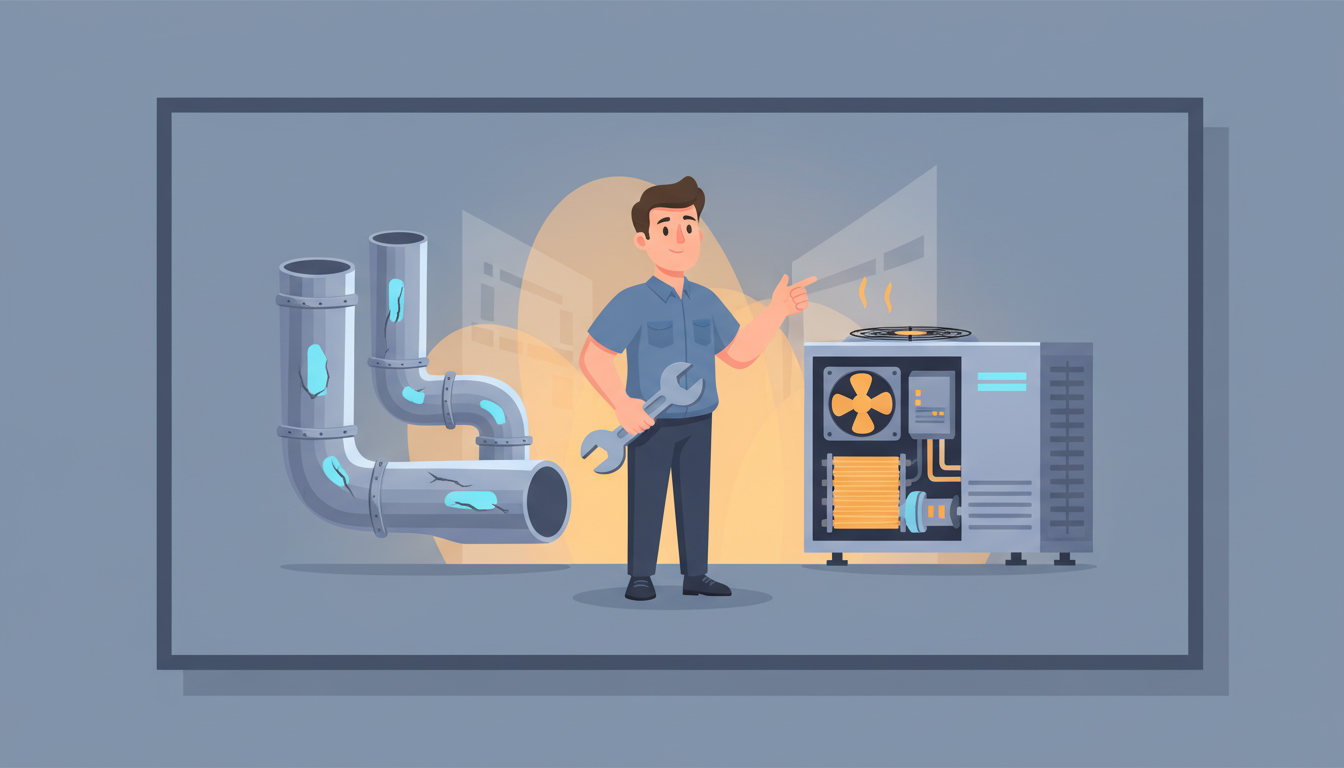
Duct Repair vs HVAC Repair: Which One Do You Actually Need?
Duct Repair vs HVAC Repair: Which One Do You Actually Need?
Your home feels stuffy. Some rooms are too hot while others stay cold. Your energy bills keep climbing. You know something's wrong with your heating and cooling system—but is it a duct problem or an HVAC system issue?
This is the question that stumps most homeowners. You don't want to waste money on the wrong repair, but you also can't afford to ignore the problem. The good news? Once you understand the difference between duct repair and HVAC repair, you'll know exactly which service your home needs.
Understanding Your HVAC System vs Your Ductwork
Before we dive into repairs, let's clear up the confusion. Your HVAC system and your ductwork are two different things that work together to keep your home comfortable.
Your HVAC system includes the major mechanical components: the air conditioning unit (compressor and condenser), the furnace or heat pump, the air handler, the evaporator coil, and the thermostat. These components create hot or cold air and push it through your home.
Your ductwork is the network of metal or flexible tubes that distribute conditioned air from your HVAC system to every room in your house. This includes supply ducts (delivering air to rooms), return ducts (pulling air back to the system), and all the registers and grilles you see on your walls, floors, or ceilings.
Think of it this way: your HVAC system is the engine, and your ducts are the delivery system. Both need to work properly for your home to stay comfortable.
Signs You Need Duct Repair (Not HVAC Repair)
Let's start with ductwork issues. These problems happen when your HVAC system works fine, but the air isn't getting where it needs to go.
Uneven Temperature Throughout Your Home
One room feels like a sauna while another feels like an icebox? This classic sign points to duct problems. When ducts leak or disconnect, some rooms get plenty of air while others get starved.
Walk through your home and check each room. If your HVAC system runs constantly but certain areas never reach the thermostat setting, you're likely dealing with duct issues rather than system failure.
Weak Airflow From Certain Vents
Hold your hand up to each vent in your home. You should feel strong, consistent airflow. Weak airflow from your vents often indicates duct leakage, disconnected ductwork, or crushed flexible ducts in your attic or crawlspace.
If some vents blow strong while others barely whisper, your ducts need attention. Your HVAC system is doing its job—the air just isn't making it to its destination.
Visible Duct Damage in Accessible Areas
Take a flashlight to your attic, basement, or crawlspace. Look for:
- Gaps or separations at duct connections
- Holes or tears in flexible ductwork
- Rust or corrosion on metal ducts
- Crushed or kinked flexible ducts
- Missing or damaged duct insulation
Any visible damage means conditioned air (that you've paid to heat or cool) escapes before reaching your living spaces.
Unusually Dusty Home Despite Regular Cleaning
When return ducts leak, they pull in dust, insulation particles, and other debris from your attic or walls. This contamination then circulates throughout your home.
If you're dusting constantly and your home still feels dirty, leaky return ducts might be the culprit. This isn't an HVAC system problem—it's a ductwork issue affecting your indoor air quality.
Higher Energy Bills With No Change in Usage
According to the Department of Energy, the average home loses 20-30% of its conditioned air through duct leaks. That's like leaving a window open year-round.
If your energy bills creep up but your usage habits haven't changed, suspect duct leakage. Your HVAC system runs longer trying to compensate for the lost air, driving up costs without improving comfort.
Strange Noises From Ducts (But Not From the Unit)
Rattling, whistling, or banging sounds coming from your walls or ceiling—not from your outdoor unit or air handler—indicate duct problems. These noises happen when:
- Air rushes through holes or gaps
- Loose duct sections vibrate against framing
- Undersized ducts create excessive air velocity
Signs You Need HVAC System Repair (Not Duct Repair)
Now let's look at problems that point to your actual HVAC equipment, not the ductwork.
No Cold Air From Any Vent (AC Problems)
When your air conditioning runs but every vent blows warm or room-temperature air, you've got an HVAC system problem. Common causes include:
- Refrigerant leaks: Your system needs refrigerant to absorb heat. Low refrigerant means no cooling.
- Failed compressor: This is the heart of your AC system. When it fails, cooling stops.
- Frozen evaporator coil: Caused by restricted airflow, dirty coils, or low refrigerant.
- Broken condenser fan: Without this fan, heat can't escape from your system.
If no vents deliver cold air (but airflow feels normal), don't call for duct repair. You need an HVAC technician to diagnose system-level issues.
No Warm Air From Any Vent (Heating Problems)
Similarly, when your furnace or heat pump runs but no vents deliver warm air, the problem lives in your heating equipment:
- Malfunctioning gas valve or ignitor (gas furnaces)
- Failed heating element (electric furnaces)
- Reversing valve problems (heat pumps)
- Thermostat issues preventing proper system operation
Ductwork doesn't affect whether your system creates heat—it only affects where that heat goes.
HVAC System Won't Turn On at All
When nothing happens after you adjust your thermostat, troubleshoot these HVAC system components:
- Thermostat: Check batteries, settings, and power
- Circuit breakers: Look for tripped breakers at your electrical panel
- Safety switches: Float switches, drain pans, and emergency cutoffs can shut down your system
- Outdoor disconnect: Make sure your outdoor unit's power switch is on
Ducts have nothing to do with whether your system turns on. This is purely an electrical or control problem with your HVAC equipment.
Ice Building Up on Your Outdoor Unit or Indoor Coils
Ice formation signals serious HVAC system problems:
- Dirty air filter restricting airflow (check and replace first)
- Dirty evaporator coil blocking heat transfer
- Low refrigerant from a leak in the system
- Malfunctioning blower motor reducing airflow
While restricted ducts can contribute to reduced airflow, ice buildup specifically indicates component-level issues that require HVAC repair expertise.
Water Leaks Around Indoor Unit
Puddles or water stains near your air handler or furnace point to:
- Clogged condensate drain line
- Broken condensate pump
- Cracked drain pan
- Frozen coil that's now thawing
These are HVAC system issues, not ductwork problems. Ducts don't handle water drainage.
Strange Smells From the System (Not Ducts)
Different odors indicate different HVAC problems:
- Burning smell: Electrical problems, overheating motor, or dust burning off heat exchangers
- Rotten egg smell: Gas leak (evacuate immediately and call your utility company)
- Chemical smell: Refrigerant leak
- Musty odor: Mold on evaporator coil or in drain pan
While musty smells can come from moldy ducts, sharp chemical or burning odors originate from HVAC components.
The Overlap: When Both Might Be the Problem
Sometimes ductwork issues cause HVAC system problems, or vice versa. Understanding these connections helps you communicate effectively with contractors.
Restricted Airflow Damaging Your System
Severely leaky or crushed return ducts reduce airflow to your HVAC system. This makes your equipment work harder and can cause:
- Frozen evaporator coils
- Overheating and premature compressor failure
- Reduced equipment lifespan
Airflow testing matters when diagnosing system efficiency. A technician might discover that fixing your ducts prevents future HVAC repairs.
Undersized or Poorly Designed Ductwork
If your ductwork was never properly sized for your HVAC equipment, both suffer. The system can't deliver its full capacity, leading to:
- Short cycling (frequent on-off cycles)
- Hot and cold spots throughout your home
- Excessive wear on system components
In these cases, you might need duct modifications and HVAC adjustments or replacement to solve the problem.
Old Systems With Old Ducts
If your HVAC system is 15-20 years old and your ductwork is original to your home (especially if built before 1990), both likely need attention. Many homeowners discover that upgrading the HVAC system without addressing deteriorated ductwork leads to disappointing results.
How to Diagnose the Problem Yourself (Basic Troubleshooting)
You don't need professional training to identify some obvious issues. Here's what you can check before calling for help:
The 5-Minute Airflow Test
- Turn your system to "on" (not "auto") at the thermostat
- Visit every vent in your home
- Hold a tissue or light piece of paper in front of each vent
- Note which rooms have strong airflow vs weak airflow
Results: If most vents have weak airflow, suspect system-level problems (dirty filter, failing blower motor). If specific vents have weak airflow while others are strong, suspect duct leaks or disconnections.
The Visual Inspection
Grab a flashlight and check accessible ductwork in your:
- Attic
- Basement or crawlspace
- Garage
- Utility closets
Look for obvious gaps, tears, disconnections, or crushed sections. Take photos of any damage to show your contractor.
The Filter Check
A clogged filter causes system-level problems that mimic duct issues. Check your filter:
- Monthly for 1-inch filters
- Every 3 months for 4-inch filters
- According to manufacturer specifications for whole-home filtration systems
If your filter looks like a solid wall of dust and debris, replace it immediately. Many "HVAC problems" resolve after a simple filter change.
The Temperature Test
Use a thermometer to check:
- Supply air temperature: Air coming out of vents near your air handler
- Return air temperature: Air entering your return vents
- Temperature difference: The gap between supply and return air
For air conditioning, you should see a 15-20°F difference. For heating, expect 40-70°F difference. If these numbers are off, you've got system-level problems, not duct issues.
Cost Comparison: Duct Repair vs HVAC Repair
Understanding typical costs helps you budget and make informed decisions.
Duct Repair Costs
- Minor repairs (sealing small leaks, reconnecting sections): $300-$800
- Moderate repairs (replacing damaged sections, adding insulation): $800-$2,000
- Aeroseal duct sealing (professional sealing technology): $1,500-$4,000
- Partial duct replacement: $2,000-$5,000
- Complete duct replacement: $4,000-$10,000+
Duct repairs typically cost less than major HVAC repairs because ductwork is simpler and doesn't involve complex refrigeration or electrical systems.
HVAC System Repair Costs
- Thermostat replacement: $150-$400
- Capacitor or contactor replacement: $150-$400
- Blower motor replacement: $400-$1,200
- Compressor replacement: $1,500-$2,500
- Evaporator coil replacement: $900-$2,000
- Air handler replacement: $2,000-$3,500
- Complete system replacement: $5,000-$12,000+
HVAC repairs involve specialized refrigeration equipment, electrical components, and skilled labor, making them more expensive than most duct work.
When Replacement Makes More Sense
Consider replacing instead of repairing when:
- Your HVAC system is 15+ years old
- Repair costs exceed 50% of replacement cost
- Your system uses obsolete R-22 refrigerant
- You've had multiple repairs in recent years
- Your ductwork is severely deteriorated (60+ years old, contains asbestos)
Why Professional Diagnosis Matters
While DIY troubleshooting helps, professional HVAC repair provides accurate diagnosis and prevents costly mistakes.
What Professional Technicians Check
A thorough HVAC inspection includes:
- Refrigerant levels and pressures
- Electrical connections and voltage
- Combustion analysis (gas systems)
- Static pressure testing (duct performance)
- Airflow measurements at vents and equipment
- Temperature differentials
- Duct leakage testing
- Visual inspection of all components
These tests identify problems that aren't visible or obvious to homeowners.
The Value of Duct Leakage Testing
Professional duct testing uses a blower door or duct blaster to measure exactly how much air you're losing through leaks. This data shows whether duct sealing will solve your problems or if you need system-level repairs.
Without proper testing, contractors might recommend expensive duct replacement when simple sealing would suffice—or suggest duct sealing when your system components need replacement.
Avoiding Unnecessary Repairs
Unfortunately, some contractors recommend the service they specialize in, regardless of what you actually need. A ductwork company might push duct replacement when your compressor is failing. An HVAC technician might sell you a new system when duct sealing would fix everything.
Get multiple opinions for expensive repairs. Ask specific questions about how they diagnosed the problem and why they recommend their solution over alternatives.
Frequently Asked Questions
Can I repair ducts myself?
Minor duct repairs like sealing small leaks with mastic sealant (not duct tape!) are DIY-friendly. However, accessing ducts in attics or crawlspaces can be difficult and dangerous. Major repairs or replacement should be left to professionals who can ensure proper sizing, sealing, and insulation.
How long do ducts last compared to HVAC systems?
Properly installed and maintained ductwork can last 30-50 years. HVAC systems typically last 15-20 years. You'll likely replace your heating and cooling equipment 2-3 times before needing complete duct replacement (unless ducts are damaged or poorly installed).
Will duct cleaning fix my airflow problems?
Probably not. Duct cleaning removes dust and debris but doesn't fix leaks, disconnections, or crushed ducts. If you have airflow problems, you need duct repair, not just cleaning. Save your money for repairs that actually address the issue.
Should I replace my ductwork when installing a new HVAC system?
Not necessarily. If your ducts are in good condition with minimal leakage, they'll work fine with new equipment. However, if you're upgrading to a higher-efficiency system or changing system size, your contractor should evaluate whether duct modifications are needed to maximize performance.
How often should ducts be inspected?
Include duct inspection during annual HVAC maintenance visits. Your technician should visually check accessible ductwork and perform static pressure testing if they suspect problems. Between professional visits, visually inspect accessible ducts yourself every 6 months.
Making the Right Decision for Your Home
Now you know the difference between duct repair and HVAC repair. Here's how to move forward:
- Start with simple troubleshooting: Check your filter, inspect accessible ducts, and perform the basic airflow test
- Document your symptoms: Write down which rooms have problems, when issues occur, and what you've already tried
- Get professional diagnosis: Schedule an inspection with a qualified HVAC contractor who offers both ductwork and equipment services
- Ask for testing data: Request airflow measurements, static pressure testing, and duct leakage testing
- Compare multiple quotes: For expensive repairs, get 2-3 opinions before committing
Don't let confusion about duct vs HVAC repair keep you uncomfortable or waste energy. Understanding the difference helps you ask better questions, evaluate contractor recommendations, and make informed decisions about your home's comfort system.
Whether you need duct sealing, HVAC repair, or both, addressing the right problem saves money and restores comfort. Your home deserves properly functioning ducts and a reliable HVAC system working together to keep every room comfortable year-round.
Ready to solve your heating and cooling problems? Start with professional diagnosis from a qualified HVAC contractor who can test both your equipment and your ductwork. With accurate information, you'll know exactly which repair your home needs—and you'll have the confidence that you're making the right investment in your comfort and efficiency.