How Efficiency Affects the True Cost of Keeping an Old HVAC System
How Efficiency Affects the True Cost of Keeping an Old HVAC System
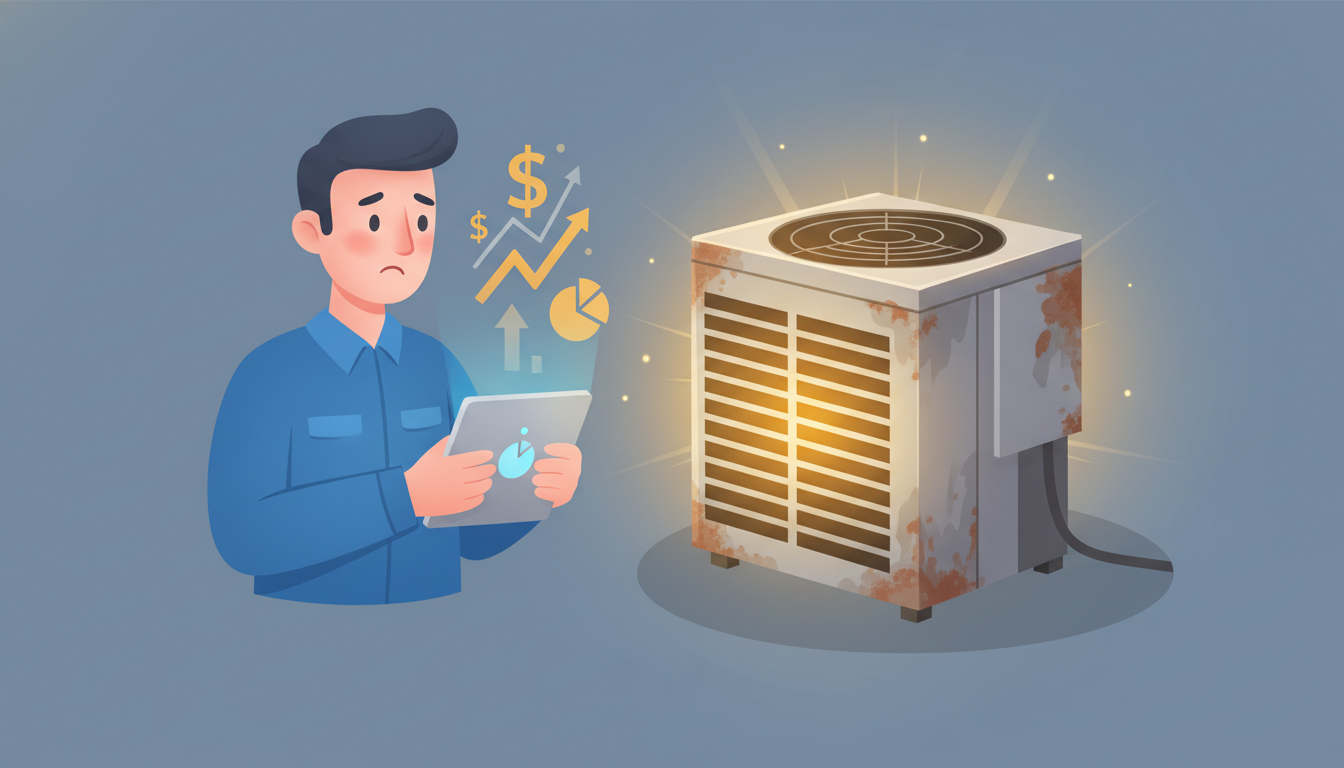
Is your old HVAC system quietly draining your wallet every month? While that 15 or 20-year-old air conditioner might still be running, the real question isn't whether it works—it's how much that outdated efficiency is actually costing you. The true cost of keeping an old HVAC system extends far beyond your monthly energy bill, and understanding these hidden expenses can help you make a smarter financial decision about repair versus replacement.
Understanding HVAC Efficiency and Why It Matters
When we talk about HVAC efficiency, we're measuring how effectively your system converts energy into heating or cooling. This efficiency is quantified through SEER ratings (Seasonal Energy Efficiency Ratio) for air conditioners and AFUE ratings (Annual Fuel Utilization Efficiency) for furnaces.
What SEER Ratings Tell You About Your Old HVAC System Cost
SEER ratings directly impact your energy consumption and monthly utility bills. Here's what you need to know:
- Pre-2006 systems: Often operate at SEER 8-10
- 2006-2010 systems: Typically rated at SEER 10-13
- Current minimum standards: SEER 14-15 (varies by region)
- High-efficiency modern units: SEER 18-25+
If your air conditioner was installed before 2010, you're likely paying 40-60% more for cooling than you would with a modern system. That's not a minor difference—it's a massive inefficiency tax you pay every single month.
How Inefficiency Increases Your HVAC Costs
An inefficient HVAC system doesn't just use more energy—it compounds costs in multiple ways:
- Longer run times: Your system works harder and runs longer to achieve the same temperature
- Reduced capacity: Aging components can't deliver the same cooling or heating output
- Increased wear: Extended operation accelerates component degradation
- Higher maintenance needs: Worn parts require more frequent service and replacement
Think of it like driving a car with poor gas mileage. You're not just filling up more often—you're also wearing out the engine faster and spending more on maintenance.
The Hidden Costs of Keeping an Old Air Conditioner
Most homeowners focus solely on their energy bills when evaluating old HVAC system costs, but that's only part of the picture. Let's break down the complete financial impact.
Energy Waste: The Ongoing Drain on Your Budget
Energy consumption is the most obvious cost of an inefficient HVAC system. Here's a real-world example:
Scenario: A 1,800 square foot home in a moderate climate
- Old system (SEER 10): $200/month during cooling season = $1,200 annually
- New system (SEER 16): $125/month during cooling season = $750 annually
- Annual savings: $450
Over a 15-year period, that's $6,750 in avoided energy costs—often enough to pay for a significant portion of a new system.
But remember, these calculations assume your old system maintains its original efficiency. In reality, efficiency degradation accelerates as systems age.
Repair Frequency: The Escalating Expense
As your HVAC system ages beyond 10-15 years, repair costs increase dramatically. Common issues include:
- Refrigerant leaks: $200-$1,500 to repair (higher if using phased-out R-22 refrigerant)
- Compressor failure: $1,200-$2,500
- Fan motor replacement: $300-$800
- Coil replacement: $600-$2,000
According to industry experts, if a repair costs more than half the price of a replacement, and your system is older than 10 years, replacement is usually the smarter financial choice. This is sometimes called the "$5,000 rule": multiply your system's age by the repair cost—if it exceeds $5,000, replace rather than repair.
The Compounding Effect of Multiple Inefficiency Factors
Here's what many homeowners don't realize: efficiency losses compound over time. Your old HVAC system doesn't just have one problem—it has several working together:
- Worn compressor: Reduced efficiency by 10-15%
- Dirty or degraded coils: Another 5-10% loss
- Refrigerant undercharge: Another 5-20% loss
- Duct leakage: Can waste 20-30% of conditioned air
- Inadequate insulation: Further reduces effective efficiency
These factors don't add up—they multiply. A system that started at SEER 10 might effectively be operating at SEER 6-7 after years of degradation, doubling your energy waste.
Breaking Down the True Cost: Old vs. New HVAC Systems
Let's look at a comprehensive five-year cost comparison to understand the real financial impact.
Five-Year Cost Analysis
Keeping your 18-year-old system:
- Energy costs (assuming 15% degradation): $7,500
- Average repairs (2-3 major repairs): $2,800
- Emergency service calls: $600
- Lost efficiency from breakdowns: $400
- Total five-year cost: $11,300
Replacing with new high-efficiency system:
- New system cost: $6,500
- Energy costs (modern efficiency): $4,500
- Minimal repairs (warranty coverage): $200
- Total five-year cost: $11,200
This example shows break-even in just five years—and that's before factoring in improved comfort, better air quality, and increased home value. After the break-even point, your savings accelerate because you're no longer paying for that new system while still enjoying reduced energy bills.
When Does HVAC Efficiency Affect Cost the Most?
Efficiency impacts your costs most significantly when:
- Extreme weather conditions: Your system runs constantly during heat waves or cold snaps
- Poor home insulation: The system works harder to maintain temperature
- Large temperature differentials: Bigger gaps between indoor and outdoor temps
- Extended operating seasons: Longer cooling or heating seasons in your region
If you live in a climate with hot summers or cold winters, the cost difference between an efficient and inefficient system becomes even more dramatic.
Understanding System Degradation Over Time
HVAC systems don't maintain their original efficiency throughout their lifespan. Understanding this degradation pattern helps you calculate the true cost of keeping an old system.
The Efficiency Degradation Timeline
Years 0-5: Minimal degradation, operating near rated efficiency Years 6-10: Gradual decline, approximately 5-10% efficiency loss Years 11-15: Accelerated decline, 10-25% efficiency loss Years 16-20: Severe decline, 25-40% efficiency loss Years 20+: Critical inefficiency, potentially 50%+ loss
This degradation pattern means an old HVAC system cost increases exponentially as it ages. A 20-year-old system originally rated at SEER 10 might effectively be operating at SEER 5-6, making it one of the most expensive appliances in your home to run.
Why Maintenance Can't Restore Lost Efficiency
Many homeowners believe regular maintenance can keep an old system running like new. While maintenance is absolutely essential and can slow degradation, it cannot reverse fundamental wear:
- Compressor wear: Internal components deteriorate regardless of maintenance
- Heat exchanger efficiency: Metal fatigue and corrosion reduce heat transfer
- Refrigerant system integrity: Seals and connections degrade with thermal cycling
- Electrical component aging: Capacitors, contactors, and motors lose effectiveness
Think of it like maintaining an older car. Regular oil changes help, but they can't make a 200,000-mile engine perform like new. For detailed guidance on maintaining your current system, check out our comprehensive HVAC repair guide.
Making the Financial Decision: Repair or Replace?
Understanding when to make the switch from repair to replacement requires looking at several financial factors beyond just the immediate repair cost.
Calculating Your Break-Even Point
Here's a simple framework to determine if replacement makes financial sense:
Step 1: Calculate your current annual operating cost
- Review 12 months of utility bills during heating/cooling seasons
- Estimate HVAC portion (typically 40-50% of total energy use)
- Add annual maintenance and repair costs
Step 2: Estimate new system operating cost
- Use SEER/AFUE ratings to calculate potential savings
- Expect 20-40% reduction in energy consumption
- Factor in reduced maintenance costs (new systems have warranties)
Step 3: Compare total cost of ownership
- New system cost minus estimated rebates/tax credits
- Divided by annual savings
- Results in years to break-even
If your break-even period is 7-10 years or less, and you plan to stay in your home that long, replacement typically makes financial sense. For more detailed analysis on this decision, see our article on HVAC repair vs replacement.
Hidden Savings You Might Not Consider
Beyond energy bills and repairs, a new system provides additional value:
Improved comfort: More consistent temperatures and better humidity control Increased home value: Modern HVAC systems are attractive to buyers Lower homeowners insurance: Some insurers offer discounts for newer systems Peace of mind: No more emergency breakdowns during extreme weather Smart features: Programmable thermostats can save an additional 10-15%
Regional Climate Impact on Old HVAC System Costs
Where you live significantly affects how much your inefficient system costs you. Understanding these regional differences helps you make location-appropriate decisions.
Hot Climate Zones
In southern and southwestern states where air conditioning runs 6-9 months yearly:
- Inefficiency costs are magnified by extended use
- A 3-ton system might run 2,000+ hours per cooling season
- Efficiency differences can mean $600-$1,200 annual cost differences
- ROI on replacement is often just 4-6 years
Moderate Climate Zones
In transitional climates with both heating and cooling needs:
- Both heating and cooling efficiency matter
- Consider dual-fuel or heat pump systems for maximum efficiency
- Annual savings from replacement typically $400-$700
- ROI period extends to 7-10 years
Cold Climate Zones
In northern states where heating dominates:
- AFUE ratings for furnaces become critical
- Old furnaces (60-70% AFUE) waste significant fuel
- Modern systems (90-98% AFUE) offer dramatic savings
- Annual savings can exceed $800-$1,000 in harsh climates
How to Reduce Old HVAC System Costs While You Decide
If you're not ready to replace your system immediately, these strategies can help minimize your old HVAC system cost in the interim:
Immediate Cost-Reduction Steps
- Replace air filters monthly: Dirty filters reduce efficiency by 5-15%
- Clean outdoor unit: Remove debris and vegetation within 2 feet
- Seal duct leaks: Can improve efficiency by 20%
- Install a programmable thermostat: Save 10-15% by optimizing schedules
- Add insulation: Reduce system workload and energy waste
- Schedule professional maintenance: Catch small problems before they become expensive
Understanding When These Measures Aren't Enough
While these steps help, they cannot overcome fundamental inefficiency in an aging system. If your system is:
- More than 15 years old
- Requiring repairs more than twice yearly
- Causing energy bills to increase despite maintenance
- Struggling to maintain comfortable temperatures
Then it's likely time to seriously consider replacement rather than continuing to invest in temporary fixes. Understanding the full scope of repair costs is essential—learn more in our guide on communicating HVAC system repair costs.
Financial Incentives That Reduce Replacement Costs
Understanding available rebates and incentives can significantly improve your replacement ROI.
Federal Tax Credits
The Inflation Reduction Act provides tax credits for high-efficiency HVAC systems:
- Up to $2,000 for heat pumps and high-efficiency central AC
- Credits apply to systems meeting specific efficiency thresholds
- Must be installed in existing homes (not new construction)
State and Local Rebates
Many states and utilities offer additional incentives:
- Utility company rebates: $200-$1,500 depending on system type
- State energy efficiency programs: Vary widely by location
- Municipal programs: Check with your local government
Manufacturer Rebates and Promotions
HVAC manufacturers frequently offer:
- Seasonal promotions ($300-$800 off)
- Mail-in rebates for specific models
- Financing options with competitive rates
These incentives can reduce your out-of-pocket costs by $2,000-$4,000, dramatically improving your break-even timeline.
Frequently Asked Questions
How much does an old HVAC system cost per month compared to new?
An old HVAC system typically costs 40-60% more per month to operate than a modern high-efficiency system. For an average home, this translates to $40-$100 extra per month during peak heating or cooling seasons, or $300-$800 more annually.
At what age does HVAC efficiency affect costs the most?
Efficiency degradation accelerates most dramatically after 12-15 years. Systems in the 15-20 year range experience the steepest decline in efficiency relative to operating costs, making this the critical decision window for most homeowners.
Can regular maintenance restore efficiency to an old HVAC system?
While regular maintenance is essential and can slow efficiency decline, it cannot restore an aging system to its original performance. Fundamental component wear—like compressor deterioration and heat exchanger degradation—occurs regardless of maintenance quality.
What's the fastest way to calculate if I should replace my HVAC system?
Use the "$5,000 rule": multiply your system's age by the proposed repair cost. If the result exceeds $5,000, replacement is typically more cost-effective. For example, if you have a 12-year-old system needing a $600 repair: 12 × $600 = $7,200, suggesting replacement makes financial sense.
How do I know if my old HVAC system is costing me extra money?
Warning signs include: energy bills increasing despite similar usage, rooms that won't reach desired temperature, system running constantly, repair frequency increasing, and age over 12-15 years. Compare your current utility bills to previous years adjusted for rate changes to identify efficiency-related increases.
Conclusion: Making the Right Decision for Your Home and Budget
The true cost of keeping an old HVAC system extends far beyond monthly energy bills. When you factor in escalating repair expenses, compounding efficiency losses, reduced comfort, and opportunity costs from missing out on modern features and incentives, the financial case for replacement often becomes compelling.
Here's what you need to remember:
- Old HVAC system costs increase exponentially as efficiency degrades
- Systems older than 15 years typically operate at 25-50% below their original efficiency
- Break-even periods for replacement often fall within 5-8 years
- Available rebates and tax credits can reduce replacement costs by thousands
- Every month you delay costs you money in wasted energy
Ready to stop wasting money on an inefficient HVAC system? Contact a qualified HVAC professional for a comprehensive efficiency assessment and replacement quote. Understanding your specific situation—including your home's size, climate zone, current system condition, and energy costs—will help you make the most informed financial decision.
Don't let an outdated system continue draining your budget. The sooner you address inefficiency, the sooner you start saving money, improving comfort, and protecting your investment in your home.