Why Your Energy Bills Can Reveal HVAC Problems
Why Your Energy Bills Can Reveal HVAC Problems
Have you noticed your energy bills creeping higher each month? Before you blame the weather or your utility company, your rising bills might be sending you an urgent message: your HVAC system has a problem. Learning to read these warning signs can help you catch issues early, avoid costly breakdowns, and keep more money in your pocket.
Your Energy Bill Is a Diagnostic Tool
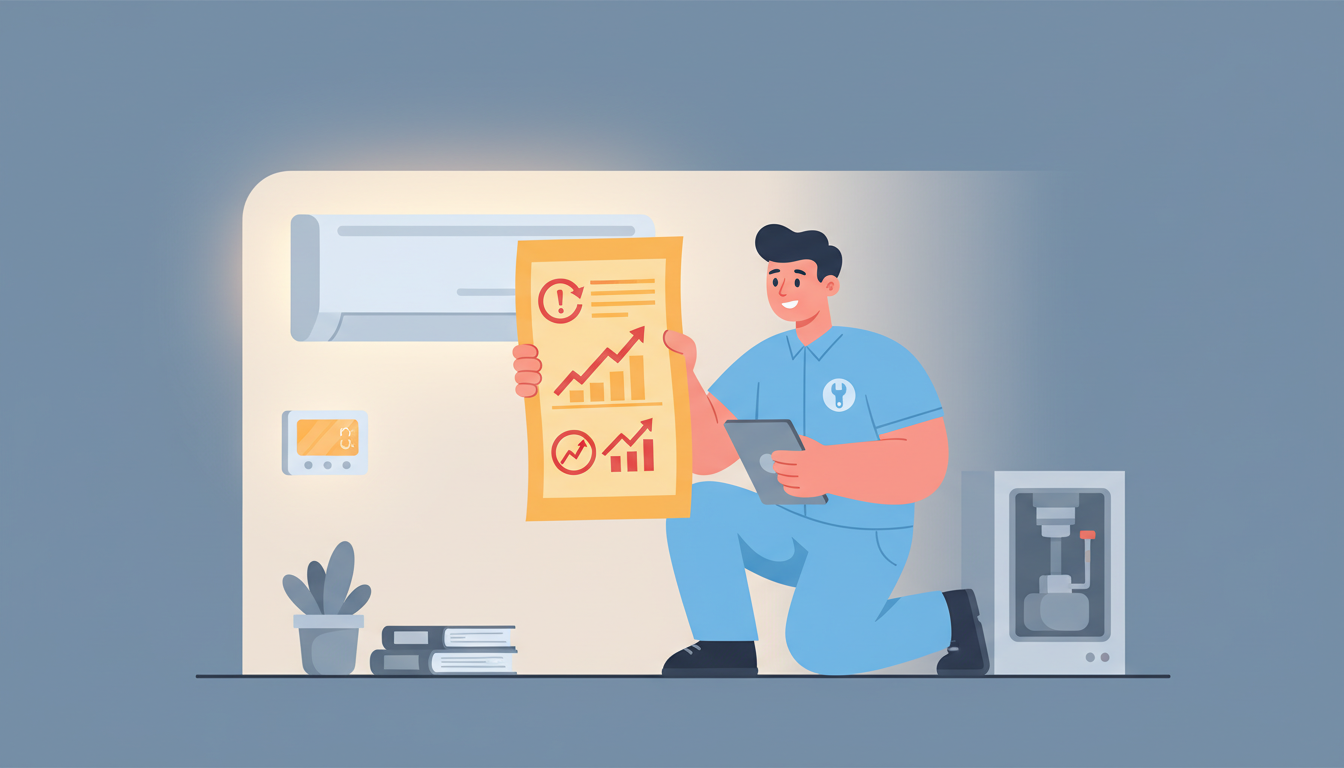
Think of your monthly utility bill as a health report for your HVAC system. Just like a sudden fever signals something's wrong with your body, an unexplained spike in your energy costs often points to heating or cooling equipment that's struggling to do its job.
Your HVAC system accounts for nearly half of your home's total energy consumption. When something goes wrong with your furnace, air conditioner, or heat pump, you'll see the impact reflected in your bills long before you notice comfort problems or hear strange noises.
How to Read Your Bills for Warning Signs
Not every increase means trouble. Seasonal changes naturally affect your costs. But certain patterns reveal underlying HVAC problems that need attention.
Month-to-Month Comparisons
Compare your current bill to the previous month. A sudden increase of 15-20% or more—without a corresponding change in weather or usage habits—deserves investigation. This type of spike often indicates a recent component failure or malfunction.
Year-Over-Year Analysis
The most revealing comparison is checking this January against last January, or this July against last July. This approach accounts for seasonal variations and shows whether your system's efficiency is declining over time. A gradual 10-15% increase year-over-year suggests your equipment is aging and losing efficiency.
Understanding Normal vs. Concerning Increases
Here's what to expect:
- Normal: 20-30% higher bills during peak heating (January-February) or cooling (July-August) months compared to mild spring or fall
- Concerning: Bills that are 25%+ higher than the same month last year, especially during moderate weather
- Urgent: Sudden spikes of 30% or more without extreme weather events
If your bills show these concerning patterns, it's time to investigate potential HVAC problems.
Common HVAC Problems Your Bills Reveal
Different types of energy bill patterns point to specific equipment issues. Understanding these connections helps you communicate effectively with HVAC technicians and make informed repair decisions.
Dirty or Clogged Air Filters
Bill Pattern: Gradual increase over 2-3 months
When your air filter becomes clogged with dust, pet hair, and debris, your system works much harder to push air through your home. This extra effort translates directly into higher electricity consumption.
A severely clogged filter can increase your energy costs by 15-20%. The good news? This is the easiest problem to fix yourself. Check your filter monthly and replace it every 1-3 months depending on usage and household conditions.
Leaking Ductwork
Bill Pattern: Consistently high bills that don't improve, even after filter changes or maintenance
Duct leaks are silent energy thieves. Studies show that the average home loses 20-30% of heated or cooled air through gaps, cracks, and disconnected duct sections. You're essentially paying to heat or cool your attic, walls, or crawl space instead of your living areas.
Signs beyond high bills include:
- Rooms that never reach the desired temperature
- Excessive dust throughout your home
- Stuffy or stale indoor air quality
Professional duct sealing can recover that lost efficiency and significantly lower your monthly costs.
Refrigerant Leaks
Bill Pattern: Steady increase during cooling season, with system running constantly but not cooling effectively
Your air conditioner or heat pump needs the right amount of refrigerant to transfer heat efficiently. When refrigerant leaks out, your system runs longer and longer cycles trying to reach your thermostat setting—but never quite getting there.
You might notice:
- Indoor temperatures that stay 3-5 degrees above your thermostat setting
- The outdoor unit running non-stop on hot days
- Ice formation on the outdoor unit or indoor coil
- A hissing sound near the outdoor unit
Refrigerant doesn't "run out" through normal use—if levels are low, you have a leak that needs professional repair. Simply adding refrigerant without fixing the leak wastes money and damages the environment.
Failing Components
Bill Pattern: Sudden spike (20-30% or more) that persists
HVAC systems contain motors, compressors, capacitors, and other electrical components. When these parts begin failing, they often struggle for weeks before completely dying. A motor with failing bearings draws more electricity. A weak capacitor forces your compressor to work harder.
Common failing components include:
- Blower motor bearings
- Compressor
- Capacitors
- Fan motors
- Contactors
These problems rarely fix themselves. The sooner you address component failures, the less you'll spend on wasted energy while preventing secondary damage to other parts.
Thermostat Malfunctions
Bill Pattern: Erratic bills with significant variation month-to-month, or unusually high bills despite moderate outdoor temperatures
Your thermostat controls when and how long your HVAC system runs. When it malfunctions, chaos follows. Common thermostat issues include:
- Poor calibration: Thermostat reads 70°F when the actual temperature is 68°F, causing excessive heating
- Failed sensors: System doesn't recognize when target temperature is reached, running endlessly
- Wiring problems: System turns on randomly or won't shut off
- Battery issues: (For battery-powered models) Weak batteries cause erratic behavior
If you have an older mechanical thermostat, upgrading to a programmable or smart model typically pays for itself within a year through improved efficiency and scheduling capabilities.
Improperly Sized Equipment
Bill Pattern: High bills since installation, or after system replacement
An oversized unit cycles on and off frequently (short cycling), while an undersized unit runs continuously trying to keep up with demand. Both scenarios waste energy and create uncomfortable temperature swings.
Short cycling is particularly damaging because most energy consumption happens during startup. A system that runs 10 two-minute cycles uses more electricity than one running for a single 20-minute cycle.
Unfortunately, fixing sizing problems usually requires replacing the equipment—a costly mistake that proper load calculations during installation would have prevented.
Lack of Regular Maintenance
Bill Pattern: Gradual increase of 5-10% annually over several years
HVAC systems need professional maintenance at least once per year. Without it, small problems compound:
- Dirty coils reduce heat transfer efficiency
- Loose electrical connections increase resistance and energy waste
- Low refrigerant charge forces longer run times
- Dirty blower wheels reduce airflow
- Worn belts slip and waste energy
Studies show that proper maintenance keeps systems running at 95% efficiency, while neglected systems can drop to 70% or lower. That 25% efficiency loss shows up as significantly higher utility bills—typically saving 10-30% in energy costs when properly maintained.
Regular professional maintenance catches these issues before they become expensive repairs. Learn more about keeping your system in top shape in our comprehensive HVAC repair guide.
Old, Inefficient Equipment
Bill Pattern: Bills consistently higher than neighbors with similar homes, gradual increases over many years
HVAC systems typically last 15-20 years. As equipment ages, efficiency naturally declines. Additionally, efficiency standards have improved dramatically over the past two decades.
If your air conditioner has a SEER rating of 10-13 (common in systems from 2000-2010), upgrading to a modern unit rated SEER 16-20 could cut your cooling costs by 30-40%. Similarly, replacing a furnace with an 80% AFUE rating with a modern 95%+ model dramatically reduces heating costs.
The age of your building can also provide clues about potential HVAC issues. Check out our article on how building age can reveal HVAC repair problems for more insights.
Using Energy Audits to Pinpoint Problems
When high bills persist but the cause isn't obvious, a professional energy audit provides detailed answers. Many utility companies offer free or subsidized audits.
During an audit, technicians use specialized equipment to:
- Measure airflow throughout your ductwork
- Check for air leaks using blower door tests
- Inspect insulation levels and quality
- Test HVAC equipment efficiency and performance
- Identify areas where energy is being wasted
The audit report gives you a prioritized list of improvements with estimated costs and savings for each measure. This data helps you make smart decisions about where to invest your repair and upgrade budget.
For a deeper dive into what energy audits can uncover about your HVAC system, read our guide on how energy audits reveal HVAC problems.
When to Act: Emergency vs. Routine
Not every bill increase requires emergency service, but knowing when to act quickly can prevent small problems from becoming system failures.
Call for Emergency Service If:
- Your bill suddenly doubles or triples
- Your system runs constantly but provides no heating or cooling
- You notice burning smells or hear loud grinding/screeching sounds
- The system frequently trips circuit breakers
- You see ice forming on indoor or outdoor components during operation
Schedule Routine Service If:
- Bills have gradually increased 15-20% over several months
- Year-over-year comparisons show consistent 10%+ increases
- It's been more than a year since professional maintenance
- You notice reduced comfort but the system still operates
DIY Actions You Can Take Now:
- Replace your air filter
- Clear debris from around outdoor unit
- Ensure all vents are open and unblocked
- Check thermostat settings and battery
- Compare several months of bills to identify patterns
The True Cost of Ignoring High Energy Bills
Putting off HVAC repairs doesn't save money—it costs you more in three ways:
Wasted Energy: A system running at 70% efficiency wastes 30% of every dollar you spend on heating and cooling. On a $200 monthly bill, that's $60 going straight out your vents or through duct leaks.
Accelerated Wear: When one component struggles, it stresses other parts. A clogged filter forces the blower motor to work harder. A refrigerant leak makes the compressor overheat. Small problems create cascading failures.
Emergency Replacement: Systems that aren't maintained fail at the worst possible times—the hottest day of summer or the coldest night of winter. Emergency replacements cost more and leave you with limited equipment options.
Many homeowners are surprised to learn that five years of excess energy costs from an inefficient system could have paid for a new, efficient replacement.
Smart Strategies to Lower Your Bills
Once you've addressed any underlying HVAC problems, these strategies help keep your energy costs in check:
Optimize Your Thermostat Settings
- Set temperatures to 78°F in summer and 68°F in winter when home
- Reduce heating/cooling by 7-10 degrees when sleeping or away for 8+ hours
- Avoid dramatic temperature swings—your system works hardest during recovery
Upgrade to a Smart Thermostat
Modern smart thermostats learn your schedule, adjust for weather, and allow remote control from your phone. Users typically save 10-15% on heating and cooling costs through optimized scheduling alone.
Improve Your Home's Envelope
Your HVAC system works in partnership with your home's insulation, windows, and air sealing. Improvements in these areas reduce the load on your equipment:
- Add insulation to attics and crawl spaces
- Seal air leaks around windows, doors, and penetrations
- Install weather stripping on doors
- Use window treatments to block summer sun
Schedule Preventive Maintenance
Annual professional maintenance keeps your system running efficiently. A typical tune-up includes:
- Cleaning indoor and outdoor coils
- Checking and adjusting refrigerant charge
- Lubricating moving parts
- Tightening electrical connections
- Testing safety controls
- Measuring system performance
The modest cost of maintenance (typically $80-150) prevents much larger repair bills and keeps efficiency high.
Frequently Asked Questions
How much should my HVAC cost per month?
Average costs vary by region, home size, and equipment efficiency, but expect $100-200 per month in moderate climates, and $150-300+ in extreme climates during peak seasons. Your home's insulation, thermostat settings, and equipment age significantly impact costs.
What percentage increase in my energy bill means I have an HVAC problem?
A sudden increase of 15-20% or more without corresponding weather changes suggests a problem. Year-over-year increases of 10%+ for the same month also indicate declining efficiency that needs attention.
Should I repair or replace my system based on my energy bills?
If your system is over 15 years old and bills have increased 25%+ over the past few years, replacement often makes more financial sense. Calculate the payback period: if annual energy savings from a new system cover the cost difference within 5-7 years, replacement is typically smarter than pouring money into repairs for aging equipment.
Can I diagnose the specific HVAC problem from my bill alone?
Your bill reveals that a problem exists and suggests the category (sudden failure vs. gradual decline), but professional diagnosis identifies the specific issue. The patterns described in this article help you provide useful information to technicians and understand their findings.
Does weather alone explain high energy bills?
Extreme temperatures increase bills, but you should still compare to the same month in previous years. If this July costs 30% more than last July despite similar temperatures, weather isn't the full explanation—your system efficiency has declined.
Take Control of Your Energy Costs
Your energy bills contain valuable diagnostic information about your HVAC system's health. By learning to recognize warning patterns, you can catch problems early, avoid emergency breakdowns, and significantly reduce your heating and cooling costs.
Start by gathering 12 months of utility bills and looking for the patterns discussed in this article. If you spot concerning trends, don't wait—schedule a professional inspection to identify and fix the underlying problems.
Remember: every month you delay addressing HVAC inefficiency is another month of wasted money and accelerating equipment damage. Your energy bills are trying to tell you something important. Are you listening?
For professional HVAC diagnosis and repair that solves the root cause of high energy bills, contact Quick HVAC Fix today. Our experienced technicians will identify exactly what's driving your costs up and provide honest solutions that fit your budget.