Why EPA Certification Matters for Refrigerant Repairs: What Every Homeowner Should Know
Why EPA Certification Matters for Refrigerant Repairs: What Every Homeowner Should Know
When your air conditioner stops working on the hottest day of summer, you need help fast. But before you call just any HVAC technician, there's one critical question you need to ask: "Are you EPA certified?" This simple question could save you thousands of dollars in fines, protect your family's safety, and ensure your cooling system runs efficiently for years to come.
EPA certification for refrigerant repairs isn't just a fancy credential—it's a federal legal requirement that protects you, your home, and the environment. In this guide, you'll discover exactly why EPA certification matters and how to make sure you're hiring qualified professionals for your refrigerant repair needs.
What Is EPA Certification for Refrigerant Repairs?
EPA certification, specifically Section 608 certification, is a mandatory credential required by the United States Environmental Protection Agency for any technician who maintains, services, repairs, or disposes of equipment containing refrigerants. This federal requirement stems from the Clean Air Act, which was designed to protect our planet's ozone layer from harmful chemicals.
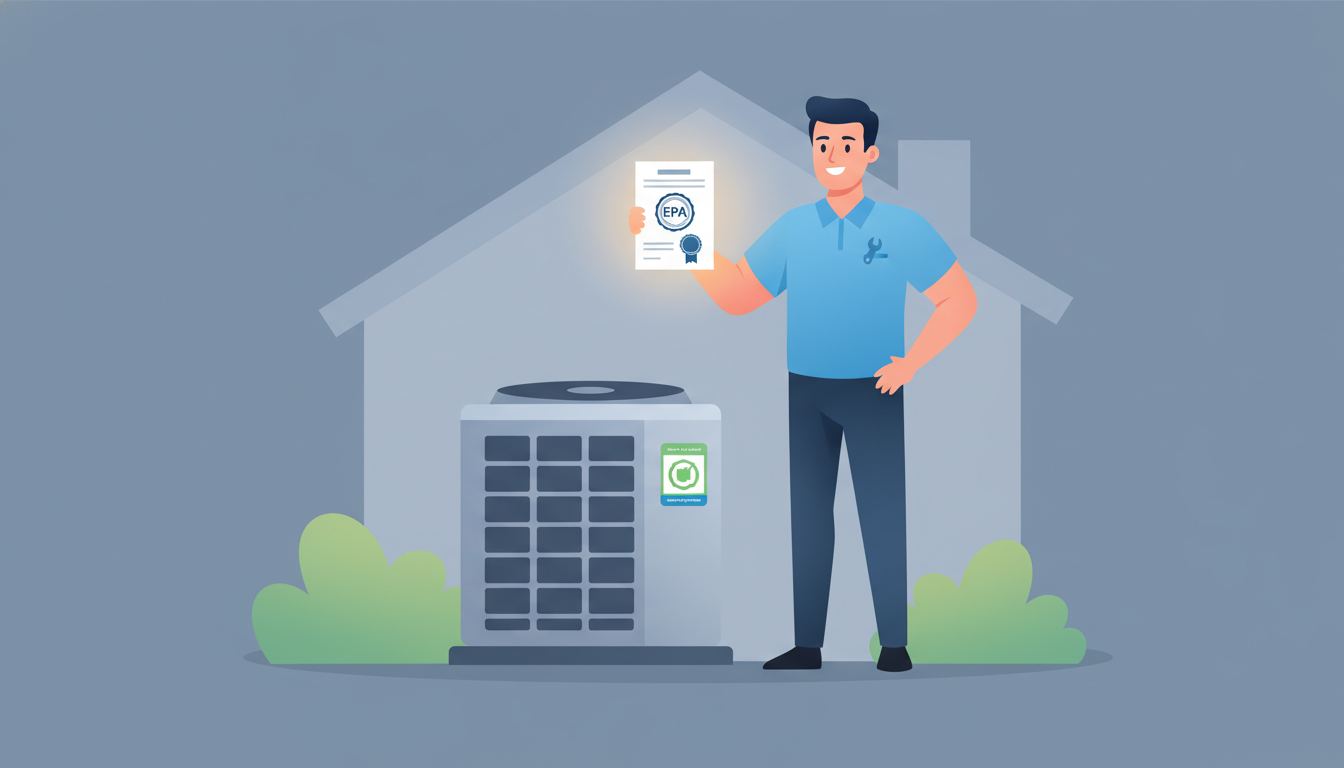
Think of EPA certification as a driver's license for refrigerant handling. Just as you wouldn't let someone without a license drive your car, you shouldn't allow an uncertified technician to work on systems containing refrigerants. The certification proves that a technician has been properly trained and tested on:
- Safe refrigerant recovery procedures
- Proper refrigerant recycling methods
- Legal disposal requirements
- Leak detection and prevention
- Environmental protection protocols
- Federal regulations and compliance standards
When you hire an EPA certified HVAC technician, you're getting someone who has passed rigorous exams covering refrigerant safety, environmental regulations, and proper handling procedures. This isn't optional training—it's the law.
Why EPA Certification Matters: The Legal Requirements
Here's something many homeowners don't realize: if an uncertified technician works on your HVAC system, you could face legal consequences. Under Section 608 of the Clean Air Act, both the technician and the property owner can be held liable for violations.
Federal Penalties Are Serious
The EPA doesn't mess around when it comes to refrigerant regulations. Violations can result in fines up to $44,539 per day for each violation. That's not a typo—per day. If an uncertified technician vents refrigerant into the atmosphere while working on your system, you could be on the hook for massive penalties.
These legal requirements exist because refrigerants like R-22 (Freon) and newer alternatives contain chemicals that can:
- Damage the Earth's ozone layer
- Contribute to climate change
- Harm human health when improperly released
- Contaminate groundwater and soil
Only Certified Technicians Can Purchase Refrigerants
Here's another important fact: only EPA certified technicians are legally allowed to purchase refrigerants. If someone shows up to "recharge" your AC without certification, they're either breaking the law or using questionable sources for their refrigerant supply. Neither scenario is good for you.
When you need HVAC repair services, always verify certification first. It's your first line of defense against legal trouble and substandard work.
Environmental Protection and Your Responsibility
You might be wondering why refrigerant handling is such a big deal. The answer lies in the devastating impact these chemicals can have on our environment when released improperly.
The Ozone Layer Connection
Chlorofluorocarbons (CFCs) and hydrochlorofluorocarbons (HCFCs)—common refrigerants in older HVAC systems—were destroying the ozone layer at an alarming rate before regulations kicked in. The ozone layer protects all life on Earth from harmful ultraviolet radiation. Without it, rates of skin cancer, cataracts, and crop damage would skyrocket.
EPA certified technicians are trained to:
- Recover refrigerant instead of venting it
- Recycle refrigerants for reuse
- Properly dispose of refrigerants that can't be recycled
- Prevent leaks during service and repairs
- Use approved recovery equipment
Your Carbon Footprint Matters
Even newer refrigerants, while safer for the ozone layer, are potent greenhouse gases. A single pound of R-410A refrigerant has the global warming potential of 2,088 pounds of carbon dioxide. When uncertified technicians vent refrigerant instead of recovering it, they're releasing the equivalent greenhouse gas impact of driving thousands of miles in a car.
By hiring EPA certified professionals, you're doing your part to protect the environment. It's a choice that matters.
How EPA Certification Impacts Your HVAC Service Quality
Beyond legal and environmental concerns, EPA certification directly affects the quality of service you receive. Certified technicians bring expertise that translates into better outcomes for your cooling system.
Proper Leak Detection Saves You Money
EPA certified technicians are trained in advanced leak detection methods. This matters because refrigerant leaks are one of the most common—and expensive—HVAC problems homeowners face. An uncertified technician might simply "top off" your refrigerant without finding the leak, meaning you'll need another expensive recharge in a few months.
Certified professionals know how to:
- Use electronic leak detectors accurately
- Identify common leak points in different systems
- Repair leaks before recharging
- Test repairs to ensure they hold
If you've noticed refrigerant leak symptoms, a certified technician will properly diagnose and fix the root cause, not just treat the symptoms.
System Efficiency and Longevity
Proper refrigerant handling directly impacts your system's efficiency and lifespan. When refrigerant is:
- Contaminated during service
- Incorrectly charged (too much or too little)
- Mixed with incompatible refrigerant types
- Exposed to moisture or air
Your HVAC system suffers. Compressors fail prematurely, energy bills skyrocket, and cooling capacity drops. EPA certified technicians understand the precise procedures needed to maintain system integrity, which means:
- Lower energy bills from efficient operation
- Fewer breakdowns and repair calls
- Extended equipment lifespan (potentially 5-10 years longer)
- Consistent comfort throughout your home
Warranty Protection
Here's something that might surprise you: many HVAC manufacturers require EPA certified technicians for warranty-covered repairs. If an uncertified technician works on your system, you could void your warranty entirely. That $6,000 heat pump replacement? You might be paying for it out of pocket if your warranty is invalidated.
Understanding the Four Types of EPA 608 Certification
Not all EPA certifications are created equal. There are four distinct types, and understanding the differences helps you ensure you're hiring the right technician for your specific needs.
Type I Certification: Small Appliances
Type I certification covers small appliances containing 5 pounds of refrigerant or less. This includes:
- Window air conditioners
- Small refrigerators
- Water coolers
- Dehumidifiers
If you only need service on a window unit, a Type I certified technician is qualified. However, for whole-home systems, you need someone with broader certification.
Type II Certification: High-Pressure Systems
Type II covers high-pressure and very high-pressure appliances except small appliances and motor vehicle air conditioners. This includes most residential and commercial air conditioning systems. Type II certified technicians can work on:
- Central air conditioning systems
- Heat pumps
- Commercial refrigeration
- Ice machines
This is the minimum certification level you want for residential HVAC repairs.
Type III Certification: Low-Pressure Systems
Type III certification applies to low-pressure appliances, primarily:
- Large chillers
- Centrifugal systems
- Some industrial equipment
Unless you have commercial or industrial cooling systems, Type III alone isn't sufficient for residential needs.
Universal Certification: The Gold Standard
Universal certification means a technician has passed all three certification exams (Type I, II, and III) plus a core exam. These technicians can legally work on any type of equipment containing refrigerants. When hiring for refrigerant repairs, Universal certification is your best bet—it demonstrates the broadest knowledge and highest level of commitment to the profession.
Many top professionals also pursue additional credentials like NATE certification, which tests hands-on technical skills beyond refrigerant handling.
The Real Cost of Hiring Non-Certified Technicians
The temptation to hire the cheapest technician is understandable, especially when facing an expensive repair. But choosing an uncertified contractor can cost you far more in the long run.
Immediate Financial Risks
Consider these potential costs when hiring uncertified technicians:
EPA Fines: Up to $44,539 per violation per day Voided Warranties: $2,000-$8,000+ for out-of-warranty replacements System Damage: $500-$3,000+ for compressor replacement due to improper service Repeat Repairs: $150-$400 each time they "recharge" without fixing leaks Insurance Issues: Potential claim denials if damage stems from uncertified work
Long-Term Consequences
Beyond immediate costs, uncertified work creates ongoing problems:
- Reduced System Lifespan: Poor refrigerant handling can cut your HVAC system's life by 30-50%
- Higher Energy Bills: Improperly charged systems use 5-20% more energy
- Frequent Breakdowns: Contaminated refrigerant causes recurring failures
- Property Value Impact: Home inspections may flag improper HVAC service
- Legal Liability: You remain responsible for environmental violations
The "Too Good to Be True" Price
If a technician quotes significantly less than competitors for refrigerant work, ask yourself why. Common reasons include:
- No EPA certification (avoiding training and compliance costs)
- Cutting corners on proper recovery procedures
- Using recycled refrigerant without proper testing
- Skipping necessary leak detection and repairs
- No insurance or licensing
That $100 savings today could cost you thousands tomorrow.
How to Verify Your HVAC Technician's EPA Certification
Protecting yourself starts with verification. Here's exactly how to confirm your technician is properly certified before they touch your system.
Ask for Certification Card
Every EPA certified technician receives a certification card upon passing their exam. This card includes:
- Technician's name
- Certification number
- Certification type (I, II, III, or Universal)
- Issuing organization
- Issue date
Don't be shy about asking to see this card. Legitimate technicians expect the question and will happily provide proof. If someone gets defensive or makes excuses, that's a major red flag.
Verify Online
Many certification organizations maintain online databases where you can verify credentials. The most common certifying organizations include:
- ESCO Group
- HVAC Excellence
- Mainstream Engineering
- RSES (Refrigeration Service Engineers Society)
Ask for the technician's certification number and organization, then check their database. This takes just 2-3 minutes and provides peace of mind.
Check Company Credentials
Reputable HVAC companies will:
- Display certifications prominently on their website
- Include certification information in their marketing materials
- Provide certification details when you request a quote
- Carry proper business licensing and insurance
If a company can't or won't provide this information upfront, move on to the next contractor.
Look for Additional Certifications
While EPA 608 certification is the legal minimum, top-tier technicians often hold additional credentials:
- NATE Certification: Tests hands-on technical knowledge
- Manufacturer Certifications: Brand-specific training
- State Licenses: Required in many jurisdictions
- Trade Organization Memberships: ACCA, RSES, etc.
These additional certifications indicate a commitment to excellence beyond minimum requirements.
Red Flags: Warning Signs of Uncertified Technicians
Knowing what to watch for can help you avoid uncertified contractors before they cause damage.
Warning Signs to Watch For
They Can't Show Certification: If a technician doesn't carry their EPA card or can't provide certification details, walk away immediately.
Rock-Bottom Prices: Significantly lower quotes often mean corners are being cut, starting with certification and training.
No Recovery Equipment: EPA certified technicians must use approved refrigerant recovery equipment. If they show up without it, they're planning to vent refrigerant illegally.
"I'll Just Top It Off": Recharging without leak detection and repair is a sign of poor training—something certified technicians learn to avoid.
Cash-Only Operations: Legitimate businesses accept multiple payment methods and provide proper receipts.
No Written Estimates: Professional contractors provide detailed written estimates including specific work to be performed.
Pressure to Decide Immediately: Scammers use high-pressure tactics. Legitimate technicians give you time to verify their credentials and compare options.
Vague Business Information: No physical address, generic email addresses, or inability to provide insurance documentation are all red flags.
Trust Your Instincts
If something feels off about a contractor, trust your gut. Plenty of qualified, certified professionals are available—don't settle for someone who raises concerns.
EPA Certification vs. Other HVAC Certifications
Understanding how EPA certification fits into the broader landscape of HVAC credentials helps you make informed hiring decisions.
EPA 608 vs. NATE Certification
EPA certification focuses specifically on refrigerant handling and environmental compliance. NATE (North American Technician Excellence) certification tests broader technical knowledge including:
- System installation
- Troubleshooting and diagnostics
- Electrical systems
- Airflow and ductwork
- Heat pumps and furnaces
Think of it this way: EPA 608 proves they can legally handle refrigerants. NATE proves they can fix your HVAC system effectively. The best technicians have both.
Manufacturer Certifications
Major HVAC brands like Carrier, Trane, Lennox, and Rheem offer manufacturer-specific training and certification. These programs teach:
- Brand-specific installation procedures
- Warranty requirements and processes
- Troubleshooting guides for specific models
- Advanced features and controls
Manufacturer certification is valuable but doesn't replace EPA 608 certification—both are important.
State and Local Licenses
Many states and municipalities require additional licensing beyond EPA certification. These licenses typically involve:
- Business registration
- Liability insurance
- Criminal background checks
- Bonding requirements
- Additional testing on local codes
Always verify that your contractor holds all required licenses for your area, not just EPA certification.
The Ideal Credential Stack
When hiring for refrigerant repairs, look for technicians who hold:
- EPA 608 Universal Certification (mandatory)
- State HVAC License (if required in your area)
- NATE Certification (strongly preferred)
- Manufacturer Certifications (bonus for brand-specific systems)
- Trade Organization Memberships (indicates ongoing education)
This combination ensures you're getting both legal compliance and technical excellence.
Frequently Asked Questions About EPA Certification for Refrigerant Repairs
How long does EPA 608 certification last?
EPA 608 certification is currently valid for the technician's lifetime and does not expire. However, technicians must stay updated on changing regulations and refrigerant types. Many professionals pursue continuing education even though it's not legally required for recertification.
Can I legally recharge my own AC without EPA certification?
Technically, homeowners are exempt from EPA certification requirements when working on their own appliances in their own home. However, this is strongly discouraged because: (1) you cannot legally purchase refrigerants without certification, (2) improper handling poses serious environmental and safety risks, and (3) you could damage expensive equipment. Always hire certified professionals for refrigerant work.
What happens if I hire an uncertified technician?
If you knowingly hire an uncertified technician who violates EPA regulations, you could face federal fines up to $44,539 per violation. Additionally, you risk voided warranties, system damage, repeat repairs, and legal liability for environmental violations. The risks far outweigh any potential cost savings.
Is EPA certification the same in all states?
EPA 608 certification is a federal requirement that applies nationwide. However, individual states may have additional licensing requirements beyond EPA certification. Check your state's contractor licensing board to understand all applicable requirements in your area.
How much does refrigerant repair typically cost from a certified technician?
Refrigerant repair costs vary based on the issue, but typical ranges include: leak detection and minor repairs ($150-$400), recharge after repair ($100-$300 for standard refrigerants), major leak repairs like coil replacement ($500-$2,000), and full refrigerant evacuation and recharge ($250-$600). While certified technicians may charge slightly more than uncertified contractors, the quality and legal compliance justify the investment.
Protect Your Investment: Choose EPA Certified Professionals
EPA certification for refrigerant repairs isn't just a bureaucratic formality—it's your protection against legal liability, environmental damage, poor workmanship, and costly system failures. When your HVAC system needs refrigerant service, EPA certification should be your non-negotiable first requirement.
The next time you need air conditioning or heat pump repairs, ask to see that EPA 608 certification card before any work begins. Verify credentials online, check for additional certifications like NATE, and choose contractors who demonstrate commitment to legal compliance and professional excellence.
Your home's comfort, your family's safety, your financial security, and our shared environment all depend on proper refrigerant handling. Don't leave it to chance—insist on EPA certified technicians every single time.
Ready to find qualified, certified HVAC professionals? Start by checking credentials, requesting written estimates, and verifying that any contractor you hire holds valid EPA 608 certification along with all required state and local licenses. Your due diligence today prevents costly problems tomorrow.