
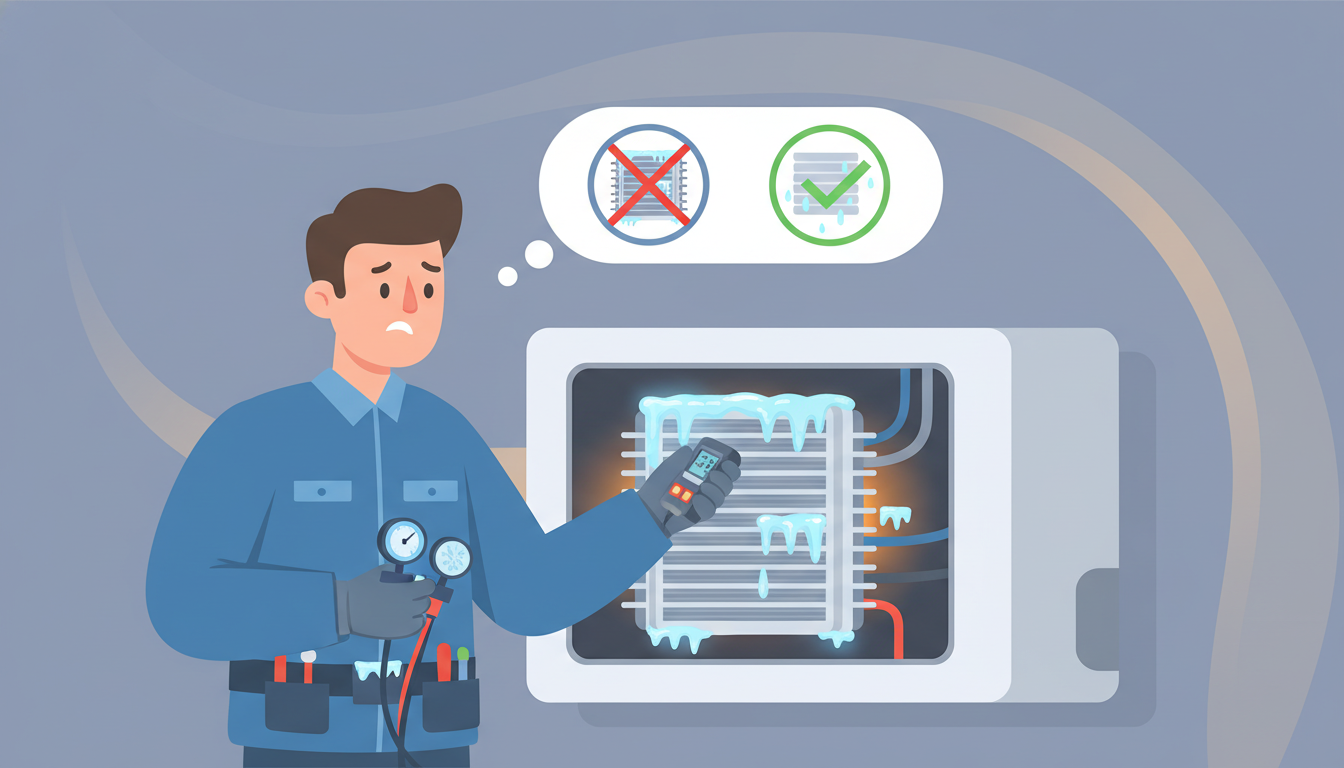
Why Does My Evaporator Coil Keep Freezing Up? (And How to Fix It for Good)
Why Does My Evaporator Coil Keep Freezing Up? (And How to Fix It for Good)
If you've opened your AC unit to find your evaporator coil frozen solid, you're not alone. A frozen evaporator coil is one of the most common AC problems homeowners face, and it can leave you sweating in the summer heat when you need cooling most. But here's the good news: most causes are fixable, and many you can prevent with simple maintenance.
In this guide, you'll discover exactly why your evaporator coil keeps freezing up, how to identify the root cause, and what steps to take to fix it for good.
What Is an Evaporator Coil and Why Does It Freeze?
Your evaporator coil is the indoor component of your air conditioning system. It's located inside your air handler or furnace and contains refrigerant that absorbs heat from the air in your home. As warm air passes over the cold coil, heat transfers to the refrigerant, and cool air is blown back into your rooms.
When everything works properly, condensation forms on the coil (like water droplets on a cold glass), drains away, and the coil stays at the right temperature. But when something disrupts this balance, the coil temperature drops too low, and that condensation freezes into ice.
The ice buildup creates a vicious cycle: ice blocks airflow, which makes the coil even colder, which creates more ice. Left unchecked, a frozen evaporator coil can damage your compressor, reduce cooling efficiency, and lead to expensive repairs.
Warning Signs Your Evaporator Coil Is About to Freeze
Catching the problem early can save you from a complete system shutdown. Watch for these warning signs:
- Weak airflow from your vents even though the system is running
- Ice or frost visible on the refrigerant lines outside your home
- Water leaks around your indoor air handler as ice melts
- Higher energy bills without increased usage
- Warm air coming from vents instead of cold air
- Hissing or bubbling sounds indicating refrigerant issues
- Long run times where your AC never reaches the set temperature
If you notice any of these signs, address them immediately before your coil freezes completely.
The 7 Most Common Causes of a Frozen Evaporator Coil
1. Dirty or Clogged Air Filter
This is the #1 culprit behind frozen evaporator coils. Your air filter traps dust, pollen, and debris before air reaches the coil. When the filter gets clogged, it restricts airflow over the coil.
Without enough warm air flowing across it, the coil can't absorb heat properly. The temperature drops below freezing, and condensation turns to ice.
The fix: Check your air filter monthly and replace it every 1-3 months depending on usage. If you have pets, allergies, or run your AC constantly, replace it more frequently. This is the easiest and cheapest way to prevent coil freezing.
For more guidance on basic AC upkeep, check out our central AC repair guide.
2. Restricted Airflow from Blocked Vents or Registers
Even with a clean filter, your system needs unrestricted airflow throughout your home. Blocked return vents, closed supply registers, or furniture placed over vents can starve your evaporator coil of warm air.
The fix: Walk through your home and ensure all vents are open and unobstructed. Don't close off more than 20% of your vents, even in unused rooms. Your AC system is balanced for your entire home, and blocking vents throws off that balance.
3. Dirty Evaporator Coils
Over time, dust and debris can bypass your air filter and coat the evaporator coil itself. This layer of grime acts as insulation, preventing proper heat exchange. The coil can't absorb heat from the air, temperatures drop, and ice forms.
The fix: Professional coil cleaning is recommended every 1-2 years. HVAC techs use specialized cleaners and tools to safely remove buildup without damaging the delicate fins. DIY cleaning is possible but risky—you can easily bend the fins or damage the coil if you're not careful.
4. Low Refrigerant Levels (Refrigerant Leak)
Refrigerant is the lifeblood of your AC system. When levels drop due to a leak, pressure in the evaporator coil decreases. Lower pressure means lower temperature, and the coil gets cold enough to freeze condensation.
Low refrigerant is a serious issue that requires professional attention. Unlike dirty filters or blocked vents, you can't fix this yourself.
Warning signs of low refrigerant:
- Ice on the refrigerant lines outside
- Hissing or bubbling sounds near the AC unit
- AC runs constantly but doesn't cool effectively
- Higher electricity bills
The fix: Call a licensed HVAC technician immediately. They'll locate the leak, repair it, and recharge your system to the correct refrigerant level. Simply adding more refrigerant without fixing the leak is a temporary fix that will cost you more in the long run.
Our HVAC repair guide covers when to call a professional versus attempting DIY fixes.
5. Malfunctioning Blower Fan or Motor
Your blower fan is responsible for moving air over the evaporator coil. If the fan isn't working properly—whether due to a failed motor, bad capacitor, or mechanical issue—airflow drops and the coil freezes.
Warning signs of blower issues:
- Little to no air coming from vents
- Unusual noises (squealing, grinding, rattling)
- Fan runs intermittently or not at all
- Burning smell from the air handler
The fix: Blower motor and fan issues require professional diagnosis and repair. A technician can test the motor, check the capacitor, and determine whether repair or replacement is needed.
6. Faulty Thermostat Settings or Malfunction
Your thermostat controls when your AC runs and for how long. If it's malfunctioning or set incorrectly, it can cause your system to run constantly, even when it's not needed. This overworks the evaporator coil and can lead to freezing.
Common thermostat issues:
- Set to "fan only" mode instead of "auto"
- Placed in direct sunlight or near heat sources (false readings)
- Old mechanical thermostat losing calibration
- Wiring issues
The fix: First, verify your thermostat is set to "auto" for the fan and "cool" for the system. Make sure it's set to a reasonable temperature (not below 65°F). If problems persist, consider upgrading to a programmable or smart thermostat, or call an HVAC tech to diagnose wiring or calibration issues.
7. Clogged Condensate Drain Line
When your evaporator coil absorbs heat, condensation forms and drips into a drain pan, then flows out through a drain line. If that drain line gets clogged with algae, mold, or debris, water backs up.
Excess moisture around the coil combined with restricted airflow (from the backup) can contribute to freezing conditions.
The fix: Locate your condensate drain line (usually a PVC pipe near your outdoor unit) and check for clogs. You can flush it with a mixture of bleach and water or use a wet/dry vacuum to clear blockages. For stubborn clogs, call a professional.
What to Do If Your Evaporator Coil Is Already Frozen
If you discover your coil is frozen, do not run your AC. Running the system with a frozen coil can damage the compressor—an expensive component to replace.
Step 1: Turn Off Your AC Immediately
Switch off your air conditioner at the thermostat. This prevents further damage and allows the ice to melt safely.
Step 2: Turn On the Fan Only
Switch your thermostat to "fan only" mode. This circulates air without running the cooling cycle and speeds up the thawing process.
Step 3: Let It Thaw Completely
Allow 3-8 hours for the ice to melt completely. Do not try to chip away the ice or use heat sources like hair dryers—you could damage the coil or refrigerant lines.
Place towels or a pan under your air handler to catch dripping water as the ice melts.
Step 4: Find and Fix the Root Cause
Once thawed, identify why it froze in the first place:
- Check and replace your air filter
- Ensure all vents are open
- Look for visible leaks or damage
Step 5: Test Your System
After fixing the issue and confirming everything is dry, turn your AC back on. Monitor it for the first few hours. If ice starts forming again, you likely have a refrigerant leak or mechanical issue that requires professional help.
If your coil keeps freezing even after you've taken these steps, read our guide on what to do when your frozen evaporator coil won't thaw.
How Long Does a Frozen Evaporator Coil Take to Thaw?
Most frozen coils take 3-4 hours to thaw completely with the fan running. Severely frozen coils with heavy ice buildup may take up to 8 hours or more.
Factors that affect thaw time:
- Amount of ice buildup (light frost vs. solid ice block)
- Outdoor temperature (warmer weather speeds thawing)
- Whether you run the fan (fan-only mode thaws faster)
- Humidity levels in your home
Be patient. Rushing the process by chipping ice or applying heat can cause permanent damage.
Can You Run Your AC with a Frozen Evaporator Coil?
No, absolutely not. Running your AC with a frozen evaporator coil can cause serious damage to your compressor—the heart of your cooling system. Compressor replacement can cost $1,500-$2,500 or more.
When ice blocks the coil, liquid refrigerant can't evaporate properly. This liquid refrigerant can flow back to the compressor (called "slugging"), which damages the compressor's internal components. Compressors are designed to compress gas, not liquid.
Always turn off your system immediately when you discover ice and allow it to thaw completely before running it again.
Why Does My Evaporator Coil Keep Freezing After Fixing It?
If your coil keeps freezing even after you've replaced the filter, cleared vents, and followed all the basic troubleshooting steps, you likely have one of these more serious issues:
Refrigerant Leak
A small, slow leak might not be obvious at first. If your coil refreezes within days or weeks of the initial fix, low refrigerant is the most likely cause.
Undersized AC System
If your AC unit is too small for your home's square footage, it will run constantly trying to keep up. This can cause the evaporator coil to freeze from overuse.
Ductwork Problems
Leaky, disconnected, or improperly sized ducts reduce airflow to the evaporator coil. Even with a clean filter, the coil doesn't get enough warm air.
Blower Motor Failing
A weak or intermittent blower motor might work sometimes but fail to provide consistent airflow, leading to repeated freezing.
The solution: If you've addressed the simple fixes and your coil keeps freezing, it's time to call a professional HVAC technician. They have the tools and training to diagnose complex issues like refrigerant leaks, ductwork problems, and failing components.
How to Prevent Your Evaporator Coil from Freezing
Prevention is always cheaper than repair. Follow these maintenance tips to keep your evaporator coil ice-free:
Monthly:
- Check and replace your air filter (every 1-3 months depending on use)
- Ensure all vents and registers are open and unobstructed
- Listen for unusual noises from your AC system
Quarterly:
- Check your condensate drain line for clogs
- Inspect visible refrigerant lines for frost or ice
- Test your thermostat accuracy
Annually:
- Schedule professional HVAC maintenance
- Have your coils professionally cleaned
- Get refrigerant levels checked
- Have ductwork inspected for leaks
Regular maintenance is the best insurance against frozen coils and expensive emergency repairs.
When to Call a Professional HVAC Technician
Some evaporator coil freezing issues are DIY-friendly. Others require professional expertise. Call a licensed HVAC technician if:
- Your coil keeps freezing after you've replaced filters and checked vents
- You see ice on the refrigerant lines outside
- You hear hissing, bubbling, or unusual noises
- Your coil won't thaw after 8+ hours
- You suspect a refrigerant leak
- Your blower fan isn't working
- You notice a burning smell
- Your AC is more than 10 years old and freezing frequently
Professional diagnosis typically costs $75-$150, but it can save you thousands in unnecessary repairs or premature system replacement.
Frozen Evaporator Coil Repair Costs
Repair costs vary widely depending on the root cause:
- Air filter replacement: $10-$30 (DIY)
- Professional coil cleaning: $100-$400
- Refrigerant recharge (no leak): $200-$500
- Refrigerant leak repair: $500-$1,500+
- Blower motor replacement: $400-$600
- Thermostat replacement: $150-$400
- Condensate drain cleaning: $75-$200
- Full system diagnostic: $75-$150
The best way to control costs is through prevention. A $100 annual maintenance visit is far cheaper than a $1,200 refrigerant leak repair.
FAQ: Frozen Evaporator Coil Questions
How do I know if my evaporator coil is frozen?
Check for these signs: weak or no airflow from vents, ice visible on refrigerant lines outside, water leaking around your indoor unit, or warm air when the AC is running. If you can access your air handler, you'll see ice coating the coil.
Can a frozen evaporator coil fix itself?
No. While the ice will eventually melt if you turn off the AC, the underlying cause won't fix itself. You must identify and resolve the root issue (dirty filter, refrigerant leak, etc.) or the coil will freeze again.
Why does my evaporator coil freeze at night?
Night freezing often indicates a thermostat issue. If your thermostat isn't calibrated properly or is located where it can't accurately read indoor temperature, it may run the AC too long. Cooler nighttime outdoor temperatures can also contribute to freezing if you already have airflow restrictions.
Is it normal for AC coils to have frost?
Light frost during startup or in extremely humid conditions can be normal and temporary. However, if frost builds up and doesn't disappear within 30 minutes, or if you see solid ice, you have a problem that needs attention.
Can I pour hot water on a frozen evaporator coil?
Never pour hot water on a frozen coil. The sudden temperature change can crack the coil or damage refrigerant lines. Always allow the coil to thaw naturally with the system off and the fan running.
Final Thoughts: Stop the Freeze for Good
A frozen evaporator coil is frustrating, but now you know exactly why it happens and what to do about it. Most causes are preventable with regular maintenance—especially air filter changes and annual professional tune-ups.
Remember the basics:
- Check your filter monthly
- Keep vents open and clear
- Schedule annual maintenance
- Address warning signs immediately
- Never run your AC with a frozen coil
If you've tried the DIY fixes and your coil keeps freezing, don't wait. Call a qualified HVAC professional to diagnose and repair the issue before it damages your compressor or other expensive components.
Your air conditioner is an investment in your comfort. Treat it right with preventative care, and it will keep you cool for many summers to come.