What to Do With a Failing R-22 Air Conditioner: Your Complete Guide
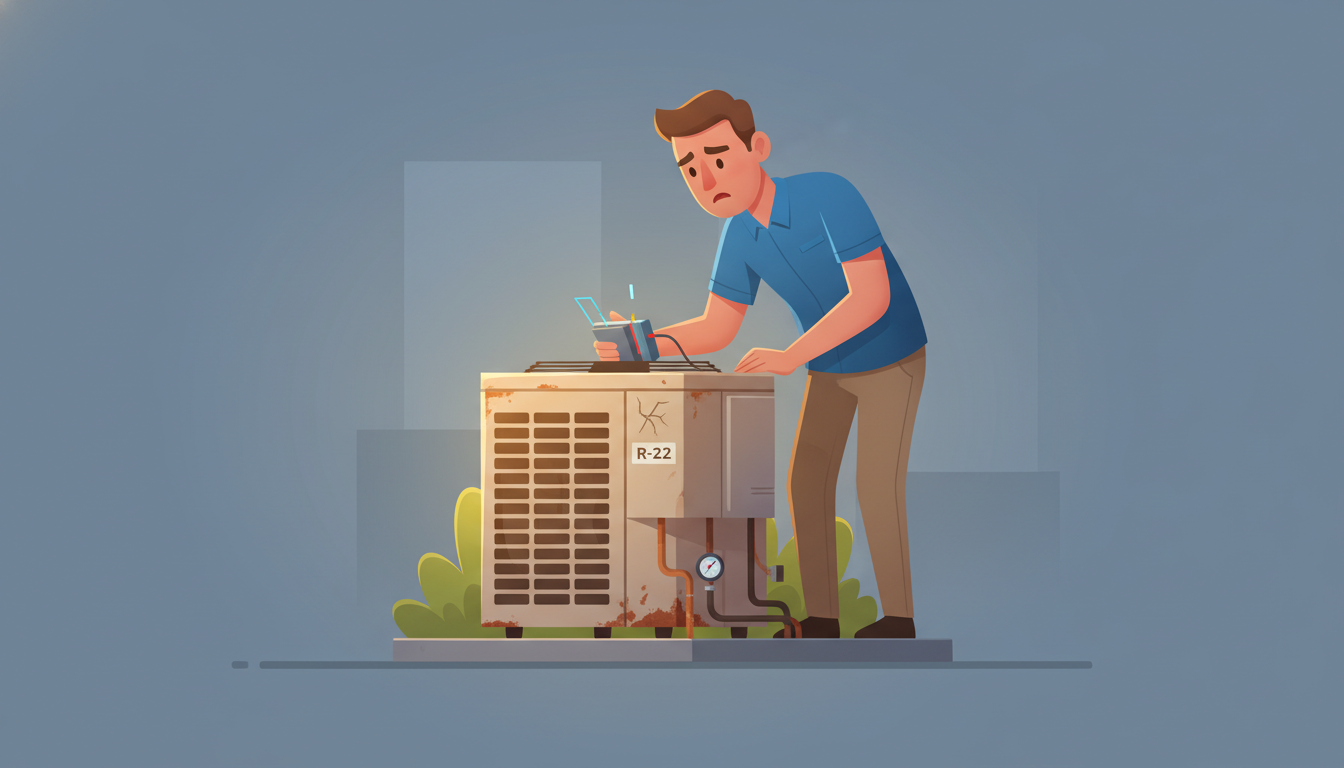
What to Do With a Failing R-22 Air Conditioner: Your Complete Guide
Is your air conditioner struggling to keep your home cool? If you own an older AC unit, you're likely dealing with a failing R-22 air conditioner—and you're not alone. With R22 refrigerant phased out since 2020, thousands of homeowners face this exact dilemma every summer. The good news? You have several practical options to keep your home comfortable without breaking the bank.
Understanding Why Your R-22 Air Conditioner Is Failing
R-22, also called Freon, was the standard refrigerant for air conditioners manufactured before 2010. Due to its harmful effects on the ozone layer, the EPA banned its production and import on January 1, 2020, as part of the Montreal Protocol's environmental protections.
Today, if your R22 AC unit is failing, you're dealing with two problems at once: an aging system and increasingly scarce refrigerant supplies. The combination makes every repair decision more critical than ever.
Signs Your R22 Air Conditioner Is Failing
Before you panic about replacement costs, learn to recognize the warning signs of a failing system:
Cooling Performance Issues:
- Your home takes longer to reach the desired temperature
- Some rooms stay warm while others cool properly
- The system runs constantly without achieving comfort
- Weak airflow from your vents
Operational Warning Signs:
- Strange noises like grinding, squealing, or banging
- Frequent cycling on and off
- The unit won't start consistently
- Ice buildup on the outdoor unit or refrigerant lines
Cost Red Flags:
- Your energy bills have increased significantly
- You're calling for repairs more than once per year
- The system needs refrigerant recharges frequently
If you notice refrigerant leak symptoms, that's often the tipping point where repair costs become prohibitive for R22 systems.
Your Three Main Options for a Failing R-22 Air Conditioner
When your R22 AC unit stops working properly, you have three paths forward. Each comes with distinct advantages, costs, and considerations.
Option 1: Repair Your Existing R22 System
Repairing your current system might seem like the cheapest route, but the numbers tell a different story in 2026.
When Repair Makes Sense:
- Your system is less than 10 years old
- The issue is minor (capacitor, thermostat, fan motor)
- The unit doesn't need additional refrigerant
- Your system has been well-maintained with regular service
When Repair Doesn't Make Sense:
- You need to add R22 refrigerant
- The compressor has failed
- Multiple components need replacement
- Your system is over 15 years old
The Cost Reality: R22 refrigerant that cost $10 per pound in 2010 now runs $80-$150 per pound in 2026—when you can find it. A typical recharge requiring 3-5 pounds means you're paying $400-$750 just for refrigerant, plus labor costs.
For detailed guidance on when repair makes financial sense, consider both immediate costs and how much longer your system will realistically last.
Option 2: Replace Your R-22 Air Conditioner
Replacement represents the most comprehensive solution for a failing R22 air conditioner, though it requires the largest upfront investment.
Why Replacement Often Wins:
Energy Efficiency Gains: Modern air conditioners operate at 14-20 SEER ratings compared to your old R22 system's likely 8-10 SEER. This translates to 40-60% lower cooling costs each summer.
Reliability and Peace of Mind: New systems come with 5-10 year warranties covering parts and often labor. You won't face surprise repair bills during the hottest months.
Environmental Benefits: R410A (Puron), the current standard refrigerant, doesn't harm the ozone layer and delivers better cooling performance.
Long-Term Value: A new system lasts 15-20 years with proper maintenance, versus squeezing a few more years from a failing R22 unit.
Average Replacement Costs (2026):
- Basic system: $3,500-$5,500
- Mid-range system: $5,500-$8,000
- High-efficiency system: $8,000-$12,000
Consider that your energy savings might offset 20-30% of this cost over the system's lifetime.
Option 3: Retrofit Your R22 System
Retrofitting means converting your existing R22 system to run on an alternative refrigerant. It sounds appealing but comes with important limitations.
How Retrofitting Works: An HVAC technician drains the R22, replaces seals and lubricants, then recharges with a compatible alternative like R407C or R421A.
The Honest Truth About Retrofits:
- Costs run $1,500-$3,000 typically
- Performance often decreases by 5-15%
- Not all systems can be successfully converted
- Voids any remaining manufacturer warranty
- May require additional repairs within 2-3 years
When to Consider Retrofitting:
- Your system is 8-12 years old (too young to abandon, too old for expensive repairs)
- The unit is well-maintained with no major component failures
- You need a 2-3 year bridge solution before planned replacement
- Budget constraints make replacement impossible right now
How to Decide: Repair, Replace, or Retrofit?
Making the right choice requires evaluating several factors specific to your situation.
Factor 1: System Age
Under 8 years old: Consider repair if the issue doesn't involve refrigerant. Retrofitting may extend life economically.
8-15 years old: The gray area. Calculate repair costs against remaining system life expectancy. Replacement often wins financially.
Over 15 years old: Replace. Your system has served its purpose, and repairs are throwing money away.
Factor 2: Type and Cost of Failure
Minor repairs (under $500): Usually worth fixing regardless of age.
Major component failures:
- Compressor replacement: Almost always replace the entire system
- Evaporator coil leak: Factor in R22 costs; usually replace
- Condenser fan motor: Repair is reasonable
Refrigerant leaks: If repair costs exceed $1,000 including refrigerant, replacement makes better financial sense.
Factor 3: Energy Bills and Efficiency
Pull your summer energy bills from the past 2-3 years. If they've increased by 20% or more (adjusting for rate changes), your system is losing efficiency.
Calculate potential savings: If you pay $200/month for cooling now, a 50% efficient system saves you $100/month—$400-$600 per cooling season. A new system could pay for itself in 7-10 years through energy savings alone.
Factor 4: Maintenance History
Well-maintained systems last longer and fail less catastrophically. If you've had annual tune-ups, your system might be worth repairing or retrofitting. If maintenance has been neglected, multiple failures are likely coming, making replacement smarter.
Factor 5: Future Plans
Selling within 2-3 years? A new, efficient HVAC system adds resale value and appeal. Staying long-term? Invest in the best system you can afford for maximum comfort and savings.
Where to Find R22 Refrigerant in 2026
If you decide to repair your R22 system, finding refrigerant is challenging but possible.
Reclaimed and Recycled R22: The only legal source is reclaimed refrigerant recovered from decommissioned systems and purified for reuse. Licensed HVAC technicians can source this through specialty suppliers.
What to Expect:
- Prices fluctuate based on scarcity
- Availability isn't guaranteed
- Quality varies between suppliers
- Your technician handles sourcing
Warning: Avoid online "deals" or unlicensed sellers. Counterfeit refrigerant and illegal imports exist in the market and can damage your system or void service warranties.
Preventive Maintenance to Extend Your R22 System's Life
If you're not ready to replace your failing R-22 air conditioner immediately, proper maintenance can buy you time.
DIY Maintenance (Do These Monthly):
- Replace or clean air filters
- Clear debris from around the outdoor unit
- Check that vents aren't blocked by furniture
- Ensure the thermostat functions properly
Professional Maintenance (Do These Annually):
- Complete system inspection
- Coil cleaning
- Refrigerant level check
- Electrical connection tightening
- Lubrication of moving parts
Following our comprehensive HVAC repair guide helps you catch small issues before they become expensive failures.
The Environmental Context: Why R22 Was Phased Out
Understanding the bigger picture helps make sense of your options.
R-22 is a hydrochlorofluorocarbon (HCFC) that depletes the stratospheric ozone layer protecting Earth from harmful ultraviolet radiation. Each pound released into the atmosphere destroys ozone molecules for decades.
The Montreal Protocol, an international environmental treaty, mandated the phase-out of ozone-depleting substances. The United States implemented this through EPA regulations:
- 2010: No new R22 equipment manufactured
- 2015: Production reduced by 90%
- 2020: Complete production and import ban
Today's refrigerants like R410A and R32 don't harm the ozone layer, representing genuine environmental progress.
What Happens If You Do Nothing?
Some homeowners wonder: can I just keep running my R22 system until it dies?
The Risks:
- Complete system failure during peak summer heat
- Limited availability of emergency repair services (fewer techs stock R22)
- Potential for refrigerant leaks causing environmental harm
- Dramatically reduced efficiency wasting money monthly
- Lower home resale value
The Reality: You can technically keep running an R22 system as long as it works and doesn't need refrigerant. But the question isn't "Can I?" but rather "Should I?" The financial and practical risks grow with each passing season.
Cost Comparison: 5-Year Total Ownership
Let's compare what each option really costs over five years:
Repair Option (aging R22 system):
- Initial repair: $1,500
- Energy bills (inefficient): $6,000
- Additional repairs (estimate): $2,000
- Replacement at failure: $6,000
- Total: $15,500
Replace Now Option:
- New system: $6,500
- Energy bills (efficient): $3,600
- Minimal repairs (under warranty): $200
- Total: $10,300
Retrofit Option:
- Retrofit: $2,000
- Energy bills (somewhat efficient): $4,500
- Additional repairs: $1,500
- Eventual replacement: $6,500
- Total: $14,500
These numbers vary by region, usage, and system size, but the pattern holds: replacement usually costs less over time than limping along with an old system.
How to Choose the Right HVAC Contractor
Your contractor choice matters as much as your repair-versus-replace decision.
Questions to Ask:
- Are you licensed and insured?
- Do you offer both repair and replacement? (Avoid companies that only do installations)
- Can you provide detailed cost breakdowns for all options?
- What warranties do you offer on labor?
- Do you have references from recent R22 system customers?
Red Flags:
- Pressure tactics or same-day decision demands
- Refusing to explain pricing details
- No licensing or proof of insurance
- Only offering one solution without discussing alternatives
- Cash-only, no-receipt transactions
Frequently Asked Questions
How long will my R22 air conditioner last without repairs?
It depends on the current condition, but most failing R22 systems last 1-3 more cooling seasons without intervention. Major component failures can happen suddenly, leaving you without cooling during the hottest weather.
Can I replace just the outdoor unit and keep my indoor R22 components?
Mixing old R22 components with new R410A equipment isn't recommended and violates most manufacturer warranties. The systems operate at different pressures and aren't compatible. You'll need a complete system replacement.
Is R410A better than R22?
Yes, for several reasons. R410A operates at higher pressure, providing better heat transfer and more efficient cooling. It doesn't deplete the ozone layer, and it's widely available at stable prices. Modern systems designed for R410A outperform old R22 systems in efficiency, reliability, and environmental impact.
What refrigerant will replace R410A in the future?
R32 and R454B are emerging as the next generation, offering even lower environmental impact. However, R410A systems installed today will have refrigerant support for decades, so this isn't a concern for current buying decisions.
Can I do R22 refrigerant work myself?
No. Federal law requires EPA certification (Section 608) to handle refrigerants. DIY refrigerant work is illegal, dangerous (refrigerants are hazardous), and can damage your system. Always hire a licensed HVAC technician.
Make Your Decision With Confidence
Dealing with a failing R-22 air conditioner feels overwhelming, but you now have the information to make a smart choice.
Choose repair if: Your system is under 10 years old, well-maintained, and needs a minor fix that doesn't involve refrigerant.
Choose replacement if: Your system is over 12 years old, needs refrigerant, has major component failures, or your energy bills have skyrocketed.
Choose retrofitting if: Your system is 8-12 years old, in decent condition, and you need an affordable bridge solution for a few more years.
Take Action Today
Don't wait until your system fails completely during a heat wave when HVAC companies are overwhelmed and emergency service costs triple.
Your Next Steps:
- Get 2-3 quotes from licensed HVAC contractors
- Ask for detailed cost breakdowns of repair, retrofit, and replacement
- Request energy savings calculations for replacement options
- Compare total 5-year ownership costs, not just upfront prices
- Make your decision before the peak cooling season
Remember, every summer you delay with an inefficient, failing R-22 air conditioner, you're spending unnecessary money on energy bills while risking uncomfortable breakdowns.
Your home deserves reliable, efficient cooling. Whether you repair, retrofit, or replace, taking action now puts you back in control of your comfort and budget.
Ready to solve your R22 air conditioner problems? Contact a qualified HVAC professional today for a thorough system evaluation and honest recommendations tailored to your specific situation. Your cooler, more comfortable home is just one decision away.