How Financing Can Change Your HVAC Decision: A Complete Guide
How Financing Can Change Your HVAC Decision: A Complete Guide
When your HVAC system breaks down or starts showing its age, you're faced with a tough choice: repair it, replace it, or just try to make it through another season. For many homeowners, the biggest factor in this HVAC financing decision isn't what makes the most sense for their home—it's what they can afford right now.
But here's something that might surprise you: financing HVAC system purchases has fundamentally changed how homeowners make these decisions. What was once a straightforward "can I afford this?" question has become "what's the best solution for my home?" Let's explore how flexible payment options are reshaping HVAC choices and why this matters for your next heating or cooling decision.
The Traditional HVAC Decision: Limited by Cash on Hand
Traditionally, homeowners faced a simple but frustrating reality: your HVAC decision was determined by your checking account balance, not by what your home actually needed.
If your 15-year-old air conditioner limped through another summer, you might opt for yet another repair—even knowing you're throwing good money after bad. If your furnace gave out in January, you might choose the cheapest replacement option just to get heat back on, regardless of efficiency or long-term costs.
This cash-constrained approach often led to:
- Repeated repairs on systems past their prime
- Choosing the bare minimum equipment to stay within budget
- Delaying replacement until a complete breakdown forced your hand
- Missing out on energy-efficient upgrades that would save money long-term
- Emergency decisions made under pressure without proper research
The problem? None of these choices optimize for your actual needs, comfort, or long-term savings.
How Financing Changes the Conversation
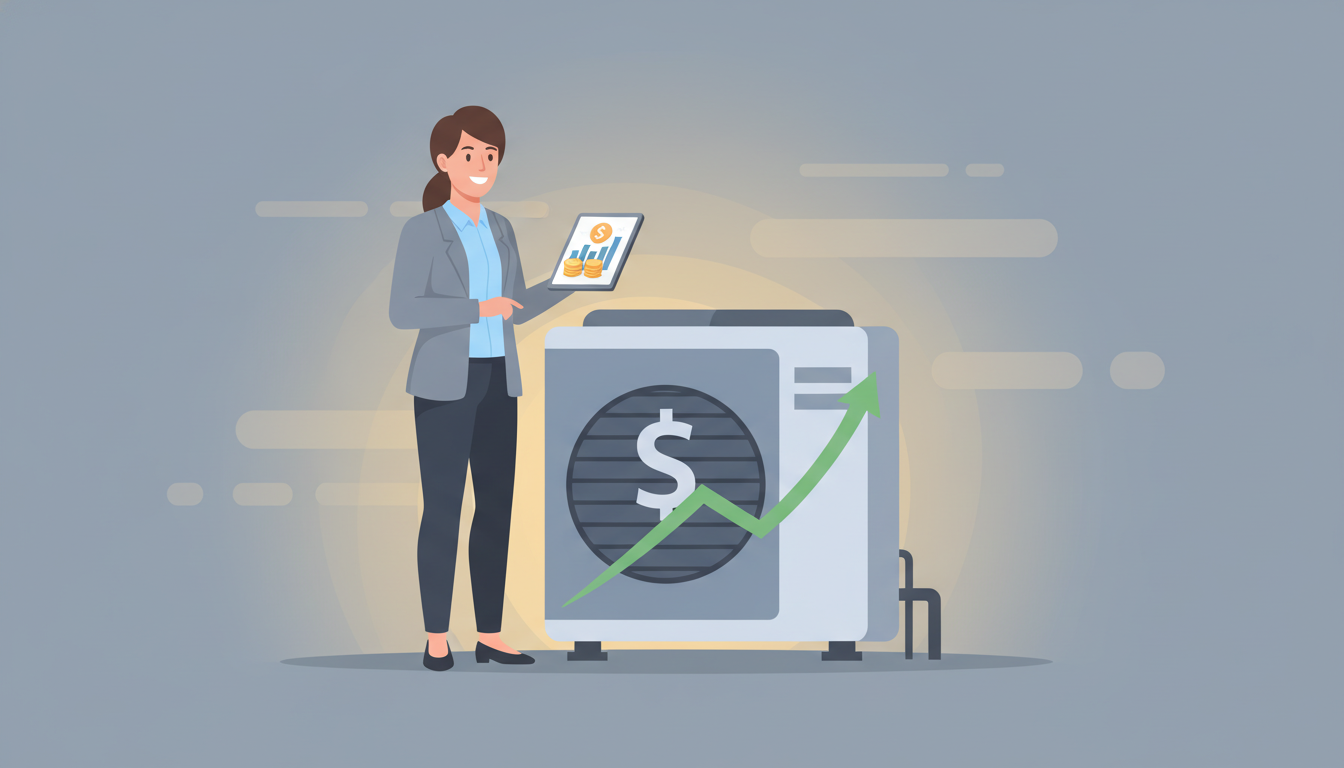
When financing HVAC options enter the picture, the entire decision-making process shifts. Instead of "What can I afford today?" the question becomes "What monthly payment fits my budget while solving my problem properly?"
This seemingly small change has profound effects on how you approach your HVAC needs.
From Price Tag to Monthly Payment
A $7,000 HVAC replacement sounds intimidating. But $150 per month for five years? That's often manageable for most household budgets. This mental shift from sticker shock to manageable monthly payments changes which options you'll seriously consider.
When you're looking at monthly payments instead of total cost, suddenly that high-efficiency system with a better warranty becomes accessible. The difference between the basic model and the premium one might be just $30-40 per month—far more palatable than a $2,000 price difference paid upfront.
Making Better Long-Term Decisions
Financing encourages homeowners to think beyond the immediate crisis. When you're not depleting your emergency fund or putting other financial goals on hold, you can focus on making the smartest long-term choice.
Consider this scenario: Your air conditioner needs a $1,200 repair, but the system is 14 years old. Without financing, you might opt for the repair to preserve cash. With financing available, you can choose a new $5,500 system with better efficiency, a full warranty, and lower utility bills—for a monthly payment that might actually be offset by your energy savings.
This is where understanding HVAC repair vs replacement becomes crucial, especially when financing options change the financial calculus.
Accessing Higher-Efficiency Equipment
Energy-efficient HVAC systems cost more upfront but deliver substantial savings over their lifetime. A high-SEER air conditioner or high-AFUE furnace can reduce your utility bills by 20-40% compared to older models.
Without financing, homeowners often settle for mid-tier efficiency because that's what fits their available cash. With financing, you can afford the premium efficiency equipment, and the monthly energy savings help offset your financing payment.
Real-world example: A homeowner choosing between a 14 SEER system ($4,500) and an 18 SEER system ($6,200) might save $40-60 per month in cooling costs with the higher-efficiency model. If they finance the $1,700 difference at 0% interest over 48 months, that's about $35 per month—essentially paying for itself through energy savings.
Key Ways Financing Transforms HVAC Decisions
Let's break down the specific ways that having financing HVAC options available changes your decision-making process.
1. Emergency Replacements Become Less Stressful
When your heating or cooling system fails completely, you're in crisis mode. If you don't have $5,000-8,000 sitting in your savings account, you're facing difficult choices: drain your emergency fund, put it on a high-interest credit card, or go without climate control.
Financing transforms this emergency into a manageable situation. You can get the system your home needs without devastating your finances. This reduces the panic factor and allows you to make better choices even under time pressure.
2. Repair vs. Replace Calculations Change Dramatically
The financing HVAC repair or replacement decision often comes down to math. Contractors commonly use the "$5,000 rule": multiply the repair cost by the system's age. If the result exceeds $5,000, replacement usually makes more sense.
But without cash on hand, a $1,500 repair on a 13-year-old system might seem like the only option (13 × $1,500 = $19,500, well above the threshold for replacement). When you can finance a new system, suddenly that replacement becomes feasible—and the smarter long-term choice.
For more guidance on this decision, check out our comprehensive HVAC repair guide that walks through when repair makes sense and when it's time to replace.
3. You Can Address Multiple Issues at Once
Many older HVAC systems have multiple problems: inefficient equipment, poor ductwork, inadequate insulation, outdated thermostats. Addressing all these issues at once delivers the best comfort and efficiency, but the combined cost is often prohibitive.
Financing allows you to take a comprehensive approach. Instead of just replacing the furnace, you can also:
- Upgrade your thermostat to a smart model
- Fix problematic ductwork
- Add proper insulation
- Install zone controls
- Upgrade both heating and cooling systems simultaneously
This holistic approach delivers better results and often better value than piecemeal solutions over several years.
4. Seasonal Timing Becomes More Flexible
Without financing, many homeowners wait for a breakdown to replace their HVAC system—often during the peak of summer or winter when systems are under maximum stress. This means:
- Higher contractor demand and potentially higher prices
- Rushed decisions during uncomfortable temperatures
- Limited equipment availability
- Pressure to choose quickly rather than carefully
When you're not constrained by having cash on hand, you can plan your replacement during shoulder seasons (spring or fall) when contractors are less busy, you can take time comparing options, and you're not sweating or freezing while making your decision.
5. Brand and Contractor Choice Opens Up
If you're limited to cash payment, you might be forced to work with whichever contractor offers the lowest price, regardless of reputation, warranty, or quality. You might have to settle for whatever brand they can install within your budget.
With financing, you can prioritize:
- Contractor reputation and customer reviews
- Quality brands with better warranties and reliability
- Proper installation rather than the quickest or cheapest job
- Additional services like extended warranties or maintenance plans
The cheapest option isn't always the best value, but it's often the only option when you're paying cash.
6. Family Decisions Become Easier
Major home expenses often involve discussions (or arguments) between partners or family members. One person might want to "just fix it cheaply," while another sees the value in a complete replacement.
Financing provides middle ground. When the choice isn't between "spend $7,000 now" or "spend $1,000 now," but rather "add $145/month to the budget" or "add $25/month for another repair that might not last," the conversation becomes more productive. It's easier to agree on a monthly payment that fits the household budget than on a large one-time expense.
Understanding Your Financing HVAC Options
Not all financing is created equal. Understanding your options helps you make the best decision for your situation.
Zero-Percent Financing
Many HVAC contractors offer promotional financing through partners, often with 0% APR for 12-24 months or longer for qualified buyers. This is essentially free money if you pay off the balance before the promotional period ends.
Key consideration: These offers often have deferred interest, meaning if you don't pay off the full balance by the end of the promotional period, you owe interest retroactively on the entire original amount. Read the terms carefully and make sure you can pay it off in time.
Standard Contractor Financing
Most established HVAC companies partner with financing companies to offer loans with competitive interest rates. These typically:
- Require a credit check
- Offer terms from 24-84 months
- Have interest rates ranging from 5-20% depending on credit
- May have no down payment requirement
- Often approval decisions within minutes
Home Equity Options
If you own your home and have equity, you might consider:
- Home equity loan: Fixed rate, fixed payment, lump sum
- HELOC (Home Equity Line of Credit): Variable rate, draw as needed
- Cash-out refinance: Wrapped into your mortgage
These options typically offer lower interest rates but use your home as collateral and involve more paperwork and closing costs.
Personal Loans
Unsecured personal loans from banks or online lenders don't require home equity. They typically:
- Have higher interest rates than secured loans
- Offer faster approval and funding
- Provide fixed monthly payments
- Don't put your home at risk
When Financing Makes the Most Sense
While financing HVAC systems opens up possibilities, it's not always the right choice. Here are scenarios where financing delivers the most value:
Your System Is Beyond Economical Repair
If you have an older HVAC system requiring frequent, expensive repairs, financing a replacement saves money in the long run. Learn more about whether repair is worth it for older HVAC systems.
Signs replacement makes sense:
- System is 12-15+ years old
- Repair costs exceed 50% of replacement cost
- Multiple components are failing
- Energy bills are consistently high
- Uneven heating or cooling throughout your home
Energy Savings Will Offset Payments
If your current system is old and inefficient, a new high-efficiency model can reduce your utility bills significantly. In many cases, the energy savings partially or fully offset your monthly financing payment.
Calculate your break-even: Compare your current monthly utility costs to projected costs with a new efficient system. If a new system saves you $75/month and your financing payment is $125/month, your net cost is only $50/month—much more manageable than the full equipment cost upfront.
You Need Climate Control Now
Some situations can't wait. If your heating fails in winter or air conditioning dies during a heat wave, especially if you have young children, elderly family members, or health conditions, you need a solution immediately. Financing makes this possible without financial devastation.
Your Emergency Fund Needs Protection
Your emergency savings exist for true emergencies—job loss, medical issues, unexpected home repairs. Depleting it for an HVAC replacement leaves you vulnerable. Financing preserves your financial safety net while solving your HVAC problem.
The ROI Is Clear
If you're planning to stay in your home for several years, investing in quality HVAC equipment pays dividends through:
- Lower utility bills every month
- Increased home comfort and air quality
- Higher home resale value
- Fewer repair calls and headaches
- Better warranty coverage
When the long-term value clearly exceeds the cost of financing, it's a smart decision.
Potential Pitfalls to Avoid
While financing can be beneficial, watch out for these common mistakes:
Focusing Only on Monthly Payment
Just because you can afford the monthly payment doesn't mean it's the best financial decision. Always calculate the total amount you'll pay over the life of the loan, including interest. A low monthly payment over 10 years might cost significantly more than a moderate payment over 5 years.
Ignoring the Interest Rate
High interest rates can make financing expensive. If you're quoted a rate above 12-15%, consider other options or work on improving your credit score before committing.
Overbuying
Don't let easy financing tempt you into equipment that's more than you need. A basic contractor will help you right-size your system based on your home's actual requirements, not based on what monthly payment you can technically afford.
Missing the Fine Print
Understand all terms before signing:
- When do payments start?
- What triggers deferred interest?
- Are there prepayment penalties?
- What happens if you miss a payment?
- Is there a balloon payment at the end?
Not Shopping Around
Just as you'd compare HVAC contractors, compare financing offers. Your contractor's financing partner might not offer the best terms. Check with your bank or credit union for alternatives.
Frequently Asked Questions
Should I pay cash or finance my HVAC system?
It depends on your financial situation. Pay cash if you have the funds available without depleting your emergency savings and the cash isn't needed for higher-priority investments. Finance if preserving liquidity is important, if you can access 0% or low-interest financing, or if energy savings will offset payments.
Can I get HVAC financing with bad credit?
Yes, many contractors work with financing partners offering second-look or alternative financing programs for customers with lower credit scores. Interest rates will be higher, but approval is possible. Some contractors also offer in-house financing with more flexible requirements.
How does HVAC financing work?
You apply through your contractor or their financing partner during the estimate process. If approved, the financing company pays the contractor directly, and you make monthly payments to the lender according to your loan terms. Most applications are simple and provide decisions within minutes.
What credit score do I need for HVAC financing?
Requirements vary by lender, but generally:
- 700+: Best rates and terms, including 0% promotional offers
- 640-699: Good approval odds with competitive rates
- 600-639: Approval possible but with higher interest rates
- Below 600: May need alternative financing or in-house programs
Does financing HVAC affect my credit score?
Applying for financing involves a hard credit inquiry, which may temporarily lower your score by a few points. However, if you make on-time payments, financing can actually improve your credit by adding positive payment history and improving your credit mix.
Can I pay off HVAC financing early?
Most HVAC financing agreements allow early payoff without penalties. In fact, with 0% promotional financing, paying it off before the promotional period ends is the smartest strategy to avoid deferred interest charges. Always verify prepayment terms before signing.
Making Your HVAC Financing Decision
Financing has genuinely transformed HVAC decisions for the better. It shifts the focus from "What can I scrape together right now?" to "What solution best serves my home, my comfort, and my budget over time?"
The key takeaways:
- Financing enables better decisions by removing cash constraints from the equation
- Monthly payments are more manageable than large upfront costs for most households
- Energy-efficient equipment becomes accessible, potentially paying for itself through utility savings
- Emergency replacements don't have to be financial disasters
- You can prioritize quality, reputation, and proper installation rather than just lowest price
- Compare all your options and read the fine print before committing
When your HVAC system needs attention, don't let your bank account balance be the only factor driving your decision. Explore your financing options, calculate the long-term costs and benefits, and choose the solution that makes the most sense for your home and your financial situation.
Remember, your HVAC system affects your daily comfort, your energy bills, and your home's value. With the right financing approach, you can make decisions that serve your best interests rather than just getting by with what cash allows.
Ready to explore your options? Talk to a qualified HVAC contractor about both equipment choices and financing possibilities. The right combination might be more affordable than you think.