
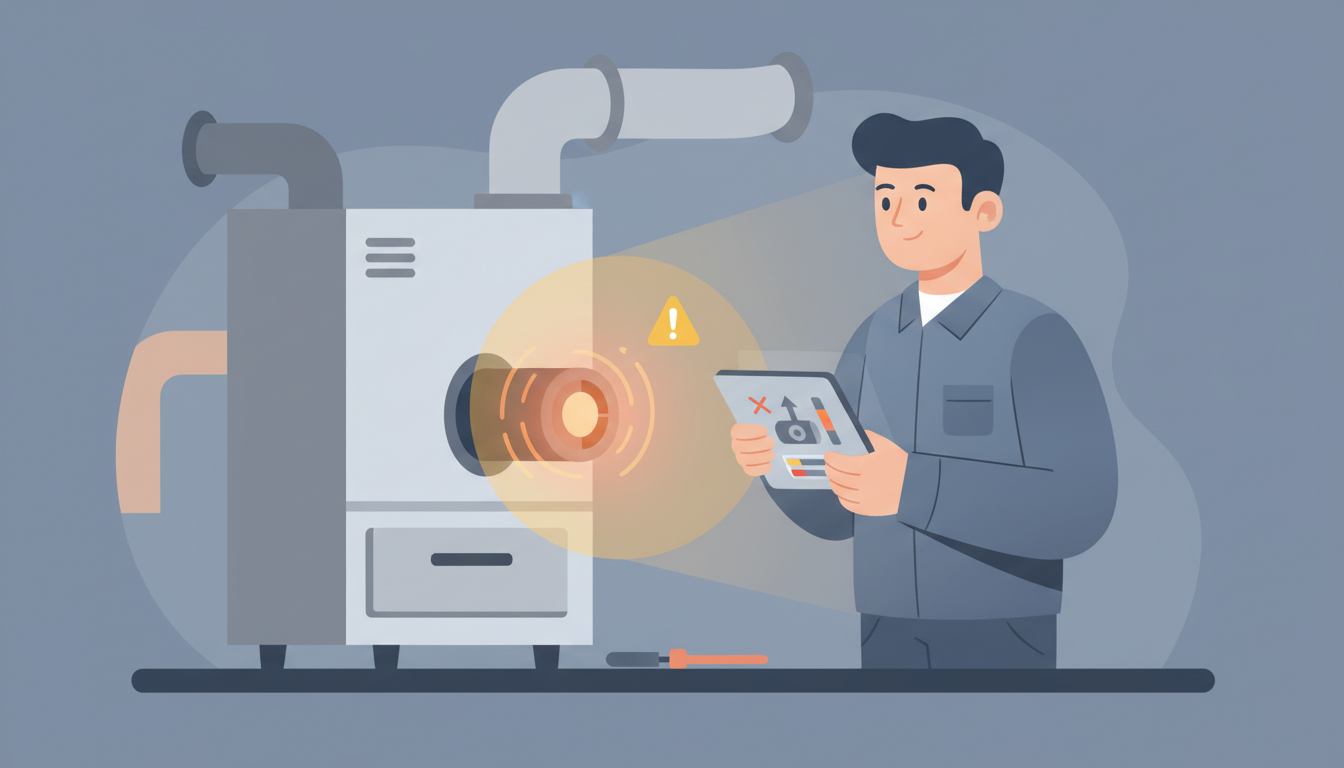
What Happens When a Furnace Inducer Motor Fails? (Warning Signs & Solutions)
What Happens When a Furnace Inducer Motor Fails? (Warning Signs & Solutions)
When your furnace inducer motor fails, your heating system stops working completely. The inducer motor is essential for removing dangerous combustion gases and creating the proper draft for ignition. Without it, your furnace won't start, and you'll be left in the cold.
If you're hearing strange noises from your furnace or it's shutting down unexpectedly, a failing inducer motor could be the culprit. In this guide, we'll walk you through exactly what happens when this critical component fails, how to recognize the warning signs, and what you need to do to get your heat back on.
What Is a Furnace Inducer Motor and Why Does It Matter?
The furnace inducer motor (also called a draft inducer motor) is a small fan located inside your furnace that starts running before your burners ignite. Its job is to pull air through the combustion chamber and push exhaust gases safely out through your flue pipe.
Think of it as your furnace's ventilation system. Before your furnace can safely light the burners, it needs to clear out any leftover gases from the previous heating cycle and establish proper airflow. The inducer motor makes this happen.
Here's why it's so important:
- Safety first: It removes carbon monoxide and other dangerous combustion gases
- Proper ignition: Creates the negative pressure needed for burners to light safely
- Efficiency: Ensures complete combustion and optimal furnace performance
- Required by code: Modern furnaces (manufactured after 1992) must have inducer motors for safety compliance
Without a working inducer motor, your furnace simply cannot operate. It's not like a thermostat you can bypass—this component is fundamental to safe heating.
What Happens When a Furnace Inducer Motor Fails?
When your furnace inducer motor fails, a cascade of problems occurs that ultimately shuts down your entire heating system. Here's the sequence of events:
Your Furnace Won't Start
The most immediate effect is that your furnace refuses to fire up. Here's what happens during a failed start attempt:
- Your thermostat calls for heat
- The inducer motor tries to start but fails (or doesn't start at all)
- The pressure switch never closes because there's no draft
- The ignition sequence halts before the burners light
- Your furnace sits idle, and your home stays cold
You might hear repeated clicking sounds as your furnace attempts to start over and over. After several failed attempts, most modern furnaces enter safety lockout mode and won't try again until you reset them.
Combustion Gases Get Trapped
One of the inducer motor's primary jobs is clearing leftover exhaust gases from the heat exchanger after each heating cycle. When it fails, those gases remain trapped inside the combustion chamber.
This creates a dangerous situation:
- Carbon monoxide and other toxic gases can't escape
- The furnace can't safely ignite with contaminated air
- Your safety controls prevent ignition (as they should)
- Attempting to override safety controls is extremely dangerous
This is why your furnace has a pressure switch—a safety device that won't allow ignition unless proper draft is established. If you're experiencing issues with your furnace draft motor running but nothing else, the pressure switch might be the issue.
The Pressure Switch Stays Open
The pressure switch is directly connected to the inducer motor's function. When the inducer creates proper airflow, the pressure difference closes the switch, signaling that it's safe to proceed with ignition.
With a failed inducer motor:
- No draft is created
- The pressure switch remains open
- The control board receives no "all clear" signal
- Ignition is blocked as a safety precaution
Your furnace control board is smart enough to know something's wrong, even if you don't see the problem yourself.
Your System Enters Lockout Mode
After multiple failed ignition attempts, your furnace's safety controls kick in. Most modern furnaces will try to start three to five times before giving up.
When lockout mode engages:
- The furnace completely shuts down
- No more start attempts occur
- You'll need to manually reset the system (usually by turning it off for 30 seconds)
- The problem will repeat unless the inducer motor is fixed or replaced
Some furnaces flash diagnostic codes on their control boards when in lockout. These codes can help a technician identify the specific problem, though a failed inducer motor usually has obvious symptoms.
Warning Signs Your Inducer Motor Is Failing
Most inducer motors don't fail suddenly—they give you warning signs. Catching these early can save you from a complete breakdown during the coldest night of winter.
Unusual Noises from Your Furnace
Strange sounds are often the first clue that your inducer motor is struggling. Listen for:
Tapping or knocking sounds: This usually means the squirrel cage fan inside the inducer is hitting something or has become unbalanced. It's one of the most common warning signs.
Loud humming or buzzing: The motor is running but struggling. This often indicates bearing wear or electrical problems within the motor.
Rattling or vibrating: Loose components or a failing motor mount. The vibration can worsen over time and damage other furnace parts.
Grinding or scraping: Metal-on-metal contact, usually from worn bearings. This is a late-stage symptom—the motor will fail soon.
If you notice any of these sounds, schedule a furnace repair appointment right away. Catching problems early often means a less expensive repair.
Furnace Starts Then Shuts Down Quickly
Does your furnace fire up for a few seconds, then turn itself off? This is called "short cycling," and a failing inducer motor is a common cause.
Here's what's happening:
- The inducer motor struggles to start or maintain speed
- It briefly creates enough draft to close the pressure switch
- The burners ignite
- The motor slows down or stops entirely
- The pressure switch opens again
- The safety controls shut everything down
This cycle can repeat several times before the furnace gives up completely.
Delayed Furnace Startup
If your furnace takes longer than usual to start after you adjust the thermostat, the inducer motor might be on its way out.
A healthy furnace should start within 30-60 seconds of receiving a heat call. If you're waiting several minutes or hearing the inducer motor struggling to get up to speed, that's a red flag.
Furnace Won't Start at All
The final stage is complete failure. When your inducer motor is completely dead:
- You hear the thermostat click but nothing happens
- No sounds come from the furnace
- The burners never light
- Your home gets progressively colder
At this point, you need immediate professional help. For comprehensive troubleshooting tips, check out our complete HVAC repair guide.
What Causes Furnace Inducer Motors to Fail?
Understanding why inducer motors fail can help you prevent problems and extend your furnace's lifespan.
Age and Normal Wear
Like any mechanical component with moving parts, inducer motors wear out over time. The typical lifespan is:
- Average lifespan: 10-15 years with regular maintenance
- High-use environments: 8-12 years in regions with long winters
- Well-maintained systems: Can last 15-20 years with annual service
The motor bearings experience constant friction, and eventually, they deteriorate beyond the point where the motor can function efficiently.
Lack of Maintenance
Skipping annual furnace maintenance accelerates inducer motor failure. Here's how:
- Dust and debris build up on the motor and fan blades
- The motor has to work harder to move the same amount of air
- Overworking causes overheating
- Heat damages motor windings and bearings
- Premature failure occurs
A dirty furnace filter forces your inducer motor to work overtime. When airflow is restricted, the motor struggles against higher resistance.
Electrical Issues
Power surges, voltage fluctuations, and capacitor failures can damage inducer motors:
Capacitor failure: The capacitor gives the motor the electrical boost it needs to start. When it fails, the motor can't get up to speed and may overheat trying.
Voltage problems: Too much or too little voltage damages motor windings over time.
Control board issues: If your furnace control board sends incorrect signals, the motor might cycle on and off too frequently, shortening its life.
Debris and Obstructions
Foreign objects in the inducer housing can cause catastrophic failure:
- Rust flakes from aging heat exchangers
- Nesting materials from rodents or insects
- Parts that have broken off from other furnace components
- Excessive dust buildup forming a solid mass
When debris gets into the squirrel cage fan, it throws off the balance and damages the motor bearings.
Manufacturing Defects
While less common, some inducer motors have design or manufacturing flaws. Certain furnace models are known for premature inducer motor failures. If your motor fails within the first few years, check if it's still under warranty.
How Much Does It Cost to Replace a Furnace Inducer Motor?
Inducer motor replacement costs vary based on several factors, but here's what you can expect:
Professional Replacement Costs
Total replacement cost: $300 to $800 for most residential furnaces
This includes:
- The inducer motor assembly ($150-$500 depending on brand and model)
- Labor for diagnosis and installation ($150-$300)
- Any necessary gaskets or seals
High-end furnaces: Can cost $800-$1,200 for premium or hard-to-find motors
Emergency service: Add $100-$300 if you need repair outside business hours
Related Repair Costs
Sometimes the inducer motor isn't the only problem:
- Pressure switch replacement: $150-$300
- Capacitor replacement: $100-$250
- Control board repair: $500-$900
- Complete furnace replacement: $2,500-$7,500 (if multiple major components have failed)
Factors Affecting Cost
Your final bill depends on:
- Furnace brand: Some manufacturers use proprietary parts that cost more
- Your location: Labor rates vary significantly by region
- Accessibility: Harder-to-reach motors take longer to replace
- Furnace age: Older models may require discontinued parts
- Warranty coverage: Some repairs might be partially or fully covered
Can You Run a Furnace Without an Inducer Motor?
No, you absolutely cannot run a modern furnace without a working inducer motor. It's not optional—it's a required safety component.
Here's why attempting to bypass or disable it is dangerous:
- Carbon monoxide poisoning risk: Without proper venting, deadly gases can backdraft into your home
- Fire hazard: Improper combustion can ignite surrounding materials
- Code violations: Bypassing safety controls violates building and fire codes
- Voided warranties: Any damage caused by disabling safety features isn't covered
If your inducer motor fails, your only safe options are repair or replacement. Never attempt to override the pressure switch or other safety controls to "force" your furnace to run.
DIY Troubleshooting vs. When to Call a Professional
Some inducer motor problems you can check yourself, while others require professional expertise.
Safe DIY Checks
You can safely perform these basic diagnostics:
Visual inspection: With the power off, look for obvious damage, debris, or loose wires.
Listen for sounds: Note any unusual noises and when they occur during the start sequence.
Check the power: Make sure your furnace is receiving electricity and the circuit breaker hasn't tripped.
Replace the air filter: A clogged filter can cause symptoms that mimic inducer motor failure.
Try a reset: Turn off your furnace for 30 seconds, then turn it back on to clear lockout mode.
When to Call a Professional HVAC Technician
Contact a professional if:
- The inducer motor won't start at all
- You smell gas around your furnace
- You hear grinding or metal-on-metal sounds
- Your carbon monoxide detector goes off
- The furnace repeatedly enters lockout mode
- You're uncomfortable working around gas appliances
HVAC technicians have the tools and training to safely diagnose and repair inducer motor problems, including:
- Multimeters to test electrical components
- Manometers to measure pressure switch operation
- Proper replacement parts for your specific furnace model
- Knowledge of manufacturer-specific quirks and common issues
How to Prevent Inducer Motor Failure
While you can't prevent normal wear and tear, you can extend your inducer motor's lifespan with proper maintenance.
Annual Professional Maintenance
Schedule a professional furnace tune-up every fall before heating season begins. During this service, technicians will:
- Clean the inducer motor and blower assembly
- Lubricate motor bearings (if applicable to your model)
- Test capacitors and electrical connections
- Check pressure switch operation
- Inspect for debris or obstructions
- Verify proper airflow and draft
This annual maintenance typically costs $80-$150 and can prevent expensive emergency repairs.
Change Your Filters Regularly
This is the single most important thing you can do:
- Standard 1-inch filters: Replace every 1-3 months
- Thicker pleated filters: Replace every 3-6 months
- High-efficiency filters: Follow manufacturer recommendations
- Homes with pets: More frequent changes are necessary
Set a phone reminder so you don't forget.
Keep Your Furnace Area Clean
- Remove stored items from around your furnace
- Sweep or vacuum the furnace room regularly
- Keep the furnace access panel properly secured
- Seal any openings where rodents could enter
Address Problems Promptly
Don't ignore warning signs. That weird noise or occasional shutdown will only get worse. Early intervention often means a simple repair instead of a major component replacement.
Frequently Asked Questions
What does a furnace inducer motor do?
The inducer motor is a small fan that creates a draft through your furnace's combustion chamber. It removes dangerous exhaust gases from the previous heating cycle and establishes the proper airflow for safe ignition. Think of it as your furnace's ventilation system—it pulls air in, supports combustion, and pushes exhaust gases out through the flue.
How long does a furnace inducer motor last?
Most inducer motors last 10-15 years with proper maintenance. Furnaces in colder climates that run more frequently may see slightly shorter lifespans (8-12 years), while well-maintained systems in moderate climates can last 15-20 years. Regular annual tune-ups and frequent filter changes significantly extend motor life.
Can I replace a furnace inducer motor myself?
While technically possible for experienced DIYers, replacing an inducer motor yourself isn't recommended unless you have HVAC experience. The job involves working with gas connections, electrical components, and critical safety devices. Improper installation can create carbon monoxide hazards or cause other furnace damage. Most homeowners should hire a licensed HVAC technician for this repair.
What causes inducer motor failure?
The most common causes are age-related bearing wear, lack of maintenance, electrical issues (especially capacitor failure), debris buildup, and excessive dust from dirty filters. Power surges and manufacturing defects also contribute to failures. Regular maintenance and prompt filter changes prevent most premature failures.
Is a bad inducer motor dangerous?
A completely failed inducer motor isn't directly dangerous because your furnace's safety controls will prevent it from operating. However, a partially failing motor could potentially allow incomplete combustion or improper venting, which creates carbon monoxide risks. If you suspect inducer motor problems, have your furnace inspected immediately and install carbon monoxide detectors throughout your home.
Why is my inducer motor making noise?
Noises indicate different problems: tapping or knocking suggests an unbalanced squirrel cage fan, humming points to bearing wear or electrical issues, rattling means loose components, and grinding indicates severe bearing damage. Any unusual noise warrants professional inspection, as it signals impending failure.
How much does it cost to replace an inducer motor?
Professional inducer motor replacement typically costs $300-$800, including parts and labor. High-efficiency furnaces or hard-to-find motors can cost $800-$1,200. Emergency service adds $100-$300. The motor itself costs $150-$500, with labor adding $150-$300. Get quotes from multiple HVAC companies for the best price.
Don't Let a Failed Inducer Motor Leave You in the Cold
Your furnace inducer motor is one of those critical components you never think about—until it stops working. When it fails, your entire heating system shuts down, leaving you without heat until it's repaired or replaced.
The good news? Most inducer motor failures give you advance warning through unusual noises, delayed starts, or short cycling. Pay attention to these signs, and you can schedule a repair before you're facing an emergency.
Remember these key takeaways:
- Never attempt to bypass safety controls or run your furnace without a working inducer motor
- Schedule annual maintenance to catch problems early
- Replace your furnace filter regularly—it's the easiest way to extend your inducer motor's life
- Call a professional at the first sign of trouble rather than waiting for complete failure
If your furnace is showing any of the warning signs we've covered, don't wait. Contact a qualified HVAC technician to diagnose and repair the problem before you're left without heat on the coldest night of the year.
Need help with your furnace right now? A failed inducer motor requires professional repair. Don't let a broken furnace put your family's comfort and safety at risk—schedule an inspection with a licensed HVAC technician today.