
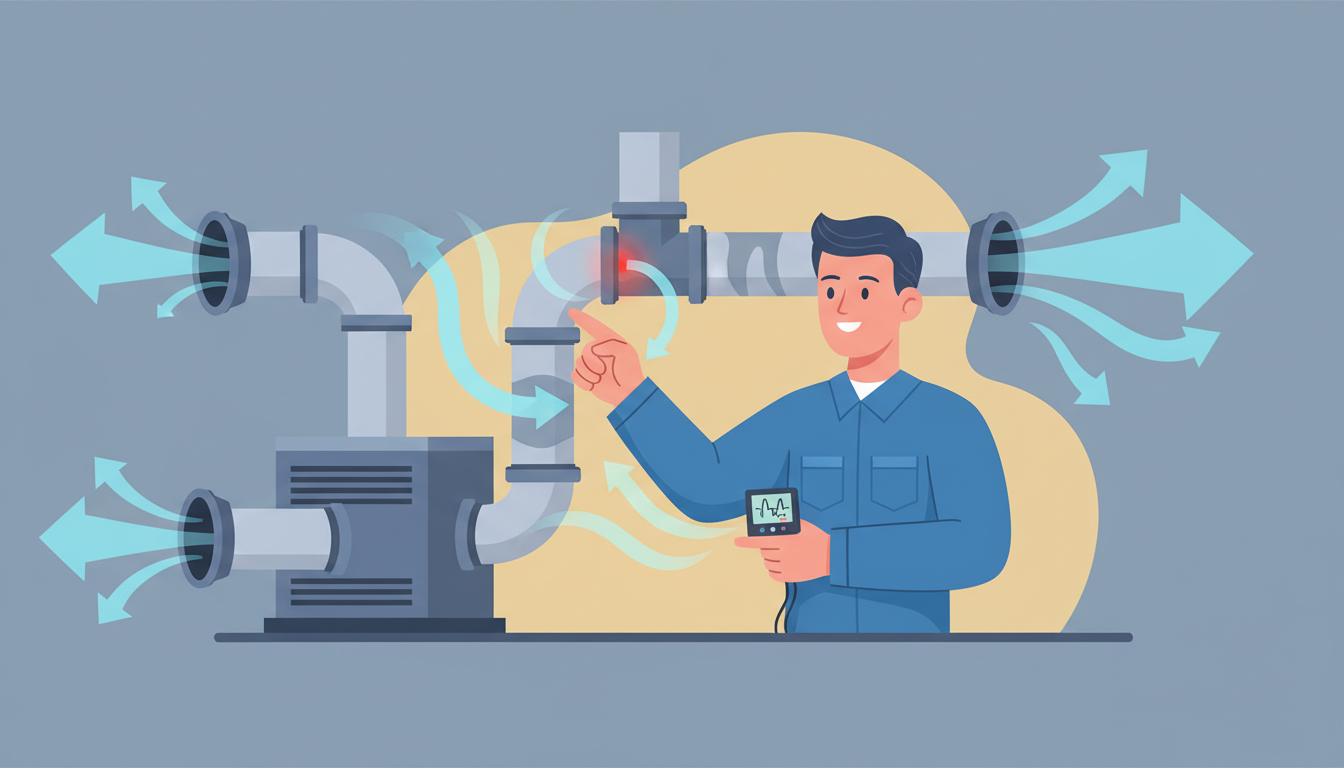
What Happens When Supply and Return Air Are Out of Balance?
What Happens When Supply and Return Air Are Out of Balance?
Is your home constantly struggling with hot and cold spots? Does one room feel like a sauna while another is freezing? The culprit might be something you've never even thought about: unbalanced supply and return air in your HVAC system.
When your heating and cooling system's airflow isn't properly balanced, it creates a domino effect of problems that go far beyond comfort issues. From skyrocketing energy bills to serious equipment damage, an unbalanced HVAC system can wreak havoc on your home and your wallet.
In this guide, we'll break down exactly what happens when supply and return air are out of balance, the warning signs to watch for, and what you can do about it.
What Are Supply and Return Air?
Before we dive into the problems, let's clarify what we're talking about.
Supply air is the conditioned air (heated or cooled) that your HVAC system pushes into your home through the supply vents. These are typically located on ceilings, walls, or floors throughout your house.
Return air is the air that gets pulled back into your HVAC system through return vents to be reconditioned. Return vents are usually larger and located centrally in hallways or common areas.
Your HVAC system works like a closed loop. Air circulates out through supply vents, around your home, and back through return vents. For your system to work efficiently, the amount of air going out must roughly equal the amount coming back in.
When this balance gets disrupted, problems start piling up fast.
The Critical Consequences of Air Imbalance
1. Extreme Temperature Inconsistencies
The most obvious sign of unbalanced supply and return air is dramatic temperature differences between rooms.
When your system can't maintain proper airflow, some rooms get flooded with conditioned air while others barely receive any. You might crank up the AC, but your bedroom stays hot while your living room turns into an icebox.
This happens because insufficient return air creates pressure imbalances that prevent proper air circulation. Your supply vents are pushing air into spaces, but without adequate return paths, that air has nowhere to go efficiently.
2. Negative or Positive Pressure Problems
An unbalanced HVAC system creates unhealthy pressure conditions in your home.
Negative pressure occurs when you have too much return air and not enough supply air. Your home essentially becomes a giant vacuum, sucking in air from every crack, gap, and opening. This pulls in unconditioned outdoor air, dust, pollen, humidity, and even exhaust fumes from your garage or outside.
Positive pressure happens when supply air exceeds return capacity. Air gets forced out through gaps and cracks, wasting your conditioned air and energy dollars.
Both scenarios make your HVAC system work harder to maintain temperature, driving up energy costs and reducing indoor air quality.
3. Reduced Indoor Air Quality
When supply and return air are out of balance, your home's air quality takes a serious hit.
Negative pressure pulls in unfiltered air from outside, bypassing your HVAC filter entirely. This means more dust, allergens, mold spores, and outdoor pollutants circulating through your living space.
Additionally, poor airflow reduces your system's ability to properly filter and circulate air, allowing contaminants to settle and accumulate in less ventilated areas of your home.
If you've noticed more dust buildup, increased allergy symptoms, or stale-smelling air, an unbalanced system could be the root cause.
4. Equipment Strain and Premature Failure
Here's where things get expensive. An unbalanced HVAC system puts tremendous strain on your equipment.
Insufficient return air is particularly damaging. When your system can't pull enough air back through the return vents, several things happen:
- The blower motor works harder and runs hotter, shortening its lifespan
- Reduced airflow over the evaporator coil causes it to freeze
- Your compressor cycles on and off more frequently, leading to premature wear
- The entire system overheats and triggers safety shutoffs
This constant strain can cut your HVAC system's lifespan by years and lead to costly repairs or complete system replacement.
5. Frozen Evaporator Coils
One of the most common consequences of insufficient return air is a frozen evaporator coil.
Your evaporator coil needs consistent airflow to absorb heat from the air passing over it. When return air is inadequate, there's not enough warm air flowing over the coil. The refrigerant inside gets too cold, causing moisture in the air to freeze on the coil's surface.
A frozen coil can't cool your home effectively. You'll notice reduced cooling performance, ice buildup on refrigerant lines, and water leaking from your air handler when the ice melts.
If left unaddressed, a frozen coil can damage your compressor—one of the most expensive components to replace.
6. Skyrocketing Energy Bills
An unbalanced HVAC system is an energy vampire.
When airflow is imbalanced, your system runs longer cycles trying to reach the thermostat setting. It might run continuously without ever satisfying the temperature demand because the conditioned air isn't circulating properly.
Studies show that HVAC airflow problems can increase energy consumption by 15-30%. For the average household, that translates to hundreds of dollars in wasted energy every year.
You're literally paying to cool or heat air that never reaches its destination or escapes through pressure leaks.
7. Excessive Noise and Vibration
Unbalanced airflow creates unusual sounds throughout your ductwork and HVAC equipment.
You might hear:
- Whistling or rushing air sounds from vents
- Rumbling or vibrating noises from ductwork
- Louder-than-normal blower motor operation
- Rattling from loose duct connections
These noises indicate turbulent airflow and pressure differentials that shouldn't exist in a properly balanced system. Beyond being annoying, they signal underlying problems that need attention.
8. Humidity Control Issues
Your HVAC system does more than control temperature—it also manages humidity levels.
When supply and return air are out of balance, humidity control suffers dramatically. Insufficient airflow prevents your system from adequately removing moisture from the air during cooling cycles.
The result? Sticky, uncomfortable indoor air even when the temperature seems right. Excess humidity also promotes mold growth, damages wood furniture and flooring, and creates the perfect environment for dust mites.
In heating season, an unbalanced system might create excessively dry air in some rooms while others maintain comfortable humidity levels.
Common Causes of Supply and Return Air Imbalance
Understanding what creates imbalance helps you prevent it. Here are the most common culprits:
Insufficient Return Vents
Many homes, especially older ones, simply don't have enough return vents installed. Builders often cut corners by installing minimal return vents, creating permanent airflow restrictions.
A good rule of thumb: every room receiving supply air should have either its own return vent or an adequate pathway for air to reach a central return.
Blocked or Closed Vents
It's tempting to close vents in unused rooms to "save energy," but this actually makes things worse. Closing supply vents without reducing return air creates pressure imbalances and forces your HVAC system to work harder.
Similarly, return vents blocked by furniture, drapes, or storage items can't do their job, starving your system of the air it needs.
Undersized or Damaged Ductwork
Ductwork that's too small, crushed, disconnected, or leaking disrupts the delicate balance between supply and return air.
Even small duct leaks can waste 20-40% of your conditioned air before it reaches your living spaces. Weak airflow from vents is often a telltale sign of ductwork problems.
Dirty Air Filters
A clogged air filter is one of the simplest yet most destructive causes of air imbalance. When your filter gets packed with dust and debris, it severely restricts return airflow.
Your HVAC system suffocates, unable to pull enough air through the choked filter. This creates all the problems we've discussed: frozen coils, temperature inconsistencies, and equipment strain.
Improperly Sized HVAC Equipment
If your HVAC system is too large or too small for your home, it will never achieve proper balance no matter what you do.
Oversized systems cycle on and off too quickly, never running long enough to circulate air effectively. Undersized systems run constantly, never satisfying demand.
Professional load calculations are essential when installing or replacing HVAC equipment.
How to Tell If Your System Is Out of Balance
Watch for these warning signs that indicate supply and return air imbalance:
- Uneven temperatures between rooms (more than 3-5 degrees difference)
- Weak airflow from some supply vents while others blast air
- Doors that slam shut or are difficult to open (pressure differential)
- Whistling sounds around doors and windows
- Excessive dust accumulation despite regular cleaning
- Frequent system cycling on and off
- Rising energy bills without explanation
- Allergy or respiratory symptoms that worsen indoors
- Ice buildup on refrigerant lines or the outdoor unit
- Stuffy or stale air in certain rooms
If you're experiencing multiple symptoms from this list, there's a good chance your system is out of balance. For more guidance on identifying issues, check out our guide on signs your HVAC system has adequate return air.
What You Can Do About It
DIY Solutions
Some balance issues you can address yourself:
Change your air filter regularly. This is the single most important maintenance task. Replace filters every 1-3 months depending on usage and filter type.
Check all vents and registers. Make sure nothing is blocking return or supply vents. Remove furniture, curtains, or storage items that obstruct airflow.
Open all supply vents. Resist the urge to close vents in unused rooms. Your HVAC system is designed to handle the full volume of all vents open.
Inspect visible ductwork. Look for obvious disconnections, damage, or crushing in accessible areas like basements, attics, and crawl spaces.
Test door closure. Close interior doors and note if any slam shut or become difficult to open—this indicates pressure imbalance.
When to Call a Professional
Some balance issues require professional intervention:
Insufficient return vents. Adding return vents involves cutting into walls and ductwork—definitely a job for an HVAC professional.
Duct modifications. Sealing leaks, replacing sections, or redesigning ductwork requires specialized tools and expertise.
Static pressure testing. Professionals use manometers to measure pressure at various points in your system, pinpointing exactly where imbalances occur.
Balancing dampers. Your ductwork contains adjustable dampers that control airflow to different zones. Professional technicians know how to fine-tune these for optimal balance.
System replacement. If your HVAC equipment is improperly sized, no amount of balancing will fix the problem. You'll need a professional load calculation and system replacement.
A qualified HVAC technician can perform a comprehensive air balancing service, measuring CFM (cubic feet per minute) at every vent, testing static pressure throughout the system, and making precise adjustments to achieve optimal performance.
For complex issues, consider scheduling a professional HVAC repair service to thoroughly diagnose and correct the problem.
The Bottom Line: Balance Matters
When supply and return air are out of balance, your HVAC system can't do its job effectively. You end up with uncomfortable temperatures, poor air quality, expensive energy bills, and premature equipment failure.
The good news? Most balance issues are fixable. Whether through simple DIY maintenance or professional HVAC services, restoring proper airflow balance will transform your home's comfort and efficiency.
Don't ignore the warning signs. Temperature inconsistencies, weak airflow, and rising energy costs are your system's way of telling you something's wrong. Address air balance issues promptly to protect your investment and keep your home comfortable year-round.
Frequently Asked Questions
How much does it cost to balance an HVAC system?
Professional air balancing typically costs $150-$500 depending on your system's complexity and the extent of adjustments needed. This is a worthwhile investment that pays for itself through improved efficiency and prevented repairs.
Can I balance my HVAC system myself?
You can handle basic tasks like changing filters, clearing vent obstructions, and ensuring all vents stay open. However, precise balancing using dampers and airflow measurements requires professional equipment and expertise.
How often should HVAC systems be balanced?
Most systems need professional balancing every 3-5 years or whenever you notice performance issues. Systems in harsh climates or older homes may benefit from more frequent balancing.
What's the ideal ratio of supply to return air?
Generally, return air should be about 90-95% of supply air volume. The slight difference accounts for intentional ventilation and pressurization. A professional can measure your specific system's requirements.
Will adding more return vents fix my problem?
Often yes, especially in homes with insufficient returns. However, this should be done by a professional who can calculate proper sizing and placement to avoid over-correcting the problem.