
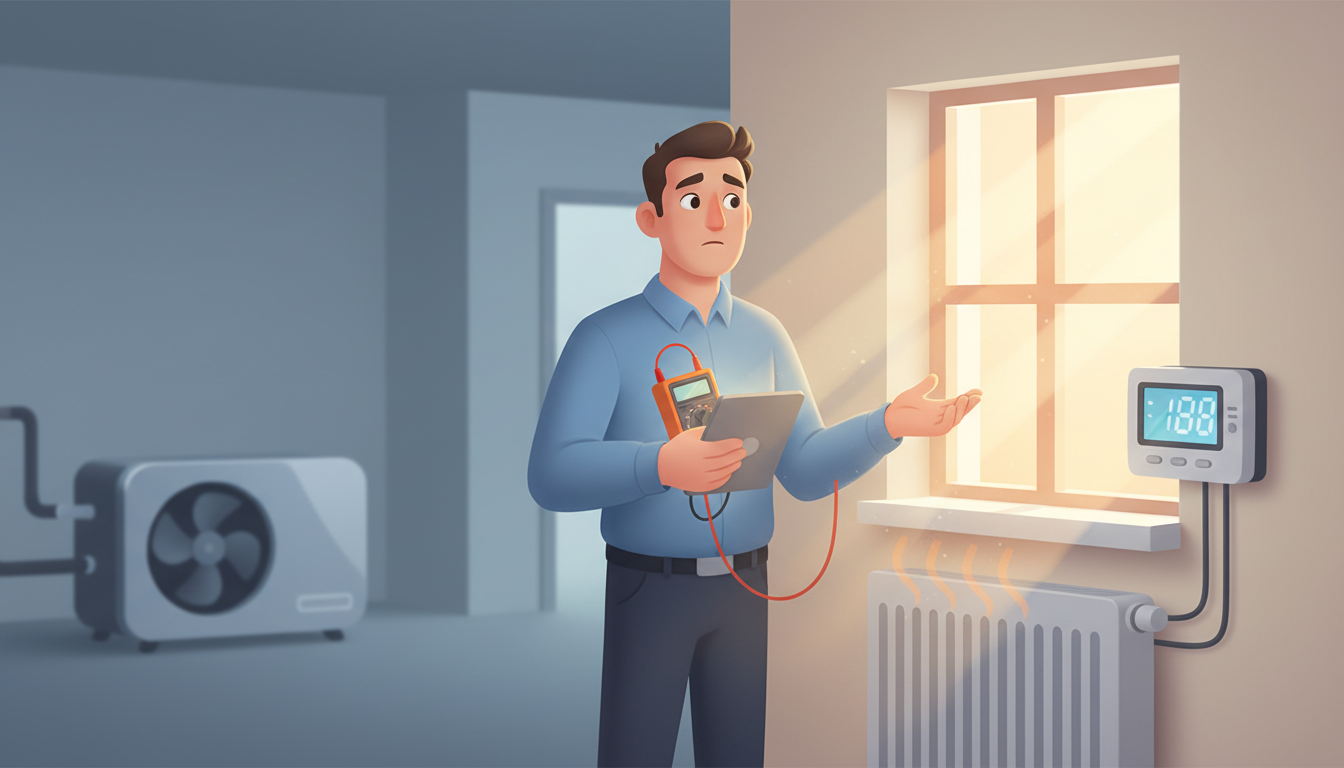
What Happens When a Thermostat Is Installed in the Wrong Location?
What Happens When a Thermostat Is Installed in the Wrong Location?
Your thermostat might seem like a simple device on your wall, but its location can make or break your home's comfort and energy efficiency. If you've noticed your heating and cooling system running constantly, uneven temperatures throughout your house, or skyrocketing energy bills, your thermostat's placement could be the hidden culprit.
When a thermostat is installed in the wrong location, it reads inaccurate temperature data and sends false signals to your HVAC system. This causes your heating or air conditioning to turn on when it shouldn't—or worse, stay off when you need it most. The result? Uncomfortable rooms, wasted energy, higher utility bills, and unnecessary wear on your equipment.
Understanding what happens when your thermostat is in a bad spot can help you identify the problem and take action before it costs you thousands in energy waste and premature equipment replacement.
Why Thermostat Location Matters for Your HVAC System
Your thermostat acts as the brain of your heating and cooling system. It constantly monitors the air temperature around it and tells your HVAC equipment when to turn on or off based on your settings.
Here's the problem: if your thermostat is reading the temperature in an area that doesn't represent your whole home, it's making decisions based on false information. Think of it like wearing a winter coat indoors and wondering why everyone else is cold—you're getting an inaccurate sense of the actual room temperature.
When placement goes wrong, your HVAC system responds to these false readings. If the thermostat thinks it's warmer than it actually is, your air conditioner runs unnecessarily. If it reads cooler than reality, your furnace stays off while you shiver in the living room.
Proper thermostat placement ensures accurate temperature sensing, which leads to:
- Consistent comfort throughout your home
- Lower energy bills
- Less frequent HVAC cycling
- Extended equipment lifespan
- Fewer thermostat-related problems
The Most Common Problems Caused by Wrong Thermostat Placement
Inaccurate Temperature Readings (Ghost Readings)
The most immediate problem with poor thermostat placement is what HVAC professionals call "ghost readings"—temperature measurements that don't reflect your home's actual comfort level.
If your thermostat is near a window that gets direct afternoon sun, it might read 78°F while the rest of your house sits at a comfortable 72°F. Your air conditioner kicks on unnecessarily, cooling rooms that don't need it while you pay the price on your electric bill.
Ghost readings can swing 5-10 degrees in either direction depending on the heat source or cold draft affecting your thermostat. That's not just a minor inconvenience—it's the difference between comfortable and miserable.
Constant System Cycling (Short Cycling)
When your thermostat gets false temperature signals, your HVAC system starts short cycling—turning on and off far more frequently than it should.
Here's how it happens: imagine your thermostat is mounted above a heating vent. When your furnace kicks on, warm air blows directly onto the thermostat sensor. Within minutes, the thermostat reads that the "room" has reached temperature and shuts the system off—even though the rest of your house is still cold.
Ten minutes later, the thermostat cools down and signals the furnace to start again. This constant on-and-off cycle prevents your system from running the longer, more efficient heating cycles it was designed for.
Short cycling causes several serious problems:
- Dramatically increased energy consumption
- Higher wear and tear on system components
- Reduced comfort as rooms never reach stable temperatures
- Shortened equipment lifespan (potentially cutting years off your system)
- More frequent need for HVAC repairs
Skyrocketing Energy Bills
Wrong thermostat placement can add 20-30% to your monthly heating and cooling costs—sometimes even more.
Let's say your actual energy bill should be $150 per month. Poor thermostat placement could easily add $30-$45 every single month. Over a year, that's $360-$540 in completely wasted energy. Over five years? You're looking at $1,800-$2,700 thrown away simply because your thermostat is reading the wrong spot.
The energy waste comes from multiple factors:
- Your system running when it doesn't need to
- Overcooling or overheating to compensate for inaccurate readings
- Short cycling reducing efficiency
- Longer run times as the system tries to reach the incorrect temperature target
Many homeowners don't realize their thermostat needs replacing or relocating until they've already wasted thousands on inflated utility bills.
Uneven Temperatures Throughout Your Home
Have you ever noticed that some rooms in your house feel perfect while others are too hot or too cold? Your thermostat's location might be the reason.
If your thermostat is in a naturally warmer part of your home—like near the kitchen or in a sunny hallway—it will reach the set temperature quickly. Your HVAC system shuts off, leaving bedrooms, basements, or rooms on the opposite side of the house uncomfortable.
This creates frustrating hot and cold spots. You might find yourself constantly adjusting the thermostat, bundling up in blankets in one room, or running space heaters or fans to compensate. None of these solutions address the real problem: your thermostat isn't measuring the temperature where you actually spend your time.
Premature HVAC Equipment Failure
Your heating and cooling equipment is designed to run in regular cycles with breaks in between. When wrong thermostat placement causes constant cycling or extended run times, it puts tremendous strain on critical components.
Key parts that suffer from placement-induced overwork include:
- Compressors (the heart of your air conditioning system)
- Heat exchangers in furnaces
- Blower motors
- Electrical contactors and relays
- Capacitors
These components aren't cheap to replace. A failed compressor alone can cost $1,200-$2,500. A cracked heat exchanger might mean replacing your entire furnace for safety reasons—a $3,000-$6,000 expense.
Even worse, when equipment fails prematurely due to thermostat placement issues, it's often not covered by warranty. Manufacturers and contractors can identify excessive cycling and run time patterns that void coverage.
The Worst Places to Install a Thermostat
Near Windows and Doors
Windows and exterior doors are temperature nightmares for thermostats. They're the primary points where outside temperatures infiltrate your home.
In summer, windows absorb solar heat and radiate it inward. Even with blinds closed, the area near a window can be several degrees warmer than the rest of your home. Your thermostat mounted on an exterior wall near a window will read these elevated temperatures and keep your air conditioner running constantly.
In winter, the opposite happens. Cold air seeps in around window frames and door jambs. Your thermostat reads these drafts and signals your furnace to keep heating, even when the rest of your house is already warm.
The problem intensifies with:
- Single-pane windows (less insulation)
- South and west-facing windows (more direct sun exposure)
- Poorly sealed doors
- Doors that open frequently (letting in outdoor air)
In Direct Sunlight
A thermostat in direct sunlight is one of the fastest ways to waste energy and sacrifice comfort.
During the day, sunlight can heat your thermostat's sensor 5-10 degrees above the actual room temperature. If your home is actually 72°F but the sun makes your thermostat read 80°F, your air conditioner will run constantly trying to reach your 75°F setting—a setting you've technically already achieved.
This problem is seasonal and time-dependent, making it especially frustrating. Your system might work fine in the morning and evening but go haywire during afternoon hours when the sun hits your thermostat. You'll notice your AC running excessively between 2-6 PM, then mysteriously behaving normally after sunset.
West-facing walls are the worst offenders, catching the intense afternoon sun when outdoor temperatures are already at their peak.
Above or Near Air Vents
Mounting a thermostat near a supply vent or return vent is a recipe for ghost readings and short cycling.
Supply vents blow conditioned air directly from your HVAC system. If your thermostat is near one, it gets blasted with air that's much warmer or cooler than the actual room temperature. Your system quickly "thinks" it has reached the target temperature and shuts off prematurely.
Return vents aren't much better. They pull air from the room, creating airflow patterns that can give your thermostat misleading temperature data.
The recommended minimum distance between a thermostat and any air vent is 4-6 feet. Unfortunately, many builders and contractors ignore this guideline, especially in homes with open floor plans or limited wall space.
In the Kitchen
Kitchens are one of the worst possible locations for a thermostat, yet they're surprisingly common in older homes and apartments.
Every time you cook, your kitchen becomes a heat island. Your oven, stovetop, dishwasher, and even your refrigerator exhaust generate significant warmth. A thermostat in the kitchen will read these elevated temperatures and signal your air conditioner to cool the entire house—even though only one room is actually hot.
This leads to:
- Your AC running every time you cook dinner
- Other rooms becoming uncomfortably cold while the kitchen stays warm
- Dramatically increased cooling costs during summer months
- Your system ignoring actual heating needs because the kitchen stays warm
The problem extends to other areas with heat-generating appliances, including laundry rooms (washer and dryer), utility rooms (water heaters), and entertainment centers (electronics and lamps).
In Hallways (Especially Near Stairs)
You might think a hallway is a neutral, central location—and it would be, except for one major problem: airflow.
Hallways, especially those near staircases, experience unusual air circulation patterns. Hot air rises, so upstairs hallways near stairs often read warmer than they should. Cold air sinks, making first-floor hallways near stairwells cooler than other rooms.
Additionally, hallways typically:
- Don't represent the temperature in frequently used living spaces
- Experience drafts from people walking through
- Have less furniture and fewer heat sources than actual living areas
- Often serve as transitional spaces rather than comfort zones
In multi-story homes, a hallway thermostat near stairs creates another issue: it might accurately represent the hallway temperature but tells you nothing about the bedrooms, living room, or other spaces where you actually spend your time.
On Exterior Walls
Exterior walls are always closer to outdoor temperatures than interior walls. They absorb heat from the sun in summer and lose heat to the cold in winter.
A thermostat on an exterior wall can read 2-5 degrees off from the true interior temperature, depending on your home's insulation quality and the wall's sun exposure.
Interior walls, by contrast, are surrounded by conditioned space on both sides. They maintain more stable temperatures and provide more accurate readings of your home's overall comfort level.
This is why HVAC professionals always recommend mounting thermostats on interior walls—they're more representative of your actual living environment.
Where Should Your Thermostat Actually Be Located?
The Ideal Thermostat Placement Guidelines
Now that you know where not to put your thermostat, here's where it should go:
Interior wall in a central, frequently used room. The best thermostat location is on an interior wall in a room where you spend significant time—typically the living room, family room, or main hallway (if it's truly central and not near stairs).
Interior walls provide stable temperature readings because they're surrounded by conditioned space. A central location ensures the temperature reading represents the average comfort level of your entire home.
Height of 52-60 inches from the floor. This is roughly eye level for most adults and represents the average height where people experience room temperature. Heat rises and cold air sinks, so mounting too high or too low will give skewed readings.
Away from direct sunlight. Even on an interior wall, make sure no windows cast direct sunlight on your thermostat during any part of the day.
At least 4-6 feet from air vents. Both supply vents and return vents should be well clear of your thermostat to avoid false readings.
Away from heat sources. Keep your thermostat away from lamps, electronics, appliances, fireplaces, and anything else that generates heat.
In an area with good air circulation. The spot should have natural airflow that's representative of the room, but not so much that drafts affect the reading.
Not behind doors or furniture. Your thermostat needs exposure to the actual room air, not the dead air space behind a door or couch.
Special Considerations for Two-Story Homes
In homes with multiple floors, thermostat placement becomes more complex.
For single-zone systems (one thermostat controlling the whole house), place the thermostat on the floor where you spend the most time—usually the first floor. This ensures comfort in your primary living spaces, even if upstairs bedrooms run slightly warmer.
If possible, consider upgrading to a multi-zone system with separate thermostats for each floor. This allows you to control each level independently, accounting for the natural tendency of heat to rise.
Smart Thermostats and Remote Sensors
Modern smart thermostats offer a partial solution to placement challenges through remote temperature sensors.
These wireless sensors can be placed in different rooms throughout your home. The thermostat averages the readings or prioritizes specific sensors during certain times of day. For example, you might prioritize bedroom sensors at night and living room sensors during the day.
While remote sensors help compensate for poor placement, they're not a complete fix. Your main thermostat should still be in a reasonable location, as it serves as a backup sensor and controls the system when remote sensors fail or lose battery power.
How to Tell If Your Thermostat Is in the Wrong Spot
Signs Your Thermostat Location Is Causing Problems
Not sure if your thermostat placement is the issue? Watch for these warning signs:
Temperature doesn't match the thermostat reading. If your thermostat says 72°F but you're clearly not comfortable, test the actual room temperature with a separate thermometer placed 5-10 feet away from the thermostat.
System runs constantly during certain times of day. If your HVAC runs excessively when the sun hits a particular wall or during cooking times, placement is likely the culprit.
Some rooms are always too hot or too cold. Consistent temperature imbalances suggest the thermostat isn't reading a representative location.
System cycles on and off rapidly. Short cycling every 5-10 minutes indicates the thermostat is too close to a heat source or air vent.
Energy bills have increased without explanation. If your usage has spiked but your habits and rates haven't changed, check your thermostat's location.
DIY Testing: Is Your Thermostat Reading Accurate?
You can perform a simple test to determine if your thermostat location is problematic:
- Set your thermostat to a specific temperature
- Let your system run until it shuts off (reaches the set point)
- Place an accurate thermometer in the center of the room, away from windows, doors, and vents
- Wait 15 minutes for the thermometer to stabilize
- Compare the thermometer reading to what your thermostat displays
If the readings differ by more than 2 degrees, your thermostat's location (or calibration) is likely the problem.
Repeat this test at different times of day, especially when you notice comfort problems. This helps identify if sunlight, cooking, or other time-specific factors are affecting your thermostat.
Solutions: Fixing a Poorly Placed Thermostat
Option 1: Relocate Your Thermostat
The most effective solution is moving your thermostat to a better location.
Cost to relocate a thermostat: $150-$500, depending on:
- Whether you need to run new wiring through walls
- The distance from the old location to the new location
- Your local labor rates
- Your system's compatibility (older systems with proprietary wiring may cost more)
For most homeowners, this investment pays for itself within 1-2 years through reduced energy bills.
Can you DIY thermostat relocation? If you're comfortable with electrical work and your local code allows it, you may be able to relocate a thermostat yourself. However, most professionals recommend hiring a licensed HVAC technician or electrician to ensure:
- Proper wire sizing and connection
- Code compliance
- Warranty protection
- Correct system configuration
Option 2: Upgrade to a Smart Thermostat with Remote Sensors
If relocating your thermostat isn't feasible (due to cost, aesthetics, or rental restrictions), consider upgrading to a smart thermostat with remote sensor capability.
Quality smart thermostats with remote sensors include:
- Ecobee (comes with one remote sensor, additional sensors available)
- Honeywell Home T9/T10 (supports multiple room sensors)
- Nest (can use multiple Nest Temperature Sensors)
The remote sensors are placed in rooms where you want accurate temperature readings. The thermostat uses these remote readings instead of (or in addition to) its built-in sensor.
Cost: $200-$350 for the thermostat plus $40-$80 per additional remote sensor.
This solution works well when:
- Your current thermostat location can't be changed
- You want room-specific comfort control
- You're interested in smart features like scheduling and remote access
Option 3: Compensate with Adjusted Settings
If neither relocation nor an upgrade is immediately possible, you can partially compensate by adjusting your thermostat settings:
- Set your target temperature 2-3 degrees higher or lower to account for the false readings
- Use programmable schedules to prevent excessive run times during problem hours (like when sun hits the thermostat)
- Manually adjust settings during cooking or other heat-generating activities
This is the least effective solution and doesn't address the underlying efficiency and equipment wear problems. Consider it a temporary fix while you plan for proper relocation or upgrade.
Building Codes and Professional Standards
Are There Official Guidelines for Thermostat Placement?
While specific requirements vary by location, most building codes and professional HVAC standards include thermostat placement recommendations:
International Residential Code (IRC) doesn't mandate specific thermostat locations but requires HVAC controls to be accessible and properly labeled.
ASHRAE (American Society of Heating, Refrigerating and Air-Conditioning Engineers) recommends:
- Interior wall mounting
- 52-60 inches above the floor
- Away from direct sunlight, air vents, and heat sources
- In areas with representative air circulation
Local building codes may have additional requirements, particularly regarding accessibility for people with disabilities (ADA compliance).
When Professional Installation Goes Wrong
Unfortunately, even professional contractors sometimes install thermostats in poor locations, usually due to:
- Taking the easiest wire routing rather than the best location
- Following homeowner requests without explaining the consequences
- Matching the old thermostat location when replacing equipment
- Rushing through installations
If your thermostat was professionally installed in a questionable location, contact the contractor to discuss relocation. Many reputable companies will correct the issue, especially if it's causing documented comfort or efficiency problems.
The Cost of Doing Nothing
Long-Term Financial Impact of Wrong Thermostat Placement
Let's put some real numbers on the cost of ignoring a poorly placed thermostat:
Scenario: Average home with thermostat in direct sunlight, causing 25% energy waste
- Monthly cooling cost without issue: $120
- Monthly cost with poor placement: $150 (+$30)
- Annual additional cost: $360
- 5-year additional cost: $1,800
- 10-year additional cost: $3,600
Plus equipment replacement:
- Average HVAC system lifespan: 15-20 years
- Lifespan with excessive cycling: 10-12 years
- Cost of premature replacement: $5,000-$8,000 lost value
Total 10-year impact: $8,600-$11,600
Cost to fix: $150-$500 for relocation, or $200-$350 for smart thermostat with sensors
The return on investment is clear. Even if you only recover half the estimated waste, you'll still come out ahead within 1-2 years.
Frequently Asked Questions
How much does it cost to move a thermostat to a better location?
Most thermostat relocations cost $150-$500, depending on the complexity of running new wiring and the distance from the current location. This investment typically pays for itself within 1-2 years through energy savings. Get quotes from 2-3 licensed HVAC technicians or electricians to find competitive pricing in your area.
Can a smart thermostat compensate for poor placement?
Smart thermostats with remote sensors can partially compensate for bad placement by reading temperatures in multiple rooms. However, this is a workaround rather than a true fix. The main thermostat should still be in a reasonable location to serve as a backup sensor and avoid issues if remote sensors fail or lose battery power.
How far should a thermostat be from air vents?
Your thermostat should be at least 4-6 feet away from both supply vents (that blow conditioned air) and return vents (that pull air back to the system). This distance ensures your thermostat reads the actual room temperature rather than the temperature of air coming directly from your HVAC equipment.
Why are thermostats often installed in hallways?
Many thermostats end up in hallways for two historical reasons: hallways provided central locations in older home designs with closed-off rooms, and hallways near basements or attics made wiring easier when central HVAC systems were first installed. While this made sense decades ago, modern open floor plans and better understanding of HVAC efficiency make living room placement preferable in most homes.
Does thermostat placement matter more for heating or cooling?
Wrong thermostat placement affects both heating and cooling, but the impact is often more noticeable with air conditioning. Heat sources (sunlight, appliances, electronics) are more common than cold sources in most homes, so thermostats are more likely to read warmer than reality. This causes air conditioners to run excessively. In winter, placement near drafty doors and windows can cause similar issues with heating systems.
Can I move my thermostat myself or do I need a professional?
While technically possible for experienced DIYers, most experts recommend hiring a licensed professional for several reasons: ensuring proper wire sizing and connections, meeting local electrical codes, maintaining equipment warranties, and configuring your specific system correctly. Many HVAC warranties are voided if homeowners perform their own thermostat work. If you do attempt DIY relocation, check your local code requirements first and turn off power to your HVAC system before beginning any work.
Take Action: Don't Let Bad Placement Cost You Thousands
Your thermostat's location might seem like a minor detail, but as you've seen, it has major consequences for your comfort, energy bills, and equipment lifespan.
If you've recognized warning signs in your own home—uneven temperatures, constantly running systems, or surprisingly high energy bills—don't wait. The longer you put off addressing the problem, the more money you waste and the more wear you put on your expensive HVAC equipment.
Start with the DIY testing steps outlined above to confirm whether placement is your issue. Then explore your options: relocating the thermostat, upgrading to a smart system with remote sensors, or at minimum, making setting adjustments to reduce the worst effects.
For professional guidance on your specific situation, consult with a qualified HVAC technician who can assess your current setup and recommend the most cost-effective solution. The small investment you make today could save you thousands over the coming years while keeping your home comfortable year-round.
Your thermostat works hard to keep you comfortable—make sure it's in the right spot to do its job effectively.