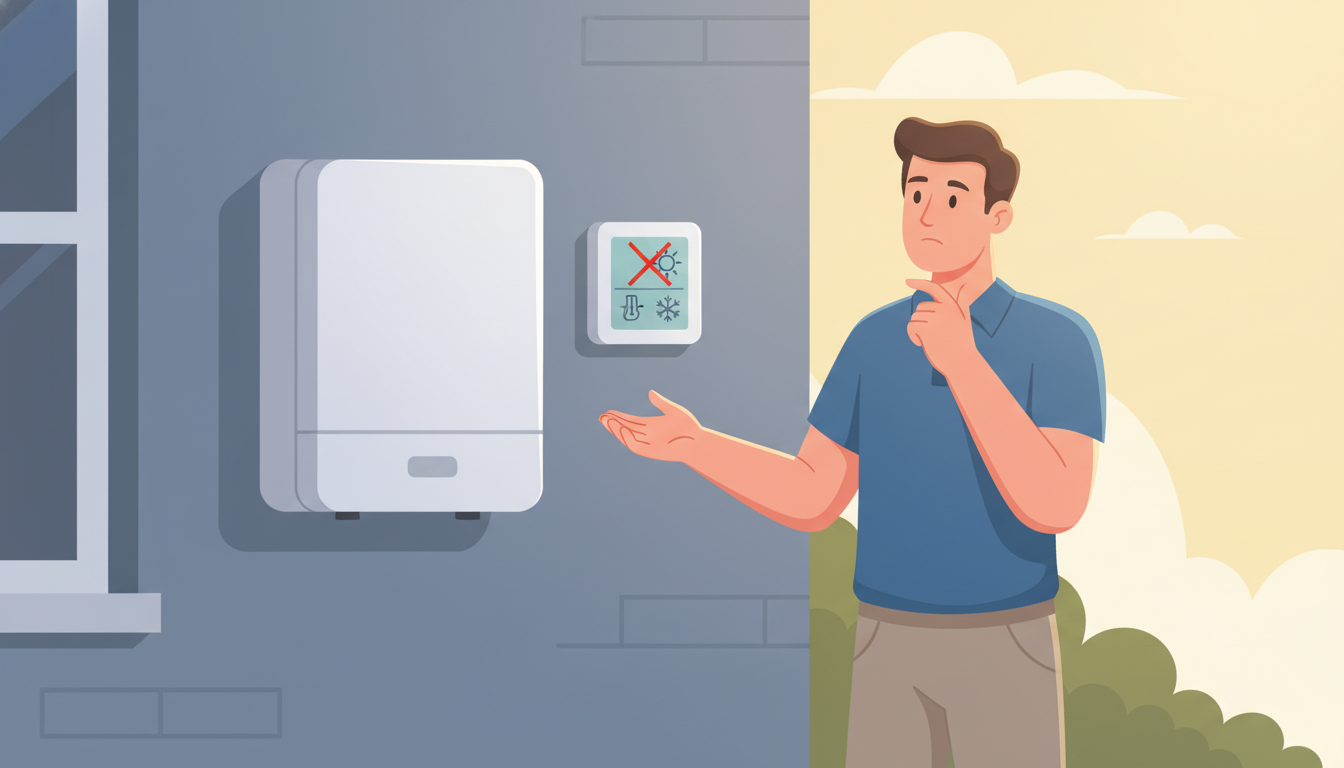
Heat Pump Not Switching Between Heating and Cooling? Start Here
Heat Pump Not Switching Between Heating and Cooling? Start Here
Is your heat pump stuck in one mode and refusing to switch? You're not alone. When your heat pump won't switch between heating and cooling, it can leave you sweating in summer or shivering in winter. The good news is that many mode switching problems have simple fixes you can try yourself.
In this guide, you'll learn why heat pumps get stuck in one mode, how to troubleshoot the problem, and when it's time to call in a professional. Let's get your system working properly again.
Understanding How Your Heat Pump Switches Modes
Before we dive into fixes, let's quickly understand how a heat pump changes between heating and cooling. Unlike a furnace or air conditioner that only does one job, your heat pump is a dual-purpose system that can both heat and cool your home.
The secret to this versatility is a component called the reversing valve. This valve controls the direction that refrigerant flows through your system. When you switch from cooling to heating mode (or vice versa), the reversing valve physically changes position, redirecting the refrigerant flow.
Here's what happens:
- In cooling mode: Refrigerant absorbs heat from inside your home and releases it outside
- In heating mode: The process reverses—refrigerant absorbs heat from outside air and brings it inside
Your thermostat sends the signal to switch modes, which activates a solenoid on the reversing valve. The valve then shifts position, typically within 1-3 minutes. You might hear a slight clicking sound during this transition—that's completely normal.
Why Your Heat Pump Won't Switch Modes
When your heat pump gets stuck in one mode, several culprits could be to blame. Let's look at the most common causes, from simplest to most complex.
Thermostat Issues
Your thermostat is the brain that tells your heat pump when to switch modes. If there's a problem with the thermostat, your heat pump never receives the signal to change.
Common thermostat problems include:
- Incorrect mode setting (set to "Cool" when you want heat, or vice versa)
- Dead or weak batteries causing erratic behavior
- Poor calibration making the thermostat read temperatures incorrectly
- Failed thermostat contacts that can't send the switching signal
- Loose wiring between the thermostat and heat pump
- Outdated firmware on smart thermostats
Smart thermostats like Nest, Ecobee, and Honeywell models can sometimes have compatibility issues with certain heat pump systems. If you recently installed a new smart thermostat and your heat pump stopped switching modes, this could be the connection.
Stuck Reversing Valve
The reversing valve is the most critical component for mode switching, and when it fails, your heat pump gets stuck. A reversing valve can stick in one position due to several reasons:
Refrigerant contamination: Dirt, debris, or moisture in the refrigerant can cause the valve to stick Worn valve slide: After years of use, the internal sliding mechanism can wear out Faulty solenoid: The electrical coil that moves the valve may burn out Low refrigerant pressure: The valve needs adequate refrigerant pressure to shift positions
You might hear the reversing valve trying to switch—a clicking or humming sound—but the system doesn't actually change modes. This indicates the solenoid is getting power but the valve itself is mechanically stuck.
Electrical and Wiring Problems
Your heat pump relies on precise electrical signals to operate. Any disruption in power or wiring can prevent mode switching.
Check for these electrical issues:
- Tripped circuit breaker cutting power to the outdoor unit
- Blown fuse in the disconnect box near the outdoor unit
- Loose or corroded wire connections at the thermostat or outdoor unit
- Failed capacitor preventing the compressor from starting
- Damaged control board that can't process the mode change signal
- Power outage that caused the system to lose its programming
If your heat pump won't switch modes after a power outage, try resetting the system by turning off the breaker for 5 minutes, then turning it back on. This simple reset can sometimes restore normal operation.
Low Refrigerant Levels
Your heat pump needs the right amount of refrigerant to function properly. When refrigerant levels drop due to a leak, the reversing valve may not have enough pressure to shift positions smoothly.
Signs of low refrigerant include:
- Ice forming on the outdoor unit
- Reduced heating or cooling performance
- Hissing sounds near refrigerant lines
- The system running constantly without reaching the set temperature
Refrigerant doesn't get "used up" like fuel—if levels are low, there's a leak somewhere that needs professional repair. Never attempt to add refrigerant yourself, as this requires specialized equipment and certification.
Dirty Air Filters and Coils
While a dirty filter won't directly prevent mode switching, it can cause symptoms that look like a switching problem. Restricted airflow from a clogged filter puts stress on your entire system.
A severely dirty filter can cause:
- Frozen indoor or outdoor coils
- Reduced heating and cooling capacity (making it seem like the mode didn't change)
- Short cycling as the system overheats and shuts down
- Increased wear on the reversing valve and other components
Dirty outdoor coils have a similar effect. When the outdoor unit can't release or absorb heat efficiently, your heat pump struggles to perform in either mode.
Frozen Outdoor Unit
If your outdoor unit is covered in ice, your heat pump can't switch to heating mode effectively. While some frost is normal during cold weather, excessive ice buildup indicates a problem.
Common causes of frozen outdoor units:
- Blocked airflow from debris, leaves, or snow around the unit
- Malfunctioning defrost cycle
- Low refrigerant causing the coils to freeze
- Broken defrost sensor or timer
During normal operation, your heat pump has a defrost cycle that periodically melts ice buildup. If you notice your heat pump briefly switching to cooling mode on a cold day, don't worry—this is the defrost cycle doing its job. The system temporarily reverses to warm the outdoor coil and melt ice.
Failed Control Board or Sensors
Modern heat pumps have electronic control boards that manage all system functions, including mode switching. A failed control board or malfunctioning sensor can prevent the switching signal from reaching the reversing valve.
Temperature sensors, pressure switches, and safety controls all communicate with the control board. If any sensor sends incorrect data, the control board might refuse to switch modes as a safety precaution.
DIY Troubleshooting Steps You Can Try
Before calling a technician, there are several troubleshooting steps you can safely perform yourself. Work through these in order, testing your system after each step.
Step 1: Check Your Thermostat Settings
This might sound obvious, but incorrect thermostat settings are surprisingly common.
Verify these settings:
- Mode is set to "Heat" or "Cool" (not "Auto" or "Off")
- Temperature setting is at least 5 degrees different from current room temperature
- Fan setting is on "Auto" (not "On," which runs the fan constantly)
- Battery level is good (replace if batteries are more than a year old)
For smart thermostats, check your app for any error messages or alerts. Some systems will notify you if they detect a problem with mode switching.
Step 2: Perform a Complete System Reset
A simple reset can clear electronic glitches that prevent mode switching.
Here's how to properly reset your heat pump:
- Turn off your heat pump at the thermostat
- Locate your electrical panel and turn off the breaker for your heat pump (both indoor and outdoor units)
- Wait at least 5 minutes to allow capacitors to fully discharge
- Turn the breaker back on
- Wait 5 minutes before turning the system back on at the thermostat
- Set your desired mode and temperature, then wait 10-15 minutes to see if the system responds
This full power cycle gives your system a fresh start and can resolve software glitches or stuck relays.
Step 3: Inspect and Replace Your Air Filter
A clogged air filter is one of the easiest problems to fix and should be checked monthly.
To replace your air filter:
- Turn off your heat pump at the thermostat
- Locate the filter (usually in the return air vent or air handler)
- Remove the old filter and check how dirty it is
- Install a new filter with arrows pointing in the direction of airflow
- Turn the system back on
If your filter was extremely dirty, wait 30 minutes for the system to stabilize before testing mode switching again. For detailed guidance on maintaining your HVAC system, check out our comprehensive HVAC repair guide.
Step 4: Clear Debris from Your Outdoor Unit
Your outdoor unit needs proper airflow to function. Walk outside and inspect the area around your heat pump.
Clear away:
- Leaves, grass clippings, or other debris within 2 feet of the unit
- Snow or ice covering the unit (gently remove, don't use sharp tools)
- Shrubs or plants that have grown too close
- Storage items blocking airflow
Never use a pressure washer or hose to clean the outdoor unit while it's running. If the coils look dirty, turn off power at the breaker first, or schedule professional cleaning.
Step 5: Test Mode Switching Manually
Now it's time to test if your heat pump will switch modes.
Follow this procedure:
- Set your thermostat to "Heat" and raise the temperature 5 degrees above current room temperature
- Listen for the outdoor unit to start running
- After 2-3 minutes, feel the air coming from your vents (should be warm)
- Wait 10 minutes, then switch to "Cool" and lower the temperature 5 degrees below current room temperature
- Listen for a clicking sound as the reversing valve switches
- After 2-3 minutes, feel the air from vents again (should be cool)
Remember that heat pumps take a few minutes to complete the mode change. Don't expect instant results.
Step 6: Check for Error Codes
Some heat pump systems display error codes when problems occur. Check your thermostat display and the outdoor unit control panel for any flashing lights or error messages.
Refer to your owner's manual to decode any error messages. Common codes related to mode switching include reversing valve errors, sensor failures, and communication errors between components.
When to Call a Professional HVAC Technician
Some heat pump problems require professional expertise and specialized tools. Here's when you should stop troubleshooting and call for help.
You've Tried All Basic Fixes Without Success
If you've worked through all the DIY troubleshooting steps and your heat pump still won't switch modes, it's time for professional diagnosis. An HVAC technician has diagnostic equipment to test electrical signals, refrigerant pressure, and component function.
You Suspect Reversing Valve Problems
Replacing or repairing a reversing valve requires refrigerant recovery, system evacuation, and brazing skills. This is not a DIY repair. A stuck reversing valve typically costs $350-$850 to replace, including labor.
If you hear the reversing valve clicking but the system doesn't change modes, or if the valve is completely silent when it should activate, you likely need professional service. For more information on heat pump repairs, visit our heat pump repair guide.
There's Ice Buildup That Won't Melt
A small amount of frost on the outdoor unit during cold weather is normal. However, if your unit is encased in ice that doesn't melt during defrost cycles, there's an underlying problem.
Possible causes include:
- Refrigerant leak requiring professional repair
- Failed defrost sensor or timer
- Stuck reversing valve preventing defrost mode
- Blocked drain causing water to freeze on the coils
Don't chip ice off the coils yourself—you could damage the fins or refrigerant lines.
You Notice Unusual Sounds or Smells
Certain sounds and smells indicate serious problems:
- Loud banging or clanking: Could indicate a failing compressor or loose internal components
- Continuous hissing: Often points to a refrigerant leak
- Burning smell: May signal electrical problems or an overheating motor
- Grinding or metal-on-metal sounds: Suggests worn bearings or damaged fan blades
Turn off your system immediately if you smell burning or see smoke, and call for emergency service.
Your System Short Cycles
Short cycling means your heat pump turns on and off repeatedly without completing a full heating or cooling cycle. This puts enormous stress on components and dramatically increases wear.
Short cycling can result from:
- Oversized equipment for your home
- Refrigerant problems
- Failed control board
- Dirty coils or severely restricted airflow
While a dirty filter can cause short cycling (and you can fix that yourself), persistent short cycling after replacing the filter needs professional attention.
The System is Old and Has Multiple Issues
If your heat pump is 12-15 years old and experiencing mode switching problems along with other issues, repair might not be cost-effective. A technician can perform a comprehensive evaluation and help you decide between repair and replacement.
Modern heat pumps are significantly more efficient than models from 10-15 years ago. The energy savings from a new system might offset the replacement cost within a few years.
How Much Does Heat Pump Mode Switching Repair Cost?
Repair costs vary widely depending on the specific problem. Here are typical price ranges for common mode switching repairs:
- Thermostat replacement: $150-$400 (smart thermostats cost more)
- Reversing valve replacement: $350-$850
- Refrigerant leak repair and recharge: $200-$1,500 (depends on leak location and refrigerant type)
- Control board replacement: $200-$600
- Capacitor replacement: $100-$250
- Wiring repair: $75-$300
Simple fixes like replacing a thermostat battery or resetting a breaker cost nothing. Always get a detailed written estimate before authorizing major repairs.
Preventing Future Mode Switching Problems
Regular maintenance keeps your heat pump switching smoothly between heating and cooling. Follow these preventive care tips:
Schedule Professional Maintenance Twice Yearly
Have your heat pump serviced in spring and fall—before the heavy cooling and heating seasons. A maintenance visit typically includes:
- Cleaning outdoor and indoor coils
- Testing refrigerant levels and pressure
- Inspecting electrical connections
- Testing the reversing valve operation
- Calibrating the thermostat
- Lubricating motors and checking belts
- Testing safety controls and sensors
Professional maintenance catches small problems before they become expensive failures. Many HVAC companies offer maintenance plans with priority service and discounts on repairs.
Replace Air Filters Monthly
This is the single most important maintenance task you can do yourself. Mark your calendar to check filters on the first of every month. Replace them when they look dirty—typically every 1-3 months depending on your home.
Homes with pets, allergies, or dusty conditions need more frequent filter changes. Use the filter size and MERV rating recommended by your system manufacturer.
Keep Your Outdoor Unit Clear Year-Round
Walk around your outdoor unit monthly and remove any debris. In fall, clear leaves weekly if you have trees nearby. In winter, gently brush off snow after storms (don't use sharp tools that could damage fins).
Maintain at least 2 feet of clearance around all sides of the outdoor unit. Trim back any shrubs or plants that have grown too close.
Test Both Modes Seasonally
Don't wait until you need heat to discover your heat pump won't switch to heating mode. When seasons change, test both modes:
- In early spring: Test cooling mode before the first hot day
- In early fall: Test heating mode before the first cold night
This gives you time to schedule repairs during the off-season when HVAC companies are less busy and often offer better rates.
Consider a Smart Thermostat with Diagnostics
Modern smart thermostats can alert you to problems before you notice them. Some models monitor your system's performance and notify you of unusual patterns, including mode switching delays or failures.
Look for thermostats specifically designed for heat pumps—they understand the unique requirements of heating and cooling in one system. Features like adaptive learning and maintenance reminders help keep your system running optimally.
Address Small Problems Immediately
When you notice minor issues—slightly warm air in cooling mode, longer mode switching times, or unusual sounds—don't ignore them. Small problems often become big, expensive failures if left unaddressed.
If your heat pump seems to be blowing lukewarm air instead of properly heating or cooling, check out our guide on why heat pumps blow lukewarm air for more troubleshooting tips.
Understanding Emergency Heat vs. Auxiliary Heat
Many homeowners get confused about the "Emergency Heat" or "E-Heat" setting on their thermostats. Understanding this feature is important when troubleshooting mode switching problems.
What is Auxiliary Heat?
Auxiliary heat (also called backup heat or supplemental heat) automatically activates when:
- Outdoor temperatures are extremely cold and your heat pump needs help
- Your home's temperature drops more than 3 degrees below the thermostat setting
- Your heat pump is in defrost mode and can't provide heat temporarily
Auxiliary heat usually comes from electric resistance heating strips in your indoor unit. These strips are expensive to run but ensure your home stays warm when the heat pump can't keep up.
What is Emergency Heat?
Emergency heat uses the same heating strips as auxiliary heat, but with one critical difference: emergency heat bypasses the heat pump entirely.
Use emergency heat mode only when:
- Your heat pump is completely broken
- The outdoor unit is frozen and won't defrost
- You're waiting for repair service and need temporary heat
Never run emergency heat mode for extended periods. It costs 2-3 times more to operate than normal heat pump operation and puts heavy strain on the electric heating elements.
If you find yourself needing emergency heat mode frequently, your heat pump has a serious problem that needs professional repair.
How Long Should Mode Switching Take?
Understanding normal mode switching behavior helps you identify when something is actually wrong.
Normal mode switching timeline:
- Thermostat signal to outdoor unit: Instant to 30 seconds
- Reversing valve activation: 30 seconds to 2 minutes (you may hear clicking)
- Refrigerant flow stabilization: 1-3 minutes
- Noticeable temperature change at vents: 3-5 minutes
- Room temperature change: 10-30 minutes (depends on room size and insulation)
If your heat pump takes longer than 5 minutes to begin producing heated or cooled air after switching modes, something is wrong. Common causes include a sluggish reversing valve, low refrigerant, or control board delays.
Frequently Asked Questions
Why does my heat pump pause when switching modes?
A brief pause (1-3 minutes) when switching modes is completely normal. During this time, the reversing valve changes position and refrigerant flow reverses direction. You might not hear the outdoor unit running during this transition period, and air from your vents may stop temporarily. This is not a malfunction—it's the system working as designed.
Can I switch between heating and cooling multiple times per day?
Yes, heat pumps are designed to switch modes as needed. However, constantly switching back and forth can wear components faster and reduce efficiency. If you find yourself switching modes multiple times daily, consider adjusting your thermostat settings or using the "Auto" mode, which maintains your desired temperature using whichever mode is appropriate.
Why does my heat pump only work in cooling mode but not heating mode?
When a heat pump works in one mode but not the other, the reversing valve is almost always the culprit. The valve might be stuck in one position, or the solenoid that activates the valve could have failed. This requires professional diagnosis and usually means reversing valve replacement.
How much does it cost to replace a reversing valve?
Reversing valve replacement typically costs $350-$850, including parts and labor. The exact cost depends on your system size, refrigerant type, and local labor rates. Some high-efficiency systems or commercial units may cost more. Since this repair requires refrigerant recovery and brazing, it must be performed by a licensed HVAC technician.
Is it normal to hear clicking sounds when my heat pump switches modes?
Yes! A clicking or clunking sound when switching modes is the reversing valve physically moving into position. This is completely normal. However, if you hear continuous clicking without the system actually changing modes, or if the clicking is accompanied by grinding or buzzing, you may have a failing reversing valve or solenoid.
Should I try to repair my heat pump myself or hire a professional?
You can safely perform basic troubleshooting yourself: checking thermostat settings, replacing air filters, clearing debris from the outdoor unit, and resetting breakers. However, any repairs involving refrigerant, electrical components beyond simple resets, or internal system components require professional service. Working with refrigerant requires EPA certification, and improper electrical work can damage your system or create safety hazards.
Take Action to Restore Your Comfort
A heat pump that won't switch between heating and cooling doesn't have to leave you uncomfortable. Start with the simple troubleshooting steps outlined in this guide: check your thermostat settings, replace your air filter, clear debris from the outdoor unit, and try a system reset.
Many mode switching problems stem from simple issues you can fix yourself in minutes. However, if you've worked through all the DIY steps and your heat pump still refuses to cooperate, don't hesitate to call in professional help. A skilled HVAC technician can quickly diagnose complex problems like reversing valve failures, refrigerant leaks, or control board issues.
Remember that regular maintenance is your best defense against mode switching problems. Clean filters, seasonal tune-ups, and prompt attention to small issues will keep your heat pump switching smoothly for years to come.
Don't let a mode switching problem compromise your home comfort. Take action today, and you'll soon have reliable heating and cooling at the touch of a button.