
Why Does My Heater Work Upstairs but Not Downstairs?
Why Does My Heater Work Upstairs but Not Downstairs?
There's nothing more frustrating than cranking up your thermostat on a cold winter day, only to find your upstairs toasty warm while your downstairs remains freezing. If your heater is working upstairs but not downstairs, you're dealing with a common HVAC problem that affects many two-story homes. The good news? This issue usually has a fixable cause, and understanding what's going wrong is the first step to getting your whole home comfortable again.
In this guide, we'll walk you through the most common reasons why your heater works upstairs but not downstairs, what you can check yourself, and when it's time to call in a professional HVAC technician.
Understanding How Your HVAC System Distributes Heat
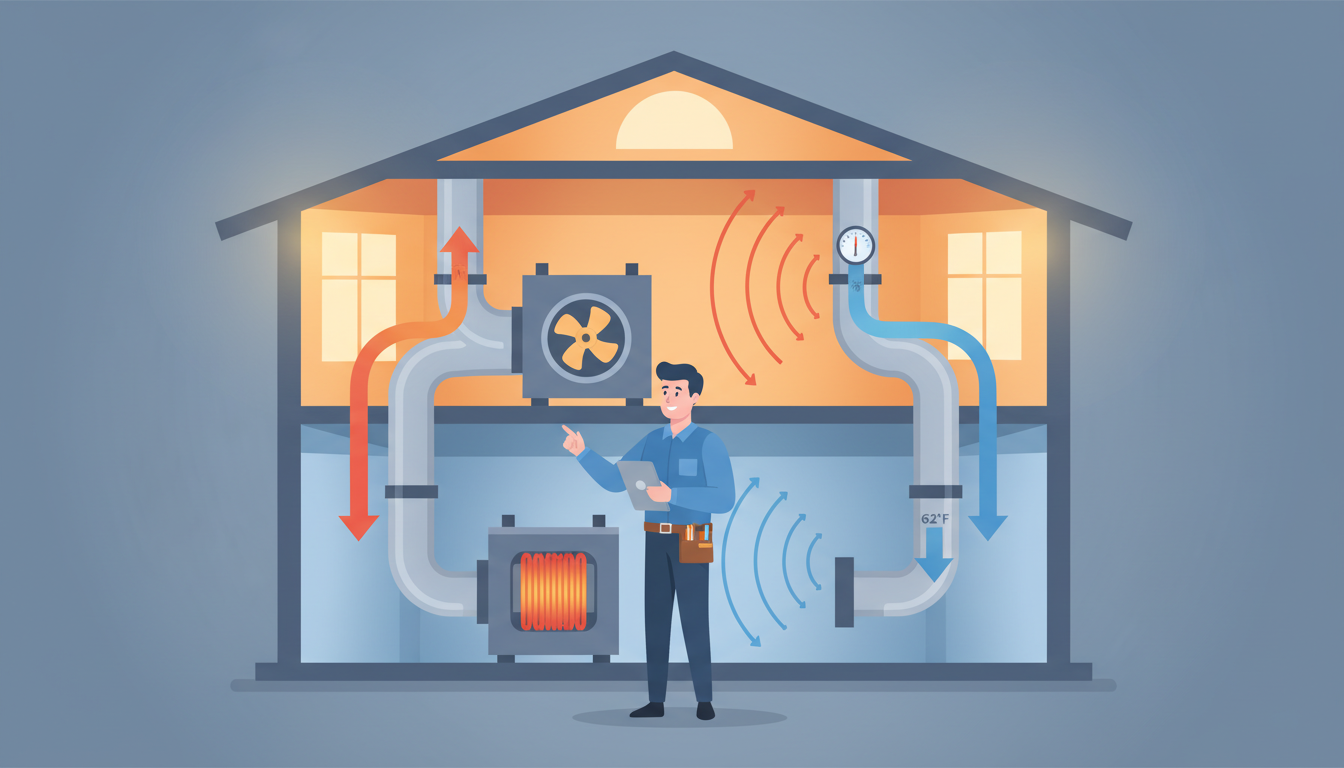
Before we dive into specific problems, it helps to understand how your heating system is supposed to work. Most modern homes use a forced-air HVAC system that pushes heated air through a network of ducts to different areas of your house. In a two-story home, your system should deliver warm air evenly to both floors through supply vents, while return vents pull cool air back to be reheated.
When your heater works upstairs but not downstairs, something is disrupting this balanced air distribution. The problem could be mechanical, related to airflow control, or caused by issues in your ductwork itself.
Common Causes: Why Your Downstairs Isn't Heating
1. Closed or Blocked Dampers
This is the most common culprit when heat reaches one floor but not the other. Dampers are metal plates inside your ductwork that control airflow to different zones of your home. Many homeowners don't even realize they have dampers, let alone that someone might have closed them.
If you have a multi-zone HVAC system, dampers can be manually adjusted or electronically controlled. Someone may have closed the damper to your downstairs zone during summer (to keep cool air upstairs) and forgotten to reopen it when heating season arrived.
What to check: Look for damper handles on the main duct trunks in your basement or crawlspace. The handle should be parallel to the duct when open, perpendicular when closed. If you find a closed damper leading to your downstairs, simply open it and see if heat starts flowing.
2. Faulty Zone Damper Motors or Actuators
If you have an automatic zoning system, electric damper motors (also called actuators) open and close the dampers based on thermostat signals. When these motors fail or get stuck, they can leave a damper closed even when your thermostat is calling for heat downstairs.
You might hear a humming sound from the ductwork when the heat kicks on, but no air flows to the downstairs vents. The damper motor might have stripped gears, a burned-out motor, or electrical connection problems.
What to check: Listen near your ductwork when your thermostat calls for heat. You should hear dampers moving. If you don't, or if you hear grinding or humming without movement, the actuator may need replacement. This typically requires a professional HVAC technician.
3. Malfunctioning Zone Control Valves
If you have a boiler-based heating system with radiators or baseboard heaters, zone valves control the flow of hot water to different floors. A stuck or broken zone valve can prevent hot water from reaching your downstairs heating elements.
Zone valves can fail in the closed position due to sediment buildup, a broken valve motor, or electrical issues. When this happens, your upstairs zone continues to work normally while downstairs stays cold.
What to check: Locate your zone valves (usually near your boiler). Each valve should feel warm when that zone is calling for heat. If the downstairs valve is cool to the touch while the upstairs valve is hot, you likely have a valve problem requiring professional repair.
4. Thermostat Wiring or Placement Issues
If you have separate thermostats for each floor, wiring problems or a malfunctioning downstairs thermostat can prevent your heating system from knowing your first floor needs heat.
Sometimes the issue is as simple as dead batteries in a wireless thermostat, or the thermostat might be mounted in a spot that doesn't accurately reflect your downstairs temperature (like near a sunny window or drafty door).
What to check: Verify your downstairs thermostat is set to "heat" mode and the temperature is set higher than the current room temperature. Replace batteries if applicable. Make sure nothing is blocking the thermostat or affecting its temperature reading.
5. Blocked or Closed Supply Vents
This might sound obvious, but furniture, drapes, or even area rugs can block downstairs vents without you realizing it. Kids sometimes close vents while playing, or you might have intentionally closed some vents thinking it would save energy (it doesn't—it actually makes your system less efficient).
When too many downstairs vents are closed or blocked, warm air can't enter those spaces even if your system is running properly.
What to check: Walk through every downstairs room and make sure all vents are open and unobstructed. Hold your hand near each vent when the heat is running to feel if air is coming out.
6. Ductwork Leaks in the Basement or Crawlspace
Leaky ductwork is a huge energy waster and can definitely cause uneven heating. If the ducts supplying your downstairs have gaps, holes, or disconnected sections—especially in an unconditioned basement or crawlspace—much of your heated air escapes before reaching your living spaces.
You might have plenty of airflow upstairs because those ducts are intact, while the leaky downstairs ducts lose pressure and deliver minimal heat.
What to check: If you can access your ductwork, visually inspect it for obvious gaps, tears, or disconnected sections. Look for dust streaks around joints, which indicate air leakage. Professional duct sealing can dramatically improve heating performance and energy efficiency.
7. Insufficient Return Air Downstairs
Your heating system needs to pull air back through return vents to complete the circulation cycle. If your downstairs doesn't have enough return air vents, the system can't effectively move warm air into those spaces.
This problem is especially common in older homes or ones where the floor plan was modified without updating the HVAC system. Poor return air circulation creates negative pressure that restricts heated air from flowing downstairs.
What to check: Count your return vents (usually larger grilles without the adjustable louvers you see on supply vents). If you have only one or two for your entire first floor, insufficient returns might be your problem. Adding return vents requires professional ductwork modification.
8. Dirty or Clogged Air Filter
A severely clogged furnace filter restricts airflow throughout your entire system. When airflow is reduced, your system might still push some warm air to the upstairs (which is closer to the furnace in many homes) but struggle to deliver adequate heat to more distant downstairs areas.
Dirty filters also make your furnace work harder, increase energy costs, and can eventually cause system breakdowns.
What to check: Locate your furnace filter and check when you last replaced it. If it's been more than three months or looks visibly dirty, replace it immediately. This is the easiest DIY fix and should be done regularly as part of basic HVAC maintenance.
9. Blower Motor Problems
Your furnace's blower motor is responsible for pushing heated air through your ductwork. If the blower is weak, failing, or running at reduced speed, it might generate enough pressure to push air to nearby upstairs ducts but not enough to reach your downstairs distribution system.
Blower motor issues can be caused by worn bearings, capacitor failure, or motor age. You might notice weaker airflow from all vents, unusual noises, or the system cycling on and off more frequently.
What to check: Listen to your furnace when it's running. A struggling blower might make grinding, squealing, or rattling sounds. If you notice these sounds or dramatically reduced airflow, call an HVAC professional to inspect the blower motor.
10. Undersized or Poorly Designed Ductwork
Sometimes the problem isn't a malfunction—it's that your ductwork was never properly designed to heat your downstairs effectively. This is common in homes with additions, finished basements, or converted spaces where heating was added as an afterthought.
Undersized ducts can't carry enough heated air, and poor duct layout creates pressure imbalances that favor one floor over another.
What to check: This requires professional assessment. An HVAC technician can perform a load calculation and airflow analysis to determine if your ductwork is properly sized for your home's heating needs.
Step-by-Step Troubleshooting Guide
If your heater works upstairs but not downstairs, try these steps before calling a professional:
- Check your thermostat settings - Verify the downstairs thermostat (if you have one) is set to heat mode and above the current temperature
- Replace your air filter - A dirty filter is the most common cause of airflow problems
- Inspect all vents - Make sure downstairs supply vents are open and not blocked by furniture
- Look for closed dampers - Check main duct dampers in your basement or crawlspace
- Listen for unusual sounds - Grinding, humming, or rattling can indicate mechanical problems
- Feel the temperature at vents - Compare the air temperature coming from upstairs vs. downstairs vents
If these simple checks don't reveal the problem or you're uncomfortable performing them, it's time to call a professional HVAC technician.
When to Call a Professional HVAC Technician
Some heating problems are DIY-friendly, but others require professional expertise and tools. Call an HVAC technician if:
- You've tried basic troubleshooting and still have no heat downstairs
- You hear unusual noises from your furnace or ductwork
- You smell gas or burning odors
- Your system is short-cycling (turning on and off frequently)
- You found problems with zone valves, damper motors, or blower components
- You suspect ductwork leaks or design issues
- Your system is more than 15 years old and experiencing multiple problems
A qualified technician can diagnose complex issues like faulty zone controls, failing blower motors, and ductwork deficiencies. They have specialized tools to measure airflow, pressure, and system performance that aren't available to homeowners.
Many heating problems, if left unaddressed, can worsen over time and lead to more expensive repairs or even complete system failure. Getting a comprehensive home performance assessment can help identify underlying issues affecting your HVAC efficiency.
How Much Does It Cost to Fix?
Repair costs vary widely depending on the underlying problem:
- Air filter replacement: $15-40 (DIY)
- Thermostat replacement: $100-300
- Damper motor replacement: $200-500
- Zone valve replacement: $200-400
- Ductwork sealing: $300-1,000
- Blower motor replacement: $400-800
- Adding return air vents: $500-2,000 depending on scope
Keep in mind that proper diagnosis is essential. Don't let a contractor sell you expensive repairs without first identifying the actual problem. A reputable HVAC company will perform a thorough inspection before recommending solutions.
Preventing Future Heating Problems
Once you've solved your downstairs heating issue, these preventive steps will help avoid similar problems:
- Change your air filter regularly - Every 1-3 months depending on your system and home
- Schedule annual furnace maintenance - A yearly tune-up catches small problems before they become major failures
- Keep vents clear - Don't block supply or return vents with furniture or décor
- Understand your zone controls - Learn where your dampers and zone valves are located
- Seal your home - Weather-strip doors and windows to reduce heat loss
- Monitor your system - Pay attention to unusual sounds, smells, or performance changes
Regular maintenance is far less expensive than emergency repairs, and it keeps your system running efficiently all winter long.
The Connection to Year-Round Temperature Imbalances
If you're experiencing heating problems where your heater works upstairs but not downstairs in winter, you might also struggle with the opposite problem in summer—an upstairs that's always hotter than downstairs during cooling season.
Both issues often stem from the same root causes: ductwork design, zone control problems, or inadequate airflow. Addressing these underlying issues can improve comfort in your home year-round, not just during heating season.
FAQ: Common Questions About Uneven Heating
Why does my thermostat show heat is on, but downstairs is still cold?
Your thermostat might be accurately calling for heat, but something is preventing that heat from reaching your downstairs—like a closed damper, faulty zone valve, or ductwork leak. The heating system is running, but the warm air isn't making it to your first floor living spaces.
Can a dirty air filter really cause one floor not to heat?
Yes. A severely clogged filter restricts airflow so much that your system might only push air to the nearest ducts (often upstairs) while struggling to deliver heated air to more distant areas downstairs. This is especially true in homes where the furnace is located in an upstairs closet or attic.
Is this an emergency, or can I wait to fix it?
If you have functioning heat upstairs and can temporarily manage by keeping doors open or using space heaters downstairs, it's not an immediate emergency. However, don't delay too long—running your system with underlying problems can cause additional damage and higher energy bills. Schedule a technician visit within a few days.
How can I balance heat between floors?
If both floors are getting some heat but one is much warmer, try adjusting your dampers to reduce airflow to the warmer floor and increase it to the colder floor. You can also use your thermostat's fan setting to run continuous circulation, or consider upgrading to a multi-zone system with separate temperature controls.
Will closing vents in my warm rooms help heat the cold rooms?
No. Closing vents doesn't redirect air to other rooms—it creates pressure imbalances that actually make your system less efficient and can damage your furnace. Keep all vents open and use dampers or zone controls instead.
Conclusion: Getting Your Whole Home Comfortable Again
When your heater works upstairs but not downstairs, you're dealing with a frustrating but usually fixable problem. Start with the simple checks—air filters, thermostat settings, and open vents—before moving on to more complex issues like zone controls and ductwork.
Remember that your heating system is designed to keep your entire home comfortable, not just parts of it. If DIY troubleshooting doesn't solve the problem, don't hesitate to call a qualified HVAC professional. The cost of a proper diagnosis and repair is worth it for the comfort and peace of mind of having consistent heat throughout your home.
A well-maintained, properly functioning heating system shouldn't play favorites with your floors. With the right fixes in place, you'll enjoy even, comfortable warmth from your basement to your top floor all winter long.
Ready to get your heating system back on track? Contact a trusted local HVAC technician to diagnose and fix your downstairs heating problem today.