Why Is My HVAC Blower Running Constantly? (And How to Fix It)
Why Is My HVAC Blower Running Constantly? (And How to Fix It)
Is your HVAC blower running nonstop, even when the heating or cooling cycle should be finished? You're not alone. A constantly running blower motor is one of the most common HVAC problems homeowners face, and it can lead to higher energy bills, excessive system wear, and uncomfortable temperature swings in your home. The good news? Many causes of an HVAC blower running constantly have simple fixes you can try yourself before calling a professional.
In this guide, we'll walk you through exactly why your furnace blower won't stop running, what it means for your system, and the step-by-step troubleshooting you need to solve the problem.
What Does It Mean When Your HVAC Blower Runs Constantly?
Your HVAC blower (also called the furnace fan or air handler) is designed to push heated or cooled air through your ductwork and into your home. Under normal operation, the blower motor runs during heating and cooling cycles, then shuts off once your thermostat reaches the set temperature.
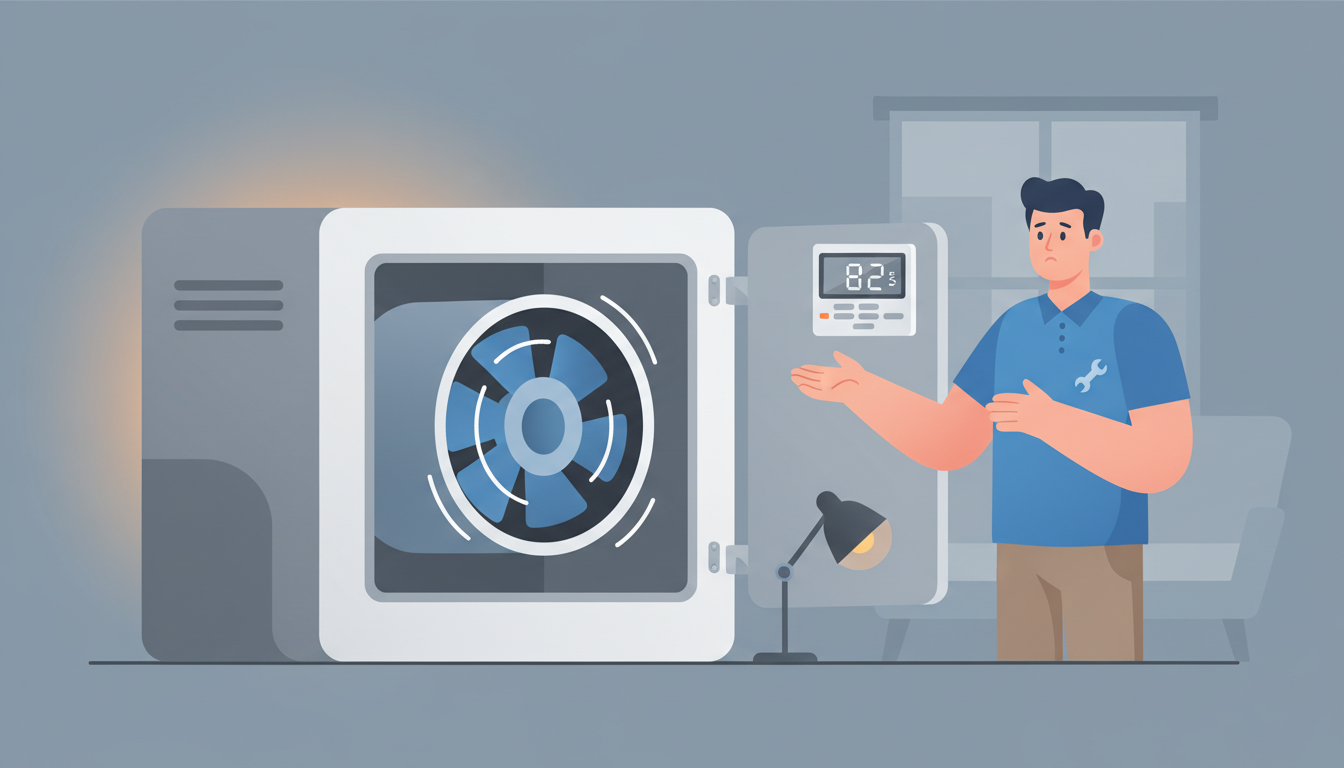
When your blower motor runs continuously without stopping, it means something is telling the system to keep the fan on 24/7. This could be an intentional setting, a malfunctioning component, or an electrical issue. The constant operation puts unnecessary strain on your blower motor and can increase your monthly electricity costs by 20-30%.
Before you panic, understand that some causes are incredibly simple to fix (like a thermostat setting), while others require professional HVAC repair. Let's start with the easiest solutions first.
The #1 Reason: Check Your Thermostat Fan Setting
The most common culprit behind an HVAC blower running constantly is simply your thermostat fan setting. Most thermostats have two fan modes:
AUTO Mode: The blower only runs during active heating or cooling cycles. When your home reaches the desired temperature, both the heating/cooling system AND the blower turn off. This is the most energy-efficient setting.
ON Mode: The blower runs continuously, 24 hours a day, regardless of whether your system is actively heating or cooling. Many homeowners accidentally switch to this mode without realizing it.
How to Fix It
Walk over to your thermostat right now and look for the fan setting. If it says "ON," switch it to "AUTO." Wait 3-4 minutes to see if the blower shuts off. If your HVAC fan won't turn off after making this change, the problem lies elsewhere in your system.
Pro Tip: Some homeowners intentionally run their fan continuously for better air circulation and filtration. If that's your goal, just be aware you'll see higher energy bills. If you didn't mean to leave it on, switching to AUTO will solve your problem instantly.
Reason #2: Fan Limit Switch Issues
The fan limit switch is a safety control inside your furnace that tells the blower motor when to start and stop. It has three main settings: the "fan on" temperature, the "fan off" temperature, and a high-limit safety temperature.
What Goes Wrong
Two common fan limit switch problems cause constant blower operation:
Manual Override Button: Many fan limit switches have a small push-button that allows manual override. If someone (or something) accidentally pressed this button, your furnace blower runs continuously until you release it. This button is usually located under the furnace access panel.
Defective Limit Switch: Over time, the fan limit switch can fail and get stuck in the "on" position. When this happens, the blower motor receives a constant signal to run, and it won't stop until the switch is replaced.
How to Fix It
Open your furnace access panel and locate the fan limit switch (consult your furnace manual if needed). Look for a small button or toggle that might be pushed in. If you find one, release it and listen for the blower to stop.
If there's no obvious manual override engaged or releasing it doesn't solve the problem, the switch itself may be faulty. Replacing a fan limit switch typically costs $150-$300 when done by a professional, including parts and labor.
Safety Note: Always turn off power to your furnace at the breaker box before opening the access panel or touching any components.
Reason #3: Thermostat Wiring Problems
Even if your thermostat fan setting shows "AUTO," faulty wiring can override that setting and keep your blower motor running nonstop. Common wiring issues include:
- Frayed or damaged wires creating short circuits
- Loose wire connections at the thermostat or furnace
- Corroded wire terminals
- Wires touching each other that shouldn't be in contact
Signs of Wiring Problems
Beyond the constantly running blower, watch for these additional warning signs:
- Thermostat display is blank or flickering
- Heating and cooling work intermittently
- Thermostat doesn't respond when you adjust settings
- You recently had thermostat work done
How to Fix It
Thermostat wiring runs low voltage (typically 24 volts), but troubleshooting electrical issues requires some expertise. If you're comfortable with basic electrical work:
- Turn off power to your HVAC system
- Remove your thermostat from the wall plate
- Inspect all wire connections for looseness, corrosion, or damage
- Tighten any loose connections and clean corroded terminals
- Look for any wires that appear frayed or have damaged insulation
If you find damaged wires or aren't confident working with electrical connections, this is a good time to call an HVAC technician. Professional thermostat wiring diagnosis and repair typically costs $100-$200.
For more comprehensive guidance on HVAC system repairs, check out our complete HVAC repair guide.
Reason #4: Control Board Malfunction
Your furnace's control board is essentially the brain of your HVAC system. It receives signals from the thermostat and coordinates all the components—including when to turn the blower motor on and off.
When the control board malfunctions, it can send constant "run" signals to the blower motor even when it should be off. Control board failures can result from:
- Power surges or lightning strikes
- Age and normal wear (typical lifespan is 10-15 years)
- Moisture exposure from condensation
- Overheating from blocked vents or dirty filters
Signs Your Control Board May Be Bad
- Blower runs constantly despite AUTO thermostat setting
- System won't start at all, or starts and stops repeatedly
- Unusual clicking or buzzing sounds from the furnace
- Error codes displayed on your furnace's diagnostic panel
- Weak airflow from vents (if this is your issue, read about common causes of weak airflow from HVAC vents)
How to Fix It
Control board replacement is not a DIY project. These circuit boards are expensive ($200-$600 for the part alone), and installation requires electrical expertise and diagnostic tools. An HVAC professional can test your control board, confirm it's the problem, and install a replacement.
If your furnace is more than 15 years old and needs a control board replacement, consider whether investing in a new, energy-efficient system might be more cost-effective than repairing an aging unit.
Reason #5: Blower Motor or Relay Problems
The blower motor itself or its associated relay switch can fail in a way that leaves the motor stuck in the "on" position.
ECM Motor Issues
Modern HVAC systems often use ECM (Electronically Commutated Motor) blowers, which are more energy-efficient than older single-speed motors. However, ECM motors have control modules that can fail. When the control module malfunctions, it may not receive or process the "turn off" signal from the control board.
Relay Switch Problems
The blower motor relay is an electrical switch that controls power to the motor. If this relay gets stuck in the closed position, power continues flowing to the motor continuously. Relays can stick due to:
- Electrical arcing that welds the contacts together
- Debris or corrosion preventing proper opening
- Manufacturing defects
How to Fix It
Diagnosing blower motor and relay issues requires testing with a multimeter and understanding of HVAC electrical systems. Signs you might have a motor or relay problem include:
- Humming or buzzing sounds from the furnace when blower should be off
- Blower speed seems constant regardless of system demands
- Recent power surges or electrical storms
Professional diagnosis costs $75-$150, and repairs range from $150-$800 depending on whether you need a relay replacement or a full motor replacement. For more details on motor repairs, see our article on common motor repairs in residential HVAC systems.
Is It Bad If My HVAC Blower Runs All the Time?
You might be wondering: "If my blower is running constantly, is it hurting anything, or should I just leave it alone?"
The Problems with Constant Blower Operation
Higher Energy Bills: Running your blower 24/7 can add $30-$60 per month to your electricity bill, depending on your system size and local energy rates. That's $360-$720 per year in wasted energy.
Increased Wear and Tear: Blower motors have a finite lifespan measured in operating hours. Running constantly means you'll need motor replacement much sooner—potentially cutting the motor's life in half.
Temperature Inconsistency: When the blower runs continuously in winter, it keeps circulating air even after the heating cycle ends. This pushes cooler air through your home, making it feel drafty and uncomfortable.
Higher Humidity in Summer: During cooling mode, your air conditioner removes humidity from your home as condensation on the evaporator coil. When the blower runs constantly, it can blow that moisture back into your home before it has time to drain away, making your house feel muggy.
When Constant Running IS Intentional
Some homeowners choose to run their blower continuously on purpose to:
- Improve air filtration (air passes through your filter more often)
- Reduce hot and cold spots by constantly circulating air
- Better distribute air in multi-story homes
If you're intentionally running your fan in ON mode for these benefits, that's fine—just understand the tradeoffs in energy costs and system wear. However, if your blower won't stop even when set to AUTO, you have a problem that needs fixing.
DIY Troubleshooting Checklist
Before calling a professional, work through this systematic checklist:
Step 1: Check Thermostat Setting
- Verify fan mode is set to "AUTO," not "ON"
- Replace thermostat batteries if it's battery-powered
- Wait 3-4 minutes after changing settings
Step 2: Inspect Fan Limit Switch
- Turn off power at the breaker
- Open furnace access panel
- Look for a pushed-in manual override button
- Release any engaged override
Step 3: Examine Thermostat Wiring
- Remove thermostat from wall plate
- Check for loose, damaged, or corroded wires
- Tighten connections if needed
Step 4: Reset Your System
- Turn off power to HVAC system for 3-5 minutes
- Turn power back on and observe behavior
- Sometimes a simple reset clears temporary glitches
Step 5: Check Your Air Filter
- A severely clogged filter can cause various system problems
- Replace filter if it's dirty or hasn't been changed in 2-3 months
If you've completed these steps and your furnace blower won't stop running, it's time to call a qualified HVAC technician.
When to Call an HVAC Professional
Some blower problems are beyond DIY fixes and require professional expertise:
Call a Professional If:
- You've verified the thermostat is on AUTO but the blower still runs
- You found damaged wiring but aren't confident repairing it
- Your system is making unusual noises (grinding, squealing, banging)
- You see error codes on your furnace display
- Your furnace is more than 10 years old and having multiple issues
- You smell burning odors coming from the furnace
- The circuit breaker keeps tripping when the blower runs
What to Expect: A service call typically costs $75-$150 for diagnosis, plus repair costs if components need replacement. Most HVAC companies offer free estimates, so get quotes from 2-3 local providers before committing to expensive repairs.
How Much Does It Cost to Fix a Constantly Running Blower?
Repair costs vary widely depending on the underlying cause:
- Thermostat setting adjustment: $0 (DIY)
- Thermostat replacement: $100-$300
- Fan limit switch replacement: $150-$300
- Thermostat wiring repair: $100-$200
- Control board replacement: $400-$900
- Blower motor relay: $150-$300
- Blower motor replacement: $400-$800
- Complete furnace replacement: $2,500-$6,000+
The good news: The cheapest solutions (thermostat settings and simple switch issues) are also the most common causes. More expensive repairs like control boards and motor replacements are less frequent.
Preventing Future Blower Problems
Once you've solved your constantly running blower issue, take these preventive steps:
1. Schedule Annual HVAC Maintenance Professional tune-ups catch small problems before they become expensive breakdowns. Technicians clean components, test controls, and identify wear before failures occur.
2. Change Air Filters Regularly Replace filters every 1-3 months depending on usage, pets, and allergies. Clean airflow reduces strain on your blower motor and entire system.
3. Keep Your Thermostat Clean Dust buildup inside the thermostat can cause false readings and erratic behavior. Gently vacuum or dust it quarterly.
4. Upgrade to a Smart Thermostat Modern smart thermostats provide better control, alert you to system problems, and prevent accidental settings changes that cause blowers to run constantly.
5. Address Problems Quickly Strange noises, weak airflow, or unusual system behavior are early warning signs. Don't ignore them—small issues become expensive repairs when left unaddressed.
Frequently Asked Questions
Q: Can I manually turn off my HVAC blower if it won't stop running?
Yes, you can turn off power to your furnace at the circuit breaker panel as a temporary solution. However, this shuts down your entire heating system, not just the blower. This is only a short-term fix while you troubleshoot the actual problem or wait for a technician.
Q: Why does my HVAC blower run when the thermostat is completely off?
If your thermostat is set to "OFF" but the blower still runs, you likely have a control board problem, a stuck relay, or faulty thermostat wiring creating a short circuit. This requires professional diagnosis since the control signal isn't reaching the blower motor properly.
Q: Does a constantly running blower mean I need a new furnace?
Not necessarily. Most constantly running blower problems can be fixed with component replacements costing a few hundred dollars. However, if your furnace is 15+ years old, has multiple failing components, and requires expensive repairs, replacement might be more economical than continuing to repair an aging system.
Q: How long should my HVAC blower run after the heating cycle ends?
In AUTO mode, your blower should run for 30-90 seconds after the heating cycle completes to clear residual heat from the heat exchanger. If it runs longer than 2-3 minutes after the burner shuts off, something isn't working correctly.
Q: Will running my HVAC blower constantly damage my air conditioner?
Running the blower constantly when your AC isn't actively cooling won't directly damage the air conditioner components, but it can reintroduce humidity into your home and make your system work harder during the next cooling cycle. It also increases wear on the blower motor itself, which serves both heating and cooling.
Conclusion: Take Action on Your Constantly Running Blower
An HVAC blower running constantly is more than just an annoyance—it's costing you money, wearing out your equipment, and potentially signaling a bigger problem with your system. The good news is that you now have a clear roadmap for identifying and fixing the issue.
Start with the simplest solution: check your thermostat fan setting and switch from ON to AUTO. If that doesn't solve it, work through the troubleshooting checklist we provided, checking the fan limit switch, inspecting wiring, and resetting your system.
If your DIY efforts don't stop the blower, don't delay calling a qualified HVAC technician. What starts as a constantly running blower can escalate into more expensive problems if left unaddressed. Early professional diagnosis saves money in the long run and ensures your home stays comfortable year-round.
Remember: Regular maintenance is your best defense against HVAC problems. Schedule annual tune-ups, change your filters faithfully, and address small issues before they become major repairs. Your heating and cooling system is one of the biggest investments in your home—take care of it, and it will take care of you.
Ready to get your HVAC blower running properly again? Don't let a constantly running fan drain your wallet and wear out your system. Take action today!