
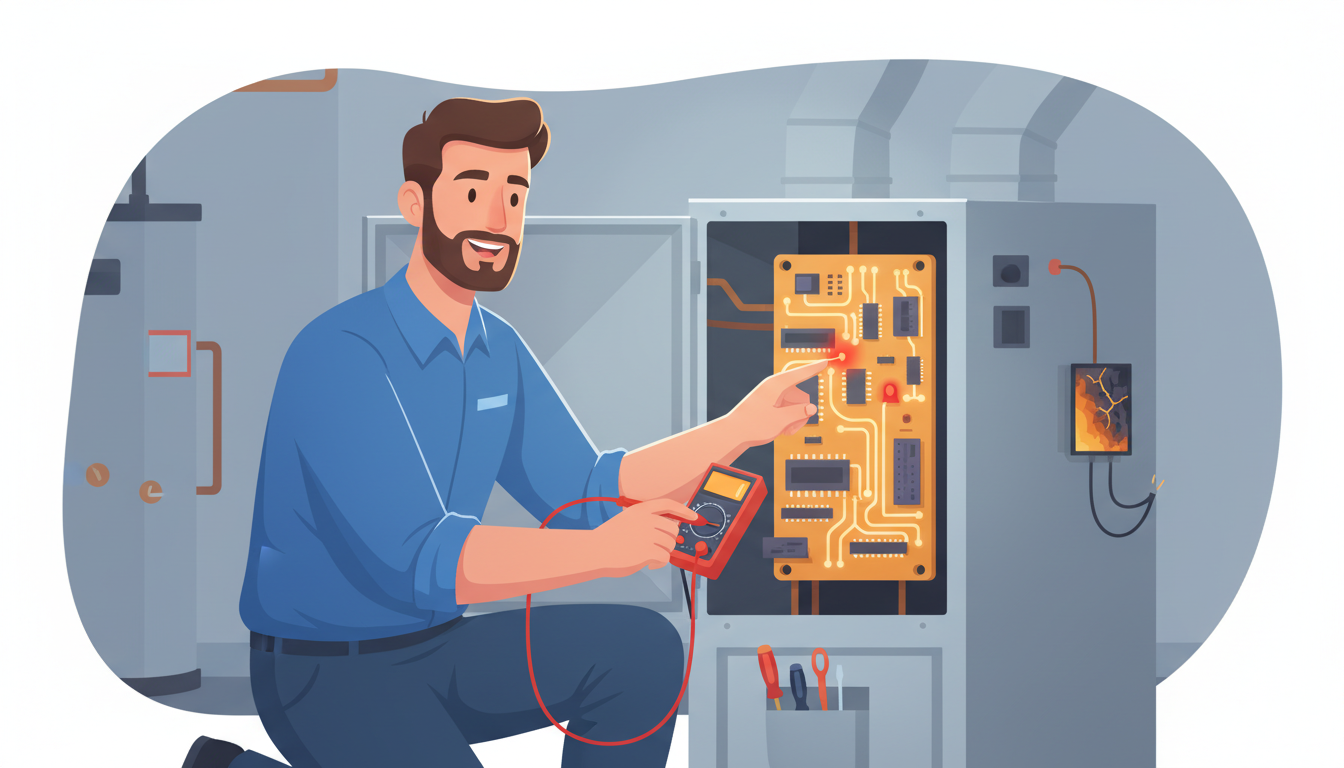
Why Your HVAC Control Board Fails (And What You Can Do About It)
Why Your HVAC Control Board Fails (And What You Can Do About It)
Is your heating and cooling system acting up? One day everything works fine, and the next, you're stuck with no heat in winter or no AC in summer. If your HVAC technician mentions a "failed control board," you might be wondering what that means—and more importantly, why it happened.
Your HVAC control board is the brain of your entire heating and cooling system. When it fails, your whole system can stop working. Understanding why HVAC control boards fail can help you prevent future problems and know what to expect when repairs are needed.
What Does Your HVAC Control Board Actually Do?
Before we dive into why control boards fail, let's understand what they do. Your HVAC control board is essentially a circuit board (also called a printed circuit board or PCB) that manages all the electrical components in your system.
Think of it as the conductor of an orchestra. The control board receives signals from your thermostat and coordinates the operation of critical components like:
- The blower motor that circulates air through your home
- The gas valve that controls fuel flow to your furnace
- The igniter that starts the heating process
- The inducer motor that exhausts combustion gases
- The compressor in your air conditioning system
- Various safety switches and sensors
When your thermostat signals that your home needs heating or cooling, the control board springs into action. It sends precise electrical signals to each component at exactly the right time, ensuring your system operates safely and efficiently.
The Top Reasons Why HVAC Control Boards Fail
1. Power Surges and Voltage Spikes
One of the most common culprits behind HVAC control board failure is electrical problems. Power surges from lightning strikes or sudden changes in the electrical grid can send a spike of high voltage through your system. These voltage spikes can instantly fry delicate electronic components on the circuit board.
Even small fluctuations you don't notice—like when your utility company switches power sources—can gradually damage the protective coatings on components. Over time, this weakens the board until it eventually fails.
Brownouts are particularly dangerous. When power drops temporarily and then surges back, it can overwhelm the control board's electrical components. The sudden return of power acts like a hammer hitting fragile circuitry.
What you can do: Installing a whole-home surge protector can shield your HVAC system from most power surges. For around $200-400, this relatively inexpensive protection can save you from a $400-1,200 control board replacement.
2. Moisture and Water Damage
Water and electronics don't mix—and your control board is no exception. Moisture damage is a leading cause of HVAC control board problems, especially in air conditioning systems.
In summer, moisture can leak from your indoor evaporator coil onto the control board below. Even small amounts of condensation can create electrical shorts or cause corrosion on the circuit board. Over time, this leads to component failure.
Water damage doesn't just come from leaks. High humidity in your home or condensation buildup inside the unit can also expose your control board to moisture. This is why you might notice more control board failures during humid summer months.
What you can do: Make sure your condensate drain line is clear and draining properly. If you notice water around your HVAC unit, address it immediately before it damages your control board.
3. Overheating from Poor Airflow
Your control board generates heat during normal operation, but it's designed to dissipate that heat safely. However, when airflow through your system is restricted, temperatures inside the unit can climb to dangerous levels.
Poor airflow forces your system to work harder and run longer, which generates more heat. This excessive heat can literally cook the electronic components on your control board, causing them to fail prematurely.
Common causes of restricted airflow include:
- Dirty air filters that haven't been changed
- Blocked return vents or supply registers
- Closed doors limiting air circulation
- Dirty evaporator or condenser coils
- Undersized ductwork
What you can do: Change your air filter every 1-3 months. Keep all vents and registers open and unobstructed. Schedule annual professional maintenance to keep your coils clean and your system running efficiently.
4. Age and Normal Wear and Tear
Like any electronic device, HVAC control boards have a limited lifespan. The constant heating and cooling cycles create thermal stress on the components. Each time your system turns on and off, electrical components expand and contract slightly.
Most HVAC control boards last 10-20 years with proper maintenance. However, if your system runs frequently (in extreme climates or poorly insulated homes), your control board may wear out sooner.
Age-related failures often happen gradually. You might notice intermittent problems before complete failure—like occasional error codes or the system randomly shutting off.
5. Loose Wiring and Vibration Damage
Your furnace vibrates slightly every time it operates. Over months and years, these vibrations can cause wiring connections on the control board to work loose. A loose connection creates electrical resistance, which generates heat and can spark.
Loose wires can also create intermittent connections, causing your system to behave erratically. One day it works fine, the next it doesn't—and that inconsistency can be frustrating to diagnose.
Additionally, if your system wasn't installed properly or has become unlevel over time, excessive vibration can accelerate this wear.
What you can do: Annual professional maintenance includes checking all electrical connections. An experienced technician can spot loose connections before they cause a control board failure.
6. Dirt, Dust, and Debris Buildup
While it sounds simple, dirt accumulation can kill your control board. Dust acts as an insulator, trapping heat against components that need to dissipate it. When electronic components can't cool themselves, they overheat and fail.
Dust can also create pathways for electrical current where it shouldn't go, causing shorts. And if that dust combines with moisture, you've got a recipe for corrosion and failure.
Dirt is especially problematic in relay terminals. These mechanical switches on your control board can get gummed up with dust and debris, causing them to stick open or closed. When relays malfunction, your system can't properly control components like the blower motor or compressor.
7. Static Electricity Damage
Here's a cause that many homeowners don't realize: static electricity can destroy control boards. This most commonly happens during installation or repair work.
When an HVAC technician walks across a carpeted floor and then touches your control board, the static discharge can damage sensitive electronic components. Just like you can feel a shock when you touch a doorknob in winter, that same shock can fry transistors on a circuit board.
This is why reputable HVAC companies use anti-static straps and proper grounding procedures when working on control boards. Unfortunately, DIY electrical HVAC repairs can be risky for this very reason.
8. Failed Components Creating Cascading Damage
Sometimes a control board fails because another component in your system has failed first. For example, if a blower motor shorts out, it can send excessive current back through the control board, damaging it in the process.
Similarly, a failing transformer or capacitor can create voltage irregularities that stress the control board. This is why experienced technicians don't just replace the control board—they investigate what caused it to fail in the first place.
Signs Your HVAC Control Board Is Failing
Catching control board problems early can sometimes prevent complete failure. Watch for these warning signs:
No Heating or Cooling
The most obvious sign is when your system simply won't turn on. You adjust the thermostat, but nothing happens. The control board might have failed completely, leaving your entire system inoperable.
Intermittent Operation
If your system works sometimes but not others, your control board might be dying. Intermittent failures often indicate cracked solder joints, failing capacitors, or temperature-sensitive component damage that only shows up under certain conditions.
The Blower Runs Constantly
When your blower fan runs non-stop—even when the system isn't heating or cooling—a relay on the control board might be stuck closed. This wastes energy and can overheat your blower motor.
LED Error Codes
Modern control boards have LED lights that flash diagnostic codes when problems occur. If you see flashing lights on your furnace control board, write down the pattern (number of flashes, pauses, etc.) and look it up in your owner's manual or call a professional.
These error codes can indicate control board issues or problems with other components that the control board is detecting.
Strange Noises or Burning Smells
If you notice unusual clicking, buzzing, or humming sounds coming from your HVAC unit, it could indicate relay problems on the control board. More concerning is a burning smell, which might mean components on the board are overheating or have already failed.
Never ignore burning smells—shut your system off immediately and call a professional.
Your Breaker Keeps Tripping
If your HVAC breaker keeps tripping, it might be trying to protect your home from a control board short circuit. A failing control board can draw excessive current or create shorts that trip the breaker as a safety measure.
How to Test if Your Control Board Is Bad
While diagnosing control boards requires professional expertise, there are a few things you can safely check:
Visual inspection: Turn off power to your unit at the breaker. Open the access panel and look at the control board with a flashlight. Look for:
- Burn marks or discoloration
- Bulging or leaking capacitors
- Cracked or broken components
- Corrosion or moisture stains
Check for power: With a multimeter, you can verify that the control board is receiving power (usually 24 volts AC). However, testing individual components on the board requires specialized knowledge and equipment.
Listen for relay clicks: When your thermostat calls for heat, you should hear relays clicking on the control board as it activates various components. No clicks might indicate a dead board.
For anything beyond visual inspection, call a professional. Modern control boards are complex, and incorrect testing can cause further damage or create safety hazards.
Can You Replace an HVAC Control Board Yourself?
Technically, yes—if you're handy and comfortable with electrical work. However, most homeowners should leave this to professionals for several reasons:
Safety concerns: You're working with both 120-volt and 24-volt electrical systems. Mistakes can cause electric shock, fires, or equipment damage.
Warranty issues: DIY replacement typically voids any manufacturer warranty on the new control board. If the replacement board fails, you'll pay full price for another one.
Diagnosis matters: Installing a new control board without determining why the old one failed often leads to another failure. Professionals investigate root causes—like voltage issues or failed components—that caused the problem.
Programming and calibration: Some modern control boards require programming or calibration after installation to work with your specific system.
Cost of mistakes: A control board costs $150-800 depending on your system. If you install it incorrectly and damage it, that's an expensive mistake.
That said, if you have HVAC experience and the right tools, replacing a control board is certainly possible. Just make sure you:
- Turn off all power at the breaker
- Take photos of all wire connections before disconnecting anything
- Use anti-static precautions
- Verify the replacement board is the exact model for your system
- Investigate why the original board failed
What Does HVAC Control Board Replacement Cost?
Control board replacement costs vary widely based on several factors:
Parts cost: The control board itself typically costs:
- Basic furnace control boards: $150-400
- Mid-range boards: $400-600
- High-end or integrated boards: $600-1,200
Labor cost: Professional installation usually runs $150-350 depending on your location and the complexity of the job.
Total replacement cost: Expect to pay $300-1,500 for complete control board replacement, with most homeowners paying around $500-800.
Factors affecting cost:
- Age and brand of your system (older models may require harder-to-find boards)
- Type of board (integrated boards that include additional functions cost more)
- Diagnostic time to confirm the board is actually the problem
- Whether other components also need replacement
- Emergency service fees for after-hours or weekend calls
Should You Repair or Replace Your Entire HVAC System?
If you're facing a control board replacement, you might wonder whether it's worth fixing your current system or replacing it entirely. Consider these factors:
Age of your system: If your HVAC system is over 15 years old, you might want to replace it rather than sink money into repairs. Modern systems are significantly more efficient, potentially saving you money on energy bills.
Repair costs vs. replacement costs: A common rule of thumb: if the repair costs more than 50% of what a new system would cost, and your system is more than halfway through its expected lifespan, replacement often makes more financial sense.
Efficiency: Old systems often operate at 60-70% efficiency, while new systems can reach 95%+ efficiency. Over 10-15 years, the energy savings can offset the higher upfront cost.
Frequency of repairs: If you're calling for repairs multiple times per year, those costs add up. A new system with a warranty provides peace of mind.
How to Prevent Control Board Failures
While you can't prevent all control board failures, you can significantly reduce the risk:
Change filters regularly: This single action prevents overheating, improves efficiency, and extends your entire system's life—not just the control board.
Schedule annual maintenance: Professional tune-ups catch small problems before they become big ones. Technicians clean components, tighten connections, and verify proper operation.
Install surge protection: Whole-home surge protectors shield all your electronics, including HVAC control boards, from power surges and voltage spikes.
Keep the area clean: Don't store items near your furnace that create dust. Keep the area around your HVAC equipment clean and clear.
Address problems promptly: When you notice unusual behavior, don't wait. Small issues often escalate into major failures if ignored.
Maintain proper humidity: Use dehumidifiers in damp basements where furnaces are located. Excessive humidity accelerates corrosion and moisture damage.
Check condensate drainage: Ensure your AC's condensate drain line flows freely. A clogged drain can overflow onto your control board.
Understanding Control Board Warranties
Most HVAC control boards come with manufacturer warranties:
Standard coverage: Typically 1-5 years on the control board itself, though some premium manufacturers offer up to 10 years.
What's covered: The warranty usually covers defects in materials and workmanship—meaning if the board fails due to manufacturing defects, it's replaced free.
What's NOT covered: Warranties typically exclude:
- Damage from power surges, lightning, or electrical problems
- Water or moisture damage
- Improper installation
- Normal wear and tear
- Damage from other failed components
Labor costs: Even with a warranty, you usually still pay for labor to diagnose and install the replacement board.
Registration requirements: Many manufacturers require you to register your equipment within a certain timeframe to activate the full warranty.
Always keep your purchase receipts and warranty documentation. If your control board fails prematurely, a warranty can save you hundreds of dollars.
When to Call a Professional
Call an HVAC professional immediately if you experience:
- Complete system failure with no heating or cooling
- Burning smells or visible smoke
- Repeated breaker trips
- LED error codes you can't resolve
- Water pooling around your HVAC unit
- Unusual noises from the control board area
Even if you're handy, control board issues involve complex diagnostics and safety considerations. A qualified technician has the tools, training, and experience to:
- Accurately diagnose whether the control board is actually the problem
- Identify what caused the failure to prevent recurrence
- Safely replace the board with proper anti-static procedures
- Test the system thoroughly to ensure proper operation
- Provide warranty protection on parts and labor
Need help with your HVAC control board issues? Our comprehensive HVAC repair guide covers common problems and solutions to keep your system running smoothly.
Frequently Asked Questions
How long do HVAC control boards typically last?
With proper maintenance, most HVAC control boards last 10-20 years. However, factors like power surges, moisture exposure, and poor maintenance can shorten that lifespan significantly. Systems that run continuously or experience frequent power fluctuations may see control boards fail sooner.
Can a bad control board cause a furnace to short cycle?
Yes, a failing control board can absolutely cause short cycling—when your furnace turns on and off repeatedly. This happens when the board can't properly regulate system operation due to damaged relays, failed components, or intermittent electrical issues.
Will a failed control board prevent my furnace from igniting?
Yes, if the control board fails completely, your furnace won't ignite because the board controls the ignition sequence. It coordinates the inducer motor, igniter, and gas valve in precise order. Without a functioning control board, this sequence can't happen.
Are universal HVAC control boards reliable?
Universal control boards can work, but original equipment manufacturer (OEM) boards designed specifically for your system are generally more reliable. Universal boards may not have all the same features or proper fit, and some manufacturers void warranties if non-OEM parts are used.
Can I prevent control board failure from power surges?
Installing a whole-home surge protector significantly reduces the risk of surge-related control board damage. While it can't protect against direct lightning strikes, it shields your system from most power fluctuations and surges from the electrical grid.
Final Thoughts
Your HVAC control board is a critical component that deserves attention and protection. While control board failures can be expensive and inconvenient, understanding why they happen helps you take preventive action.
Regular maintenance, prompt attention to problems, and protective measures like surge protectors can extend your control board's life and keep your home comfortable year-round. When problems do arise, working with qualified HVAC professionals ensures proper diagnosis, safe repairs, and lasting solutions.
Remember, your heating and cooling system is an investment in your home's comfort and value. Taking care of it—including that often-overlooked control board—pays dividends in reliability, efficiency, and peace of mind.