Why HVAC Humidity Problems Often Lead to Repair Calls
Why HVAC Humidity Problems Often Lead to Repair Calls
Your home feels sticky even though the air conditioner is running. You notice water pooling around your AC unit. Your energy bills have skyrocketed. These aren't just comfort issues—they're warning signs that HVAC humidity problems are about to cost you money in repair calls.
Humidity-related issues are among the most common reasons homeowners call HVAC technicians. When your system can't properly manage moisture levels, it triggers a cascade of mechanical problems that require professional intervention. Understanding why this happens can help you catch issues early and potentially avoid expensive emergency repairs.
The Hidden Connection Between Humidity and HVAC Failures
Most homeowners think of their HVAC system purely as a temperature control device. But your air conditioner has another critical job: removing excess moisture from indoor air. When this dehumidification process breaks down, it doesn't just make your home uncomfortable—it creates conditions that damage the system itself.
High humidity AC problems force your equipment to work harder and longer than designed. The compressor runs continuously trying to reach your thermostat setting. Components that should last 15-20 years wear out in 10. What starts as a minor humidity control issue quickly becomes a major repair bill.
How Your AC Actually Removes Moisture
Your air conditioning system removes humidity through a process that happens at the evaporator coil. As warm, humid air passes over the cold coil surface, moisture condenses into water droplets—just like a cold glass of water "sweats" on a humid day. This water should drain away through the condensate drain system, leaving drier air to circulate through your home.
When this process works correctly, your AC maintains indoor relative humidity between 30-50%, which is the ideal range for comfort and equipment protection. But when something disrupts this moisture removal, problems multiply fast.
Frozen Evaporator Coils: The Most Common Humidity Repair Call
Nothing sends homeowners reaching for the phone faster than discovering their AC has turned into an ice block. Frozen evaporator coils are one of the most frequent HVAC repair calls, and humidity plays a starring role.
Here's what happens: when humidity levels are extremely high, your evaporator coil has to handle more condensation than normal. If airflow is restricted even slightly—by a dirty filter, closed vents, or ductwork issues—the coil temperature drops below freezing. That condensation turns to ice instead of draining away.
The ice buildup creates a vicious cycle. Ice blocks airflow, which makes the coil even colder, which creates more ice. Within hours, your entire coil can become encased in ice, completely stopping air circulation. Your system shuts down, often triggering safety switches to prevent compressor damage.
Why Frozen Coils Require Professional Help
While you can turn off your system and let the ice melt, that doesn't solve the underlying problem. A technician needs to identify why the coil froze in the first place. Common culprits include:
- Restricted airflow from clogged air filters or blocked return vents
- Low refrigerant levels that cause abnormal temperature drops
- Dirty evaporator coils that can't transfer heat properly
- Oversized AC units that short-cycle before completing dehumidification
- Ductwork leaks pulling in excessive humid outdoor air
Each of these issues requires professional diagnosis and repair. Ignoring the problem means it will happen again, often causing additional damage each time.
Condensate Drain Clogs and Water Damage
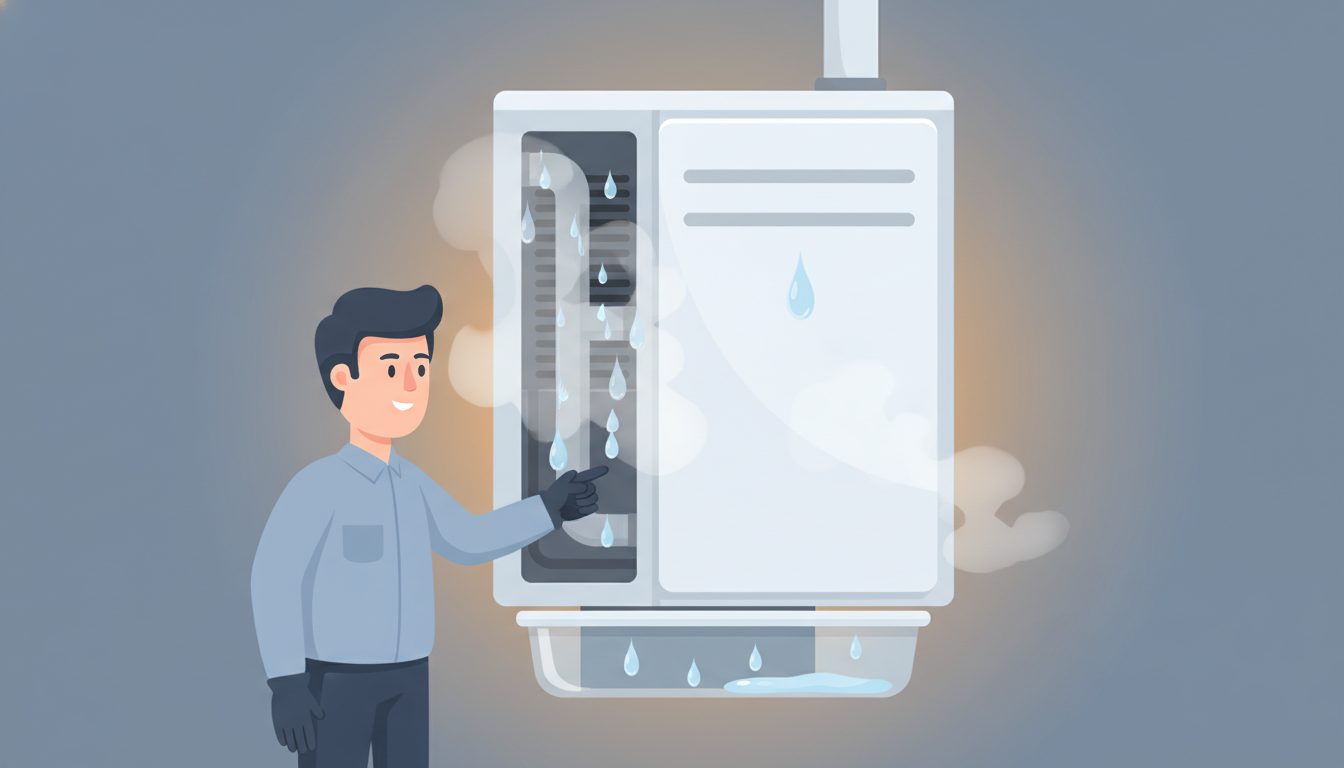
Your AC system can produce 5-20 gallons of water per day during humid weather. All that moisture has to go somewhere—and when it doesn't drain properly, you're looking at an emergency repair call.
The condensate drain system includes a drain pan under the evaporator coil, a drain line (often PVC pipe), and sometimes a condensate pump. In high humidity conditions, this system works overtime. When algae, mold, or debris clogs the drain line, water backs up into the drain pan.
Modern systems have a float switch that detects this backup and shuts down the AC to prevent flooding. You might discover this on the hottest, most humid day of summer when your AC suddenly stops working. When you check, you find standing water in the drain pan or, worse, water damage to your ceiling or floors.
The Real Cost of Condensate Problems
A simple drain cleaning might cost $75-150, but if the backup caused water damage, you're looking at much higher costs. Water that overflows from the drain pan can:
- Damage drywall and insulation around the air handler
- Create mold growth in ductwork and walls
- Ruin hardwood floors or carpeting below the unit
- Corrode electrical components and safety switches
This is why humidity-related condensate problems are among the most expensive repair calls. Prevention through regular maintenance is far cheaper than emergency water damage repair. For guidance on handling HVAC system water leaks, professional inspection is essential.
Oversized Systems: When Bigger Isn't Better
One of the most frustrating HVAC humidity problems comes from a system that's too powerful for your home. An oversized air conditioner cools your home quickly—too quickly, in fact—which creates a humidity nightmare.
Here's why oversized AC humidity issues lead to repair calls: When your AC unit is too large, it reaches your thermostat setting in just 2-3 minutes. The system shuts off before the evaporator coil gets cold enough to properly remove moisture from the air. Your home might be 72°F, but it feels like 78°F because the air is saturated with humidity.
The Compressor Pays the Price
This rapid on-off cycling is called "short cycling," and it's murder on your compressor. Each time your AC starts up, the compressor experiences significant electrical and mechanical stress. Systems designed to run in 15-20 minute cycles are instead starting and stopping dozens of times per hour.
The result? Compressor failure years before the expected lifespan. Since the compressor is the most expensive component in your AC system—often costing $1,500-2,500 to replace—this humidity-related problem generates some of the costiest repair calls.
You'll also notice:
- Uneven temperatures between rooms
- Hot and cold spots throughout the house
- Humidity levels that fluctuate wildly
- Higher energy bills despite shorter run times
- Frequent breakdowns of other system components
Unfortunately, the only real fix for an oversized system is replacement with properly-sized equipment. This makes proper load calculation critical during installation—a lesson many homeowners learn the expensive way.
Mold Growth and Indoor Air Quality Emergencies
High humidity HVAC problems create the perfect environment for mold and mildew growth. When your system can't control moisture, you'll start noticing that musty smell—a clear sign that mold is growing somewhere in your HVAC system or home.
If you notice a musty smell from your HVAC system, immediate attention is needed to prevent health issues and system damage.
Mold doesn't just affect air quality; it damages your HVAC system directly:
- Clogged Coils: Mold growing on evaporator coils acts as insulation, reducing heat transfer efficiency and causing freezing issues
- Blocked Drains: Mold and algae are the primary causes of condensate drain clogs
- Contaminated Ductwork: Mold spores spread through your duct system, requiring professional duct cleaning
- Corroded Components: Mold growth accelerates corrosion of metal parts, leading to premature failure
When Mold Becomes a Repair Emergency
Some homeowners try to clean visible mold themselves, but mold inside your HVAC system requires professional remediation. A technician must:
- Clean or replace moldy evaporator coils
- Sanitize drain pans and drain lines
- Treat or replace contaminated ductwork
- Install UV lights to prevent future mold growth
- Address the humidity problem causing mold in the first place
This comprehensive mold remediation often costs $500-1,500 or more, making it one of the more expensive humidity-related repair calls.
Compressor Strain and Premature System Failure
When your AC struggles with humidity control HVAC performance suffers across the board. The compressor—your system's heart—bears the brunt of humidity-related stress.
In high humidity conditions, your air conditioner must remove both sensible heat (temperature) and latent heat (moisture). Removing latent heat requires significantly more energy. When humidity is excessive, your compressor runs longer cycles at higher pressures, generating more heat and consuming more power.
Warning Signs of Compressor Stress
Before a compressor fails completely (requiring a $1,500-3,000 repair or full system replacement), you'll often notice:
- AC running constantly without reaching the set temperature
- Circuit breakers tripping frequently
- Unusual noises from the outdoor unit (grinding, squealing, or chattering)
- Hot air blowing from vents despite the system running
- Dramatically higher electric bills
These symptoms often bring homeowners to call for emergency HVAC repair. A technician will measure compressor function, check refrigerant pressures, and assess whether humidity-related overwork has damaged the compressor beyond repair.
Thermostat and Sensor Failures in Humid Environments
Here's a problem many homeowners don't connect to humidity: thermostats and sensors can fail when exposed to excessive moisture. Modern HVAC systems rely on various sensors—temperature sensors, humidity sensors, pressure switches, and more. When these get corroded or short-circuited by moisture, your entire system stops working correctly.
High humidity can cause:
- Erratic thermostat readings that don't match actual room temperature
- Systems that won't turn on or won't shut off
- Humidity sensors that give false readings, triggering incorrect system responses
- Corroded sensor connections that cause intermittent failures
These electrical issues require diagnostic work by a qualified technician. Replacing sensors and controls typically costs $150-400 per component, and humidity damage often affects multiple sensors simultaneously.
Ductwork Problems That Amplify Humidity Issues
Your ductwork plays a crucial but often overlooked role in humidity control. When ducts leak, they can pull in humid outdoor air or lose dehumidified indoor air—either way, your HVAC system can't keep up.
How Duct Leaks Create Repair Calls
Duct leakage in humid climates creates multiple problems:
- Return Leaks: Pull humid attic or crawlspace air into your system, overwhelming your AC's dehumidification capacity and causing frozen coils
- Supply Leaks: Lose cool, dehumidified air before it reaches living spaces, forcing your system to run continuously
- Condensation Damage: Cool air moving through ducts in hot, humid spaces causes condensation on duct surfaces, leading to water damage and mold
Homeowners typically discover duct problems when their AC can't maintain comfort despite running constantly. A duct inspection and sealing service costs $300-1,000 but often solves humidity problems that seemed impossible to fix.
Seasonal Patterns: When Humidity Repair Calls Spike
HVAC technicians see predictable patterns in humidity-related repair calls. Understanding these patterns helps you anticipate problems:
Early Summer (May-June): Systems that sat idle all winter suddenly have to handle high humidity. Clogged condensate drains and dirty coils cause the first wave of calls.
Peak Summer (July-August): Maximum humidity combined with maximum cooling demand pushes marginal systems over the edge. Compressor failures and frozen coils spike during heat waves.
Fall Transition (September-October): When outdoor humidity remains high but temperatures drop, oversized systems show their true colors with short-cycling and poor dehumidification.
Spring Humidity Surges: Spring rain and warm temperatures create surprisingly high indoor humidity, catching homeowners off-guard before they've switched to cooling mode.
DIY Troubleshooting Before Calling for Repair
Some humidity-related HVAC problems you can address yourself before calling a technician:
Simple Checks That Might Save a Service Call
- Replace your air filter: A clogged filter is the #1 cause of airflow restriction and frozen coils
- Check the condensate drain: Pour a cup of vinegar down the drain line to clear minor clogs
- Inspect visible ductwork: Look for disconnected or obviously damaged ducts you can see
- Clean outdoor unit: Remove debris blocking airflow to the condenser
- Verify thermostat settings: Make sure it's set to "Auto" not "On" (continuous fan operation can increase humidity)
- Check vents and returns: Ensure furniture, curtains, or closed doors aren't blocking airflow
When to Stop and Call a Professional
Don't attempt repairs if you notice:
- Refrigerant lines covered in ice
- Water actively leaking from the system
- Strange odors like burning, chemicals, or strong mildew
- Complete system shutdown or repeated breaker trips
- Unusual noises from the compressor or air handler
These situations require professional diagnosis and potentially urgent repair to prevent further damage.
For comprehensive troubleshooting steps, refer to our HVAC repair guide for detailed information on common issues.
Prevention: Stopping Humidity Problems Before They Start
The best way to avoid humidity-related repair calls is preventing problems in the first place. Here's what works:
Regular Maintenance Makes the Difference
Annual HVAC maintenance catches humidity problems early:
- Cleaning evaporator and condenser coils improves moisture removal efficiency
- Clearing condensate drains prevents backup and water damage
- Checking refrigerant levels ensures proper dehumidification
- Testing system controls verifies humidity sensors work correctly
- Inspecting ductwork identifies leaks that compromise humidity control
Most HVAC service plans cost $100-200 annually but prevent $500-2,000 repair bills.
Upgrades That Improve Humidity Control
If humidity problems persist despite maintenance, consider:
- Whole-home dehumidifiers: Installed in your ductwork, these remove moisture even when AC isn't running
- Variable-speed air handlers: Run longer at lower speeds, providing better dehumidification
- Smart thermostats with humidity sensing: Automatically adjust system operation to manage moisture
- Properly sized replacement equipment: If your system is oversized, replacement with correctly-sized equipment solves chronic problems
How Climate Affects Humidity Repair Call Frequency
Where you live significantly impacts how often humidity causes HVAC repairs:
Humid Climates (Southeast, Gulf Coast, Florida): Humidity-related repairs are the #1 service call category. Systems work year-round removing moisture, wearing out components faster.
Moderate Climates: Seasonal humidity problems during summer or humid spring weather create periodic spikes in repair calls.
Dry Climates: Humidity problems are less common but still occur, especially if ductwork pulls in unconditioned air or if systems are oversized.
Understanding your local climate helps you anticipate maintenance needs and budget for more frequent service in high-humidity areas.
FAQ About HVAC Humidity Problems and Repairs
Why does high humidity make my AC work harder?
High humidity AC problems occur because your air conditioner must remove both heat and moisture from the air. Removing moisture (latent heat) requires significantly more energy than just lowering temperature (sensible heat). When humidity is excessive, your AC runs longer cycles, uses more electricity, and experiences greater wear on the compressor and other components.
How do I know if humidity is damaging my HVAC system?
Watch for these warning signs that humidity is causing damage: water pooling around your indoor unit, ice forming on refrigerant lines or coils, musty odors when the system runs, rooms feeling sticky despite the AC running, system running constantly without reaching set temperature, or higher-than-normal energy bills. Any of these symptoms suggests humidity is stressing your HVAC equipment.
What are the most common signs of humidity-related HVAC problems?
The most frequent signs include: frozen evaporator coils (ice on indoor coil or refrigerant lines), water leaks from the indoor unit or ceiling near the air handler, musty or moldy smells from vents, excessive condensation on windows, rooms that feel clammy or sticky, short cycling (system turning on and off rapidly), and persistent comfort problems despite the thermostat being set correctly.
Can humidity cause my AC to freeze?
Yes, high humidity is one of the leading causes of frozen AC coils. When your evaporator coil must handle excessive moisture, especially combined with restricted airflow from a dirty filter or other issues, the coil temperature drops below freezing. The moisture that should drain away as water instead freezes on the coil, building up until it blocks all airflow and shuts down your system.
Should I call for HVAC repair if my house feels humid even when the AC runs?
Yes, persistent indoor humidity despite a running AC indicates a problem requiring professional diagnosis. Possible causes include an oversized system, clogged coils, ductwork leaks, low refrigerant, or a system that needs replacement. A technician can identify the specific issue and recommend appropriate repairs. Ignoring the problem typically leads to more expensive repairs as humidity damages additional components.
When to Call for Professional HVAC Repair
Don't wait until a minor humidity problem becomes a major repair emergency. Call a qualified HVAC technician when you notice:
- Any visible ice or frost on your system
- Water leaking from your indoor unit
- Persistent humidity problems despite normal operation
- Musty odors that don't go away
- System running constantly without maintaining comfort
- Unusual noises or performance changes
Early intervention often means the difference between a $150 service call and a $2,000 emergency repair.
Protect Your HVAC Investment
HVAC humidity problems aren't just about comfort—they directly threaten your system's reliability and lifespan. Understanding the connection between moisture control and equipment failures helps you spot warning signs early and take action before minor issues escalate into expensive repairs.
Your HVAC system is a significant investment, typically costing $5,000-10,000 to replace. Protecting that investment means addressing humidity problems promptly, maintaining your system regularly, and working with qualified professionals who understand how moisture impacts equipment performance.
If you're experiencing any signs of humidity-related HVAC problems, don't wait for a complete breakdown. Professional diagnosis and repair today can save thousands in emergency costs and extend your system's life by years.