How to Know When Duct Repair Should Come Before Equipment Repair
How to Know When Duct Repair Should Come Before Equipment Repair
Are you dealing with an HVAC system that just won't keep your home comfortable? Before you spend thousands on a new furnace or air conditioner, there's something critical you need to check first: your ductwork.
Here's the truth most homeowners don't realize: even the most advanced HVAC equipment can't overcome the problems caused by damaged, leaky, or poorly designed ductwork. In fact, your ducts could be the root cause of what seems like an equipment problem—and fixing them first could save you thousands of dollars.
In this guide, you'll learn exactly how to know when duct repair should come before equipment repair, what signs to look for, and how to make the smartest investment in your home's comfort system.
Why Your Ductwork Matters More Than You Think
Your ductwork is the circulatory system of your HVAC. Just like your body can't function properly with clogged arteries, your heating and cooling system can't work efficiently with compromised ducts.
The numbers tell a sobering story: typical air-duct systems lose between 25% and 40% of the heating or cooling energy produced by your HVAC equipment. That means up to 40% of the money you're spending on comfort is literally disappearing into your walls, attic, or crawlspace.
When ducts leak just 20% of the conditioned air passing through them, your HVAC system has to work 50% harder to maintain the same temperature. This extra strain doesn't just increase your energy bills—it dramatically shortens the lifespan of your equipment.
The 3-Step Framework: When Duct Repair Should Take Priority
Not sure whether to repair your ducts or replace your HVAC equipment first? Use this simple three-step decision framework to make the right choice.
Step 1: Check for Critical Duct Issues
Start by looking for these red flags that indicate your ductwork needs immediate attention:
Visible damage: Disconnected joints, large holes, crushed sections, or ducts that have separated from registers. If you can see light coming through duct connections in your attic or crawlspace, that's a critical leak.
Excessive energy bills: Has your heating or cooling bill jumped 20% or more without changes to your usage? Duct leakage is often the culprit, adding $200 to $300 annually to your energy costs.
Severe airflow problems: Some rooms get no air at all while others blast too much. This often indicates major duct leaks, blockages, or sizing problems that no amount of equipment repair will fix.
Step 2: Calculate the Age Factor
Both ductwork and HVAC equipment have finite lifespans, but they don't always age at the same rate:
Ductwork lifespan: Most duct systems last 10 to 15 years before they need significant repair or replacement. If your ducts are over 15 years old, they're likely compromising your system's performance.
Equipment lifespan: Furnaces and air conditioners typically last 15 to 20 years with proper maintenance. However, bad ductwork can cut this lifespan significantly.
Here's the key insight: if your ductwork is older than your HVAC equipment, or if both are approaching the end of their lifespans, prioritize the ducts. Installing new equipment on old, leaky ducts is like putting a brand-new engine in a car with four flat tires.
Step 3: Assess the ROI
Consider the return on investment for each repair:
Duct sealing and repair typically costs $500 to $2,000, while properly sealed and insulated ducts can improve your system's efficiency by 20%. That means if you're spending $2,000 per year on heating and cooling, duct repair could save you $400 annually—paying for itself in just a few years.
Major HVAC equipment repairs (like replacing a compressor) can cost $2,500 to $4,500. But if your ducts are losing 30% of your conditioned air, that expensive new compressor will still have to work overtime, reducing its lifespan and failing to deliver the comfort you're paying for.
Clear Signs Duct Repair Should Come Before Equipment Repair
Let's get specific about the warning signs that tell you your ductwork needs attention before you invest in equipment repairs or replacement.
Your HVAC Runs Constantly But Can't Keep Up
If your furnace or air conditioner runs non-stop yet struggles to reach the temperature you set on your thermostat, weak airflow from your vents is often the first clue.
This pattern typically indicates major air leakage in your duct system. The equipment itself may be functioning perfectly, but it's trying to condition air that never makes it to your living space.
Before you replace a system that appears "too small" or "worn out," have a professional perform airflow testing. You might discover your equipment is fine—it's just fighting against compromised ductwork.
Dramatic Temperature Differences Between Rooms
Walk through your home. Is your bedroom freezing while your living room is sweltering? Do you need to close vents in some rooms just to get adequate airflow in others?
These uneven temperatures rarely indicate equipment problems. Instead, they point to duct issues like leaks near some rooms and blockages near others, improperly sized ducts that can't deliver enough air to distant rooms, or disconnected duct sections that dump conditioned air into unconditioned spaces.
The frustrating part? Many homeowners spend thousands on new HVAC equipment trying to fix this problem, only to discover the temperature imbalances continue because the real issue was in the ductwork all along.
Your Energy Bills Keep Rising
Have you noticed your heating and cooling costs creeping up year after year, even though your usage hasn't changed?
When duct leakage accounts for 20% to 30% of energy loss, as studies consistently show, you're essentially heating or cooling your attic, crawlspace, and wall cavities instead of your living areas. That's money disappearing with nothing to show for it.
Here's a telling test: if your energy bills are significantly higher than your neighbors with similar-sized homes and similar equipment, duct problems are likely to blame.
You Have Constant Dust and Air Quality Issues
Do you find yourself dusting and vacuuming constantly, only to see surfaces coated again within days? Are family members experiencing more allergies or respiratory issues at home than elsewhere?
Holes and leaks in your ductwork create a two-way street: conditioned air escapes, and unconditioned air—along with dust, insulation fibers, mold spores, and other contaminants—gets pulled in and distributed throughout your home.
No amount of equipment repair will solve air quality problems caused by ductwork that's pulling dirty air from your attic or crawlspace and pumping it into your living areas.
Your HVAC System Is Young But Struggling
Perhaps the most frustrating scenario: you invested in new HVAC equipment just a few years ago, but it's already showing signs of wear or requiring repairs.
This often means your ductwork is forcing your new equipment to work much harder than it should. Leaky ducts create pressure imbalances that stress the blower motor. Inadequate return air (often due to crushed or blocked return ducts) makes the compressor work overtime.
When HVAC equipment fails prematurely, the ductwork is frequently the hidden culprit.
What Professional HVAC Technicians Check First
When diagnosing system problems, experienced HVAC professionals know to assess ductwork before recommending expensive equipment repairs. Here's what they look for:
Static Pressure Testing
Technicians measure the air pressure in your duct system using specialized gauges. Excessive static pressure indicates restrictions, leaks, or undersized ducts that are choking your system's performance.
Think of it like checking blood pressure—it reveals whether your HVAC's circulatory system is healthy or struggling.
Visual Duct Inspection
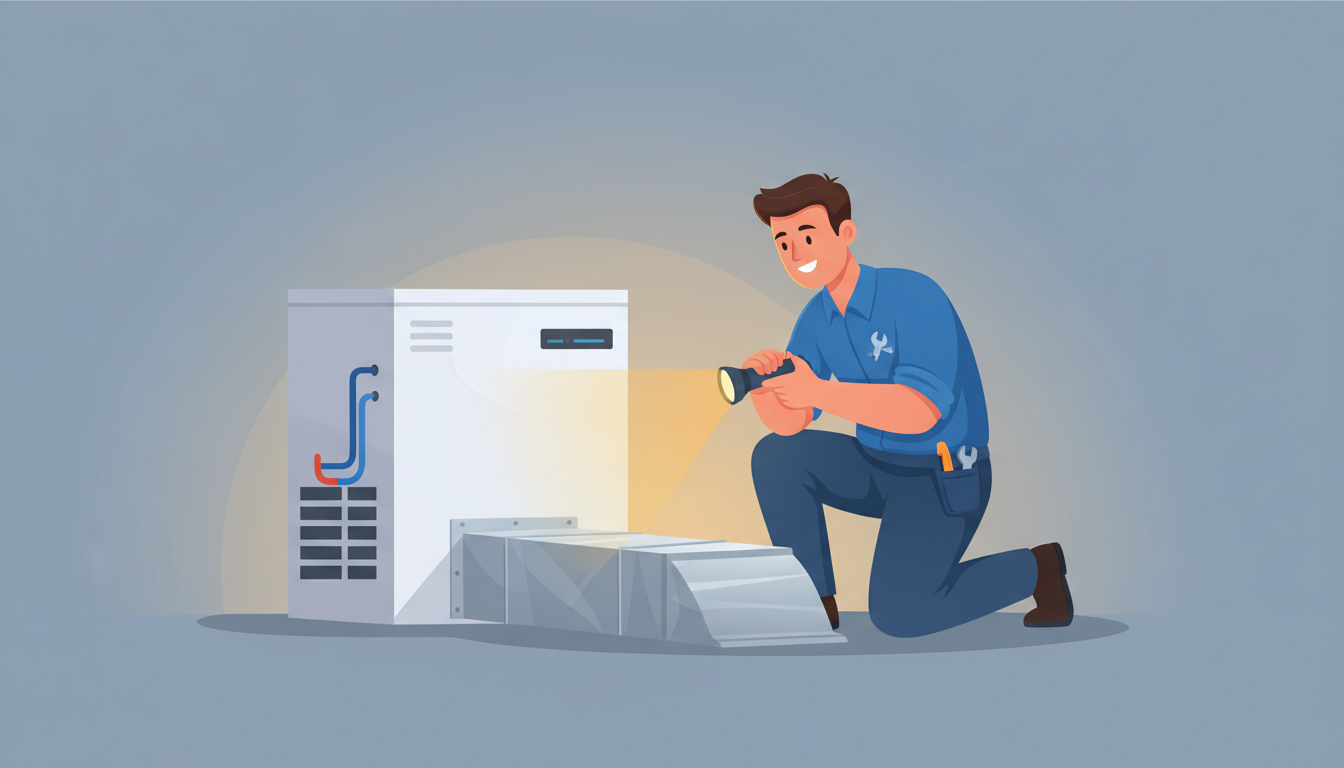
A thorough inspection of accessible ductwork in attics, crawlspaces, and basements reveals disconnected joints, crushed or kinked flex duct, missing or damaged insulation, improper duct sizing for the system capacity, and signs of mold growth or pest infiltration.
Many of these issues are invisible to homeowners but immediately obvious to trained technicians.
Blower Door and Duct Blaster Tests
These diagnostic tools measure exactly how much air is leaking from your duct system. A blower door test pressurizes your home to find where air is escaping. A duct blaster test specifically measures ductwork leakage.
These tests provide concrete data about whether your ducts need repair before investing in equipment replacement.
Manual J Load Calculation
Professional HVAC contractors perform Manual J calculations to determine your home's actual heating and cooling needs. This often reveals that your existing equipment is properly sized—but undersized, oversized, or poorly designed ductwork is preventing it from performing correctly.
Replacing equipment without addressing duct sizing issues typically results in continued comfort problems and equipment inefficiency.
Real-World Scenarios: When to Repair Ducts First
Let's look at practical situations where duct repair should take priority over equipment replacement.
Scenario 1: The "Undersized" System
You call an HVAC company because your system struggles to cool your home. The technician recommends a larger air conditioner. Before you agree, request airflow testing and duct inspection.
Often, the existing equipment is properly sized according to Manual J calculations, but duct leakage is reducing delivered airflow by 30% or more. Sealing and repairing the ducts allows the current equipment to finally perform as designed—saving you thousands on unnecessary equipment replacement.
Scenario 2: The Recent Installation with Problems
You installed a new air conditioner two years ago, but you're still uncomfortable, and now the system needs compressor repair. This is a major red flag that the installation didn't address existing ductwork problems.
Before paying for expensive compressor replacement, have a different contractor assess your ductwork. Poor duct design or leakage may have caused premature compressor failure. Fixing the ducts first prevents the new compressor from failing for the same reasons.
Scenario 3: The Mounting Repair Bills
Your 12-year-old furnace needs its third repair in two years. You're considering replacement, but the unit isn't that old. Request a comprehensive duct assessment before making the decision.
Duct leaks and restrictions often cause components like blower motors and heat exchangers to fail prematurely. If your ducts are compromised, repairing them might extend your equipment's life by several years—and when you do eventually replace it, the new equipment will perform optimally.
Scenario 4: Pre-Purchase Home Inspection
You're buying a home with older HVAC equipment and older ductwork. You're planning to replace the equipment soon after moving in. Smart move: have the ductwork inspected and repaired first, before equipment replacement.
This ensures you're installing new equipment on a properly functioning duct system, protecting your investment and ensuring the performance you're paying for.
The Hidden Cost of Ignoring Ductwork Problems
Choosing to repair or replace equipment while ignoring ductwork issues carries several hidden costs:
Reduced equipment lifespan: When your HVAC system compensates for duct leakage, it runs longer cycles and works harder, leading to premature wear on the blower motor, compressor, and other critical components. This can reduce equipment life by 3 to 5 years.
Voided warranties: Some HVAC manufacturers require proper installation, including adequate ductwork, for warranty coverage. If your equipment fails due to duct problems that create excessive strain, warranty claims may be denied.
Ongoing efficiency losses: Even new, high-efficiency equipment can't overcome the 25% to 40% energy loss from leaky ducts. You'll never achieve the rated efficiency and energy savings promised by new equipment if the ductwork isn't addressed.
Continued comfort problems: Spending thousands on new equipment while leaving duct problems unresolved means you'll continue experiencing uneven temperatures, weak airflow, and comfort issues—the very problems you were trying to solve.
How to Approach the Duct Repair Decision
Ready to take action? Here's your step-by-step approach:
1. Get a Comprehensive HVAC Assessment
Don't settle for a company that only wants to sell you new equipment. Seek out HVAC contractors who offer comprehensive system assessments including equipment evaluation, duct inspection, airflow and static pressure testing, and Manual J load calculations.
A thorough HVAC repair guide evaluation should examine your entire system, not just the equipment.
2. Ask the Right Questions
When consulting with HVAC professionals, ask:
- "Have you inspected my ductwork for leaks and damage?"
- "What's the static pressure in my system, and is it within acceptable range?"
- "Will my current equipment perform properly if the ducts are repaired?"
- "What's the expected ROI timeline for duct repair versus equipment replacement?"
These questions help identify contractors who prioritize comprehensive solutions over quick equipment sales.
3. Consider the Timing
The best time to address ductwork is when replacing your HVAC equipment—you're already making a major investment, and combining the projects often reduces overall costs. However, don't let this principle trap you into replacing equipment prematurely.
If your equipment has 5+ years of life remaining but your ducts are compromised, repair the ducts now and replace the equipment when it actually needs replacement.
4. Prioritize Based on Impact
Use this priority hierarchy:
- Critical safety issues (carbon monoxide risks from cracked heat exchangers)
- Severe duct damage (major disconnections or crushed sections)
- Equipment failure (complete system breakdown)
- Moderate duct problems (leaks, poor insulation)
- Equipment inefficiency (old but functioning equipment)
This ensures you address the most impactful issues first, regardless of whether they're in the ductwork or equipment.
FAQ: Common Questions About Duct Repair Priority
Can damaged ducts cause my HVAC to fail completely?
Yes. Severe duct leakage creates pressure imbalances that can cause blower motors to burn out, heat exchangers to crack, and compressors to fail prematurely. In extreme cases, restricted airflow from crushed or blocked ducts can trigger safety shutoffs that prevent your system from running at all.
How much will duct repair cost compared to equipment repair?
Duct repair typically ranges from $500 to $2,000 for sealing and fixing leaks, while complete duct replacement costs $1,500 to $7,000. Compare this to major equipment repairs: compressor replacement ($2,500-$4,500), heat exchanger replacement ($1,500-$3,000), or full system replacement ($5,000-$12,000+). In many cases, duct repair is the more cost-effective first step.
Will fixing my ducts really improve my HVAC's performance?
Absolutely. Studies show that properly sealed and insulated ducts improve system efficiency by 20%. If your system is currently losing 30% of its conditioned air through duct leaks, sealing those leaks means 30% more heating and cooling reaches your living spaces—often transforming an "inadequate" system into one that keeps your home comfortable.
Should I seal ducts myself or hire a professional?
While you can seal visible, accessible duct connections with mastic sealant and metal tape (never standard duct tape, which degrades quickly), most duct leakage occurs in hidden areas like attics and walls. Professional duct sealing using aeroseal technology or comprehensive hand-sealing of all accessible ductwork provides much better results and can address problems you can't reach.
How long do duct repairs last?
Professional duct sealing with mastic and metal tape typically lasts the life of the duct system—15 to 20 years or more. Aeroseal treatments, which seal ducts from the inside using an aerosolized sealant, come with warranties of 10 years or longer. This longevity makes duct repair an excellent investment that continues paying dividends for years.
Make the Smart Investment in Your Comfort System
When it comes to HVAC problems, duct repair often deserves priority over equipment repair or replacement. The key is understanding the signs and making decisions based on comprehensive assessment rather than assumptions.
Remember: even the most advanced, energy-efficient HVAC equipment can't overcome the fundamental problems caused by damaged, leaky, or poorly designed ductwork. By addressing duct issues first, you ensure that any investment in equipment repairs or replacement delivers the full performance and efficiency you're paying for.
Don't waste thousands on new equipment when compromised ductwork will prevent it from performing properly. Start with a thorough assessment of both your equipment and your duct system—then prioritize repairs based on impact, safety, and return on investment.
Your comfort, your energy bills, and your HVAC equipment's lifespan all depend on making the right choice. Now you have the knowledge to make that decision with confidence.
Ready to solve your HVAC problems the right way? Schedule a comprehensive system assessment with a qualified HVAC professional who will examine both your equipment and your ductwork to identify the most cost-effective path to comfort and efficiency.