
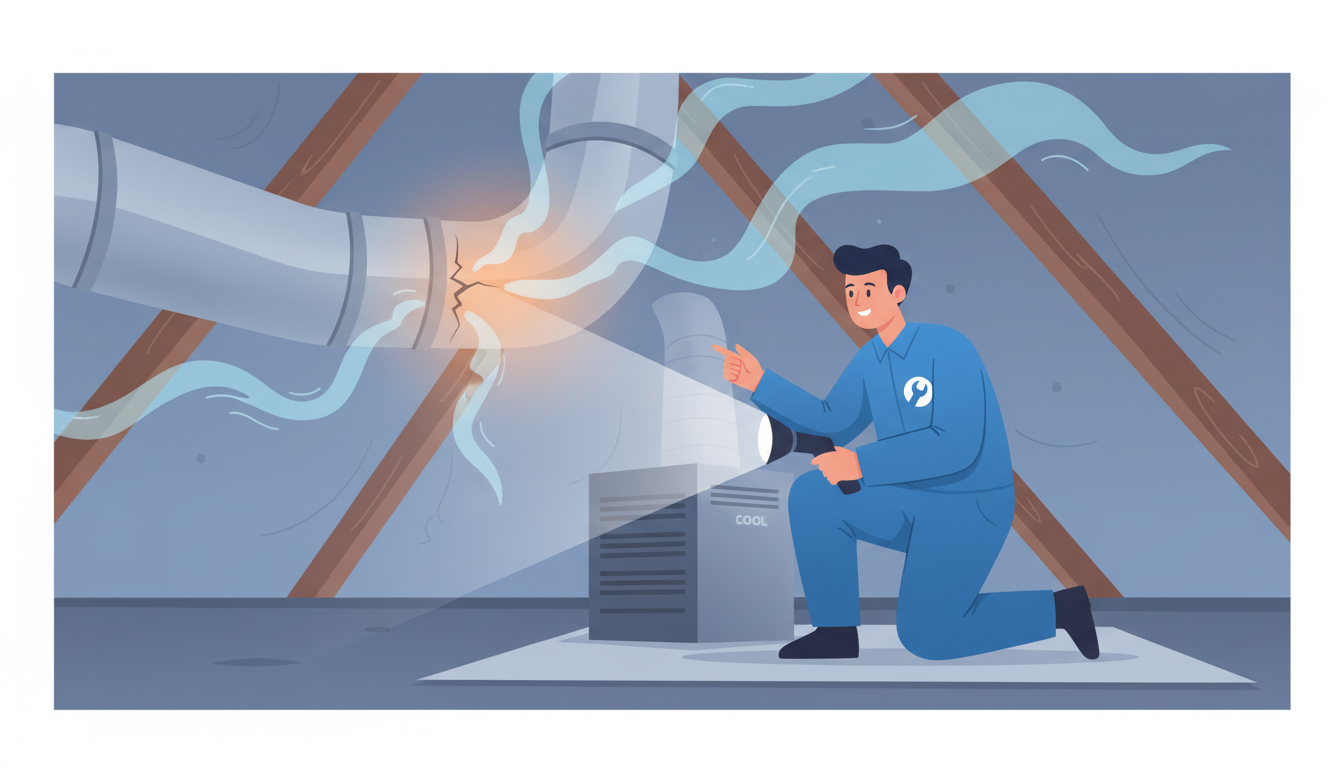
How Leaky Ducts Affect Your Home's Humidity, Comfort, and Cooling
How Leaky Ducts Affect Your Home's Humidity, Comfort, and Cooling
Is your air conditioner running constantly but your home still feels muggy and uncomfortable? Are some rooms freezing while others feel like a sauna? The culprit might be hiding in your walls, attic, or crawlspace: leaky ductwork. Duct leaks affect far more than just your energy bills—they directly impact your indoor humidity levels, comfort, and your HVAC system's cooling performance. Let's explore how these sneaky air leaks undermine your home comfort and what you can do about it.
What Are Leaky Ducts and Why Do They Matter?
Your home's duct system is the circulatory system of your HVAC—it delivers conditioned air from your air handler to every room through supply ducts and returns warm air back through return ducts. When these ducts develop gaps, holes, or disconnections, they leak conditioned air into unconditioned spaces like attics, crawlspaces, and wall cavities.
The numbers are startling: typical homes lose 20-30% of their conditioned air through duct leakage. That means nearly one-third of the air you're paying to heat or cool never reaches your living spaces. Even worse, those same leaks pull in hot, humid, dusty air from unconditioned areas, directly sabotaging your comfort and indoor air quality.
How Leaky Ducts Increase Indoor Humidity
The Humidity Highway
When your HVAC system operates, it creates pressure differences throughout your duct network. Return duct leaks, in particular, create negative pressure that pulls air from wherever it can find it. Instead of drawing air only from your living spaces through return registers, leaky return ducts suck in humid air from crawlspaces, attics, and other unconditioned areas.
This humid outdoor air mixes with your conditioned air and gets distributed throughout your home. Your air conditioner works overtime trying to remove this excess moisture, but it's fighting a losing battle when new humid air constantly enters through duct leaks.
Why Return Duct Leaks Are Worse for Humidity
Supply duct leaks waste energy by dumping cold air where you don't need it. But return duct leaks actively introduce moisture problems. Air always follows the path of least resistance, and when your return ducts have leaks, they bypass your return registers and pull humid air directly from problem areas:
- Crawlspace air: Often 70-80% relative humidity or higher
- Attic air: Superheated in summer with outdoor humidity levels
- Wall cavities: Uninsulated spaces with no moisture control
Your air conditioner's dehumidification capacity is limited—typically only about 15% of total cooling capacity goes toward removing moisture. When leaky ducts constantly introduce new humid air, your system can't keep up. The result? A home that feels clammy, sticky, and uncomfortable even when the thermostat shows your target temperature.
The Comfort Connection: Why High Humidity Feels Miserable
Humidity doesn't just make your home feel uncomfortable—it fundamentally changes how your body experiences temperature. At 60% relative humidity, 75°F feels reasonably comfortable. But at 70% humidity, that same 75°F feels sticky and oppressive. Your body relies on sweat evaporation to cool itself, and high humidity prevents that evaporation from happening efficiently.
When leaky ducts increase your indoor humidity from a comfortable 45-50% to a muggy 60-70%, you might drop your thermostat setting by 3-5 degrees trying to feel comfortable. This creates a vicious cycle: your AC runs longer, uses more energy, and still can't solve the underlying humidity problem caused by duct leakage.
How Leaky Ducts Sabotage Your Cooling Performance
Lost Cooling Capacity
Every cubic foot of conditioned air that escapes through supply duct leaks represents wasted cooling capacity. When 20-30% of your cooled air leaks into your attic or crawlspace, it's as if your HVAC system shrunk by that same percentage. A 3-ton system effectively becomes a 2.1-2.4 ton system.
This capacity loss shows up in several ways:
- Your system runs longer cycles trying to reach the thermostat setting
- It may never reach the set temperature on extremely hot days
- Energy consumption spikes as runtime increases
- Wear and tear accelerates, shortening equipment lifespan
Pressure Imbalances and Airflow Problems
Duct leaks create pressure imbalances throughout your home. When supply ducts leak, rooms at the end of duct runs receive less airflow. When return ducts leak, the entire system can't move air efficiently. The result is dramatic temperature inconsistencies:
- Master bedroom: 78°F
- Living room: 72°F
- Home office: 80°F
These hot and cold spots frustrate homeowners and often lead to constant thermostat adjustments that never fully solve the problem. The issue isn't your HVAC equipment—it's the delivery system.
The Overworked AC Syndrome
Research shows that ducts leaking just 20% of airflow force your HVAC system to work 50% harder to achieve the same comfort level. This dramatically increased workload leads to:
- Higher energy bills (cooling costs can increase by 20-40%)
- More frequent breakdowns and repairs
- Shortened equipment lifespan
- Reduced dehumidification (the system can't run long enough cycles to remove moisture effectively)
Your air conditioner isn't just cooling your home—it's also air conditioning your attic, crawlspace, and wall cavities. That's money literally disappearing into thin air.
Signs You Have Leaky Ductwork
How can you tell if your ducts are leaking? Watch for these telltale signs:
Comfort Red Flags
- Temperature inconsistencies: Significant temperature differences between rooms (more than 2-3 degrees)
- Stuffy or stale air: Poor circulation despite running HVAC
- Excessive dust: Duct leaks pull in dusty attic or crawlspace air
- Humidity problems: Home feels muggy even when AC runs constantly
Performance Issues
- High energy bills: Cooling costs higher than similar homes in your area
- Constant system operation: AC rarely cycles off, even in mild weather
- Weak airflow: Some rooms have noticeably weak air coming from vents
- Whistling or hissing sounds: Air escaping through duct gaps creates noise
Visual Inspection Clues
- Disconnected duct sections: Visible gaps where ducts should connect
- Damaged or crushed ducts: Physical damage to flexible ductwork
- Poorly sealed connections: Duct tape (which ironically fails on ducts) or no sealing at joints
- Tangled or kinked flex ducts: Restricts airflow and often indicates poor installation
If you notice several of these signs, there's a strong chance your ductwork needs professional attention.
The Hidden Health Costs of Leaky Ducts
Beyond comfort and energy concerns, leaky ductwork poses real health risks that many homeowners don't realize:
Mold and Mildew Growth
When leaky ducts increase indoor humidity above 60%, you create ideal conditions for mold growth. Mold spores thrive in moist environments and can colonize:
- Ductwork interiors (especially in humid areas)
- Drywall and insulation near leaks
- Carpets and upholstery in chronically humid rooms
- HVAC system components (coils, drain pans)
Mold exposure triggers allergies, asthma symptoms, and respiratory irritation—especially problematic for children and those with compromised immune systems.
Indoor Air Quality Problems
Return duct leaks don't just pull in humid air—they also introduce:
- Dust and particulates: Insulation fibers, construction debris, and accumulated dust
- Allergens: Pollen, pet dander, and outdoor contaminants
- Odors: Musty crawlspace smells or chemical odors from stored items
- Pollutants: Carbon monoxide and combustion byproducts if ducts run near garages or utility areas
Your HVAC filter can only catch what comes through the return registers. Duct leaks bypass filtration entirely, delivering these contaminants directly into your breathing air.
For comprehensive guidance on improving your HVAC system's efficiency and performance, check out our complete HVAC repair guide.
Professional Duct Sealing: What to Expect
The Duct Testing Process
Professional HVAC technicians use specialized equipment to quantify duct leakage:
- Blower door test: Measures overall home air tightness
- Duct blaster test: Specifically measures duct leakage rate
- Pressure mapping: Identifies which zones have leakage problems
- Visual inspection: Locates accessible leaks and damage
These tests establish a baseline and help prioritize which leaks to address first.
Professional Sealing Methods
Properly sealing ducts requires professional-grade materials and techniques:
Mastic Sealant: A fibrous paste that's brushed onto seams and joints. It remains flexible, withstands temperature extremes, and creates an airtight seal. This is the gold standard for duct sealing.
Foil-Faced Tape: UL-181 rated foil tape with acrylic adhesive works for accessible duct joints. Note: Regular "duct tape" (cloth-backed) actually performs poorly on ducts and is not recommended.
Aeroseal Technology: For inaccessible ducts, this innovative process seals leaks from the inside by blowing polymer particles through the duct system that accumulate at leak points.
Insulation: Properly insulating sealed ducts in unconditioned spaces prevents condensation and improves efficiency.
Cost and ROI
Professional duct sealing typically costs $1,500-$3,500 for an average home, depending on accessibility and system size. However, the return on investment is compelling:
- Energy savings of 20-40% on cooling costs
- Improved comfort and humidity control
- Reduced HVAC wear and maintenance costs
- Potential payback period of 3-5 years
Many utility companies offer rebates for duct sealing, which can offset 20-30% of the cost.
If you're experiencing cooling issues specifically, our central AC repair guide covers additional troubleshooting steps and solutions.
DIY Duct Sealing: When It Makes Sense
While professional sealing is ideal, homeowners can address some accessible duct leaks:
What You Can DIY
- Visible disconnected sections: Reconnect and seal with mastic and foil tape
- Accessible joints: Apply mastic sealant to exposed duct seams
- Return register leaks: Seal gaps between registers and drywall
- Filter housing leaks: Ensure filter compartment doors seal properly
What to Leave to Professionals
- Inaccessible ductwork: Ducts in walls, tight crawlspaces, or buried in insulation
- System balancing: Adjusting airflow and pressure distribution
- Major repairs: Replacing damaged duct sections or redesigning poor layouts
- Testing and verification: Measuring leak rates before and after sealing
Safety Considerations
Never seal air ducts near:
- Gas appliances (furnaces, water heaters)
- Combustion appliance vents
- Areas where sealing could trap dangerous gases
If you're unsure about any aspect of duct sealing, consult an HVAC professional.
The Ventilation Factor: Leaky Ducts and Fresh Air
While sealing duct leaks is crucial for efficiency and comfort, your home still needs controlled fresh air ventilation. This is where many homeowners get confused—don't leaks provide ventilation?
The answer is no. Duct leaks introduce uncontrolled air from undesirable locations (dusty attics, moldy crawlspaces) rather than filtered fresh outdoor air. Proper fresh air ventilation should be intentional and controlled, typically through:
- Energy recovery ventilators (ERVs)
- Heat recovery ventilators (HRVs)
- Dedicated outdoor air systems
- Controlled ventilation fans with fresh air intake
Sealing duct leaks doesn't compromise healthy ventilation—it simply means you need proper ventilation systems rather than relying on random air leakage.
Seasonal Considerations: Summer vs. Winter
Duct leaks affect your home differently depending on the season:
Summer Impact
- Return duct leaks: Pull hot, humid outdoor air into system
- Supply duct leaks: Dump cold air into hot attics (massive waste)
- Humidity control: Impossible to maintain comfortable humidity levels
- Cooling costs: Peak energy waste during highest-demand periods
Winter Impact
- Supply duct leaks: Heated air escapes into cold spaces
- Return duct leaks: Pull cold air into system, reducing heating efficiency
- Condensation risk: Warm humid air meeting cold surfaces causes moisture damage
- Heating costs: Significant waste, though often less noticeable than summer issues
In both seasons, duct leaks undermine comfort and waste energy, but the humidity and comfort problems are typically most noticeable during cooling season.
Beyond Duct Sealing: Complementary Solutions
Sealing duct leaks is essential, but other improvements can enhance results:
Proper HVAC Maintenance
- Replace filters regularly (monthly during heavy use)
- Clean coils annually to maintain dehumidification capacity
- Verify proper refrigerant charge
- Ensure drain lines flow freely
Humidity Control
- Install a whole-home dehumidifier if duct sealing alone doesn't resolve humidity issues
- Use bathroom and kitchen exhaust fans to remove moisture at the source
- Address crawlspace encapsulation and moisture barriers
Thermostat Settings
- Use "auto" fan setting rather than "on" (running the fan continuously can reintroduce humidity)
- Consider a programmable thermostat to optimize runtime patterns
- Avoid constant temperature adjustments that prevent proper cycling
Insulation Improvements
- Ensure ductwork in unconditioned spaces has adequate insulation (R-6 minimum)
- Address building envelope leaks that allow humid outdoor air infiltration
- Consider attic insulation upgrades to reduce heat gain
How Long Do Duct Repairs Last?
When done properly with professional-grade materials, duct sealing should last 10-15 years or longer. Mastic sealant and quality foil tape withstand the temperature swings and vibration that ducts experience.
However, longevity depends on:
- Material quality: Professional-grade products vastly outperform hardware store supplies
- Application technique: Proper surface preparation and application method
- Environmental conditions: Extreme temperature swings or moisture exposure can accelerate degradation
- System age: Older ductwork may have multiple failure points that continue to develop
Schedule duct inspections every 5-7 years to catch new leaks before they become major problems. This is especially important if you've experienced:
- Significant HVAC repairs or modifications
- Home remodeling that affected ductwork
- Pest infestations in attic or crawlspace areas
- Notable increases in energy bills despite sealed ducts
Making the Decision: Is Duct Sealing Worth It?
For most homes, especially those with ductwork in unconditioned spaces, duct sealing delivers excellent return on investment. It's particularly valuable if you're experiencing:
- Persistent humidity problems despite adequate AC capacity
- Dramatic temperature differences between rooms
- Energy bills significantly higher than similar homes
- Frequent HVAC repairs or performance issues
- Plans to stay in your home long-term (3+ years)
The combination of energy savings, improved comfort, better indoor air quality, and reduced equipment wear typically justifies the cost within a few years. Many homeowners report duct sealing as one of the most impactful home improvements they've made—fixing problems they didn't even realize were solvable.
FAQ: Common Questions About Leaky Ducts
Q: How much does leaky ductwork increase my energy bills?
A: Leaky ductwork typically increases cooling and heating costs by 20-40%. In a home spending $200/month on cooling, that's $40-80 wasted monthly, or $480-960 annually. The exact amount depends on duct location, leak severity, and climate.
Q: Can leaky ducts cause mold in my home?
A: Yes, absolutely. Leaky return ducts pull humid air into your system and distribute it throughout your home, raising indoor humidity above 60%—the threshold where mold thrives. Leaky supply ducts can also cause condensation on cold duct surfaces in humid spaces, promoting mold growth.
Q: What's the difference between supply and return duct leaks?
A: Supply duct leaks waste conditioned air by dumping it into unconditioned spaces—an energy waste issue. Return duct leaks pull in unconditioned air (often hot, humid, and contaminated) and introduce it to your living spaces—causing humidity, comfort, and air quality problems. Both waste energy, but return leaks typically cause more noticeable comfort issues.
Q: Can I seal my own ducts or do I need a professional?
A: You can seal accessible duct leaks yourself using mastic sealant and UL-181 foil tape. However, most ductwork is inaccessible (in walls, attics, or tight crawlspaces). Professional technicians have specialized tools to locate and seal hard-to-reach leaks and can verify results with testing equipment. For comprehensive solutions, professional sealing is recommended.
Q: How do I know if my ducts need sealing?
A: Common signs include: rooms with inconsistent temperatures (hot/cold spots), excessive dust, high humidity despite AC operation, unusually high energy bills, weak airflow from some vents, and an HVAC system that runs constantly without reaching the thermostat setting. A professional duct leakage test provides definitive answers.
Take Action on Your Leaky Ducts
Don't let leaky ductwork continue undermining your home comfort and draining your wallet. If you're experiencing persistent humidity problems, temperature inconsistencies, or high energy bills, schedule a professional duct inspection. A qualified HVAC technician can:
- Perform duct leakage testing to quantify the problem
- Identify the location and severity of leaks
- Provide a detailed repair plan with cost estimates
- Seal ducts using professional-grade materials and techniques
- Verify results with post-sealing testing
Your home's duct system is too important to ignore. Properly sealed ductwork delivers the comfort, efficiency, and indoor air quality your family deserves—without the energy waste and humidity headaches that leaky ducts create.
Ready to solve your duct leakage problems? Contact a qualified HVAC professional today to schedule your duct inspection and take the first step toward better comfort and lower energy bills.