
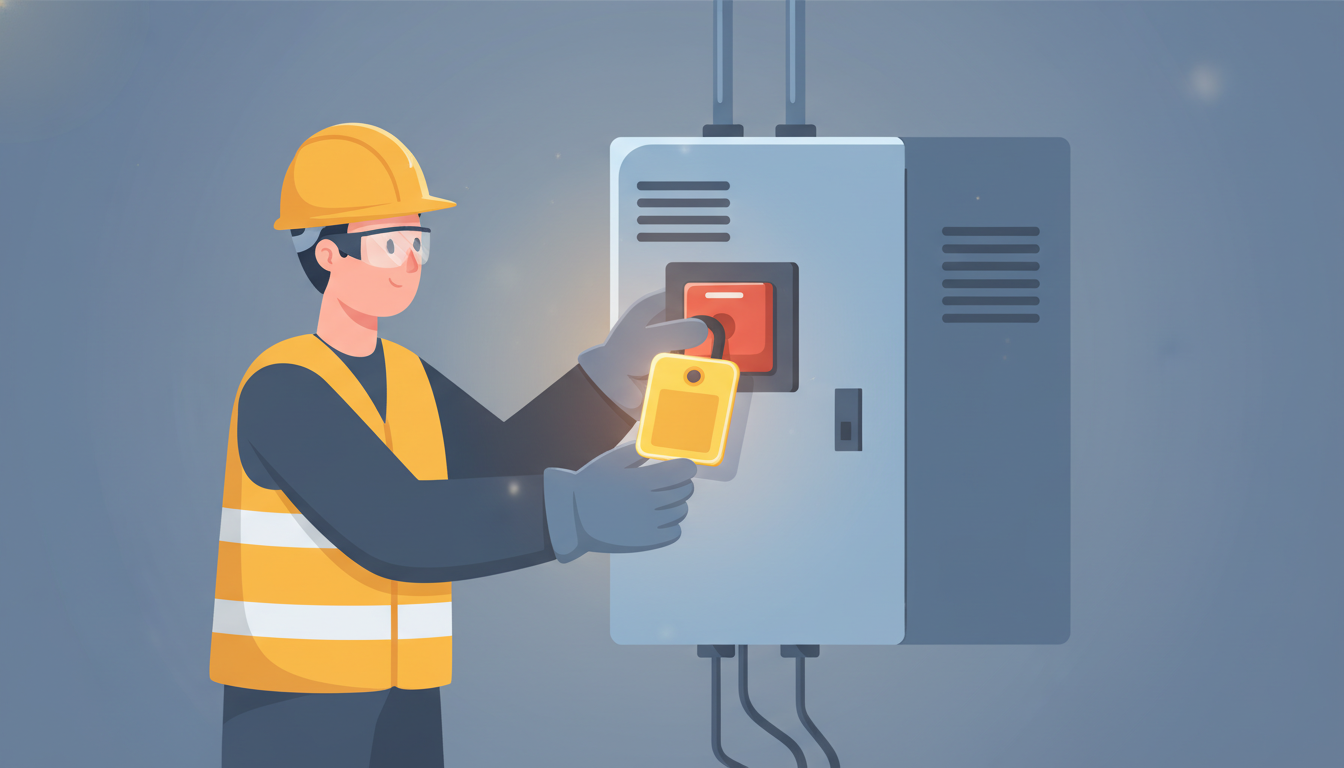
What Lockout/Tagout Means and Why HVAC Safety Matters
What Lockout/Tagout Means and Why HVAC Safety Matters
Every year, thousands of workers suffer serious injuries—or worse—from equipment that unexpectedly starts up during maintenance. In the HVAC industry, where technicians work with high-voltage electricity, refrigerant systems, and heavy machinery, one critical safety procedure can mean the difference between going home safely and ending up in the emergency room: lockout/tagout.
If you're an HVAC technician, business owner, or even a homeowner who wants to understand what professionals should be doing to stay safe, this guide will walk you through everything you need to know about lockout/tagout procedures and why they're absolutely essential for HVAC work.
What Is Lockout/Tagout (LOTO)?
Lockout/tagout—often abbreviated as LOTO—is a set of safety procedures designed to ensure that dangerous equipment is properly shut down and cannot be restarted until maintenance or repair work is complete. The process involves two key components:
Lockout means physically securing energy-isolating devices (like circuit breakers or valves) with a lock so that equipment cannot be turned back on. The person working on the equipment holds the only key to that lock.
Tagout means placing a warning tag on the energy-isolating device that identifies who locked it out, when they did it, and why the equipment is out of service.
Think of it this way: lockout is the physical barrier that prevents equipment from turning on, while tagout is the communication that tells everyone else what's happening and who's responsible.
In the HVAC industry specifically, lockout tagout HVAC safety procedures protect technicians from multiple hazards including electrical shock, arc flash burns, rotating fan blades, and sudden releases of pressurized refrigerant.
Why Lockout/Tagout Is Critical for HVAC Safety
HVAC systems present unique dangers that make proper lockout tagout procedures absolutely essential. Here's why this safety protocol matters so much:
The Real Cost of Skipping Safety Procedures
According to OSHA data, failure to control hazardous energy accounts for nearly 10% of serious workplace injuries across all industries. In 2020, lockout/tagout violations ranked as the 6th most frequently cited OSHA standard, resulting in millions of dollars in fines.
But the real cost isn't measured in fines—it's measured in lives. When an HVAC technician gets shocked by live voltage or injured by equipment that starts unexpectedly, families are devastated and businesses face liability that can shut them down permanently.
HVAC-Specific Hazards That Demand LOTO
Unlike many industrial applications where lockout/tagout covers a single energy source, HVAC systems often involve multiple types of hazardous energy:
Electrical Energy: HVAC units operate on high voltage—often 240V or higher for commercial systems. Even after you flip the breaker, capacitors can store lethal charges for minutes or even hours.
Mechanical Energy: Compressors, fan motors, and blower assemblies contain moving parts that can cause crushing injuries or amputations if they start unexpectedly during maintenance.
Stored Energy: Refrigerant systems operate under high pressure. A sudden release can cause serious injuries, and capacitors retain electrical charges even when power is disconnected.
Thermal Energy: Heat exchangers and condensers can remain dangerously hot long after a system shuts down.
When you're servicing a rooftop unit or repairing a commercial chiller, you're not just dealing with one hazard—you're managing multiple energy sources that all need to be properly isolated and controlled.
Understanding the Difference: Lockout vs. Tagout
While the terms are often used together, lockout and tagout serve different purposes in HVAC technician safety:
Lockout is the physical control method. You place a padlock on the circuit breaker, disconnect switch, or other energy-isolating device. This creates a physical barrier that prevents anyone from turning the equipment back on. Your lock requires your specific key, and only you can remove it when work is complete.
Tagout is the communication method. The tag identifies you as the person who locked out the equipment, includes the date and time, and explains why the equipment is out of service. Tags must be durable enough to withstand environmental conditions and must not be removed except by the person who installed them.
Here's the crucial point: tagout alone is not sufficient protection. OSHA requires lockout devices whenever equipment is capable of being locked out. Tags can fall off, get ignored, or be removed by someone who doesn't understand their importance. A physical lock provides the positive control necessary to protect your life.
OSHA Lockout/Tagout Requirements for HVAC Work
The federal standard that governs lockout tagout HVAC procedures is OSHA 29 CFR 1910.147, officially titled "The Control of Hazardous Energy." This regulation applies to servicing and maintenance of machines and equipment where unexpected energization or startup could cause injury.
What OSHA Requires
According to OSHA compliance standards, employers must:
- Establish a written energy control program that includes procedures, training, and periodic inspections
- Train authorized employees who will perform lockout/tagout on how to apply, use, and remove energy controls
- Train affected employees (those who work in areas where LOTO might be used) to recognize when LOTO is in place
- Provide appropriate lockout/tagout devices including locks, tags, chains, wedges, or adapter pins
- Conduct annual inspections of energy control procedures to ensure compliance
For HVAC companies, this means you can't just hand technicians a lock and send them out. You need documented procedures, proper training, and regular verification that your safety program is working.
2026 Updates You Need to Know
While the core OSHA standard hasn't changed, enforcement has intensified and related standards have been updated:
NFPA 70E Arc Flash Requirements: All electrical panels must now be labeled with arc flash hazard data. HVAC technicians must wear arc-rated personal protective equipment (PPE) when working on or near energized equipment.
Increased Enforcement: OSHA has stepped up inspections in the construction and service industries, with particular focus on electrical safety and fall protection for rooftop HVAC work.
These updates mean that proper HVAC lockout tagout procedures aren't just good practice—they're legally required, actively enforced, and critical for keeping your team safe.
The Complete HVAC Lockout/Tagout Procedure
When you need to service HVAC equipment, following a systematic lockout tagout procedure isn't optional—it's the only way to ensure you make it home safely. Here's the step-by-step process:
Step 1: Prepare for Shutdown
Before touching any equipment, you need to know exactly what you're dealing with:
- Identify all energy sources: Check the equipment documentation to find every power source, including primary electrical, backup power, and any stored energy in capacitors or accumulators
- Review the specific procedure: Your employer should have equipment-specific procedures that detail the exact lockout points
- Gather your equipment: Collect your personal lock and tag, voltage tester, and any adapters needed for that particular system
For a typical rooftop HVAC unit, you might have a main disconnect at the unit, a circuit breaker in the electrical panel, and possibly multiple power sources if it's a package unit with electric heat.
Step 2: Notify Affected Personnel
You can't just shut down equipment without warning—especially in commercial or industrial settings where HVAC systems affect building operations:
- Tell your supervisor that you're taking the system offline
- Notify building occupants if the shutdown will affect comfort or operations
- Alert other technicians who might be working in the area
This communication step prevents confusion and ensures nobody attempts to restore power while you're working.
Step 3: Shut Down the Equipment Properly
Never just flip the breaker and start working. Follow the manufacturer's shutdown sequence:
- Turn off the unit at its controls first (thermostat or control panel)
- Allow the system to complete its shutdown cycle (fans may run for a few minutes)
- Turn off the disconnect switch at the equipment
- Finally, turn off the circuit breaker at the electrical panel
This sequence prevents damage to equipment and reduces the risk of arc flash when you open the disconnect.
Step 4: Isolate All Energy Sources
Now you're ready to isolate the equipment from its power sources:
- Open all disconnect switches and move them to the "off" position
- Turn off circuit breakers that supply the equipment
- Close and lock valves if you're working on refrigerant or water lines
- Block or secure any mechanical parts that could move due to gravity
For HVAC systems, pay special attention to equipment with multiple compressors or heating elements—each may have its own circuit.
Step 5: Apply Your Lockout and Tagout Devices
This is where you create the physical barrier that protects your life:
- Install your personal padlock on each energy-isolating device (breaker lockout, hasp, or disconnect lockout)
- Attach your tag to the same location, filled out with your name, date, and reason for lockout
- Test that the lock cannot be removed without the key you're keeping with you
If multiple technicians are working on the same equipment, each person must apply their own lock using a multiple-lockout hasp. Nobody removes any locks until everyone has finished their work.
Step 6: Release or Restrain Stored Energy
Here's where HVAC work gets particularly dangerous—and where many technicians make fatal mistakes:
Capacitor Discharge: HVAC capacitors can hold lethal charges even after power is disconnected. You must discharge capacitors using an insulated screwdriver or approved discharge tool before touching any wiring. Never assume a capacitor is safe just because the power is off.
Refrigerant Pressure: If you're opening refrigerant lines, you must properly recover refrigerant and equalize pressure before breaking any connections.
Mechanical Energy: If working on belt-driven equipment, ensure belts are slack and cannot cause pulleys to turn.
Step 7: Verify Zero Energy State
Never trust that lockout worked—always verify:
- Use a volt meter or voltage detector to confirm zero voltage at the equipment
- Try to start the equipment at its normal controls (it should not respond at all)
- Check for voltage at multiple points including the disconnect and at the equipment itself
- Verify stored energy is released by checking capacitor voltage
This "try-out" or "test-try-verify" step is your last line of defense. If equipment can still start or you detect any voltage, do not proceed—something went wrong with your lockout.
Step 8: Perform Your Maintenance Work Safely
Only after completing all seven previous steps can you safely work on the equipment. While you work:
- Keep your lock and tag in place the entire time
- Never ask someone else to remove your lock for any reason
- If you leave the job site, ensure your lock remains in place until you return and complete the work
Step 9: Restore Equipment to Service
When maintenance is complete, restoration must be just as systematic as shutdown:
- Remove all tools and parts from the equipment
- Reinstall any guards or panels you removed
- Clear personnel from the area around the equipment
- Remove your tag and lock (in that order)
- Restore energy by reversing your shutdown sequence
- Test equipment operation to confirm proper function
- Document the maintenance per your company's procedures
Only the person who installed a lock can remove it. If a technician leaves for the day with their lock still in place, that equipment must remain locked out until they return—no exceptions.
Essential Lockout/Tagout Equipment for HVAC
To perform lockout tagout procedures properly, you need the right safety equipment. Here's what should be in every HVAC technician's toolkit:
Personal Locks and Tags
Safety Padlocks: These are different from security locks. LOTO padlocks should be:
- Clearly identifiable (usually red with "Danger" labeling)
- Standardized so everyone in your company uses the same type
- Keyed differently so each technician has their unique lock
- Durable enough for indoor and outdoor use
Danger Tags: Pre-printed tags that include spaces for your name, date, and reason for lockout. Tags must be able to withstand 50 pounds of pull force without tearing.
Lockout Devices for Electrical Systems
Circuit Breaker Lockouts: Devices that fit over breakers to prevent them from being switched on. Different models fit different breaker types (toggle, rocker, twist-lock).
Disconnect Switch Lockouts: Cover plates or hasps that prevent disconnect switches from being operated.
Plug Lockouts: For equipment with plug connections, devices that cover the prongs or prevent the plug from being inserted.
Multiple-Lockout Hasps: Allow 2-6 technicians to each place their own lock on a single lockout point.
Verification Equipment
Non-Contact Voltage Detectors: Allow you to verify zero voltage without touching potentially live parts. Essential for the verification step.
Multimeter: Provides precise voltage readings to confirm energy isolation.
Capacitor Discharge Tools: Insulated tools designed specifically for safely discharging HVAC capacitors.
Your employer is required to provide appropriate lockout/tagout devices, but many professional HVAC technicians prefer to maintain their own personal safety equipment to ensure it's always available and in good condition.
Who Needs HVAC Lockout/Tagout Training?
OSHA divides workers into three categories for lockout/tagout purposes, and each requires different training:
Authorized Employees
These are HVAC technicians who actually perform maintenance and servicing on equipment. Authorized employees must receive comprehensive training on:
- Recognizing hazardous energy sources
- The type and magnitude of energy in workplace equipment
- The methods and means for isolating and controlling energy
- The purpose and use of lockout/tagout procedures
- Your company's specific energy control procedures
- How to apply and remove lockout/tagout devices
This training typically takes 4-8 hours initially, plus annual refresher training and retraining whenever procedures change.
Affected Employees
These are workers whose jobs are in areas where LOTO procedures might be used—like other building maintenance staff or HVAC helpers. They need to understand:
- The purpose and use of lockout/tagout procedures
- The prohibition against attempting to restart locked-out equipment
- How to recognize when LOTO is in place
Other Employees
Everyone else in the workplace must be instructed that locked-out equipment must not be tampered with or re-energized.
Training Requirements for HVAC Companies
If you own an HVAC business, OSHA holds you responsible for ensuring your technicians are properly trained. This means:
- Initial training before anyone performs lockout/tagout
- Documented training records showing who was trained, when, and on what procedures
- Retraining whenever procedures change, when new equipment is introduced, or when an inspection reveals deficiencies
- Annual certification of training program effectiveness
Many HVAC contractors use third-party training providers or industry associations to ensure their programs meet OSHA requirements. The investment in training is minimal compared to the cost of an injury or OSHA citation.
Common Lockout/Tagout Mistakes (And How to Avoid Them)
Even experienced HVAC technicians sometimes fall into dangerous habits. Here are the most common mistakes and how to avoid them:
Mistake #1: "I'm Just Checking Something Quick"
The most dangerous words in HVAC work: "I don't need to lock it out—I'm just going to..." Whether you're just checking a connection or planning an hour of work, the hazard is exactly the same. There are no shortcuts with electricity.
The Fix: If you need to open a panel or access electrical components, go through the full LOTO procedure. Period.
Mistake #2: Not Discharging Capacitors
Technicians die every year from capacitor shocks. The power can be off for hours, your voltage detector shows zero at the disconnect, but the capacitor is still holding a lethal charge right at the component you're about to touch.
The Fix: Always discharge capacitors using proper tools, even if you "know" they're safe. Test voltage directly at the capacitor terminals.
Mistake #3: Locking Out at Equipment Only
You lock out the disconnect switch right at the rooftop unit, but someone in the building sees the tripped breaker and flips it back on. Now you've got live voltage at that disconnect—right where you're working.
The Fix: Lock out at the electrical panel where the circuit originates, not just at the equipment. If working on commercial systems with multiple disconnects, lock out every point.
Mistake #4: Removing Locks to "Test" Equipment
Your work is almost done and you want to see if you fixed the problem. You remove your lock, test the system, then lock it back out to finish. But now you've created a gap where someone else might energize the equipment, or you might forget to re-lockout.
The Fix: Don't remove lockout devices until work is 100% complete and you're ready for final testing. If you must do intermittent testing, treat each test as a complete restoration-and-lockout cycle.
Mistake #5: Using Tagout When Lockout Is Possible
Sometimes technicians slap a tag on a breaker without using an actual lock, figuring "everyone knows not to touch it." Tags can be ignored, removed, or simply not seen by someone in a hurry.
The Fix: If the energy-isolating device can accept a lock, you must use a lock. Tagout alone is only acceptable when equipment cannot physically accept a locking device—which is rare in modern HVAC systems.
Mistake #6: Sharing Locks or Using Company Locks
Each technician must have their own personal lock that only they can remove. Using a "shop lock" defeats the entire purpose—if anyone can remove the lock, it's not protecting you.
The Fix: Every technician gets their own unique keyed lock. Only that person can apply or remove their lock. If multiple people work on equipment, everyone applies their own lock.
What Homeowners Should Know About HVAC Safety
If you're a homeowner, you might wonder why lockout/tagout matters to you. Here's why you should care:
When You Hire an HVAC Contractor
Professional HVAC companies follow proper safety procedures, and you should see evidence of this when technicians work on your system:
Red flags to watch for:
- Technicians working on electrical panels without turning off power
- No locks or tags visible on your circuit breakers during major work
- Contractors who work alone on complex electrical repairs without following safety protocols
- Companies that can't provide proof of safety training for their technicians
Good signs:
- Technicians who take time to properly shut down and lock out power before working
- Use of voltage testers to verify zero energy
- Clear communication about when power will be off and why
- Proper PPE (gloves, safety glasses, arc-rated clothing for electrical work)
Why This Matters for Your Home
While OSHA regulations technically don't apply to residential work, professional contractors follow these procedures for good reason. A contractor who skips basic safety steps like lockout/tagout:
- Is more likely to make mistakes that could damage your equipment
- May not carry adequate insurance if they're cutting corners on safety
- Puts themselves and your property at risk
When you're checking references for HVAC companies, ask about their safety training and procedures. Companies that invest in proper safety training typically provide better service overall.
To learn more about identifying HVAC safety risks in your home, check out our comprehensive guide on what to watch for.
Can Homeowners Do Their Own HVAC Lockout?
For simple tasks like changing filters or cleaning coils, homeowners can safely work on HVAC systems by turning off power at the breaker. However:
- Do not attempt repairs involving electrical components, refrigerant, or internal mechanical parts
- Never bypass safety switches or disable safety features
- Always turn off power at the circuit breaker before opening any electrical panels
- Consider the complexity: If you're not sure, call a professional
For anything beyond basic maintenance, hiring a qualified HVAC technician isn't just about convenience—it's about safety. Our HVAC repair guide can help you understand when to DIY and when to call the pros.
Building a Culture of HVAC Safety
Lockout/tagout procedures are only effective when they're consistently followed. Here's how HVAC companies and technicians can build a real culture of safety:
For HVAC Business Owners
Make safety non-negotiable: Technicians should know that proper LOTO procedures are a requirement, not a suggestion. Create an environment where taking time to do things safely is praised, not punished.
Provide the right tools: Don't make technicians hunt for lockout devices or use improvised solutions. Every service truck should have complete lockout equipment.
Document everything: Maintain training records, procedure documentation, and incident reports. These protect your business legally and help identify areas for improvement.
Lead by example: If owners and managers cut corners on safety, technicians will too.
For HVAC Technicians
Speak up about unsafe conditions: If you see another technician skipping lockout procedures, say something. Your colleague's life may depend on it.
Never let time pressure override safety: A callback or service agreement deadline is never worth a life. If a customer pressures you to rush through safety procedures, explain why it's non-negotiable.
Keep learning: Attend refresher training, read about incidents in the industry, and share knowledge with newer technicians.
Know when to say no: If you're asked to work on equipment without proper lockout devices or training, you have the right to refuse. OSHA protects workers who refuse unsafe work.
For more on keeping yourself and your team safe, especially during emergency HVAC situations, check out our emergency response guide.
The Bottom Line: Your Life Depends on It
Lockout/tagout procedures might seem like bureaucratic red tape when you're trying to get a system back online on a hot summer day. But the few extra minutes it takes to properly lock out and verify zero energy could save your life.
Every year, workers are killed or seriously injured because someone skipped a step, assumed equipment was safe, or believed "it'll just take a second." In HVAC work, where you're dealing with high voltage, stored energy in capacitors, pressurized refrigerant, and mechanical hazards, there's no room for shortcuts.
Whether you're an HVAC technician, a business owner responsible for safety programs, or a homeowner who wants to make informed decisions about contractors, understanding lockout tagout HVAC safety is essential.
Remember these key points:
- Lockout/tagout is legally required under OSHA regulations for most maintenance work
- HVAC systems have unique hazards including electrical, mechanical, and stored energy that require specific procedures
- Proper training saves lives—make sure you and your team know how to perform LOTO correctly
- There are no shortcuts—every lockout procedure must be completed fully, every time
- Homeowners should verify that contractors follow proper safety procedures
The goal isn't just compliance with regulations—it's making sure every technician who goes to work comes home safely at the end of the day.
Frequently Asked Questions About Lockout/Tagout
What does lockout/tagout mean in simple terms?
Lockout/tagout is a safety procedure that prevents equipment from being turned on while someone is working on it. "Lockout" means putting a physical lock on power sources so they can't be switched on. "Tagout" means attaching warning tags that identify who locked out the equipment and why.
Why is lockout/tagout so important in HVAC work?
HVAC systems involve multiple hazards including high-voltage electricity, mechanical parts that can start unexpectedly, pressurized refrigerant, and stored energy in capacitors. Without proper lockout/tagout, technicians risk electrocution, burns, crushing injuries, or death from unexpected equipment startup or energy release.
Who is required to have lockout/tagout training?
Any HVAC technician who performs maintenance or servicing on equipment must be trained as an "authorized employee" with comprehensive LOTO training. Other workers in the area need basic "affected employee" training. OSHA requires employers to provide and document this training.
What are the basic steps of the lockout/tagout procedure?
The core HVAC lockout tagout procedure includes: (1) prepare and identify energy sources, (2) notify affected personnel, (3) shut down equipment properly, (4) isolate all energy sources, (5) apply locks and tags, (6) release stored energy (especially capacitors), (7) verify zero energy with testing, (8) perform maintenance, and (9) safely restore equipment to service.
What equipment do I need for lockout/tagout?
Essential equipment includes personal safety padlocks (uniquely keyed), danger tags, circuit breaker lockouts, disconnect switch lockouts, voltage testers or meters, and capacitor discharge tools. Your employer must provide appropriate lockout devices for the equipment you work on.
Can a homeowner perform lockout/tagout on their own HVAC system?
Homeowners can turn off power at the circuit breaker for simple maintenance like changing filters. However, any work involving electrical components, refrigerant, or internal mechanical parts should be done by trained HVAC professionals who know proper lockout/tagout procedures and have the right equipment and training.
What happens if someone violates lockout/tagout procedures?
OSHA can issue serious citations for lockout/tagout violations, with fines ranging from thousands to tens of thousands of dollars per violation. More importantly, violations can result in severe injuries or death. Companies may face liability lawsuits, and individuals may face criminal charges if violations lead to fatalities.
Looking for more HVAC safety information and maintenance tips? Visit QuickHVACFix.online for expert guides, troubleshooting help, and professional advice on keeping your heating and cooling systems running safely and efficiently.