Why New HVAC Equipment Still Performs Poorly With Bad Ductwork
Why New HVAC Equipment Still Performs Poorly With Bad Ductwork
You just spent thousands of dollars on a brand-new, high-efficiency HVAC system. The contractor promised lower energy bills, better comfort, and reliable performance for years to come. But within weeks, you're noticing the same problems you had before: uneven temperatures, weak airflow, and energy bills that are still too high.
What went wrong? In most cases, the culprit isn't your new equipment—it's your old ductwork. Even the most advanced HVAC system can't overcome the limitations of a poorly designed, leaking, or outdated air distribution system. Here's why new HVAC equipment bad ductwork creates a perfect storm of inefficiency and frustration.
The Hidden Truth About HVAC System Performance
Your HVAC system is only as good as the ductwork that delivers conditioned air throughout your home. Think of it this way: if you install a powerful new engine in your car but leave the old, cracked fuel lines in place, you'll never get the performance you paid for.
The same principle applies to heating and cooling. According to Energy Star, up to 30% of the air moving through duct systems escapes through leaks, holes, and poorly sealed connections. That means nearly a third of the air your new HVAC equipment is working hard to heat or cool never reaches your living spaces.
More concerning, more than half of new ductwork systems don't perform to their rated efficiency due to improper installation or design flaws. When you pair brand-new equipment with old, compromised ductwork, you're essentially handicapping your investment from day one.
Why Modern HVAC Equipment Demands Better Ductwork
Today's HVAC systems are dramatically different from models installed even 10-15 years ago. High-efficiency units with SEER ratings of 16, 18, or higher are designed to move air more precisely and efficiently. Many feature variable-speed blowers that adjust airflow based on your home's needs.
But here's the problem: these advanced systems have different airflow requirements than older equipment. If your ductwork was designed for an older system with lower CFM (cubic feet per minute) requirements, it may not be compatible with your new equipment's specifications.
The Compatibility Gap
Old ductwork new HVAC system compatibility issues show up in several ways:
Undersized ducts restrict airflow, causing your new system to work harder than necessary. The increased static pressure puts strain on the air handler and can lead to premature equipment failure.
Oversized ducts allow air to move too slowly, reducing the system's ability to remove humidity effectively. This creates uncomfortable, clammy conditions even when temperatures seem right.
Design mismatches between modern variable-speed systems and ductwork designed for single-speed operation can cause short-cycling, inconsistent temperatures, and excessive wear on components.
The Five Ductwork Problems That Sabotage New HVAC Equipment
1. Duct Leaks Waste Your Investment
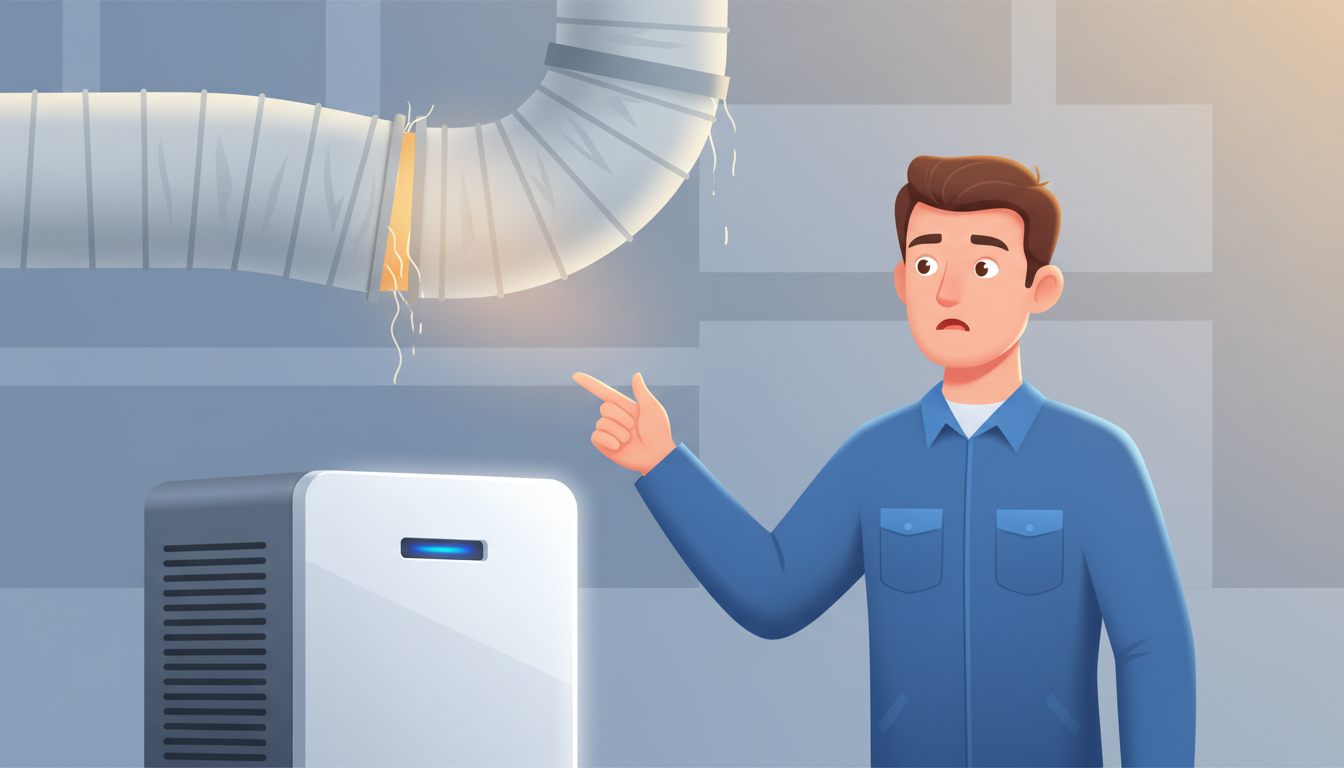
Even small gaps and holes in your ductwork can have a massive impact on system performance. When 20-30% of your conditioned air escapes into attics, crawl spaces, or wall cavities, your new HVAC equipment has to run longer and work harder to maintain comfortable temperatures.
Duct leaks affecting new air conditioner efficiency don't just waste energy—they also:
- Pull in contaminated air from unconditioned spaces
- Create pressure imbalances that affect airflow distribution
- Force your equipment to cycle more frequently
- Increase wear and tear on expensive new components
The frustrating part? Your contractor may have installed a perfectly good HVAC system, but if they didn't assess and address ductwork leakage, you're still losing money every month.
2. Poor Insulation Undermines Efficiency
Inadequate or degraded duct insulation is especially problematic in unconditioned spaces like attics and crawl spaces. When hot summer air or cold winter air surrounds your ducts, it conducts heat through the metal or flexible ductwork material.
This thermal transfer means the air temperature changes significantly between your air handler and your living spaces. Your new high-efficiency system might be producing perfectly conditioned air, but by the time it reaches your rooms, it's lost much of its heating or cooling capacity.
Bad ductwork affects new AC systems even more severely in extreme climates. If you live in a hot, humid region and your ducts run through a 140°F attic, even a brief exposure can raise supply air temperature by 15-20 degrees.
3. Improper Sizing Creates Performance Problems
Manual J and Manual D calculations are industry standards for determining proper HVAC sizing and ductwork design. Unfortunately, many older duct systems were installed without these calculations, relying instead on rough estimates or rules of thumb.
When ductwork sizing doesn't match your new equipment's specifications:
- Undersized ducts create excessive air velocity, noise, and static pressure that reduces airflow and strains the blower motor
- Oversized ducts allow air to move too slowly, reducing system efficiency and humidity control
- Imbalanced systems deliver too much air to some rooms and not enough to others
Your new HVAC equipment might be perfectly sized for your home, but if the ductwork can't distribute air properly, you'll experience hot and cold spots, poor air quality, and higher energy bills.
4. Design Flaws Restrict Airflow
Even ductwork that's technically the right size can perform poorly if the layout includes too many bends, long runs, sharp turns, or unnecessary transitions. Every obstruction in your duct system creates resistance that your equipment must overcome.
Common ductwork problems HVAC performance issues include:
- Crushed or kinked flexible ducts in tight spaces
- Sharp 90-degree turns that create turbulence
- Excessive length between the air handler and supply vents
- Missing or damaged dampers
- Inadequate return air pathways
These design flaws become even more problematic with new equipment because modern systems are optimized for smooth, efficient airflow. When that airflow is restricted, the equipment can't operate as designed.
5. Age-Related Deterioration
Ductwork doesn't last forever. Metal ducts are subject to rust, especially in humid climates or when condensation forms on cold surfaces. Flexible ducts can sag, tear, or become disconnected over time. Seams and connections fail as the structure settles.
Most ductwork has an effective lifespan of 15-25 years before deterioration begins to seriously impact performance. If your ducts are approaching or beyond this age when you install new HVAC equipment, you're pairing cutting-edge technology with a failing distribution system.
The Financial Reality: Don't Waste Your HVAC Investment
Here's what many homeowners don't realize until it's too late: a new $7,000-$12,000 HVAC system can deliver the performance of a $4,000 system if the ductwork isn't up to par.
You might be spending $150-$250 per month on cooling and heating when proper ductwork would reduce those costs to $100-$150. Over the 15-20 year lifespan of your equipment, that difference adds up to thousands of dollars in wasted energy.
The irony is that addressing ductwork issues typically costs much less than the HVAC equipment itself. Professional duct sealing and insulation might run $1,500-$3,000. Partial duct replacement or redesign might cost $2,500-$5,000. These investments pay for themselves through reduced energy bills and extend the life of your expensive new equipment.
What Should Have Happened: The Right Way to Install New HVAC
When a professional HVAC contractor recommends new equipment, they should always evaluate your existing ductwork first. A proper assessment includes:
Airflow Testing
Static pressure measurements tell technicians whether your ducts are restricting airflow. Readings above manufacturer specifications indicate undersized ducts, excessive bends, or blockages. Airflow testing matters in HVAC repair because it identifies problems before they damage your new equipment.
Duct Leakage Testing
Specialized equipment can measure exactly how much air escapes from your duct system. A professional blower door test combined with duct leakage testing provides concrete data about where improvements are needed.
Visual Inspection
Technicians should physically inspect accessible ductwork for damage, deterioration, poor connections, inadequate insulation, and design flaws. This inspection often reveals problems that aren't apparent from equipment operation alone.
Load Calculations
Manual J calculations determine the correct HVAC capacity for your home. Manual D calculations ensure ductwork is properly sized and designed to deliver that capacity efficiently to every room. These aren't optional extras—they're fundamental requirements for a properly functioning system.
If your contractor installed new HVAC equipment without these assessments, they did you a disservice. You may have spent thousands of dollars without addressing the underlying problems limiting system performance.
How to Fix the Problem Now
If you're already dealing with new HVAC equipment poor performance due to ductwork issues, you have several options:
Option 1: Professional Duct Sealing
For ductwork that's properly sized and designed but has leakage issues, professional sealing can improve efficiency by up to 30%. Modern Aeroseal technology can seal leaks from the inside without requiring access to every section of ductwork. Cost: $1,500-$3,000.
Option 2: Duct Insulation Upgrades
If your ducts run through unconditioned spaces with inadequate insulation, adding or upgrading insulation can significantly reduce thermal losses. Professional installation of properly rated insulation ensures optimal performance. Cost: $1,000-$2,500.
Option 3: Partial Duct Replacement
Sometimes only portions of your duct system are problematic. Replacing the worst sections—particularly crushed flex ducts, severely damaged metal ducts, or improperly sized trunk lines—can dramatically improve performance without the expense of a complete replacement. Cost: $2,000-$4,000.
Option 4: Complete Duct System Redesign
For severely compromised systems or when ductwork is fundamentally incompatible with new equipment, a complete redesign and replacement may be the most cost-effective long-term solution. While expensive upfront, this approach ensures your HVAC system can deliver its full rated performance. Cost: $4,000-$8,000.
Signs Your New HVAC System Is Suffering From Bad Ductwork
Not sure if ductwork is undermining your new equipment's performance? Watch for these warning signs:
- Energy bills haven't decreased after installing high-efficiency equipment
- Weak airflow from supply vents, especially in rooms farthest from the air handler
- Temperature inconsistencies with some rooms too hot or cold compared to others
- Excessive noise when the system runs, indicating turbulent airflow or loose connections
- Frequent cycling as the system turns on and off more than expected
- Dusty conditions despite having new equipment with good filters
- Humidity problems with too much moisture during cooling season
For more guidance on diagnosing airflow problems, check out our comprehensive HVAC repair guide.
Prevention: Getting It Right From the Start
If you're considering new HVAC equipment but haven't purchased yet, take these steps to ensure you don't waste your investment:
Demand a Complete Assessment
Choose a contractor who insists on evaluating your existing ductwork before recommending equipment. If someone can quote you a price just by looking at your current unit, they're not doing their job properly.
Insist on Load Calculations
Request copies of the Manual J and Manual D calculations for your home. Legitimate contractors will gladly provide this documentation. Those who resist probably aren't doing the calculations at all.
Budget for Ductwork Improvements
Set aside 20-30% of your total HVAC budget for potential ductwork repairs or upgrades. It's better to address these issues during installation than to discover problems afterward.
Get Multiple Opinions
Consult with at least three contractors, and pay attention to how thoroughly they assess your home's entire heating and cooling system—not just the equipment that needs replacement.
Ask About Warranty Coverage
Understand what warranty coverage you'll have if performance problems emerge. Some manufacturers void warranties if equipment is installed with inadequate ductwork, so get everything in writing.
The Bottom Line on New HVAC Equipment and Bad Ductwork
Spending thousands of dollars on new HVAC equipment makes sense only if your home's air distribution system can deliver that equipment's full performance potential. Old ductwork, new HVAC system compatibility issues aren't minor inconveniences—they're fundamental obstacles to comfort and efficiency.
The good news is that ductwork problems are fixable. Whether through sealing, insulation upgrades, partial replacement, or complete redesign, addressing these issues transforms your expensive new equipment from an underperformer into the high-efficiency system you paid for.
Don't settle for mediocre performance from premium equipment. If you suspect bad ductwork is undermining your new HVAC system, schedule a professional assessment. The investment in proper ductwork will pay dividends in comfort, efficiency, and equipment longevity for years to come.
Understanding weak airflow causes in your HVAC system is the first step toward getting the performance you deserve from your heating and cooling investment.
Frequently Asked Questions
Can I keep my old ductwork with a new HVAC system?
It depends on the condition and design of your existing ductwork. If your ducts are properly sized, well-sealed, adequately insulated, and less than 15 years old, they may work fine with new equipment. However, most homes benefit from at least duct sealing and insulation upgrades when installing new HVAC systems. A professional assessment is essential to make the right decision.
How do I know if my ductwork is compatible with new equipment?
Professional testing is the only way to know for sure. Static pressure measurements, duct leakage testing, and Manual D calculations will reveal whether your ductwork can handle your new equipment's airflow requirements. Signs of incompatibility include weak airflow, frequent cycling, and inability to maintain comfortable temperatures despite new equipment.
Should ductwork be replaced when installing new HVAC?
Not always, but ductwork should always be evaluated. If testing reveals significant leakage, improper sizing, or design flaws, addressing these issues during HVAC replacement makes financial sense. Many contractors offer package deals that include both equipment and ductwork improvements at better pricing than tackling them separately.
Why is my new HVAC system not performing well?
If your new equipment isn't delivering the comfort and efficiency you expected, ductwork issues are the most common cause. Leaks, poor insulation, improper sizing, design flaws, or age-related deterioration can prevent even the best equipment from performing properly. Other potential causes include incorrect equipment sizing, poor installation, or refrigerant issues.
What tests should be done on ductwork before new HVAC installation?
A thorough ductwork evaluation should include: visual inspection of accessible ducts, static pressure measurements, duct leakage testing (using specialized blowers), Manual D calculations to verify proper sizing, and assessment of insulation levels. These tests provide concrete data about whether your existing ductwork will support new equipment or needs improvements.