
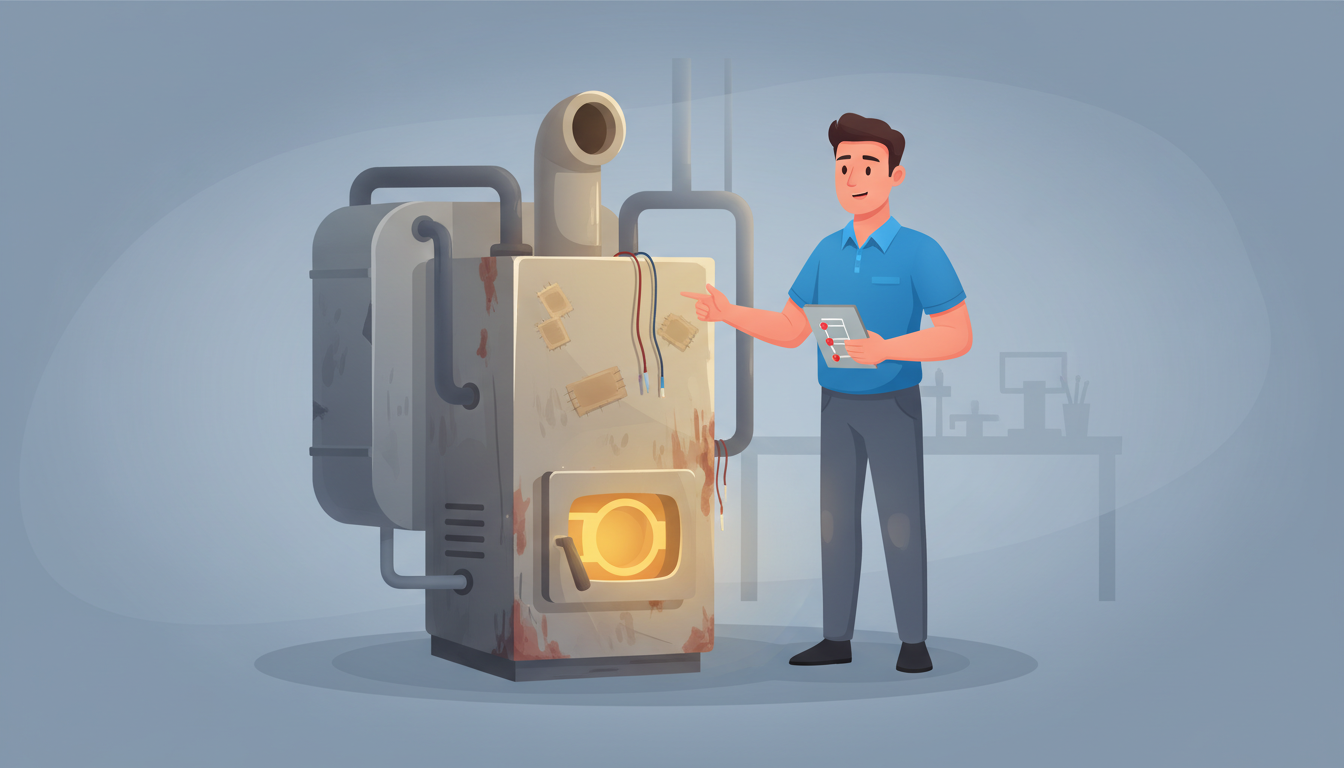
Why Older Furnaces Develop Repeated Repair Problems
Why Older Furnaces Develop Repeated Repair Problems
If you've noticed your furnace needs repairs more frequently than it used to, you're not alone. Older furnaces develop repeated repair problems that can quickly turn into a frustrating and expensive cycle. Understanding why this happens can help you make smarter decisions about maintaining or replacing your aging heating system.
The Reality of Aging Furnace Systems
Most furnaces are built to last 15 to 20 years with proper maintenance. But as your system approaches this age range, something changes. What starts as an occasional repair suddenly becomes a recurring pattern of breakdowns, especially during the coldest months when you need heat most.
The truth is, older furnaces don't just wear out randomly. There's a predictable pattern to how aging furnace component failures develop, and once the cycle begins, it's difficult to stop without a full system replacement.
Material Fatigue: The Silent Breakdown Factor
Metal Components Weaken Over Time
Your furnace contains dozens of metal parts that expand and contract thousands of times each heating season. Heat exchangers, burners, mounting brackets, and fasteners all experience this constant stress. After 10 to 15 years, metal fatigue sets in.
Tiny stress fractures develop in the heat exchanger—the heart of your furnace. These cracks may start small, but they grow with each heating cycle. A cracked heat exchanger isn't just an efficiency problem; it's a serious safety hazard that can allow carbon monoxide to leak into your home.
Rubber and Plastic Parts Deteriorate
Gaskets, seals, and O-rings made from rubber compounds dry out and crack over time. The constant exposure to heat accelerates this process. When these seals fail, your furnace loses efficiency and may develop air leaks that throw the entire system out of balance.
Plastic components in older furnaces become brittle. What once flexed now snaps. Blower wheels, housing components, and mounting clips fail unexpectedly, often during the coldest nights of winter.
Electrical Components Degrade
Wiring insulation becomes brittle after years of heat exposure. Connections that were once tight develop resistance, creating hot spots that can lead to complete failure. Relays and contactors wear out, causing your furnace to cycle on and off erratically or fail to start altogether.
The circuit board in your furnace—essentially its brain—can develop solder joint failures, corroded connections, or burnt components. When control boards fail, they often take other components down with them.
The Cascade Effect: Why One Problem Triggers Another
Here's what many homeowners don't realize: older furnaces develop a cascade effect where one failing component accelerates the wear on everything else.
How the Cascade Begins
Let's say your air filter gets clogged because you missed a change. Your blower motor has to work harder to push air through. This extra strain causes the motor to overheat and wear out faster. When the blower struggles, your heat exchanger doesn't cool properly, leading to limit switch failures and potential cracks.
Now your furnace is running inefficiently, cycling more frequently to maintain temperature. Each component—from the gas valve to the ignition system—experiences more start-up stress. Parts that should have lasted another few years fail prematurely.
The Domino Effect in Action
Once you replace the blower motor, you might think you're done. But the damage is already spreading. The inducer motor that removes combustion gases has been working overtime too. It fails next. Then the pressure switch. Then the flame sensor gets coated with residue from incomplete combustion.
Each furnace repair addresses a symptom, not the underlying problem: your entire system is wearing out. This is why older furnaces develop repeated repair problems that seem to come in waves, particularly as furnace repair problems spike at the start of winter.
Outdated Technology Creates System Imbalance
Old Control Systems Lack Precision
Furnaces manufactured 15 or 20 years ago use control technology that seems primitive compared to modern systems. Old mechanical thermostats and simple control boards can't make the fine adjustments that newer systems manage effortlessly.
As temperature sensors drift out of calibration, your furnace may short-cycle—turning on and off too frequently. This puts enormous stress on the ignition system, blower motor, and gas valve. Components designed for 3-5 cycles per hour suddenly face 10-15 cycles, dramatically shortening their lifespan.
Efficiency Loss Magnifies Problems
New furnaces operate at 95-98% efficiency. Your 20-year-old furnace might have started at 80% efficiency, but it's probably down to 60-65% now. This means it has to run much longer to produce the same amount of heat.
Longer run times mean more wear on every moving part. Your blower motor, inducer fan, and combustion components accumulate more operating hours each season. What should be moderate use becomes heavy-duty operation, and failures come faster than expected.
Safety Controls Become Overly Sensitive
As safety switches age, they often become either too sensitive or not sensitive enough. A limit switch that should prevent overheating might trip at normal temperatures, shutting down your furnace unnecessarily. Or worse, it might fail to trip when needed, creating a safety hazard.
Flame sensors accumulate residue and corrosion, causing frequent shutdowns even when the flame is burning correctly. Pressure switches develop membrane fatigue and trigger false readings. You end up calling for repairs, but the real problem is that your furnace's safety systems are wearing out from age.
Parts Availability Challenges for Older Systems
Discontinued Components
Manufacturers typically support models for 10-15 years after production ends. Once your furnace hits the 15-20 year mark, finding exact replacement parts becomes difficult or impossible.
Your HVAC technician might need to use aftermarket parts that don't fit quite right or perform slightly differently than the original. Sometimes they'll modify parts from similar models to work in your system. These workarounds can solve immediate problems but may introduce new reliability issues down the road.
Increasing Repair Costs
When parts are scarce, prices go up. A circuit board that cost $150 five years ago might now run $400—if you can find it at all. Labor costs increase too, as technicians spend extra time sourcing parts and fabricating solutions.
Some repairs that should be straightforward become multi-day affairs while your technician hunts for discontinued components. Meanwhile, you're without heat, potentially paying for a temporary heating solution or hotel stay.
The Warranty Expiration Turning Point
Most furnace manufacturers offer warranties that last 10-20 years on specific components, with shorter coverage on parts like blower motors and controls. Once these warranties expire, you're paying full price for every repair.
The timing isn't coincidental. Manufacturers design warranty periods based on when they expect components to fail. When your warranty runs out around year 10-15, that's exactly when repeated repair problems tend to begin.
The Hidden Cost of Operating Inefficiency
Beyond direct repair costs, older furnaces waste substantial money on energy. If your furnace efficiency has dropped from 80% to 60%, you're spending 25% more on heating bills for the same amount of warmth.
Over a single winter, this efficiency loss can cost you $200-500 extra in natural gas or heating oil. Multiply that by several years of operating an aging system, and you've spent enough on wasted energy to pay for a significant portion of a new, high-efficiency furnace.
Specific Components That Fail in Older Furnaces
Heat Exchanger Problems
The heat exchanger is the most critical—and expensive—component. Cracks develop from thermal stress, and repairs aren't possible. When your heat exchanger fails, you're looking at 50-70% of the cost of a new furnace just for this one part plus installation.
Heat exchanger failure also creates carbon monoxide risk, making your home unsafe until repairs are complete.
Blower Motor and Fan Assembly
Blower motors typically last 10-15 years. As bearings wear out, you'll hear grinding or squealing noises. The motor may struggle to start, draw excessive current, or fail completely. Capacitors that help motors start and run also degrade over time, causing performance issues.
The blower wheel itself can crack, become unbalanced, or accumulate so much debris that it can't move air effectively.
Ignition System Failures
Older furnaces with standing pilot lights waste energy constantly and become unreliable as thermocouples fail. Electronic ignition systems are more efficient but have their own issues. Hot surface ignitors become brittle and crack. Spark igniters lose their ability to generate consistent sparks.
When ignition fails, your furnace either won't start or will try repeatedly, potentially creating dangerous gas buildup situations.
Inducer Motor and Pressure Switch
The inducer motor creates the draft needed for safe combustion. As these motors age, bearings fail and performance drops. Pressure switches that monitor inducer operation become unreliable, causing nuisance shutdowns.
These failures are particularly common after years of moisture exposure from combustion gases.
Gas Valve and Burner Assembly
Gas valves can develop internal failures that prevent proper fuel delivery. Burners accumulate deposits that create uneven flames, incomplete combustion, and soot buildup. These problems reduce efficiency and can damage other components like the flame sensor and heat exchanger.
Age-Based Repair Patterns: What to Expect
Years 1-10: The Honeymoon Period
During the first decade, properly maintained furnaces need minimal repairs. You might replace an air filter regularly and clean the flame sensor occasionally, but major component failures are rare.
Years 10-15: The Warning Signs Begin
This is when you start seeing your first significant repairs. A blower motor might fail. You might need a new circuit board or inducer motor. These repairs are isolated incidents, not yet a pattern.
If you're diligent about HVAC repair and maintenance, you might extend this period a few years. But the clock is ticking on other components.
Years 15-20: The Repair Cycle Accelerates
After 15 years, repeated furnace failures become common. You might have two or three repairs in a single season. Each time a technician fixes one problem, something else fails within months.
This is the critical decision point where repair vs replacement becomes a serious financial question.
Years 20+: Repair Costs Exceed Replacement Value
Furnaces operating beyond 20 years are living on borrowed time. Parts are increasingly difficult to find. Efficiency has dropped significantly. The risk of heat exchanger failure and carbon monoxide problems increases dramatically.
At this stage, any major repair should prompt serious consideration of full system replacement.
Warning Signs Your Furnace Is Entering the Repair Cycle
Increasing Repair Frequency
If you're calling for repairs more than once per year, your furnace is telling you something. Pay attention when the interval between service calls starts shrinking from annual to twice yearly to multiple times per season.
Rising Energy Bills
Your heating bills should be relatively consistent year-over-year when adjusted for weather. If you're spending significantly more without using more heat, efficiency loss is eating your money.
Uneven Heating and Comfort Issues
Rooms that used to stay warm now feel cold. Your furnace runs constantly but can't maintain temperature. These signs indicate your system is losing capacity and struggling to perform its basic function.
Strange Noises
Banging, grinding, squealing, or whistling sounds that develop in an older furnace usually indicate mechanical wear. These noises often precede component failures by weeks or months.
Frequent Cycling
Short-cycling—when your furnace turns on and off every few minutes—puts enormous stress on components and indicates control system problems or efficiency loss.
Making the Repair vs. Replacement Decision
The 50% Rule
Many HVAC professionals use this guideline: if a repair costs more than 50% of a replacement furnace's price, and your system is over 15 years old, replacement makes more financial sense.
The $5,000 Rule
Add your furnace's age to the repair cost (in hundreds). If the total exceeds $5,000, replacement is usually the better choice. For example, a $400 repair on a 12-year-old furnace equals 4,012 (12 years + 40 hundreds = 52), which is under the threshold. But a $600 repair on a 16-year-old furnace equals 76, suggesting replacement.
Consider the Total Picture
Factor in:
- How many repairs you've had in the past two years
- Whether parts are readily available
- Energy cost savings from a high-efficiency replacement
- Remaining warranty coverage (or lack thereof)
- Your plans for the home (selling soon vs. staying long-term)
- Available utility rebates and tax credits for new high-efficiency systems
Preventive Maintenance: Can It Stop the Cycle?
Regular maintenance can delay repeated repair problems, but it can't prevent them indefinitely. Think of it like maintaining an old car—oil changes and tune-ups help, but they won't stop a 200,000-mile engine from eventually wearing out.
What Maintenance Can Do
- Extend component life by reducing strain
- Catch small problems before they become expensive failures
- Maintain efficiency longer
- Identify safety issues early
- Provide data on system decline to inform replacement timing
What Maintenance Cannot Do
- Reverse material fatigue and wear
- Update outdated control technology
- Make discontinued parts available
- Prevent the cascade effect once it begins
- Eliminate the fundamental issue of an aging system
If your furnace is over 15 years old and experiencing repeated failures, maintenance becomes a delay tactic rather than a solution.
The Hidden Risks of Delaying Replacement
Carbon Monoxide Danger
Heat exchanger cracks and combustion problems in older furnaces can allow carbon monoxide into your home. This colorless, odorless gas is deadly. Older furnaces with multiple repair issues pose an increasing safety risk.
Emergency Replacement Costs
Furnaces often fail completely during the coldest weather, when HVAC companies are busiest. Emergency replacement typically costs 20-30% more than planned installations. You'll have limited time to research options and compare bids.
Compounding Efficiency Losses
Every year you operate an inefficient older furnace, you're throwing away hundreds of dollars in wasted energy. These costs add up quickly and represent money you could have put toward a new system.
Frequently Asked Questions
How many repairs are too many for an older furnace?
If you're experiencing more than one significant repair per year, or if your total repair costs over two years exceed $1,000, your furnace is likely in the decline phase. At 15+ years old with multiple repairs, replacement should be seriously considered.
Why did my furnace work fine for years and suddenly need constant repairs?
This is the cascade effect in action. Component wear accumulates gradually, then multiple systems begin failing at once. Think of it like an old car that runs fine until it hits a certain mileage, then everything seems to break at the same time.
At what age should I expect my furnace to start having problems?
Most furnaces begin showing signs of aging between 12-15 years. The frequency and severity of problems typically accelerate significantly after 15 years of operation.
Can a really old furnace be reliable?
While some furnaces operate beyond 20 years, they become increasingly unreliable and inefficient. The money you save by avoiding replacement is usually offset by higher repair costs, energy waste, and the risk of emergency replacement at the worst possible time.
Is there a way to prevent older furnaces from developing repeated problems?
Regular maintenance can delay problems but cannot prevent the fundamental aging process. Once the cascade of failures begins in a 15+ year old system, maintenance becomes a temporary measure rather than a permanent solution.
Making Your Decision
Older furnaces develop repeated repair problems because of material fatigue, component wear, outdated technology, and the cascade effect where one failure accelerates others. While the emotional attachment to a system that has served you well is understandable, there comes a point where continuing repairs no longer makes financial or safety sense.
If your furnace is over 15 years old and you're experiencing multiple repairs per year, it's time to have an honest conversation with a qualified HVAC professional about replacement options. Modern high-efficiency furnaces offer dramatically lower operating costs, better comfort, improved reliability, and enhanced safety features that make the investment worthwhile.
Don't wait for a complete failure during the coldest week of winter. Plan your replacement on your timeline, get multiple quotes, research available rebates and financing options, and make the decision that protects both your comfort and your budget for years to come.