Why Is One Thermostat Zone Not Working? Complete Troubleshooting Guide
Why Is One Thermostat Zone Not Working? Complete Troubleshooting Guide
Is one zone in your home refusing to heat or cool while the others work perfectly? You're not alone. When one thermostat zone stops working, it's frustrating—especially when you're paying to condition your entire home but one room stays uncomfortably hot or cold.
The good news? Most zone control problems have straightforward causes that you can diagnose yourself. In this guide, we'll walk you through exactly why one thermostat zone might not be working and show you step-by-step how to fix it.
Understanding How HVAC Zone Systems Work
Before troubleshooting your zone problem, it helps to understand what's happening behind the walls. A zoned HVAC system divides your home into separate areas (zones), each controlled by its own thermostat.
When you adjust a zone's thermostat, it sends a signal to either open a damper (in ductwork) or activate a zone valve (in hydronic systems). These components direct heating or cooling only to the rooms that need it, saving energy and improving comfort.
Think of it like this: your main HVAC system is the engine, and the zone dampers or valves are the traffic controllers deciding where the heated or cooled air goes. When one zone isn't working, something's blocking that traffic signal.
Most Common Reasons One Zone Won't Work
1. Stuck or Faulty Zone Dampers
Zone dampers are motorized plates inside your ductwork that open and close to control airflow. When a damper gets stuck, your zone won't receive conditioned air even if your system is running.
Symptoms of a stuck damper:
- Thermostat is calling for heating/cooling but nothing happens
- Other zones work fine
- You might hear the damper motor humming but no airflow changes
What causes dampers to stick?
- Dust and debris buildup on the damper blade
- Failed damper motor
- Loose or broken linkage between motor and blade
- Power supply issues to the damper motor
To check your dampers, locate them in your ductwork (usually in the basement or attic near where ducts branch off). When your problem zone's thermostat calls for heating or cooling, the damper should visibly open. If it doesn't move, you've found your problem.
2. Zone Valve Problems (Hydronic Systems)
If you have hot water baseboard heating or radiant floor heating, your zones use valves instead of dampers. These valves control water flow to each zone.
Common zone valve issues:
- Stuck valve: The valve motor receives the signal but the valve won't open
- Failed end switch: The valve opens but doesn't tell the boiler to fire
- Broken actuator motor: The thermostat clicks but nothing moves
- Air trapped in the zone: Water can't circulate even with the valve open
You'll typically hear a clicking sound from the thermostat when it calls for heat. If the valve actuator clicks but your boiler doesn't fire, the valve is likely stuck closed or the end switch has failed.
3. Thermostat Wiring Issues
According to HVAC professionals, 90% of zone control problems trace back to wiring issues. This is especially common in older homes or after recent renovations.
Wiring problems that cause zone failures:
- Loose connections at the thermostat or zone panel
- Crossed wires causing zones to control the wrong areas
- Broken wires inside walls (from drilling or pest damage)
- Corroded wire terminals from moisture exposure
- Incorrect voltage supply (should be 24V AC)
To test your thermostat wiring, you'll need a multimeter. Check for 24-26 volts at the thermostat terminals when it's calling for heat or cooling. No voltage? The problem is in the wiring or control panel, not the thermostat itself.
If you're not comfortable working with electrical systems, this is a good time to call an HVAC professional for help.
4. Faulty Zone Control Board or Relays
Your zone control panel is the brain of your system. It receives signals from all thermostats and coordinates which dampers or valves to activate. When this board fails, zones stop responding.
Signs of control board problems:
- Multiple zones suddenly stop working
- Zones work intermittently
- System doesn't respond to any thermostat
- Diagnostic lights show error codes
Most modern zone panels have LED indicators that show which zones are calling and whether there are faults. Check your panel's manual for error code meanings. A single failed relay on the board can knock out one zone while leaving others operational.
5. Power Supply Problems
Zone systems require a dedicated 24V transformer to power thermostats, dampers, and valves. If this power supply fails or becomes overloaded, zones won't activate.
Power issues to check:
- Blown fuse or tripped breaker serving the HVAC system
- Failed 24V transformer
- Undersized transformer for your number of zones (60VA minimum recommended)
- Loose connections at the transformer
Start by checking your home's electrical panel for any tripped breakers. Then locate your HVAC system's transformer and verify it's producing 24V AC with a multimeter.
6. Dead or Dying Thermostat Batteries
This might seem obvious, but low batteries in battery-powered thermostats cause more zone problems than you'd think. Even if your thermostat display is still visible, weak batteries can prevent it from properly signaling your zone system.
Replace the batteries in your problem zone's thermostat first—it's the easiest fix and works more often than you'd expect.
Step-by-Step Troubleshooting for a Non-Working Zone
Now that you know the common causes, let's diagnose your specific problem systematically.
Step 1: Check the Thermostat First
Start with the simplest possibilities:
- Verify the thermostat is calling for heat or cool: Set it 5 degrees above (heating) or below (cooling) the current temperature
- Replace the batteries if it's battery-powered
- Check the mode setting: Make sure it's set to "Heat" or "Cool," not "Off"
- Inspect the thermostat display: Blank screen or error messages indicate power or device failure
- Feel for clicks: You should hear the thermostat relay click when it calls for heating/cooling
If your thermostat passes all these checks but the zone still doesn't work, the problem is downstream.
Step 2: Test Other Zones
Check if your other zones are working normally. This tells you whether the problem is:
- Isolated to one zone: Issue is likely the damper, valve, thermostat, or wiring for that specific zone
- Affecting multiple zones: Problem is likely the control board, power supply, or main HVAC system
Step 3: Locate and Inspect Your Zone Equipment
Find your zone control panel (usually near your furnace or air handler). Look for:
- Indicator lights: Most panels show which zones are calling
- Error codes: Blinking patterns indicate specific problems
- Buzzing or clicking sounds: These suggest relay or damper motor activity
If your panel shows the problem zone is calling but nothing happens, the issue is between the panel and the damper/valve.
Step 4: Check the Damper or Zone Valve
For dampered systems:
- Locate the damper for your problem zone in the ductwork
- Have someone change the thermostat setting while you watch the damper
- The damper blade should visibly open when the thermostat calls
- If it doesn't move, the damper motor may be failed or disconnected
For hydronic systems:
- Find the zone valve (attached to the piping near your boiler)
- Listen and feel for the valve actuator to click and vibrate when the thermostat calls
- The valve lever should move from closed to open position
- If it clicks but doesn't move, the valve may be stuck or the motor may be failed
Step 5: Check for Airflow or Water Flow
Forced air systems: Put your hand near the supply vents in the problem zone. You should feel strong airflow when the zone is calling. Weak airflow might indicate:
- Blocked or closed supply vents
- Disconnected ductwork
- Extremely dirty air filter restricting overall system airflow
Hydronic systems: Feel the baseboard or radiator pipes in the problem zone. They should become hot within 5-10 minutes of the thermostat calling. Cold pipes suggest:
- Zone valve isn't opening
- Air trapped in the zone preventing circulation
- Closed isolation valves
- Failed circulator pump (if your system has zone-specific pumps)
Step 6: Test the Wiring
If you have a multimeter and basic electrical knowledge:
- Turn off power to your HVAC system at the breaker
- Remove your thermostat from the wall plate
- Turn power back on
- Test voltage between the R (or Rh) wire and each of the other wires
- You should read 24V AC between R and the wire that activates your zone (usually W for heat, Y for cooling)
No voltage? The problem is in the wiring between the thermostat and control panel. Incorrect voltage? Your transformer or control board may be failing.
Safety note: If you're not comfortable working with electrical components, skip this step and call a professional. The voltages involved are low but can still cause injury or damage to your system if handled improperly.
Advanced Issues That Cause Zone Failures
Bypass Damper Problems
Many multi-zone systems include a bypass damper that prevents pressure buildup when only one zone is calling. If this bypass damper sticks open, it can reduce airflow to your zones. If it sticks closed, it can cause system shutdowns.
Adjusting the bypass damper's pressure relief setting sometimes resolves mysterious zone performance issues.
Air Balance Issues
Even if your damper is opening, poor air balance throughout your duct system can starve certain zones of airflow. This is especially common in homes where zones were added to existing systems without proper duct redesign.
Professional air balancing service can measure and adjust airflow to each zone for optimal performance.
Incompatible HVAC Equipment
Oversized furnaces or air conditioners paired with zone systems can cause short-cycling and uneven performance. The equipment cycles off before adequately conditioning the smaller zones.
Variable-speed or multi-stage systems work best with zoning because they can operate at lower capacities for single-zone calls.
When to Call a Professional vs. DIY Fixes
Safe DIY Fixes:
- Replacing thermostat batteries
- Checking and replacing your thermostat
- Changing air filters
- Resetting tripped breakers
- Cleaning supply vents and registers
- Adjusting thermostat settings
Call a Professional For:
- Replacing zone valves or dampers
- Repairing or replacing control boards
- Fixing wiring problems inside walls
- Bleeding air from hydronic systems
- Diagnosing refrigerant or ductwork issues
- Any electrical work beyond simple battery replacement
Getting professional help sooner rather than later can prevent a minor zone issue from becoming a major system failure. A qualified HVAC technician has the specialized tools and knowledge to diagnose complex problems quickly.
Preventing Future Zone Problems
Once you've fixed your zone issue, take these steps to prevent future problems:
Regular Maintenance:
- Change air filters every 1-3 months
- Test all zones monthly during heating and cooling seasons
- Keep vents and registers unobstructed
- Schedule annual professional HVAC inspections
Watch for Warning Signs:
- Thermostats that cycle on and off rapidly
- Unusual sounds from dampers or valves (grinding, squealing)
- Zones that take much longer than others to reach temperature
- Increasing energy bills despite normal usage
Protect Your System:
- Keep your mechanical room clean and dry
- Don't block access to zone panels and equipment
- Document which thermostat controls which zone
- Keep manuals and system diagrams for future reference
Cost Expectations for Zone Repairs
Understanding repair costs helps you decide between DIY fixes and professional service:
Typical repair costs:
- Thermostat replacement: $100-$300
- Zone damper replacement: $200-$500 per damper
- Zone valve replacement: $150-$400 per valve
- Control board replacement: $300-$800
- Full zone system diagnostic: $100-$200
DIY thermostat replacement can save you $50-$150 in labor costs. However, damper and valve replacements usually require professional installation to ensure proper operation and avoid warranty issues.
Frequently Asked Questions
Q: Why does my zone work sometimes but not others?
A: Intermittent zone operation typically indicates loose wiring connections, a failing control board relay, or a damper motor that's on its last legs. The problem will likely worsen over time, so address it before the zone fails completely.
Q: Can a dirty air filter cause one zone to stop working?
A: A severely clogged filter reduces airflow to all zones, but it won't typically cause one zone to completely stop working. However, the reduced system airflow can make existing zone problems worse. Always check and replace your filter as a first troubleshooting step.
Q: One zone works for heating but not cooling—what's wrong?
A: This usually indicates a wiring issue or a thermostat problem. The thermostat uses different terminals for heating (W) and cooling (Y) calls. If one works but not the other, check those specific wire connections at both the thermostat and zone panel.
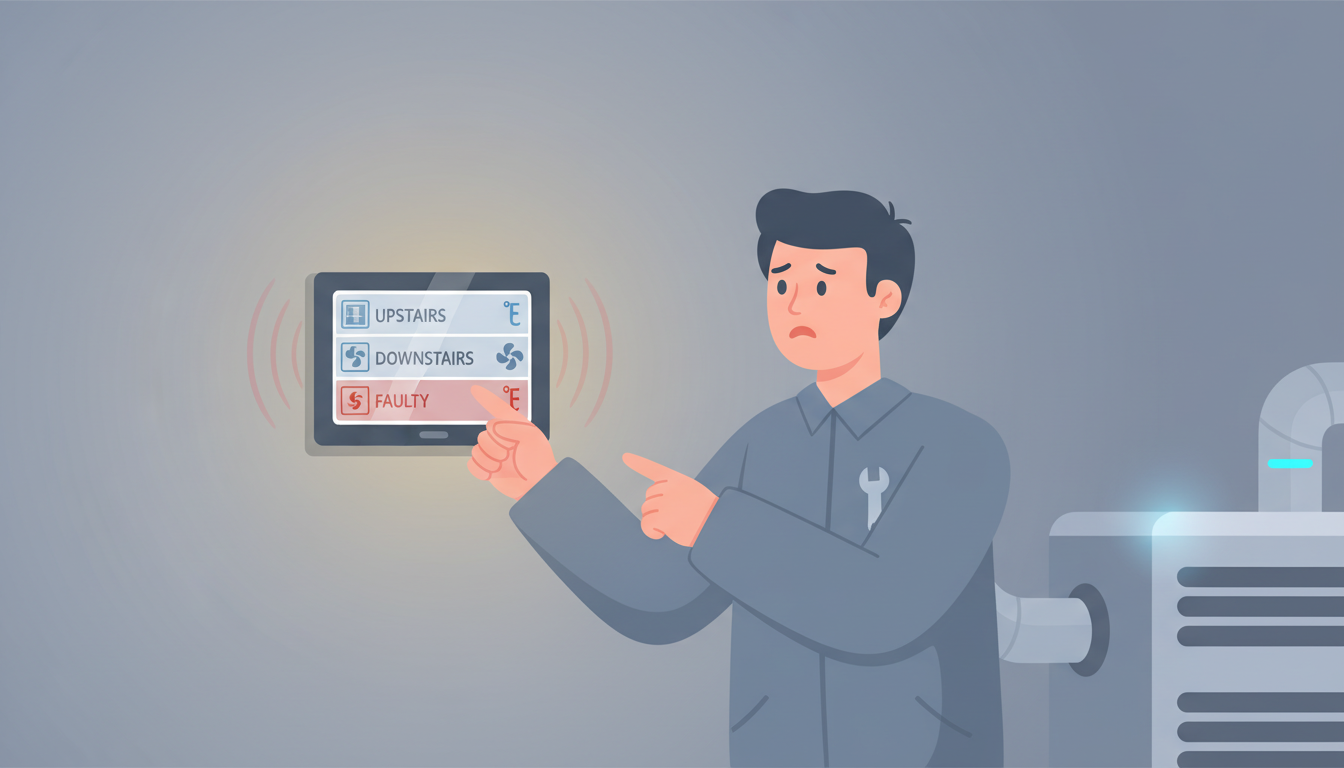
Q: My upstairs zone doesn't work but downstairs is fine—why?
A: Upstairs/downstairs zone problems are common. Check that the upstairs thermostat has power, the damper for that zone is opening, and the ductwork is properly connected. Heat naturally rises, so cooling upstairs zones often requires more aggressive damper settings than downstairs zones.
Q: How long should a zone damper last?
A: Quality zone dampers typically last 15-20 years with proper maintenance. The damper motors usually fail before the dampers themselves. Budget for eventual replacement as your system ages, especially if your dampers are original to a home built before 2005.
Conclusion: Get Your Zone Working Again
A non-working thermostat zone doesn't have to mean expensive repairs or uncomfortable rooms. By systematically checking your thermostat, dampers or valves, wiring, and control board, you can identify most zone problems yourself.
Remember: start with the simple fixes first. Replace thermostat batteries, verify settings, and check for tripped breakers before diving into complex diagnostics. Many zone issues resolve with these basic steps.
When you do need professional help, understanding how your zone system works helps you communicate the problem clearly and avoid unnecessary repairs. A good HVAC technician will appreciate that you've done preliminary troubleshooting and can jump straight to solving the real issue.
Don't let a malfunctioning zone drive up your energy bills or leave part of your home uncomfortable. Whether you tackle the fix yourself or call in a professional, you now have the knowledge to get your zone system working perfectly again.
Need professional HVAC help? Check out our comprehensive HVAC repair guide for more troubleshooting tips and when to call the experts.